
Navigating the intricacies of traffic laws and their associated penalties can be a daunting task for any driver, especially when traveling through a new state like Texas. Understanding the potential financial implications of a traffic ticket is crucial for budgeting your trip and ensuring a smooth experience. While the exact cost of a traffic ticket in Texas can vary significantly, this guide aims to demystify the factors that influence these fines, offering insights into common violations and their potential financial repercussions. This knowledge is particularly valuable for those who might be visiting Texas for leisure or business, potentially staying at a charming boutique hotel in Austin or a luxurious resort in San Antonio, as unexpected fines can certainly impact a travel budget.
Factors Influencing Traffic Ticket Costs in Texas
Several variables contribute to the final amount you might owe for a traffic violation in Texas. It’s not simply a matter of a fixed price for each offense; rather, a complex interplay of legal statutes, court fees, and even your driving record can determine the final sum. For travelers unfamiliar with the state’s specific regulations, this can be a source of confusion, potentially leading to higher costs than anticipated. Understanding these contributing factors can help you better estimate potential expenses and, more importantly, encourage safe driving habits to avoid incurring any fines altogether.
Base Fine Amounts
Each traffic violation in Texas has a statutory base fine associated with it. These are the foundational amounts set by the state legislature for specific offenses. For instance, minor infractions like exceeding the speed limit by a small margin will have a lower base fine compared to more serious offenses like running a red light or making an illegal turn. These base fines are intended to reflect the severity of the infraction and serve as a deterrent. However, it is critical to remember that these base fines are rarely the total amount a driver will pay.
Court Costs and Fees
Beyond the base fine, every traffic ticket in Texas typically comes with additional court costs and administrative fees. These fees cover the operational expenses of the justice system, including court personnel, administrative processing, and legal services. These costs can add a substantial percentage to the base fine, often doubling the initial amount or more. For example, a $100 base fine could easily escalate to $150-$200 once these mandatory court costs are factored in. This is a common point of surprise for many, as the initial citation might only state the base penalty.
Surcharges and State Mandates
Texas also imposes various surcharges on traffic tickets, often mandated by state law for specific purposes. These can include funds allocated for law enforcement training, highway safety programs, or even to support the state’s general fund. One of the most common surcharges is related to the state’s driver responsibility program, which can significantly increase the cost of a ticket, particularly for repeat offenders or those with multiple violations within a specific timeframe. These surcharges are separate from base fines and court costs and are designed to generate revenue for state-funded initiatives.
Geographic Location and Specific Court Districts
The exact amount of court costs and administrative fees can also vary slightly depending on the specific municipality or county where the ticket was issued. While state laws set the framework, individual court districts have some discretion in determining the precise amounts for their local fees. Therefore, a speeding ticket issued in one Texas city might end up costing slightly more than the identical offense committed in another, simply due to variations in local court administrative costs. This geographical nuance is another layer of complexity for drivers to consider.
Driving Record and Prior Offenses
Your personal driving record can also play a role in the final cost of a ticket. While not directly increasing the fine for a single offense, a history of previous traffic violations can lead to increased insurance premiums. Many insurance companies view a history of tickets as an indicator of higher risk, and they will adjust your premiums accordingly. In some cases, for very serious or repeated offenses, a judge might have discretion to impose a higher fine within the statutory limits, though this is less common for minor infractions. For travelers, it’s important to remember that a ticket in Texas could have ripple effects on your insurance rates back home.
Common Traffic Violations and Estimated Costs
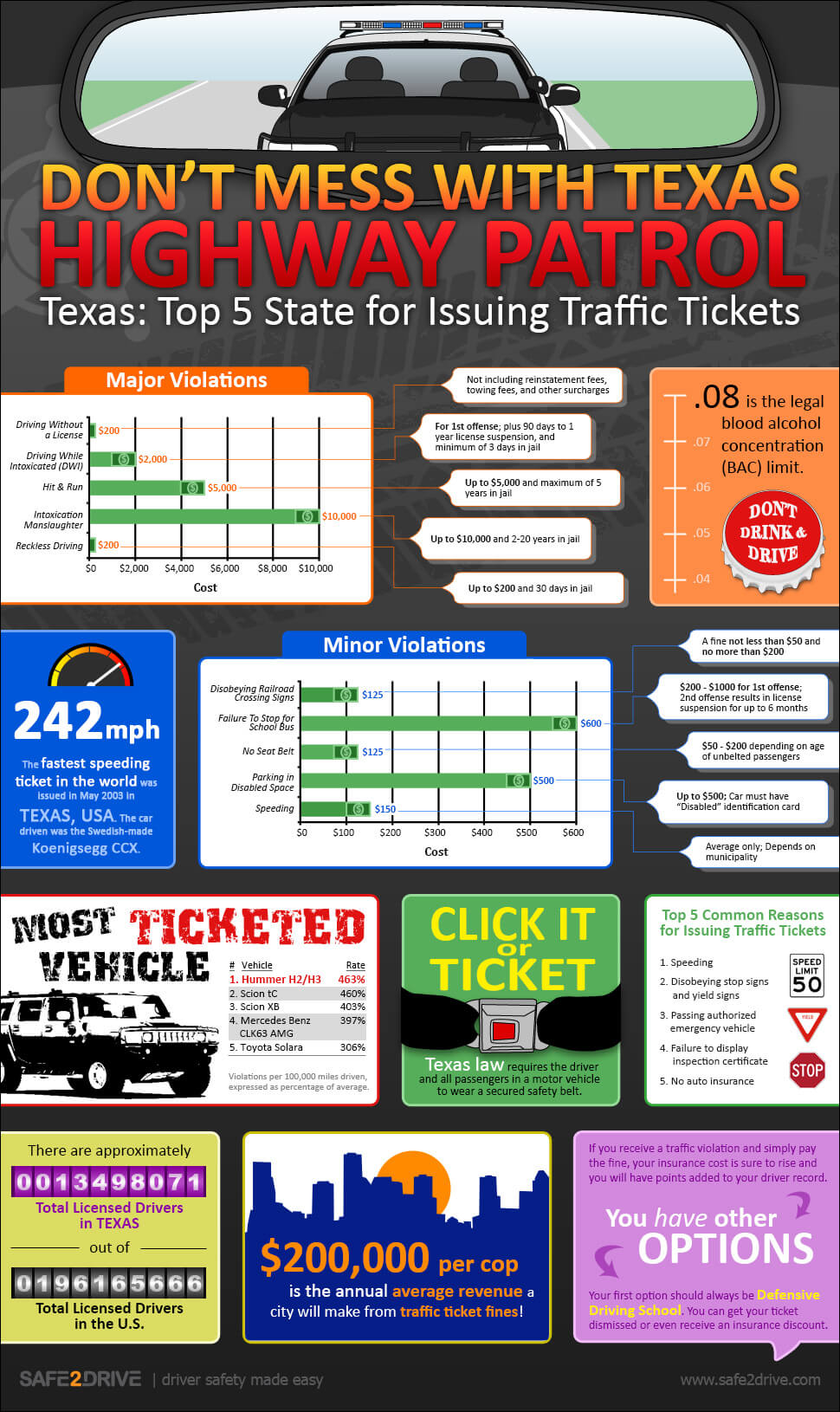
While pinpointing an exact dollar amount for every possible traffic ticket in Texas is impossible due to the aforementioned variables, we can provide estimated cost ranges for common violations. These estimates include base fines, typical court costs, and some state surcharges, offering a realistic preview of potential expenses. It is important to note that these are approximations, and the actual cost may be higher or lower.
Speeding Tickets
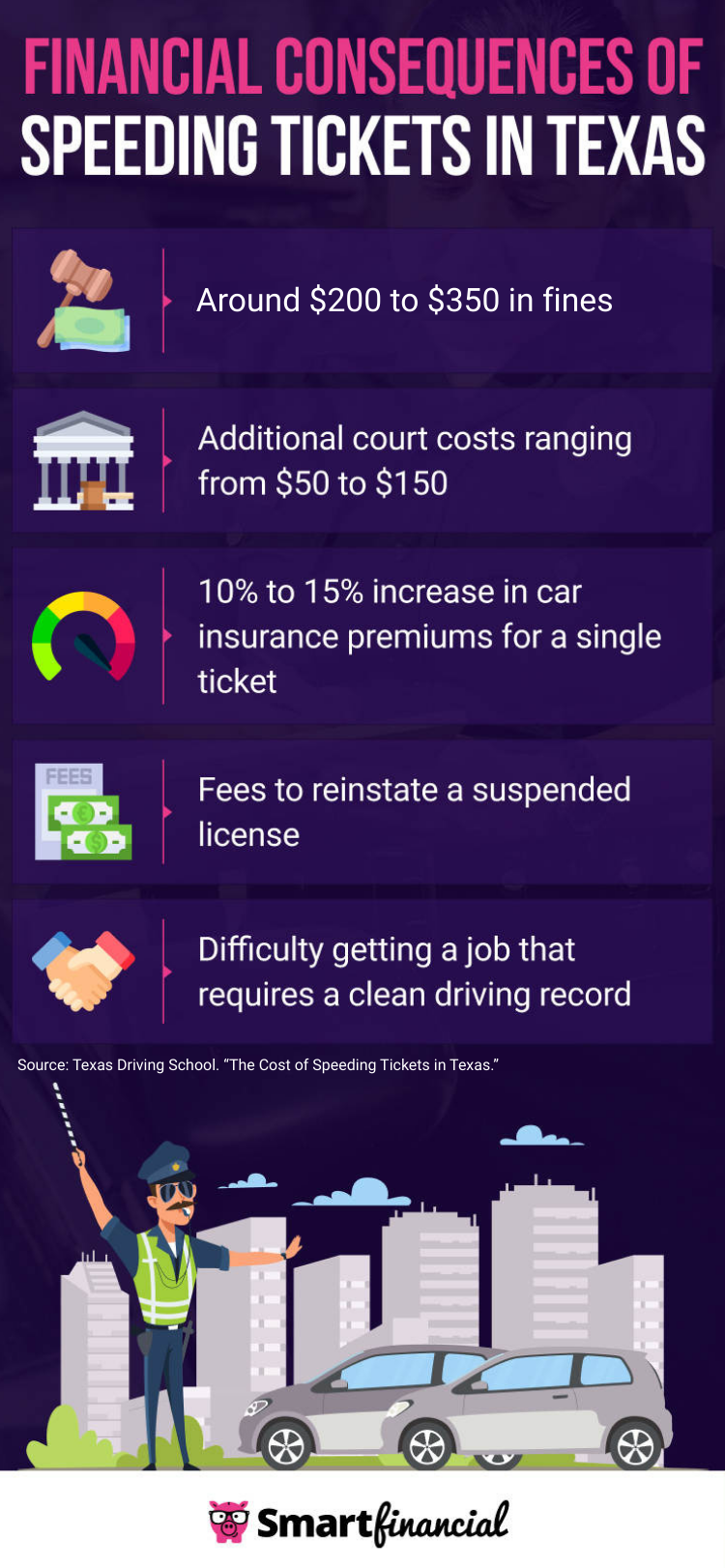
Speeding is arguably the most frequent traffic violation. The cost of a speeding ticket in Texas is directly proportional to how far over the speed limit you were driving.
- Minor Speeding (e.g., 1-5 mph over): These often carry the lowest fines, potentially starting around $100-$150 when all costs are included.
- Moderate Speeding (e.g., 10-15 mph over): Fines can escalate to the $150-$250 range.
- Significant Speeding (e.g., 20+ mph over): Costs can easily climb to $250-$400 or more. Speeding in a construction zone or school zone will typically result in significantly higher fines.
Running Red Lights and Stop Signs
Violations involving traffic signals and signs are taken seriously in Texas.
- Running a Red Light: This typically incurs a fine in the range of $150-$300.
- Disregarding a Stop Sign: Fines are generally similar to running a red light, often falling between $150-$275.
Improper Turns and Lane Changes
Maneuvering errors can also lead to citations.
- Illegal U-Turn: Fines can range from $100-$200.
- Failure to Signal Lane Change: This might result in a ticket costing around $100-$175.
Driving Without Insurance or With Expired Registration
These are more serious offenses that can carry higher penalties.
- No Proof of Insurance: This can result in fines of $150-$350 for a first offense, with penalties increasing for subsequent offenses.
- Expired Vehicle Registration: Fines can vary but often fall in the $100-$250 range, depending on how long the registration has been expired.
More Serious Offenses
While this guide focuses on common, less severe violations, it’s crucial to be aware that more serious offenses like DWI (Driving While Intoxicated), reckless driving, or leaving the scene of an accident carry much more severe penalties, including significant fines, license suspension, and potential jail time. These are beyond the scope of typical travel-related ticket costs.
Options for Handling a Traffic Ticket in Texas
When you receive a traffic ticket in Texas, you generally have a few options for how to proceed. Understanding these options can help you make an informed decision that best suits your circumstances, especially if you are a visitor far from home.
Paying the Fine
The most straightforward approach is to pay the fine by the due date specified on the citation. This typically constitutes an admission of guilt and will result in a conviction on your driving record. For minor, first-time offenses, and if you are not concerned about potential insurance rate increases, this might be the easiest path. Payment can usually be made online, by mail, or in person at the court.
Contesting the Ticket
If you believe you were wrongly ticketed, you have the right to contest the citation in court. This involves pleading not guilty and presenting your case before a judge. You may choose to represent yourself or hire a traffic attorney. Contesting a ticket requires time and potentially travel to the court, which can be an added consideration for out-of-state visitors. If you win your case, the ticket will be dismissed, and you will not have to pay the fine or incur points on your record.
Attending Driving Safety School
For many eligible traffic violations, Texas law allows drivers to attend a state-approved driving safety course. Successfully completing this course within the specified timeframe can result in the dismissal of the ticket and prevent it from appearing on your driving record or affecting your insurance rates. Eligibility often depends on the type of violation, your driving history (e.g., not having completed a similar course recently), and whether you were speeding excessively. There is usually a court fee and the cost of the course itself, but for many, this is a worthwhile investment to avoid points and potential insurance hikes. To determine eligibility and proceed with this option, you typically need to contact the court listed on your citation promptly.
Preventing Traffic Tickets While Traveling in Texas
The most effective way to manage traffic ticket costs is to avoid receiving them altogether. When traveling through Texas, whether you’re exploring the vibrant culture of Dallas, enjoying the coastal breezes in Galveston, or embarking on a road trip through its vast landscapes, adhering to traffic laws is paramount.
Familiarize Yourself with Texas Traffic Laws
While general driving principles are similar across the United States, each state has its specific nuances. Before or upon arrival in Texas, take a few minutes to review common traffic regulations. Pay attention to speed limits, which can vary significantly between urban areas, rural highways, and school zones. Understand laws regarding passing, lane usage, and right-of-way.
Obey Posted Speed Limits
This cannot be stressed enough. Speeding is a leading cause of tickets and accidents. Cruise control can be a helpful tool for maintaining a consistent and legal speed. Be particularly vigilant in construction zones and areas with reduced speed limits, as these are often heavily enforced.
Pay Attention to Traffic Signals and Signs
Ensure you come to a complete stop at stop signs and yield appropriately. Be mindful of traffic lights, and avoid entering intersections when the light is red or turning yellow if you cannot safely clear the intersection.
Maintain Your Vehicle
Ensure your vehicle is in good working order. Functioning headlights, taillights, brake lights, and turn signals are essential for safety and can prevent tickets for equipment violations.
Drive Defensively and Alertly
Avoid distractions such as mobile phones (unless using a hands-free device and permitted by local laws), eating, or adjusting navigation systems while driving. Be aware of your surroundings, anticipate the actions of other drivers, and maintain a safe following distance.
By understanding the potential costs associated with traffic tickets in Texas and by prioritizing safe and legal driving practices, travelers can ensure their journey through the Lone Star State remains enjoyable and financially predictable. The beauty and attractions of Texas are best experienced without the burden of unexpected fines and legal complications.
LifeOutOfTheBox is a participant in the Amazon Services LLC Associates Program, an affiliate advertising program designed to provide a means for sites to earn advertising fees by advertising and linking to Amazon.com. Amazon, the Amazon logo, AmazonSupply, and the AmazonSupply logo are trademarks of Amazon.com, Inc. or its affiliates. As an Amazon Associate we earn affiliate commissions from qualifying purchases.