
Navigating the financial landscape of establishing a business in the Lone Star State involves understanding various costs, and for those looking to form a Limited Liability Company (LLC) in Texas, a clear picture of the expenses is crucial. This guide delves into the primary fees associated with filing an LLC in Texas, offering insights into potential additional costs and strategies for managing your startup budget effectively. While the core filing fees are relatively straightforward, the overall investment can fluctuate based on your specific business needs and chosen services.
The Essential Filing Fee: Certificate of Formation
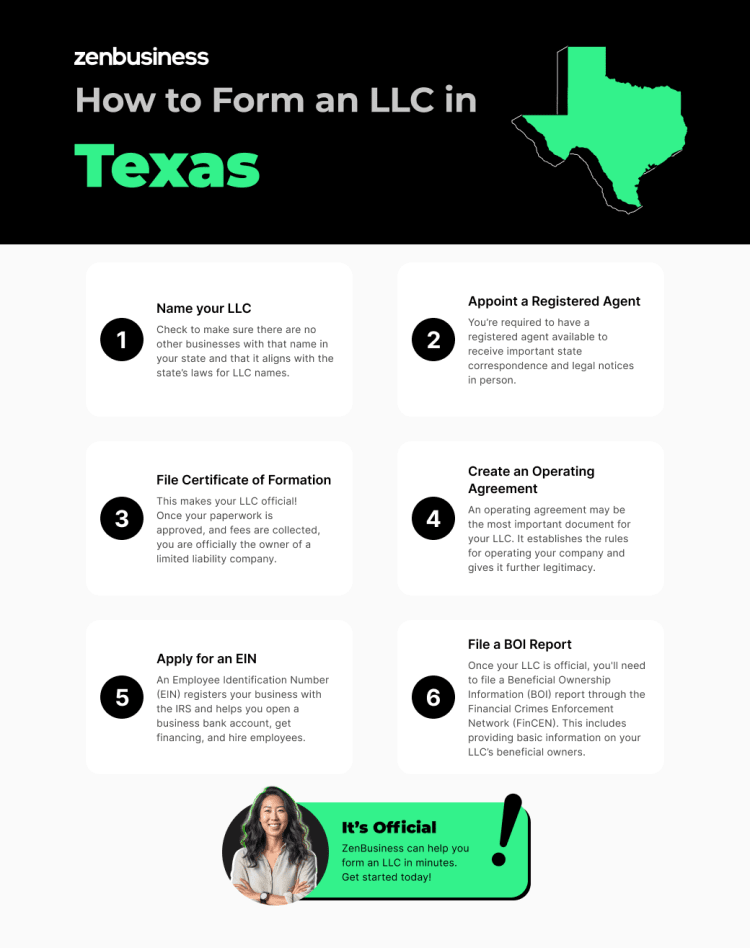
The foundational cost for forming an LLC in Texas is the filing fee for the Certificate of Formation. This document, submitted to the Texas Secretary of State, officially creates your LLC and grants it legal existence.
Understanding the Certificate of Formation Fee
As of the latest available information, the filing fee for the Certificate of Formation in Texas is $300. This is a one-time fee paid directly to the Texas Secretary of State’s office. It is non-refundable and is a mandatory step in the LLC formation process. Without this filing, your business will not be recognized as a legal entity, and you will not be able to operate as an LLC.
How to Submit the Certificate of Formation
You have a few options for submitting your Certificate of Formation:
- Online: The Texas Secretary of State offers an online filing system, which is often the most convenient and quickest method. You will need to create an account, fill out the required fields, and pay the $300 fee electronically.
- Mail: You can download the Certificate of Formation form from the Secretary of State’s website and mail it along with a check or money order for $300. Processing times for mailed documents are typically longer than online submissions.
- Fax: Similar to mailing, you can fax the completed form and payment information.
Regardless of the method chosen, ensure all information on the Certificate of Formation is accurate and complete to avoid delays. This includes your LLC’s registered name, the registered agent’s name and address, and the business purpose.
The Registered Agent Fee: A Legal Necessity
Every LLC in Texas must designate a registered agent. This individual or company is responsible for receiving official legal and tax documents on behalf of your business. While you can technically serve as your own registered agent, many entrepreneurs opt for a professional service to ensure compliance and maintain privacy.
Options for Registered Agent Services
- Serving as Your Own Registered Agent: If you choose to be your own registered agent, there is no direct fee associated with this role. However, you must have a physical street address within Texas (a P.O. Box is not acceptable) and be available during normal business hours to accept service of process. This can be inconvenient if you travel frequently or wish to keep your personal address separate from your business.
- Appointing a Friend or Family Member: If a trusted friend or family member meets the requirements (physical Texas address and availability), you could ask them to serve. However, this can place a significant burden on them and may introduce complications if your relationship sours.
- Hiring a Commercial Registered Agent Service: This is the most common approach for business owners who prioritize professionalism and peace of mind. Commercial registered agent services typically charge an annual fee ranging from $50 to $300 or more, depending on the provider and the services they offer. These services ensure that legal documents are received promptly and forwarded to you, and they maintain a permanent address in Texas for your business.
Factors Influencing Registered Agent Costs
When selecting a commercial registered agent, consider:
- Annual Fee: The base cost for their services.
- Additional Services: Some providers offer services like annual report reminders, business formation assistance, or virtual office solutions, which may increase the overall cost.
- Reputation and Reliability: Opt for established companies with a proven track record of excellent customer service and timely delivery of documents.
Optional, Yet Often Necessary: Business Licenses and Permits
Beyond the state-level filing, your LLC may require specific business licenses and permits to operate legally. These are typically issued by local or federal authorities and vary significantly depending on your industry and location within Texas.
Identifying Required Licenses and Permits
The process of identifying necessary licenses begins with understanding your business activities.
- Industry-Specific Licenses: Many professions and industries require special licenses. For example, if you plan to open a restaurant, you’ll need food service permits. If you’re in healthcare, you’ll need medical licenses. Construction, real estate, and financial services are other sectors with extensive licensing requirements.
- Local Permits: Cities and counties in Texas often have their own permit requirements. This could include a general business permit, zoning permits, or permits related to signage, building use, or health and safety regulations. For instance, a business operating in Austin might have different permit needs than one in Houston.
- Federal Licenses: Certain industries are regulated at the federal level, requiring federal licenses or permits. Examples include businesses involved in alcohol, tobacco, firearms, aviation, or broadcasting.

Estimated Costs for Licenses and Permits
The cost of licenses and permits can range from nominal amounts (e.g., $25 for a local permit) to several hundred or even thousands of dollars for specialized, industry-specific licenses. It is essential to research the specific requirements for your business and location to get an accurate estimate.
- Resources for Research:
- The Texas Department of Licensing and Regulation (TDLR) website is a valuable resource for finding state-level licensing information.
- Your local city or county clerk’s office can provide details on municipal permits.
- The Small Business Administration (SBA) offers guidance on federal licensing and permit requirements.
Other Potential Costs to Consider
While the Certificate of Formation and registered agent fees are the most common initial expenses, other costs may arise as you establish and operate your LLC.
Business Name Registration (DBA)
If you plan to operate your LLC under a name different from the one stated in your Certificate of Formation, you will need to file a “Doing Business As” (DBA) or Assumed Name Certificate.
- Filing Fee: The fee for filing a DBA in Texas is typically around $10-$20, paid to the county clerk where your principal office is located. You may also need to publish notice of your DBA in a local newspaper.
Employer Identification Number (EIN)
An Employer Identification Number (EIN) is like a Social Security number for your business, issued by the Internal Revenue Service (IRS). You will need an EIN if you plan to hire employees, operate your business as a corporation or partnership, or file certain tax returns.
- Cost: Obtaining an EIN from the IRS is free. You can apply directly on the IRS website. Be wary of third-party services that charge for this.
Business Insurance
While not a filing fee, business insurance is a critical expense for most LLCs. The type and cost of insurance will depend on your industry, the size of your business, and the risks involved. Common types include general liability insurance, professional liability insurance (errors and omissions), and workers’ compensation insurance.
Legal and Accounting Services
Depending on your comfort level with legal and financial matters, you might incur costs for:
- Legal Review: Having an attorney review your formation documents or operating agreement.
- Accounting Setup: Hiring an accountant to set up your bookkeeping system and advise on tax matters.
Operating Agreement
An Operating Agreement is an internal document that outlines the ownership structure, operating procedures, and management of your LLC. While not legally required to be filed with the state of Texas, it is highly recommended for establishing clear guidelines and protecting the interests of all members. The cost here is primarily your time in drafting it, or you might pay a lawyer to draft it for you.
Summary of Estimated Costs
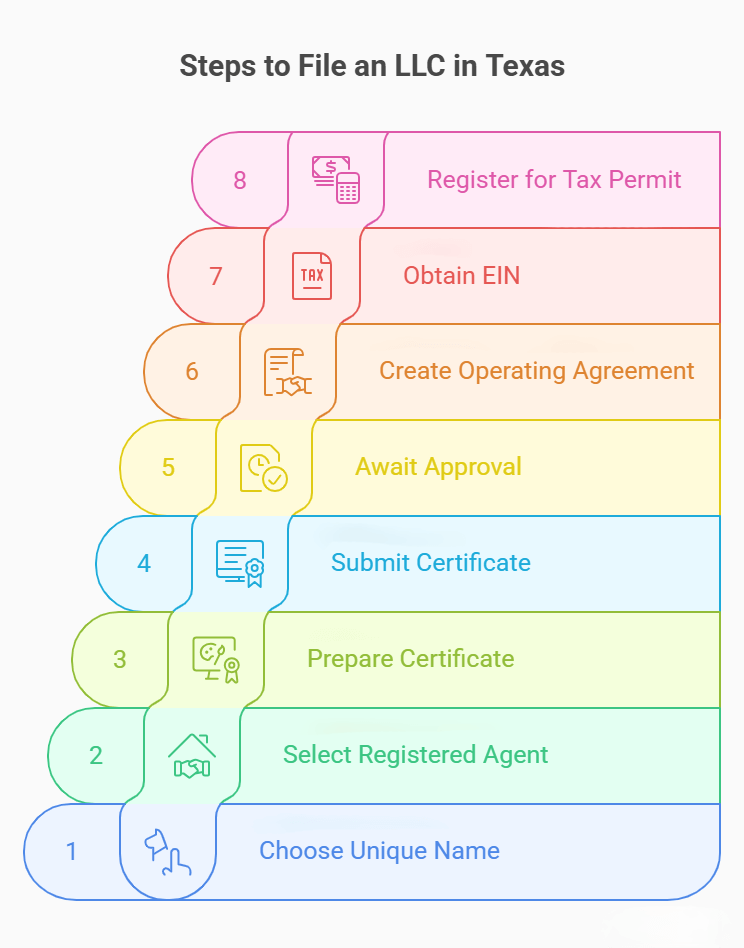
To provide a clearer picture, here’s a typical range of initial costs for filing an LLC in Texas:
- Certificate of Formation: $300
- Registered Agent Service (Annual Fee): $50 – $300 (if using a service)
- Business Licenses and Permits: Varies greatly, potentially $0 – $1,000+
- DBA Filing (if applicable): $10 – $20 + publication costs
- EIN: Free
Therefore, the minimum cost to file an LLC in Texas (excluding licenses, permits, and optional services) is $300 if you act as your own registered agent. However, factoring in a professional registered agent service, you might expect to spend between $350 and $600 for the initial setup, with additional costs arising from necessary licenses and permits specific to your business operations. Thorough research and planning are key to accurately budgeting for your new Texas LLC.
LifeOutOfTheBox is a participant in the Amazon Services LLC Associates Program, an affiliate advertising program designed to provide a means for sites to earn advertising fees by advertising and linking to Amazon.com. Amazon, the Amazon logo, AmazonSupply, and the AmazonSupply logo are trademarks of Amazon.com, Inc. or its affiliates. As an Amazon Associate we earn affiliate commissions from qualifying purchases.