
Becoming a nurse in Texas offers a rewarding career path with significant demand across the Lone Star State. The healthcare landscape in Texas is dynamic, with growing populations in cities like Houston, Dallas, San Antonio, and Austin, all contributing to a constant need for skilled and compassionate nursing professionals. This comprehensive guide outlines the essential steps, educational pathways, and licensing requirements to embark on your nursing journey in Texas.
Understanding the Nursing Pathways in Texas
The nursing profession encompasses various roles, each with distinct educational prerequisites and scopes of practice. In Texas, the most common entry-level nursing roles are Licensed Vocational Nurse (LVN) and Registered Nurse (RN). Understanding the differences between these pathways is crucial for planning your education and career trajectory.
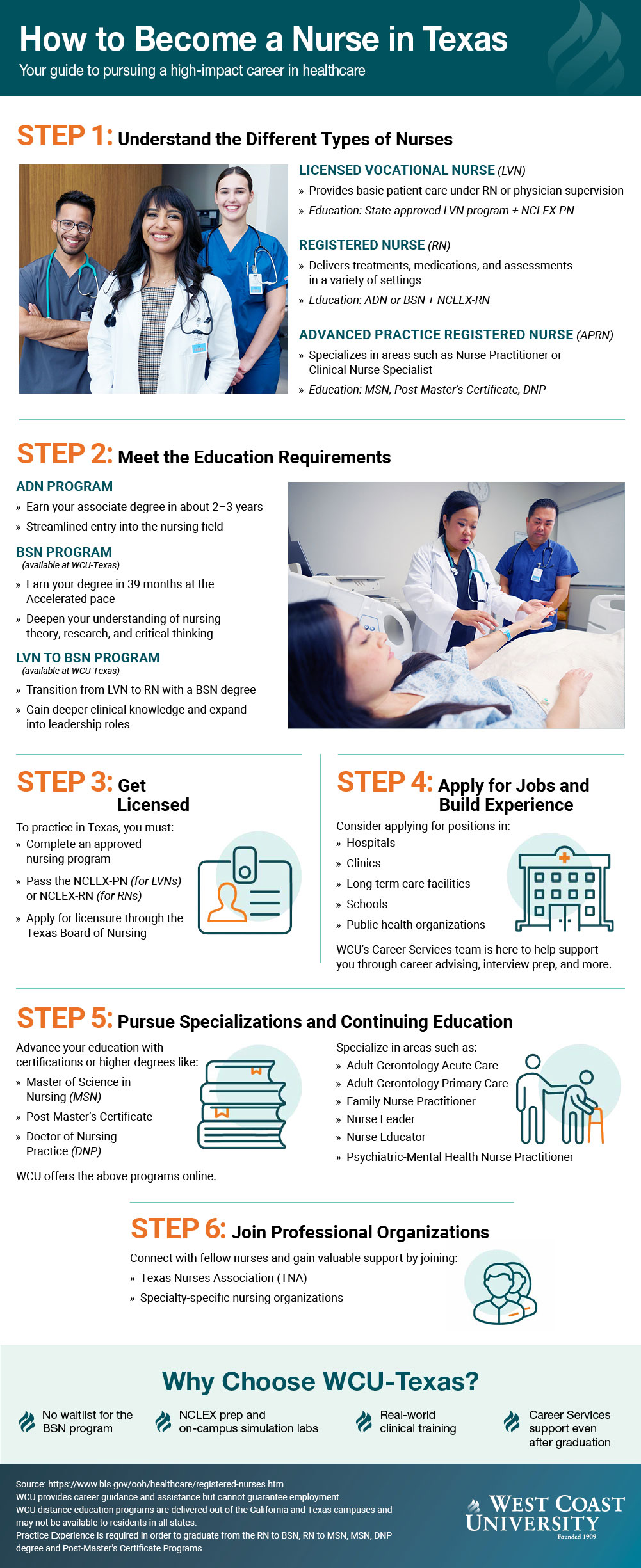
Licensed Vocational Nurse (LVN)
LVNs provide basic nursing care under the supervision of an RN or physician. Their duties typically include taking vital signs, administering medications, dressing wounds, and educating patients and their families. The educational program for LVNs is shorter than that for RNs, typically lasting about one year.
Registered Nurse (RN)
RNs have a broader scope of practice, involving patient assessment, care planning, administering complex treatments, and supervising LVNs and other healthcare personnel. There are two primary educational routes to becoming an RN in Texas:
Associate Degree in Nursing (ADN)
An ADN program is typically offered by community colleges and can be completed in approximately two years. Graduates are prepared for entry-level RN positions and can pursue further education. This is often a more accessible and affordable option for many aspiring nurses.
Bachelor of Science in Nursing (BSN)
A BSN program, usually offered by four-year universities, takes approximately four years to complete. A BSN education provides a more comprehensive understanding of nursing theory, research, leadership, and community health. Many healthcare employers in Texas increasingly prefer or require BSN-prepared nurses, especially for leadership and specialized roles. Graduates with a BSN are also better positioned for graduate studies.
Educational Requirements and Program Accreditation
Regardless of the chosen pathway, selecting an accredited nursing program is paramount. Accreditation ensures that the program meets rigorous quality standards set by professional organizations and regulatory bodies.
Choosing an Accredited Program
In Texas, nursing education programs must be approved by the Texas Board of Nursing (BON). Accreditation by national bodies such as the Accreditation Commission for Education in Nursing (ACEN) or the Commission on Collegiate Nursing Education (CCNE) is also highly recommended, as it signifies a commitment to educational excellence and facilitates transferability of credits and future licensure in other states.
Admission Requirements
Admission criteria for nursing programs vary, but generally include:
- High School Diploma or GED: A foundational requirement for most programs.
- Specific Prerequisite Courses: Many programs require completion of science courses such as anatomy, physiology, biology, chemistry, and mathematics with a minimum GPA.
- Standardized Entrance Exams: Some programs may require scores from exams like the TEAS (Test of Essential Academic Skills) or HESI (Health Education Systems, Inc.).
- Background Check and Drug Screening: Standard procedures for healthcare education programs.
- Immunizations: Proof of required immunizations is typically mandatory.

It is advisable to research the specific admission requirements of individual nursing schools in Texas well in advance of application deadlines.
Licensing and Examination
Upon successful completion of an approved nursing education program, the next critical step is to obtain a nursing license from the Texas Board of Nursing. This involves passing a national standardized examination.
The NCLEX Examination
All aspiring RNs and LVNs in the United States must pass the National Council Licensure Examination (NCLEX). There are two versions:
- NCLEX-RN: For Registered Nurses.
- NCLEX-PN: For Licensed Vocational Nurses.
The NCLEX is a computer-adaptive test designed to assess the knowledge, skills, and abilities essential for safe and effective nursing practice. Preparation for this exam is crucial, and many nursing programs incorporate NCLEX review into their curriculum. Numerous review courses and study materials are available to help candidates prepare effectively.
Applying for Licensure in Texas
After graduating from an approved nursing program, candidates must submit an application for licensure to the Texas Board of Nursing. This application typically requires:
- Official transcripts from the nursing program.
- Criminal background check, including fingerprinting.
- Payment of application fees.
- Confirmation of passing the NCLEX examination.
Once all requirements are met, the Texas Board of Nursing will issue the nursing license, allowing the individual to practice as an LVN or RN in Texas.
Career Opportunities and Professional Development in Texas
The demand for nurses in Texas remains strong across a diverse range of healthcare settings. From major metropolitan hospitals to rural clinics, the opportunities are plentiful.
Diverse Healthcare Settings
Nurses in Texas can find employment in:
- Hospitals: Offering a wide array of specialties including intensive care, emergency rooms, pediatrics, oncology, and medical-surgical units. Major hospital systems like HCA Healthcare and Baylor Scott & White Health are significant employers.
- Long-Term Care Facilities: Providing care for elderly and chronically ill patients.
- Outpatient Clinics and Physician Offices: Offering specialized care and routine health services.
- Schools: Serving as school nurses to care for students’ health needs.
- Home Health Agencies: Providing care to patients in their homes.
- Public Health Departments: Focusing on community health initiatives and disease prevention.
- Correctional Facilities: Providing healthcare services to incarcerated individuals.
Specialization and Advanced Practice
As nurses gain experience, they may choose to specialize in areas such as critical care, mental health, obstetrics, or surgical nursing. Further education can lead to advanced practice roles, such as Nurse Practitioners (NPs), Certified Nurse Midwives (CNMs), or Certified Registered Nurse Anesthetists (CRNAs), which require graduate-level education and licensure. These advanced roles offer greater autonomy and often higher earning potential.

Continuing Education and Professional Growth
To maintain licensure in Texas, nurses are required to complete continuing education (CE) hours. The Texas Board of Nursing mandates a specific number of CE hours every two years. Engaging in CE allows nurses to stay updated on the latest medical advancements, best practices, and evolving healthcare regulations. Professional organizations, such as the Texas Nurses Association, offer valuable resources, networking opportunities, and advocacy for the nursing profession, supporting ongoing career development and professional growth. Embarking on a nursing career in Texas is a commitment to lifelong learning and a dedication to serving the health and well-being of the community.
LifeOutOfTheBox is a participant in the Amazon Services LLC Associates Program, an affiliate advertising program designed to provide a means for sites to earn advertising fees by advertising and linking to Amazon.com. Amazon, the Amazon logo, AmazonSupply, and the AmazonSupply logo are trademarks of Amazon.com, Inc. or its affiliates. As an Amazon Associate we earn affiliate commissions from qualifying purchases.