
The Lone Star State, with its vibrant economy and entrepreneurial spirit, is a prime location for establishing a Limited Liability Company (LLC). Texas offers a business-friendly environment, and understanding the process of filing for an LLC is crucial for aspiring business owners. This guide will navigate you through the essential steps, from initial considerations to the final filing, ensuring a smooth and compliant launch for your Texas-based venture.
Understanding the Texas LLC Landscape
Before diving into the procedural aspects, it’s important to grasp what an LLC is and why Texas is a favorable choice for its formation. An LLC combines the pass-through taxation of a partnership or sole proprietorship with the limited liability of a corporation. This means your personal assets are generally protected from business debts and lawsuits, while profits and losses are passed through to your personal income without being taxed at the corporate level. Texas, specifically, offers several advantages, including no state corporate income tax and a relatively straightforward regulatory framework.
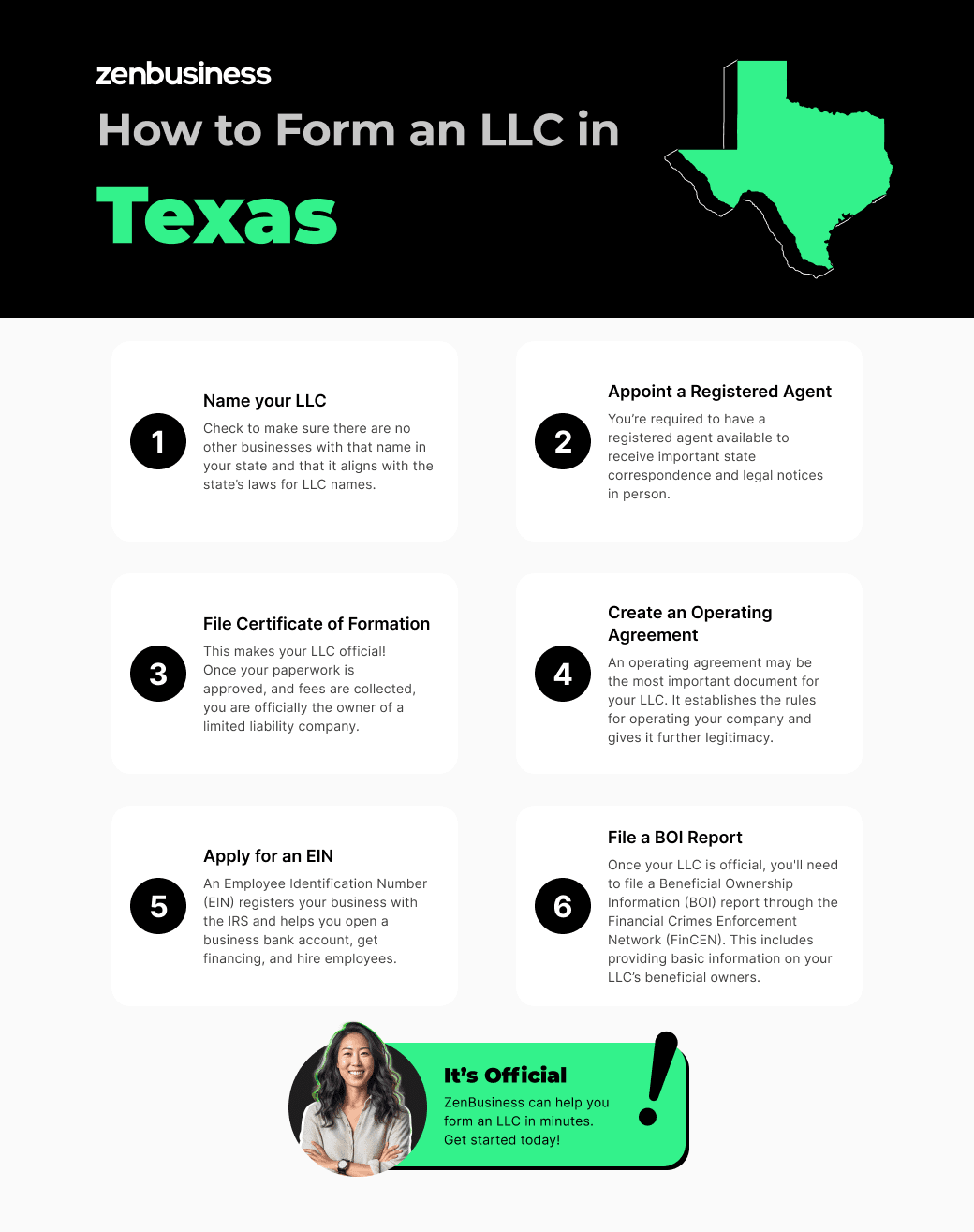
Key Advantages of Forming an LLC in Texas
The appeal of an LLC in Texas stems from a combination of legal and financial benefits. Chief among these is the robust protection it offers to your personal assets. If your business incurs debt or faces legal challenges, your personal savings, home, and other possessions are typically shielded. This separation between personal and business liabilities is a cornerstone of the LLC structure.
Furthermore, Texas boasts a competitive tax environment. The absence of a state corporate income tax is a significant draw for businesses looking to maximize profitability. While you will still be subject to federal taxes, the state-level savings can be substantial. The state also has a franchise tax, but many small businesses are exempt. Understanding these tax implications early on is vital for accurate financial planning.
The operational flexibility of an LLC is another major advantage. Unlike corporations, LLCs often have less stringent record-keeping requirements and fewer formalities to adhere to. Management can be structured in various ways, either by the members themselves (member-managed) or by appointed managers (manager-managed), offering adaptability as your business grows and evolves.
Choosing Your Business Name
Selecting a unique and legally available business name is a foundational step. In Texas, your LLC name must contain specific words or abbreviations to indicate its legal structure, such as “Limited Liability Company,” “LLC,” or “L.L.C.” The name also cannot be misleadingly similar to existing business names registered with the Texas Secretary of State.
Name Availability Search
To ensure your desired name is available, you must conduct a thorough search. The Texas Secretary of State provides an online database that allows you to check for name conflicts. This search is critical to avoid potential rejection of your filing and the need to choose a new name later. It’s advisable to have a few alternative names in mind in case your first choice is already in use.
Reserving a Business Name
If you have a name you’re particularly fond of but are not yet ready to file for your LLC, you can reserve it. The Texas Secretary of State allows you to reserve a business name for up to 180 days. This is done by filing a “Name Reservation Request” form and paying the associated fee. This ensures that no other entity can register your chosen name during your reservation period.
The Essential Filing Process in Texas
The core of establishing your Texas LLC lies in submitting the correct documentation to the Texas Secretary of State. This process, while detailed, is designed to be manageable with careful attention.
Appointing a Registered Agent
Every Texas LLC must designate a registered agent. This individual or entity is responsible for receiving official legal documents, such as service of process (lawsuit notifications), on behalf of the LLC. The registered agent must have a physical street address within Texas (a P.O. box is not sufficient) and be available during normal business hours.
Requirements for a Registered Agent
The registered agent can be an individual resident of Texas, a Texas domestic business entity, or a foreign business entity authorized to do business in Texas. If an individual is chosen, they must be at least 18 years old. For business entities, they must maintain a registered office in Texas and be authorized to transact business in the state. Many entrepreneurs choose to use a professional registered agent service for convenience and to ensure compliance.
Filing the Certificate of Formation
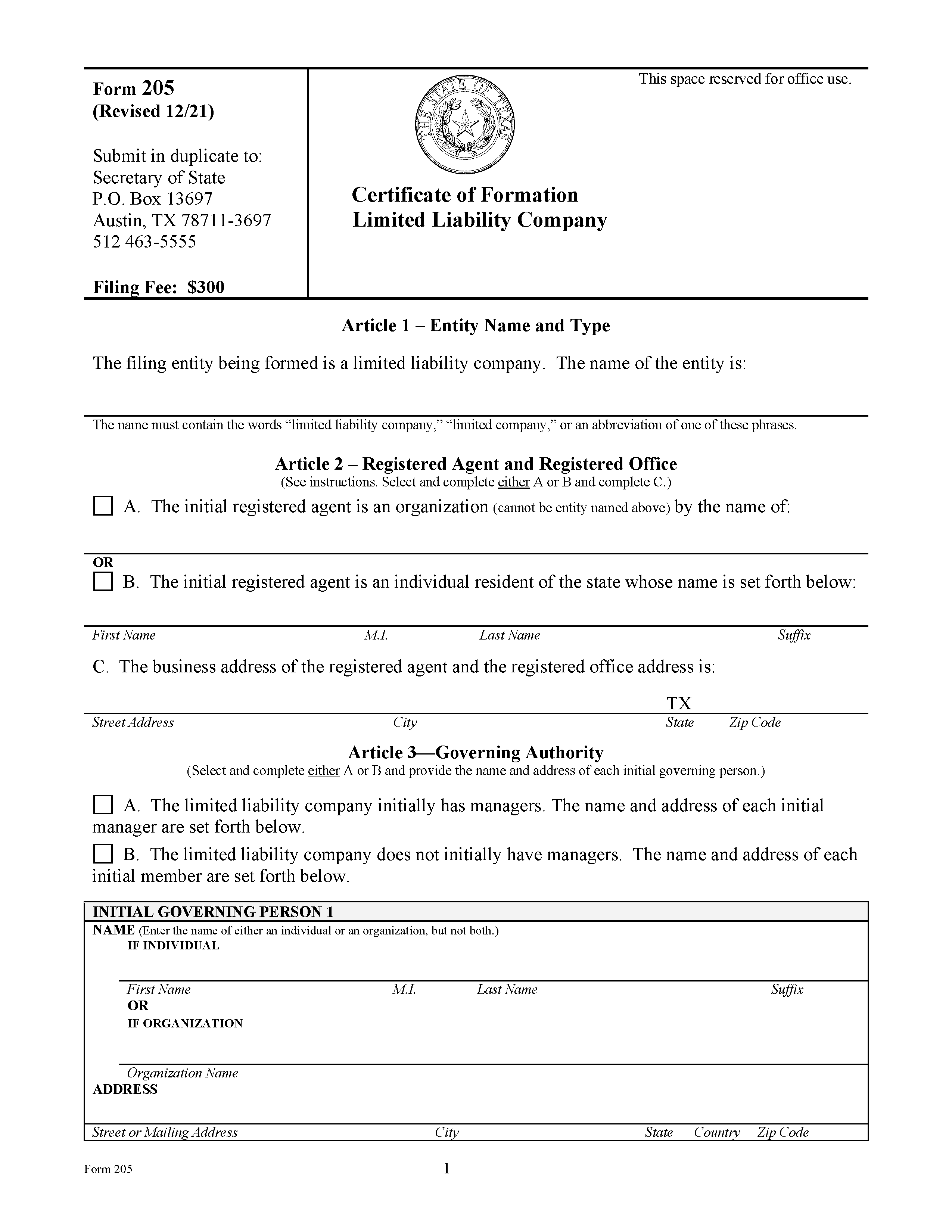
The primary document required to form an LLC in Texas is the Certificate of Formation (Form 205). This document officially creates your LLC with the state. It requires specific information, including:
- The Name of the LLC: The exact name you’ve chosen, which must comply with Texas naming requirements.
- Registered Agent Information: The name and physical street address of your designated registered agent in Texas.
- Management Structure: Whether the LLC will be managed by its members or by appointed managers.
- Organizer Information: The name and address of the person filing the certificate. This individual doesn’t have to be a member or manager of the LLC.
Submitting the Certificate of Formation
The Certificate of Formation can be filed online through the Texas Secretary of State website, by mail, or in person. Online filing is generally the fastest and most efficient method. There is a filing fee associated with submitting the Certificate of Formation.
Obtaining an EIN (Employer Identification Number)

While not strictly a state filing requirement for LLCs that have no employees, obtaining an Employer Identification Number (EIN) from the Internal Revenue Service (IRS) is highly recommended for almost all businesses. An EIN is like a Social Security number for your business and is required for opening a business bank account, filing federal taxes, and hiring employees.
How to Apply for an EIN
You can apply for an EIN online directly from the IRS website, free of charge. The process is straightforward and typically takes only a few minutes to complete. You will need to provide information about your business, including its name, address, and the name and Social Security number of the responsible party.
Post-Formation Best Practices for Your Texas LLC
Forming your LLC is a significant milestone, but maintaining compliance and operational efficiency are crucial for its long-term success. Several steps should be taken after the state has approved your filing.
Drafting an Operating Agreement
While not legally required by the state of Texas, having a comprehensive Operating Agreement is strongly advised for all LLCs. This internal document outlines the ownership structure, management responsibilities, profit and loss distribution, and procedures for adding or removing members. It serves as a blueprint for your business operations and can prevent disputes among members.
Key Components of an Operating Agreement
A well-drafted Operating Agreement typically includes:
- Membership Interests: How ownership is divided among members.
- Management Provisions: Details on whether the LLC is member-managed or manager-managed, and the powers of each.
- Profit and Loss Allocation: How profits and losses will be distributed.
- Capital Contributions: Requirements for initial and future contributions from members.
- Dissolution Procedures: Steps to be taken if the LLC is to be dissolved.
- Buy-Sell Provisions: Mechanisms for handling the exit of a member.
Opening a Business Bank Account
Keeping your business finances separate from your personal finances is paramount for maintaining the liability protection of your LLC. Opening a dedicated business bank account is a critical step in this process. You will typically need your approved Certificate of Formation and your EIN to open the account.
Benefits of a Separate Business Account
A separate business bank account not only simplifies accounting and tax preparation but also reinforces the legal distinction between you and your business. This separation is vital if your LLC were ever to face legal scrutiny. It demonstrates that you are operating your business as a distinct entity.
Understanding Texas Franchise Tax
Texas imposes a franchise tax on businesses operating in the state. However, many small businesses, including most LLCs, are exempt from paying this tax if their Texas taxable margin falls below a certain threshold. It’s important to understand the filing requirements, even if you are likely exempt, as failure to file can lead to penalties.
Filing Requirements for the Franchise Tax
Even if you believe your LLC is exempt, you may still need to file a “No Tax Due Report” annually with the Texas Comptroller of Public Accounts. This report verifies your exemption status. Familiarizing yourself with the filing deadlines and reporting requirements is essential to avoid unnecessary complications.
Maintaining Your Texas LLC
Ongoing compliance ensures your LLC continues to enjoy its legal and financial benefits. The Texas Secretary of State requires certain ongoing filings and adherence to business laws.
Annual Compliance Requirements
While Texas does not have a mandatory annual report filing requirement like some other states, you must maintain your registered agent and keep your business information current with the Texas Secretary of State. If your business undergoes significant changes, such as a change in registered agent or business name, you will need to file the appropriate amendments.
Tax Obligations
Beyond the potential franchise tax, your LLC will have federal tax obligations. Depending on your management structure and elections, your LLC may be taxed as a sole proprietorship, partnership, S-corporation, or C-corporation. Consulting with a tax professional is highly recommended to determine the most advantageous tax structure for your business and to ensure timely and accurate tax filings.
Conclusion
Establishing an LLC in Texas is a strategic move that offers significant protection and operational flexibility. By diligently following the steps outlined—from selecting a name and appointing a registered agent to filing the Certificate of Formation and establishing sound internal practices—you lay a solid foundation for your business’s success in the dynamic Texas market. Remember that ongoing attention to compliance and financial best practices will ensure your LLC remains a robust and protective entity for years to come.
LifeOutOfTheBox is a participant in the Amazon Services LLC Associates Program, an affiliate advertising program designed to provide a means for sites to earn advertising fees by advertising and linking to Amazon.com. Amazon, the Amazon logo, AmazonSupply, and the AmazonSupply logo are trademarks of Amazon.com, Inc. or its affiliates. As an Amazon Associate we earn affiliate commissions from qualifying purchases.