
Understanding Disability Benefits in the Lone Star State
Navigating the complex world of disability benefits can be a daunting prospect, especially when dealing with the specifics of a particular state. For residents of Texas, understanding the pathways to qualifying for disability can significantly impact their quality of life and financial stability. This guide aims to demystify the process, outlining the essential criteria and steps involved in securing these vital supports. While the term “disability” can encompass various forms of assistance, in the context of long-term support, it primarily refers to benefits provided by the Social Security Administration (SSA) – specifically Supplemental Security Income (SSI) and Social Security Disability Insurance (SSDI). Both programs aim to provide financial aid to individuals who are unable to work due to a medical condition, but they have distinct eligibility requirements.

Eligibility Criteria for Social Security Disability Benefits
To qualify for disability benefits through the SSA in Texas, an applicant must meet a rigorous set of medical and non-medical criteria. These criteria are standardized across the nation, but understanding them within the Texas context is crucial for a successful application.
Medical Requirements: The Foundation of Your Claim
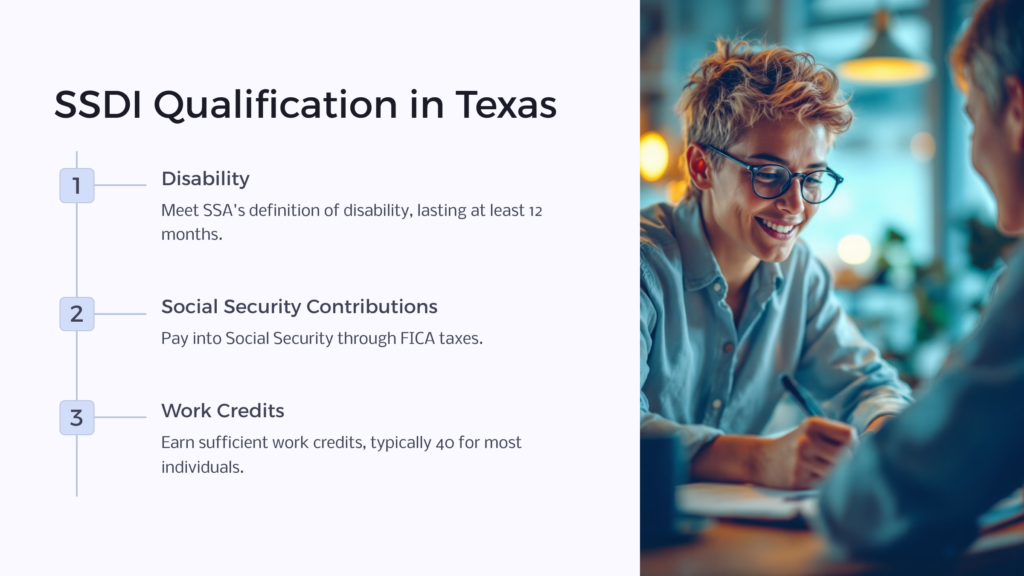
The cornerstone of any disability claim is a verifiable medical condition that prevents an individual from engaging in substantial gainful activity (SGA). The SSA defines SGA as earning a certain amount of money per month through work. As of 2024, this threshold is $1,550 for non-blind individuals. Your condition must be expected to last for at least 12 months or result in death. The SSA maintains a detailed list of impairments, known as the “Listing of Impairments” or “Blue Book,” which outlines conditions that are considered severe enough to prevent work.
If your condition is not explicitly listed, or does not meet the exact criteria of a listed impairment, you must demonstrate that your condition is as severe as a listed impairment. This involves a thorough assessment of your medical records, doctor’s opinions, and the functional limitations imposed by your condition.
Key aspects of the medical evaluation include:
- Severity and Duration of the Impairment: As mentioned, the condition must be severe and long-lasting. This is not about temporary illnesses or injuries that resolve within a few months.
- Functional Limitations: Beyond the diagnosis, the SSA assesses how your condition affects your ability to perform daily activities and work-related tasks. This includes your capacity to stand, sit, walk, lift, carry, remember, understand, and interact with others.
- Medical Evidence: Comprehensive medical documentation is paramount. This includes reports from treating physicians, specialists, hospitals, and diagnostic tests (X-rays, MRIs, blood work, etc.). The more detailed and consistent the evidence, the stronger your claim will be.
- Consultative Examinations (CEs): In some cases, the SSA may require you to undergo a consultative examination with a doctor chosen by the SSA. This examination is intended to provide an independent assessment of your condition and its impact on your ability to work.
Non-Medical Requirements: Beyond the Diagnosis
In addition to meeting the medical criteria, applicants must also satisfy certain non-medical requirements, which differ between SSDI and SSI.
Social Security Disability Insurance (SSDI)
SSDI is an insurance program funded by Social Security taxes paid by workers. To be eligible for SSDI, you must have a sufficient work history and have paid Social Security taxes for a specific number of years.
- Work Credits: Eligibility for SSDI is based on your work credits. You earn credits by working and paying Social Security taxes. The number of credits required depends on your age when you become disabled. Generally, you need 40 credits (equivalent to about 10 years of work), but younger individuals may require fewer.
- Disability Onset Date: You must be able to establish a date on which your disability began, which must be prior to your “insured status” expiring.
Supplemental Security Income (SSI)
SSI is a needs-based program funded by general tax revenues, not Social Security taxes. It provides a monthly payment to individuals with limited income and resources who are disabled, blind, or age 65 or older.
- Income and Resource Limits: To qualify for SSI, you must have very limited income and resources. The SSA has specific limits for what counts as income and resources, and these limits can change annually. Assets such as cash, bank accounts, stocks, bonds, and property (other than your primary residence and one vehicle) are considered resources.
- Age or Disability: You must be either under age 65 and disabled or blind, or age 65 or older. Children can also be eligible for SSI if they meet the disability or blindness criteria and their parents have limited income and resources.
The Application Process in Texas
Applying for disability benefits in Texas involves a multi-step process that, if not approached strategically, can be lengthy and frustrating.
Step 1: Gathering Your Information
Before you begin your application, ensure you have all the necessary information readily available. This includes:
- Personal Information: Your Social Security number, date of birth, and contact information for yourself and your spouse (if applicable).
- Medical Information: Names, addresses, and phone numbers of all doctors, hospitals, and clinics that have treated you for your condition. Dates of treatment, types of treatment received, and medications prescribed.
- Work History: Details about all jobs you have held in the past 15 years, including job titles, duties, dates of employment, and the wages you earned. If you’ve had other work, it may also be relevant.
- Education and Training: Information about your educational background and any vocational training you have received.
- Proof of U.S. Citizenship or Lawful Alien Status: If you are not a U.S. citizen.
Step 2: Filing Your Application

You can file your disability application in several ways:
- Online: The SSA offers an online application for SSDI. This is often the most convenient method for initial applications for this program.
- By Phone: You can call the SSA’s toll-free number to schedule an appointment or to have an application started over the phone.
- In Person: You can visit your local Social Security Administration office. It is advisable to call ahead to schedule an appointment to minimize wait times. In Texas, there are numerous SSA field offices located across the state.
Step 3: The Disability Determination Process
Once your application is submitted, it will be sent to the Texas Disability Determination Services (DDS) agency. DDS is responsible for evaluating the medical evidence and making the initial disability determination.
- Review of Medical Records: DDS will obtain and review all the medical records you have provided and may request additional information from your healthcare providers.
- Consultative Examinations (CEs): If the existing medical evidence is insufficient, DDS may schedule you for one or more CEs.
- Vocational and Functional Assessments: In addition to medical assessments, DDS will consider how your medical condition affects your ability to perform work-related activities and your residual functional capacity (RFC).
Step 4: Decision and Appeals
After DDS makes a determination, you will receive a written notification by mail. There are generally four possible outcomes:
- Approved: If your claim is approved, the notice will detail the benefit amount and when payments will begin. For SSI, you will also receive information about the next steps for managing your benefits.
- Denied: A denial means that the SSA determined you do not meet the eligibility criteria for disability benefits at this time. Do not be discouraged, as many initial applications are denied.
- Non-Medical Denial: This could mean you do not meet the non-medical requirements for SSDI (e.g., insufficient work credits) or SSI (e.g., too much income or resources).
- Continue Review: In some cases, your claim may be pending further review.
The Appeals Process
If your claim is denied, you have the right to appeal the decision. The appeals process has several levels:
- Reconsideration: This is the first level of appeal, where your claim is reviewed by a new disability examiner and medical consultant who did not participate in the initial decision.
- Hearing by an Administrative Law Judge (ALJ): If your reconsideration is denied, you can request a hearing before an ALJ. This is a critical stage, as it is your opportunity to present your case directly, often with the assistance of legal counsel. Many claimants are successful at this stage.
- Appeals Council Review: If the ALJ denies your claim, you can request a review by the Appeals Council.
- Federal Court Review: The final level of appeal is filing a lawsuit in federal district court.
The appeals process can be lengthy, often taking months or even years. It is highly recommended to seek legal representation, particularly for the ALJ hearing and subsequent appeals. Many disability lawyers in Texas work on a contingency fee basis, meaning they only get paid if you win your case.
Tips for a Stronger Disability Application in Texas
While the SSA’s disability criteria are national, certain strategies can improve your chances of a successful claim within Texas.
Build a Strong Relationship with Your Doctors
Your treating physicians are your most important allies. They understand your medical history, treatment, and how your condition impacts your daily life.
- Be Thorough and Honest: Clearly communicate all your symptoms, pain levels, and functional limitations to your doctors.
- Follow Treatment Plans: Adhering to prescribed medications, therapies, and recommended lifestyle changes demonstrates the seriousness of your condition and your commitment to managing it.
- Request Detailed Medical Records: Ensure your doctors’ notes accurately reflect your complaints and limitations. If they are vague, politely ask for clarification and more detailed descriptions of your condition’s impact.
- Ask for Opinions on Functional Capacity: Request that your doctors provide written opinions regarding your ability to perform work-related activities (e.g., lifting, standing, sitting, concentrating). These opinions are invaluable to the DDS.
Understand the SSA’s “Five-Step Sequential Evaluation Process”
The SSA uses a five-step process to determine disability. Understanding this process can help you present your case more effectively.
- Substantial Gainful Activity (SGA): Are you currently engaging in SGA? If so, you are not disabled.
- Severity of Impairment: Does your medically determinable impairment or combination of impairments have a severe impact on your ability to perform basic work activities?
- Listing of Impairments: Does your impairment(s) meet or medically equal one of the listed impairments in the Social Security Administration’s Blue Book? If yes, you are found disabled.
- Residual Functional Capacity (RFC): If your impairment is not severe enough to meet a listing, the SSA will assess your RFC. This is the maximum of what you can still do despite your limitations.
- Past Relevant Work and Other Work: Can you perform your past relevant work, considering your RFC? If not, can you perform any other type of work that exists in significant numbers in the national economy, considering your RFC, age, education, and past work experience? If the answer to both is no, you are found disabled.
Consider Professional Assistance
The disability application and appeals process is complex and often requires a deep understanding of SSA regulations and procedures.
- Disability Attorneys and Advocates: Hiring a qualified disability attorney or advocate can significantly increase your chances of success. They can help you gather evidence, prepare your application, represent you at hearings, and navigate the appeals process. Many are familiar with the specific practices and judges within the Texas DDS offices and Social Security Administration hearing offices.
- Local Resources: In Texas, there are various organizations and legal aid societies that may offer assistance to individuals seeking disability benefits, particularly for those with limited financial resources.
Qualifying for disability benefits in Texas is a challenging journey, but with thorough preparation, strong medical evidence, and a clear understanding of the process, you can navigate it successfully. Persistence and attention to detail are key to securing the support you need.
LifeOutOfTheBox is a participant in the Amazon Services LLC Associates Program, an affiliate advertising program designed to provide a means for sites to earn advertising fees by advertising and linking to Amazon.com. Amazon, the Amazon logo, AmazonSupply, and the AmazonSupply logo are trademarks of Amazon.com, Inc. or its affiliates. As an Amazon Associate we earn affiliate commissions from qualifying purchases.