
Moving to the Lone Star State is an exciting chapter, and for many, it involves bringing their trusty vehicle along for the ride. Registering your out-of-state vehicle in Texas is a straightforward process, but it requires careful attention to detail to ensure a smooth transition. This guide will walk you through each step, from gathering necessary documents to understanding the fees involved, empowering you to get your vehicle legally on Texas roads with confidence.
Understanding the Requirements for Texas Vehicle Registration
Before you even consider visiting a county tax assessor-collector’s office, it’s crucial to understand the fundamental requirements for registering your out-of-state vehicle in Texas. The state mandates that new residents must register their vehicles within 30 days of establishing residency. This timeframe is designed to ensure all vehicles operating on Texas roadways are properly documented and insured according to state laws. Failure to comply can result in penalties.
Establishing Residency in Texas
Proof of residency is a cornerstone of the registration process. The Texas Department of Motor Vehicles (DMV) defines residency as intending to remain in Texas indefinitely. You’ll need to provide documentation to support your claim. Acceptable forms typically include:
- Utility Bills: Recent bills (within the last 30-60 days) for services like electricity, gas, water, or internet, addressed to you at your Texas residence.
- Lease Agreement or Mortgage Statement: A current lease agreement or a mortgage statement for your Texas property.
- ** Texas Driver’s License:** Once you’ve obtained your Texas driver’s license, it serves as strong evidence of residency.
- ** Texas Voter Registration Card:** If you’ve registered to vote in Texas.
- ** Texas Employment Verification:** A letter from your employer confirming your employment and Texas address.
Required Documentation for Registration
Gathering the right documents beforehand will significantly expedite your visit to the county tax assessor-collector’s office. The essential documents you’ll need include:
- Proof of Ownership: This is typically your out-of-state vehicle title. If you have a lien on your vehicle, you’ll need a lien release letter from the lender or the title itself if the lien has been satisfied.
- Proof of Insurance: Texas requires a minimum amount of liability insurance. You’ll need to present an insurance card or policy declaration page showing your Texas coverage. Ensure your policy meets Texas minimum requirements:
- $30,000 of bodily injury liability per person
- $60,000 of bodily injury liability per accident
- $25,000 of property damage liability per accident
- ** Texas Vehicle Inspection Report:** Before you can register your vehicle, it must pass a safety inspection at a Texas licensed inspection station. The inspection verifies that your vehicle meets Texas safety standards. For vehicles manufactured within the last seven model years, a passed inspection is generally all that’s needed. For older vehicles, an emissions test may also be required in certain counties.
- Proof of Identity: A valid government-issued photo ID, such as a driver’s license or passport.
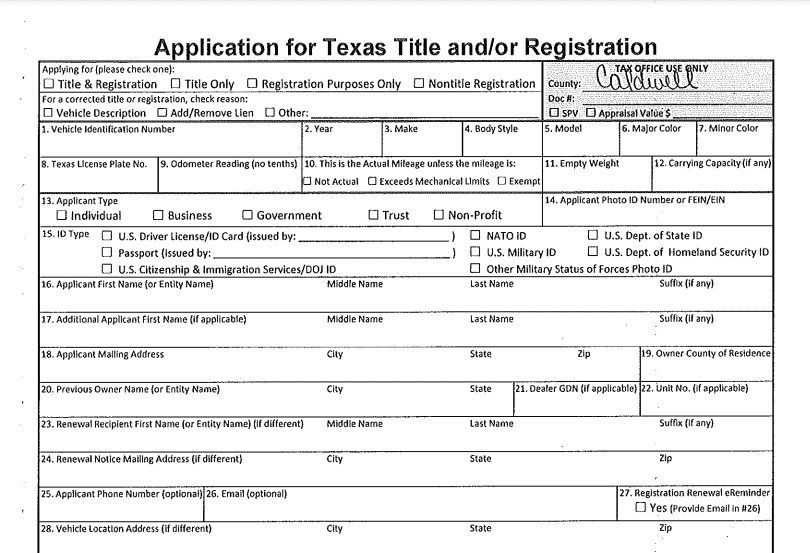
- Application for Texas Title and/or Registration (Form 130-U): This form can typically be downloaded from the Texas Department of Motor Vehicles website or obtained at the county tax assessor-collector’s office. You’ll need to complete this form accurately.
- Out-of-State Registration: Your current out-of-state vehicle registration.
The Texas Vehicle Inspection Process
The vehicle inspection is a mandatory step in registering your out-of-state vehicle in Texas. This safety check ensures your vehicle is roadworthy and meets the state’s minimum safety standards.
Where to Get Your Vehicle Inspected
You can get your vehicle inspected at any Texas licensed inspection station. These stations are identifiable by a sign with a state seal and the words “State Vehicle Inspection Station.” You can find a station near you by searching online through the Texas Department of Public Safety (DPS) website.
What the Inspection Covers
A standard Texas vehicle inspection typically covers:
- Brakes: Ensuring your braking system is functional and effective.
- Headlights, Taillights, and Turn Signals: Verifying all lights are operational and properly aimed.
- Tires: Checking for adequate tread depth and proper inflation.
- Windshield Wipers and Washers: Ensuring they function correctly.
- Horn: Testing that the horn is operational.
- Exhaust System: Checking for leaks and excessive noise.
- Mirrors: Ensuring all mirrors are present and in good condition.
- Seat Belts: Confirming seat belts are present and functional.
For vehicles that are seven model years old or newer, a safety inspection is generally sufficient. However, for vehicles older than seven model years, an emissions test may also be required, depending on the county of registration. Texas has designated emissions testing areas in certain metropolitan regions to help improve air quality. If your county requires an emissions test, you will need to pass that as well before you can proceed with registration.
Upon passing the inspection, you will receive a Vehicle Inspection Report (VIR). This report is crucial documentation you’ll need for your registration appointment.
Navigating the Registration Process at the County Tax Assessor-Collector’s Office
Once you have all your documentation in order and your vehicle has passed inspection, it’s time to visit your local county tax assessor-collector’s office. These offices are responsible for processing vehicle registrations in Texas.
What to Expect at the Office
The process at the county office is designed to be efficient. You’ll present all your gathered documents to a clerk who will review them for accuracy and completeness. They will verify your proof of ownership, insurance, inspection report, and residency.
You will then complete the necessary paperwork, including the Application for Texas Title and/or Registration (Form 130-U), if not already fully completed. The clerk will calculate the applicable fees, which include registration fees and any applicable local fees or taxes.
Understanding Fees and Taxes
The cost of registering your vehicle in Texas is determined by several factors, including the vehicle’s type, weight, and age. You’ll also be subject to Texas sales tax on the value of the vehicle if you haven’t paid sales tax in another state or if you have owned the vehicle for less than a year.
- Registration Fees: These vary based on the vehicle’s gross weight rating. A basic passenger vehicle typically has a lower registration fee than a larger truck or SUV.
- Title Fee: A fee is charged for issuing a new Texas title.
- Sales Tax: If applicable, you will pay Texas sales tax on the value of your vehicle. The rate is typically 6.25%. However, if you’ve paid sales tax in another state, you may receive credit for that amount. Keep your out-of-state sales tax receipt as proof.
- Local Fees: Some counties may impose additional local fees.
The total amount due will be clearly itemized by the clerk. Payment can typically be made via cash, check, money order, or sometimes credit/debit cards (though check with your specific county office for accepted payment methods).
Upon successful completion of the registration process and payment of all fees, you will receive your new Texas license plates and registration stickers. It’s important to affix these to your vehicle immediately as required by law.
Special Considerations for Your Out-of-State Vehicle
While the general process is consistent, there might be a few specific scenarios or additional steps to consider when registering your out-of-state vehicle in Texas.
Vehicles Purchased Out-of-State
If you recently purchased a vehicle out-of-state and are bringing it to Texas to register, you will need to ensure you have the proper documentation from the seller, including a properly assigned title. You will likely need to pay Texas sales tax on the purchase price unless you can provide proof of sales tax paid in another state at the time of purchase.
Vehicles with a Lien
If your vehicle has an outstanding loan, the process is slightly different. You will need to provide a lien release from the lienholder. If the lienholder retains the title, they will need to submit the title to the Texas Department of Motor Vehicles on your behalf. In such cases, you may need to apply for a new title in your name once the lien is satisfied.
Transferring Out-of-State Plates
Once your vehicle is registered in Texas, you will surrender your out-of-state license plates to the county tax assessor-collector’s office. This is typically done at the time of registration. It’s essential to remove your old plates from your vehicle and ensure they are properly returned according to the regulations of the state from which you are moving.

The Importance of Timeliness
As mentioned earlier, Texas law requires new residents to register their vehicles within 30 days of establishing residency. Procrastinating can lead to fines and complications. Familiarize yourself with the process, gather your documents early, and schedule your visit to the county office in a timely manner to avoid any unnecessary stress.
By following these steps and being well-prepared, you can successfully navigate the process of registering your out-of-state vehicle in Texas and confidently hit the road, enjoying all the Lone Star State has to offer.
LifeOutOfTheBox is a participant in the Amazon Services LLC Associates Program, an affiliate advertising program designed to provide a means for sites to earn advertising fees by advertising and linking to Amazon.com. Amazon, the Amazon logo, AmazonSupply, and the AmazonSupply logo are trademarks of Amazon.com, Inc. or its affiliates. As an Amazon Associate we earn affiliate commissions from qualifying purchases.