
Establishing a Limited Liability Company (LLC) in Texas is a strategic move for entrepreneurs and business owners seeking to protect their personal assets while gaining operational flexibility. The Lone Star State offers a business-friendly environment, making it an attractive location for forming an LLC. This guide will walk you through the essential steps, from initial planning to final registration, ensuring a smooth and compliant setup process.
Understanding the Benefits of an LLC in Texas
An LLC combines the pass-through taxation of a sole proprietorship or partnership with the limited liability protection of a corporation. This hybrid structure provides several key advantages for businesses operating in Texas.
Limited Liability Protection
The primary benefit of an LLC is the separation of personal assets from business debts and liabilities. This means that if your business incurs debts or faces lawsuits, your personal savings, home, and other assets are generally protected. This shield is crucial for mitigating financial risks associated with starting and running a business, especially in industries with higher potential for litigation or financial exposure.
Pass-Through Taxation
Unlike traditional corporations, LLCs typically avoid double taxation. Profits and losses are passed through directly to the owners (members) and reported on their personal income tax returns. This avoids the corporate tax rate and the separate dividend tax that shareholders of C-corporations face. While this is the default, LLCs can elect to be taxed as a corporation if it proves more advantageous.
Operational Flexibility
LLCs offer significant flexibility in management and operations. Members can choose how to manage the company, either by electing managers (similar to a corporation’s board of directors) or by managing the business directly. This flexibility extends to profit and loss distribution, which does not have to be based on ownership percentages, allowing for customized arrangements among members.
Credibility and Professionalism
Formally establishing an LLC can lend an air of legitimacy and professionalism to your business. It signals to customers, suppliers, and potential investors that you are operating a serious, registered entity, which can build trust and enhance your business’s reputation.
Essential Steps for Setting Up Your Texas LLC
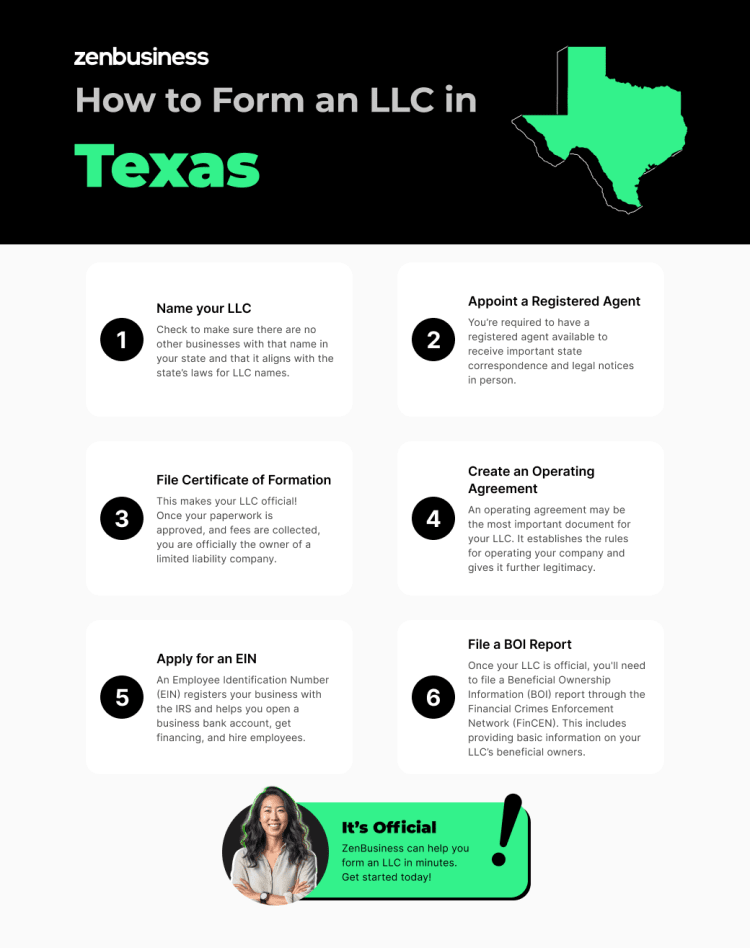
The process of forming an LLC in Texas involves several distinct stages. Careful attention to each step ensures that your LLC is properly established and compliant with state regulations.
Step 1: Choose a Business Name
Your LLC’s name must be unique and distinguishable from other registered business entities in Texas. It must also contain specific designators indicating its LLC status, such as “Limited Liability Company,” “LLC,” or “L.L.C.”
Name Availability Search
Before finalizing your business name, it’s imperative to conduct a thorough name availability search. The Texas Secretary of State provides an online database that allows you to check if your desired name is already in use. This is a crucial step to avoid potential conflicts and delays in the registration process. You can access this service through the Texas Secretary of State’s website.
Reserve Your Business Name
If your desired name is available, you have the option to reserve it for a period of 120 days by filing a Name Reservation Application with the Texas Secretary of State. This is particularly useful if you are still in the planning stages and want to secure a name before officially filing your formation documents.
Step 2: Appoint a Registered Agent
Every LLC in Texas must designate a registered agent. This individual or company is responsible for receiving official legal and tax documents on behalf of the LLC. The registered agent must have a physical street address in Texas (not a P.O. Box) and be available during normal business hours to accept service of process.
Who Can Be a Registered Agent?
The registered agent can be:
- An individual resident of Texas.
- A business entity that has a physical address in Texas and is authorized to do business in the state.
- The LLC itself, provided it meets the physical address requirement.
Many businesses opt for a commercial registered agent service, which provides a reliable and professional solution for managing these important legal notices.
Step 3: File the Certificate of Formation
The cornerstone of creating your LLC in Texas is filing the Certificate of Formation with the Texas Secretary of State. This document officially creates your Limited Liability Company.
Key Information Required for the Certificate of Formation:
- Name of the LLC: The exact name you have chosen and verified for availability.
- Registered Agent and Office: The name and physical address of your appointed registered agent in Texas.
- Management Structure: You will need to state whether the LLC will be member-managed or manager-managed.
- Organizer’s Information: The name and address of the person filing the Certificate of Formation.
- Purpose Statement (Optional but Recommended): While not strictly required by Texas law for all LLCs, including a brief statement of the business’s purpose can be beneficial for clarity and potential future filings.
The filing fee for the Certificate of Formation is subject to change, so it’s advisable to check the Texas Secretary of State’s website for the most current fee schedule. Filings can typically be submitted online, by mail, or in person.
Step 4: Create an LLC Operating Agreement

While not a mandatory state filing requirement for LLCs in Texas, an Operating Agreement is a critical internal document. It outlines the ownership structure, operating procedures, and management responsibilities of your LLC.
Components of an Operating Agreement:
- Member Contributions: Details the initial capital contributions of each member.
- Profit and Loss Distribution: Specifies how profits and losses will be allocated among members.
- Management Duties: Clearly defines the roles and responsibilities of managing members or appointed managers.
- Meeting Procedures: Outlines how meetings will be conducted, if applicable.
- Membership Changes: Addresses procedures for admitting new members or the departure of existing ones.
- Dissolution Procedures: Details how the LLC will be dissolved if necessary.
A well-drafted Operating Agreement is invaluable for preventing disputes among members, clarifying expectations, and ensuring the smooth operation of your LLC. It also reinforces the separation between personal and business affairs, further strengthening your limited liability protection.
Step 5: Obtain an EIN (Employer Identification Number)
If your LLC plans to hire employees, operate as a corporation for tax purposes, or file certain tax returns, you will need an Employer Identification Number (EIN) from the Internal Revenue Service (IRS).
Applying for an EIN:
- Free Service: Obtaining an EIN is a free service provided by the IRS.
- Online Application: The easiest and fastest way to apply is through the IRS website. You will need to complete an online application.
- Required Information: You will need to provide information about your LLC, including its name, address, and the names of responsible parties.
An EIN serves as a Social Security number for your business and is essential for opening business bank accounts, filing taxes, and conducting various other business transactions.
Ongoing Compliance for Your Texas LLC
Forming your LLC is just the first step. To maintain its legal standing and operational benefits, ongoing compliance with Texas state regulations is essential.
Annual Reports and Franchise Tax
Unlike many states, Texas does not require LLCs to file annual reports. However, most LLCs are subject to the Texas Franchise Tax. This is an annual tax imposed on businesses for the privilege of doing business in Texas.
Franchise Tax Thresholds and Reporting:
- Filing Threshold: Businesses with gross receipts over a certain threshold (which changes annually) are required to file a franchise tax report. Even if no tax is due, a report may still be required.
- No Tax Due Report: If your LLC’s revenue falls below the threshold for owing franchise tax, you are still typically required to file a “No Tax Due” report.
- Filing Deadline: The franchise tax reports are due annually on May 15th.
- Responsible Party: The Texas Comptroller of Public Accounts administers the franchise tax.
It is crucial to stay informed about the current franchise tax requirements and filing deadlines to avoid penalties and interest.
Business Licenses and Permits
Depending on your industry and the specific services or products your LLC offers, you may need to obtain various federal, state, and local business licenses and permits.
Common Licenses and Permits:
- State Licenses: Many professions and industries require specific state-level licenses. For example, a restaurant may need a food service permit, while a construction company may need contractor licenses.
- Local Licenses: Cities and counties may have their own business licensing requirements.
- Federal Licenses: Certain industries, such as those involving firearms, alcohol, or aviation, require federal licenses.
Researching and securing all necessary licenses and permits before commencing operations is vital for legal compliance and avoiding business disruptions.
Maintaining Business Records
Keeping accurate and up-to-date business records is fundamental for financial management, tax purposes, and demonstrating the separateness of your LLC from your personal affairs.
Key Records to Maintain:
- Financial Records: Including income statements, balance sheets, cash flow statements, bank statements, receipts, and invoices.
- Legal Documents: Such as your Certificate of Formation, Operating Agreement, and any amendments.
- Tax Returns: Copies of all federal, state, and local tax filings.
- Meeting Minutes (if applicable): If your LLC has a complex management structure, keeping records of member or manager meetings can be beneficial.
Proper record-keeping is not only a matter of good business practice but also essential for supporting your limited liability protection in the event of any legal challenges.
Considering Professional Assistance
While setting up an LLC in Texas can be a straightforward process, seeking professional guidance can ensure accuracy and efficiency, especially for those unfamiliar with legal and business formation procedures.

When to Seek Professional Help:
- Complex Business Structures: If your LLC involves multiple members with intricate ownership or distribution arrangements.
- Uncertainty About Legal Requirements: If you are unsure about specific licensing, tax obligations, or compliance needs for your industry.
- Desire for Efficiency: To expedite the process and avoid potential errors.
You might consider consulting with a business attorney, a certified public accountant (CPA), or a reputable business formation service. These professionals can provide invaluable expertise, helping you navigate the complexities of LLC formation and ongoing compliance in Texas, ensuring your business is set up for success from the outset.
LifeOutOfTheBox is a participant in the Amazon Services LLC Associates Program, an affiliate advertising program designed to provide a means for sites to earn advertising fees by advertising and linking to Amazon.com. Amazon, the Amazon logo, AmazonSupply, and the AmazonSupply logo are trademarks of Amazon.com, Inc. or its affiliates. As an Amazon Associate we earn affiliate commissions from qualifying purchases.