
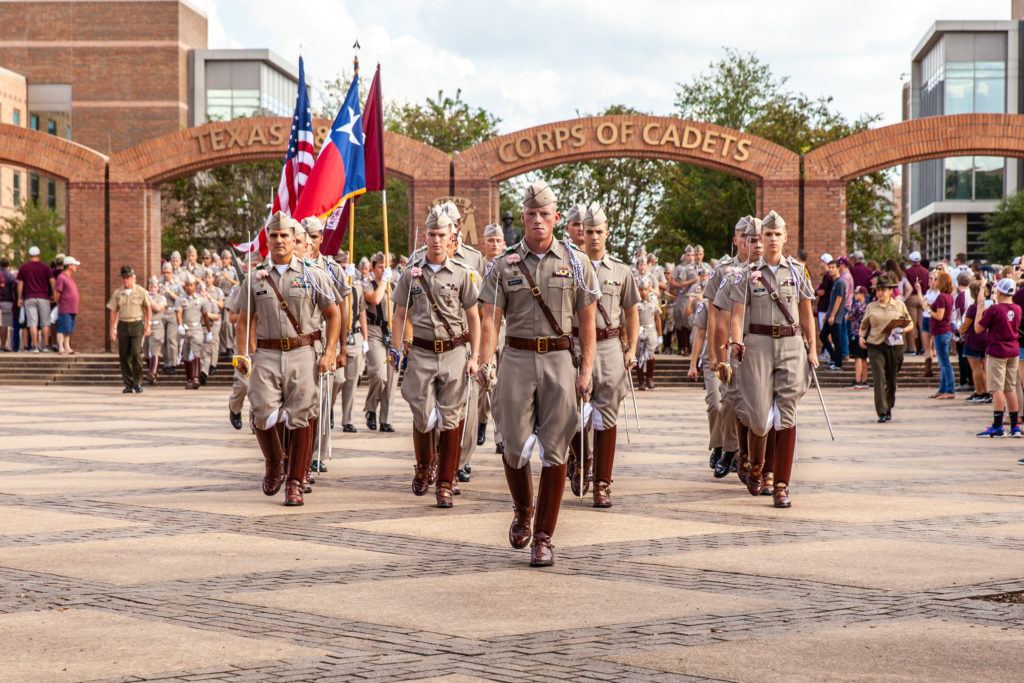
The question of whether Texas A&M University is a military school is a common one, often arising from its distinctive traditions, the prominent presence of its Corps of Cadets, and its deep-rooted history. While Texas A&M is indeed a public land-grant research university, its identity is profoundly shaped by its military heritage and the unique educational experience it offers through its Corps of Cadets. To understand Texas A&M’s classification, it’s essential to delve into its historical context, the structure and function of the Corps, and the broader implications for its students and alumni.
Historical Roots and Military Tradition
Founded in 1876 as the Agricultural and Mechanical College of Texas, the university was established under the provisions of the Morrill Act of 1862. This federal legislation aimed to create colleges that would provide instruction in “agriculture, mechanical arts, and other useful branches of learning” and prepare students for the national defense. From its inception, military tactics and discipline were integral components of the curriculum. The early days of land-grant institutions like Texas A&M were heavily influenced by the need for a trained citizenry capable of military service, especially in the post-Civil War era.
The university’s charter mandated that all male students receive military instruction. This requirement cemented a military ethos into the very fabric of the institution. Over the decades, while the mandatory military training evolved and eventually became optional for most students, the Corps of Cadets remained a central and influential element of the university’s identity. This historical commitment to military training is why many perceive Texas A&M as a military school, even though it operates as a comprehensive civilian university with diverse academic programs.
The traditions that Texas A&M is famous for—such as its reverence for the American flag, its emphasis on loyalty and selfless service, and the solemn respect shown to veterans and active-duty military personnel—are all deeply intertwined with this military legacy. These traditions are not mere relics of the past; they are living expressions of the values instilled by the Corps of Cadets and embraced by the broader Aggie community.
The Morrill Act and Land-Grant Institutions
The Morrill Act, signed into law by President Abraham Lincoln, was a landmark piece of legislation that revolutionized higher education in the United States. It provided federal land grants to states, which could then sell this land to fund the establishment and operation of colleges. The primary goal was to make education more accessible and relevant to the common person, focusing on practical and vocational subjects that would contribute to the nation’s economic and military strength. Texas A&M was one of the first beneficiaries of this act, and its early development was directly shaped by its directives, including the requirement for military training.
Evolution of Military Training Requirements
Initially, military training was compulsory for all male students at Texas A&M. This meant that every student, regardless of their chosen field of study, was part of the Corps of Cadets and participated in drills, physical training, and military science courses. However, as the university grew and diversified its academic offerings, and as societal views on military service and higher education shifted, the mandatory nature of military training began to change.
In the latter half of the 20th century, Texas A&M transitioned to a model where military training became part of specific ROTC programs, allowing students to pursue military careers if they chose. However, a significant portion of the student body, particularly within the Corps of Cadets, continues to undergo rigorous military training, often with the intention of commissioning into the armed forces upon graduation. This continued emphasis on producing officers for the military distinguishes Texas A&M from many other large public universities.
The Corps of Cadets: A Defining Feature
The Corps of Cadets is arguably the most visible and distinctive element that leads to the perception of Texas A&M as a military school. It is one of the largest uniformed student bodies in the United States, second only to the five federal service academies. The Corps comprises approximately 2,500 students who live, train, and operate together under a strict code of discipline and leadership.

Structure and Organization
The Corps is organized into four different branches of the U.S. Armed Forces: the Army, Air Force, Navy, and Marine Corps. Cadets in the Corps have the option to enroll in ROTC programs for their chosen branch and pursue a commission. In addition to ROTC cadets, there are also members of the Texas A&M Cadet Corps who do not participate in ROTC and are not pursuing military commissions. These cadets focus on leadership development and maintaining the Corps’ traditions.
Each of the four ROTC branches is represented by a respective “Outfit.” These outfits are further divided into units and then into smaller groups, creating a hierarchical structure that mirrors military organizations. The Corps is overseen by the commandant of the Corps of Cadets, a retired general officer who provides leadership and guidance.
Daily Life and Training
Life for a cadet in the Corps of Cadets is demanding and structured. Cadets rise early for physical training, attend classes, participate in military drills, and adhere to a strict dress code. They are expected to maintain a high level of discipline, teamwork, and personal responsibility. This immersive experience instills values that extend far beyond the military, shaping their character and leadership capabilities.
The training within the Corps focuses on developing leadership potential, decision-making skills, and a strong sense of duty and service. Cadets are taught to lead by example, to work effectively in teams, and to uphold the highest ethical standards. This rigorous training prepares them not only for military service but also for success in various civilian careers. The experience is designed to foster resilience, self-reliance, and a profound understanding of commitment.
Is Texas A&M a Military School? The Nuance
The most accurate answer to the question “Is Texas A&M a military school?” is nuanced. It is not a federal service academy like West Point or the Naval Academy, where attendance is exclusively for those pursuing a military career and the institution is solely focused on military training. Instead, Texas A&M is a comprehensive public university with a strong and enduring military tradition, embodied by its Corps of Cadets.
Civilian University with Military Components
Texas A&M offers a vast array of academic programs across numerous disciplines, attracting students who pursue careers in engineering, business, agriculture, arts and sciences, medicine, and many other fields, with no intention of joining the military. The majority of the student body is civilian and does not participate in the Corps of Cadets. This broad academic scope and diverse student population firmly place Texas A&M within the category of a large, comprehensive research university.
However, the presence and prominence of the Corps of Cadets mean that the military influence is undeniable and a significant part of the university’s character. For students who choose to join the Corps, their experience is deeply intertwined with military discipline, training, and tradition. This dual nature—a leading civilian institution with a formidable military component—is what makes Texas A&M unique.

The Impact on Alumni and Culture
The impact of the Corps of Cadets and the university’s military heritage extends to its alumni network and the broader Aggie culture. Texas A&M graduates are known for their strong sense of loyalty, camaraderie, and commitment to service, values often cultivated during their time in the Corps or through exposure to its traditions. The university consistently ranks among the top institutions for commissioning officers into the U.S. Armed Forces, contributing significantly to national defense.
The question, therefore, is not a simple yes or no. Texas A&M is a civilian university that operates a large and influential military-style organization within it. It is a place where academic rigor and military discipline coexist, creating an educational environment unlike any other. It is a testament to its history that the military aspect continues to be so central to its identity, shaping the experiences of many of its students and defining its place in American higher education. The spirit of service, leadership, and honor fostered by its military traditions makes Texas A&M a special institution, distinct and proud in its unique heritage.
LifeOutOfTheBox is a participant in the Amazon Services LLC Associates Program, an affiliate advertising program designed to provide a means for sites to earn advertising fees by advertising and linking to Amazon.com. Amazon, the Amazon logo, AmazonSupply, and the AmazonSupply logo are trademarks of Amazon.com, Inc. or its affiliates. As an Amazon Associate we earn affiliate commissions from qualifying purchases.