
The question of whether Texas is a “right to work” state is a crucial one for businesses considering relocation or expansion, and for individuals seeking employment within the Lone Star State. This designation significantly impacts labor relations, unionization efforts, and the overall business climate. Understanding this legal framework is paramount for anyone involved in the economic landscape of Texas.
Understanding “Right to Work” Legislation
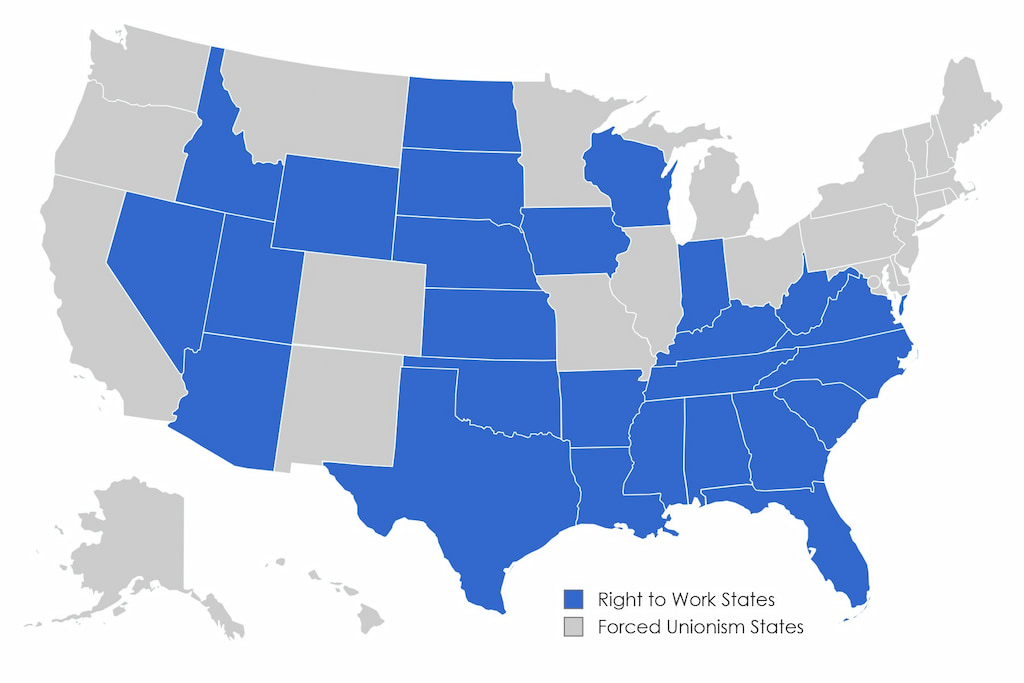
“Right to work” is a term used to describe state laws that prohibit agreements requiring employees to join a labor union, pay union dues, or pay fees to a union as a condition of employment. In essence, these laws protect an individual’s right to work in a job without being compelled to associate with or financially support a union.
The Core Principles
At its heart, “right to work” legislation is founded on the principle of individual freedom of association. Proponents argue that forcing an employee to join or pay dues to a union infringes upon their personal liberty and right to refrain from association. They believe that employees should have the autonomy to decide whether or not to support a union, and that this choice should not impact their ability to earn a living.
Historical Context
The movement for “right to work” laws gained significant momentum in the United States following the passage of the Taft-Hartley Act in 1947. This federal legislation allowed states to enact their own laws that prohibited union security agreements, which are clauses in collective bargaining agreements that require employees to join a union or pay fees. Since then, a majority of U.S. states have adopted some form of “right to work” legislation.
The Impact on Collective Bargaining
“Right to work” laws fundamentally alter the dynamics of collective bargaining. Without the ability to require union membership or dues, unions may face challenges in maintaining membership numbers and financial resources. This can impact their bargaining power during contract negotiations and their ability to represent their members effectively. Employers, on the other hand, may find it easier to operate without the perceived constraints of union-driven labor practices.
Texas’s Stance: A Definitive “Yes”
Yes, Texas is unequivocally a “right to work” state. This status has been enshrined in the state’s laws for decades, shaping its approach to labor and employment. The Texas Constitution itself declares that all citizens have the right to work for any employer, regardless of membership or non-membership in any labor organization.
Constitutional and Statutory Basis
Article I, Section 24 of the Texas Constitution states: “No citizen of this State shall be deprived of life, liberty, property, privileges, or immunities, or of any other right, for any debts or liabilities, hereafter contracted, nor for any debt or obligation of another, nor shall any law be enacted impairing the obligation of contracts; and no law shall ever be enacted or enforced that abridges or impairs the right of any person to choose their employment, or to enter into any profession or calling, or to do so on terms mutually agreed upon by the employer and employee, free from any coercion or duress.” This foundational principle is further solidified by Texas Labor Code Chapter 205, which explicitly prohibits agreements that require union membership as a condition of employment.
Implications for Employers
For businesses operating in Texas, the “right to work” status offers a distinct advantage in terms of labor flexibility. Employers are not required to negotiate union security clauses into their contracts. This can simplify the negotiation process and reduce the administrative burden associated with union dues collection and remittance. Furthermore, it can contribute to a perception of a more business-friendly environment, potentially attracting investment and new industries to the state. Companies like Southwest Airlines and numerous manufacturing firms have long operated successfully within this framework.
Implications for Employees
From an employee’s perspective, Texas‘s “right to work” law means that joining a union or paying union dues is always voluntary. An employee cannot be fired or disciplined for refusing to join a union or pay fees, even if the workplace is unionized. This provides a significant degree of personal autonomy. However, it also means that if a union successfully negotiates a contract that benefits all employees in a bargaining unit, non-members may still receive those benefits without contributing financially to the union that secured them. This phenomenon is often referred to as the “free rider” problem and can present challenges for union organizing and sustainability.
Economic Advantages and Criticisms
The “right to work” status in Texas is often cited as a key factor in the state’s strong economic growth and its reputation as a business-friendly destination.
Arguments for Economic Benefits
Supporters of “right to work” laws contend that they stimulate economic development by:
- Reducing Business Costs: Lower union dues and the absence of mandatory union membership can translate into lower labor-related costs for businesses.
- Increasing Flexibility: Employers have greater flexibility in hiring and managing their workforce without the constraints of union security agreements.
- Attracting Investment: The perception of a less unionized and more flexible labor market can be a significant draw for companies looking to relocate or expand. Austin and Houston, two of Texas‘s major economic hubs, have benefited from this perception.
- Promoting Individual Freedom: The emphasis on individual choice in employment matters resonates with a segment of the population and business community.
Counterarguments and Criticisms
Conversely, critics of “right to work” laws argue that they can lead to:
- Lower Wages and Benefits: Studies have indicated that workers in “right to work” states, on average, earn lower wages and receive fewer benefits compared to their counterparts in states without such laws. This is often attributed to weakened union bargaining power.
- Reduced Worker Protections: The diminished role of unions can sometimes mean less robust oversight and advocacy for worker safety and rights.
- Stagnation in Workforce Development: Critics suggest that the lack of strong union presence can hinder investments in training and skill development that unions often champion.
- Increased Income Inequality: The disparity in wages and benefits can contribute to a widening gap between high- and low-income earners.
Navigating Employment in Texas
For individuals seeking employment in Texas, understanding the “right to work” environment is essential. It means that while unions exist and operate within the state, their influence on an individual’s ability to secure and maintain employment is distinct from non-“right to work” states.
Your Rights as an Employee
As an employee in Texas, you have the right to:
- Work for any employer, regardless of your union membership status.
- Choose whether or not to join a union.
- Refuse to pay union dues or fees as a condition of employment.
Understanding Union Contracts
If a union represents workers at your place of employment in Texas, you will be informed about whether you are eligible to join the union or if you are covered by a collective bargaining agreement. Even if you choose not to join the union, you may still be covered by the terms and conditions of the union contract, including wages, benefits, and grievance procedures, depending on the specifics of the contract and any applicable agency fee provisions. However, you will not be required to become a full member.
Seeking Employment
When considering employment opportunities across Texas, whether in bustling cities like Dallas or in more industrial centers like San Antonio, prospective employees should be aware that the “right to work” designation is a standard characteristic of the state’s labor landscape. This aspect influences the dynamics of employment relationships and the role of organized labor.

Conclusion: A Defining Feature of the Texas Economy
In conclusion, Texas is definitively a “right to work” state. This legal framework is a cornerstone of its labor policies and significantly shapes its economic identity. While proponents herald it as a driver of business growth and individual liberty, critics point to potential impacts on wages and worker protections. For employers, it represents a flexible labor environment; for employees, it ensures the freedom to choose association. Understanding this fundamental aspect of Texas law is vital for anyone navigating the state’s vibrant and dynamic employment market.
LifeOutOfTheBox is a participant in the Amazon Services LLC Associates Program, an affiliate advertising program designed to provide a means for sites to earn advertising fees by advertising and linking to Amazon.com. Amazon, the Amazon logo, AmazonSupply, and the AmazonSupply logo are trademarks of Amazon.com, Inc. or its affiliates. As an Amazon Associate we earn affiliate commissions from qualifying purchases.