
Navigating the world of employment as a young individual in Texas involves understanding a specific set of regulations designed to protect minors. While the allure of earning money and gaining experience is strong, it’s crucial for both aspiring young workers and their employers to be aware of the legal framework. This article delves into the age requirements and restrictions for working in the Lone Star State, ensuring a safe and compliant entry into the workforce.
Minimum Age and General Requirements
In Texas, the general minimum age to begin working is 14 years old. However, this age is not a blanket permission to take on any job. Federal labor laws, specifically the Fair Labor Standards Act (FLSA), often set the baseline, and Texas adheres to these standards while sometimes imposing additional, more stringent rules.

14 and 15-Year-Olds: Entry-Level Opportunities and Restrictions
For individuals aged 14 and 15, the opportunities to work are generally limited to non-hazardous occupations. These roles are designed to be safe and not interfere with their education.
Permitted Occupations
Common jobs available to 14 and 15-year-olds often include:
- Retail: Stocking shelves, bagging groceries, customer service in non-supervisory roles at establishments like H-E-B or Walmart.
- Food Service: Working in fast-food restaurants in non-kitchen roles, such as cashier or dining room attendant. Certain kitchen duties may be permissible if they are not deemed hazardous.
- Office Work: Clerical duties, filing, and data entry.
- Recreational Facilities: Working at amusement parks or pools, provided the duties are not hazardous.
- Lawn Care and Landscaping: Basic tasks that do not involve operating heavy machinery.
Hour Restrictions for 14 and 15-Year-Olds
To ensure that work does not negatively impact their schooling and well-being, strict limits are placed on the number of hours 14 and 15-year-olds can work. These restrictions vary depending on whether school is in session:
- During the School Year:
- No more than 3 hours on a school day.
- No more than 18 hours in a school week.
- Work is generally prohibited during school hours.
- During School Breaks (Summer Vacation, School Holidays):
- No more than 8 hours on any day.
- No more than 40 hours in any week.
- Work is permitted between 7 a.m. and 7 p.m. (and until 9 p.m. from June 1 through Labor Day).
Prohibited Occupations for 14 and 15-Year-Olds
The FLSA and Texas law clearly define occupations that are considered hazardous and are therefore off-limits to minors under 16. These include, but are not limited to:
- Operating most power-driven machinery.
- Working in mining, logging, or meatpacking operations.
- Driving a motor vehicle or being an outside helper on a vehicle.
- Working on ladders or scaffolds.
- Handling toxic substances or explosives.
16 and 17-Year-Olds: Expanded Opportunities and Continued Protections
As individuals turn 16, the restrictions on working hours loosen, and they gain access to a broader range of occupations. However, they are still subject to certain safety regulations, particularly concerning hazardous jobs.
Expanded Permitted Occupations
While the list of non-hazardous jobs remains available, 16 and 17-year-olds can often perform roles that might have been restricted for younger teens. This can include:
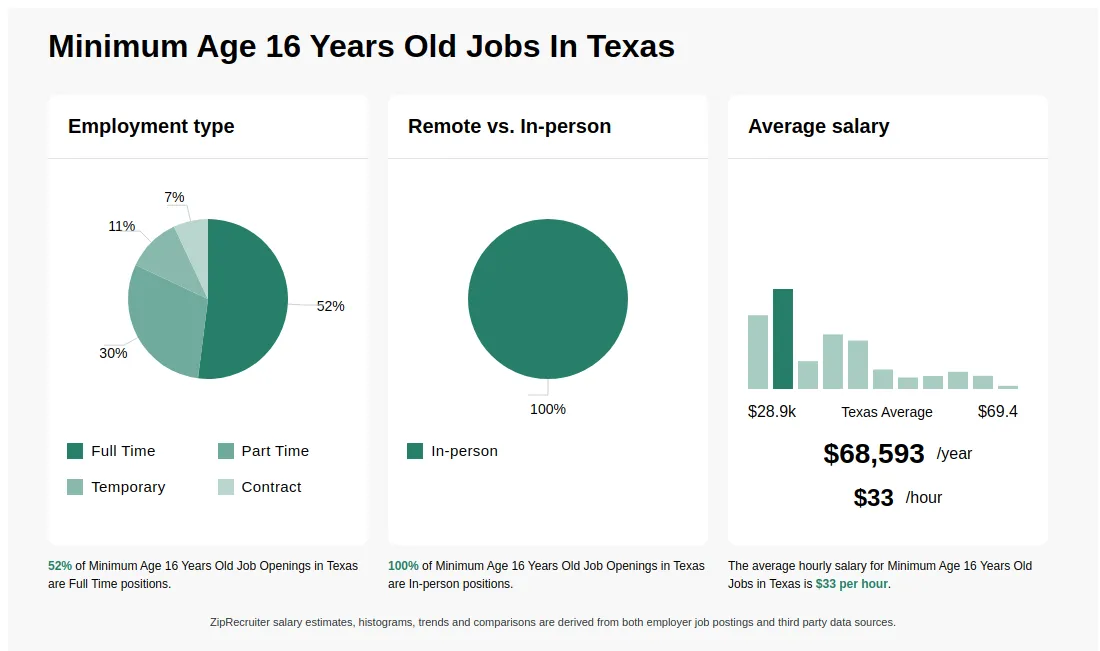
- More involved roles in retail and food service, potentially including some supervisory duties or more complex customer interactions.
- Certain roles in light manufacturing or assembly, provided the machinery is deemed safe.
- Working in environments like movie theaters or arcades.
Hour Restrictions for 16 and 17-Year-Olds
The primary difference for 16 and 17-year-olds is the removal of the strict hour limits imposed during the school year for 14 and 15-year-olds.
- During the School Year and School Breaks:
- There are no federal or state hour limits on the number of hours 16 and 17-year-olds can work per day or per week.
- However, state child labor laws often still require that work does not interfere with schooling. Some local school districts or individual employers may have their own policies regarding work hours for students.
- The 7 a.m. to 7 p.m. (or 9 p.m. in summer) restriction also generally does not apply to 16 and 17-year-olds, although “late-night” work might still be discouraged or regulated if it encroaches on school time.
Hazardous Occupations for 16 and 17-Year-Olds
While 16 and 17-year-olds have more freedom, they are still prohibited from performing a significant list of hazardous jobs. The FLSA outlines 17 specific hazardous occupation orders that minors under 18 cannot perform. These are critical for safety and include many of the same prohibitions as for younger teens, such as operating dangerous machinery, working in mining, and driving in connection with certain types of employment.
Age 18 and Above: Full Employment Rights
Once an individual reaches the age of 18, they are considered an adult under the law and are no longer subject to child labor regulations in Texas. This means:
- No Hour Restrictions: They can work any number of hours per day or week, regardless of school attendance.
- Access to All Occupations: They can legally perform any job, including those previously classified as hazardous for minors.
- Full Employment Rights: They are entitled to the same minimum wage, overtime pay, and other labor protections as any adult worker.
Essential Documentation and Employer Responsibilities
Regardless of age, any individual seeking employment in Texas will need to complete appropriate hiring paperwork, most notably the federal Form I-9, Employment Eligibility Verification. For minors, employers also have specific responsibilities to ensure compliance with child labor laws.
Work Permits and Age Certificates
While Texas does not require a state-issued work permit for minors under 18, employers are responsible for verifying the age of their young employees. They may request a birth certificate, school records, or a driver’s license as proof of age.
Employer Obligations
Employers hiring minors must:
- Know and Adhere to Labor Laws: Understand the specific hour and occupation restrictions for different age groups.
- Maintain Records: Keep accurate records of employee ages and hours worked.
- Provide a Safe Workplace: Ensure that any tasks assigned to minors are safe and do not violate hazardous occupation rules.
- Avoid Interference with School: For 14 and 15-year-olds, ensure work does not disrupt their education.

The Importance of Education and Experience
While understanding the legal framework for working is paramount, it’s also worth noting the broader context. For young people, work experience can be incredibly valuable, offering opportunities to develop life skills, responsibility, and an understanding of the professional world. However, this should always be balanced with the primary importance of education. The regulations in Texas are designed precisely to strike this balance, ensuring that youth can gain valuable experience without compromising their academic success or safety.
Aspiring young workers and their families should consult official resources from the Texas Workforce Commission or the U.S. Department of Labor for the most current and detailed information.
LifeOutOfTheBox is a participant in the Amazon Services LLC Associates Program, an affiliate advertising program designed to provide a means for sites to earn advertising fees by advertising and linking to Amazon.com. Amazon, the Amazon logo, AmazonSupply, and the AmazonSupply logo are trademarks of Amazon.com, Inc. or its affiliates. As an Amazon Associate we earn affiliate commissions from qualifying purchases.