
The year 1959 marked a pivotal moment in the history of the United States, as two vastly different, non-contiguous territories, Alaska and Hawaii, officially joined the Union. Their admission as the 49th and 50th states, respectively, not only reshaped the map of the nation but also signified the culmination of decades of unique political, economic, and social journeys. From the icy wilderness of the far north to the volcanic islands of the Pacific, the paths to statehood for these two iconic destinations are as distinct as their landscapes, each offering a fascinating glimpse into American expansion and the evolving concept of its diverse identity. For those planning a journey to these incredible locations, understanding their historical context deepens the appreciation for their vibrant cultures, unique landmarks, and unparalleled natural beauty, which continue to draw millions of tourists each year.
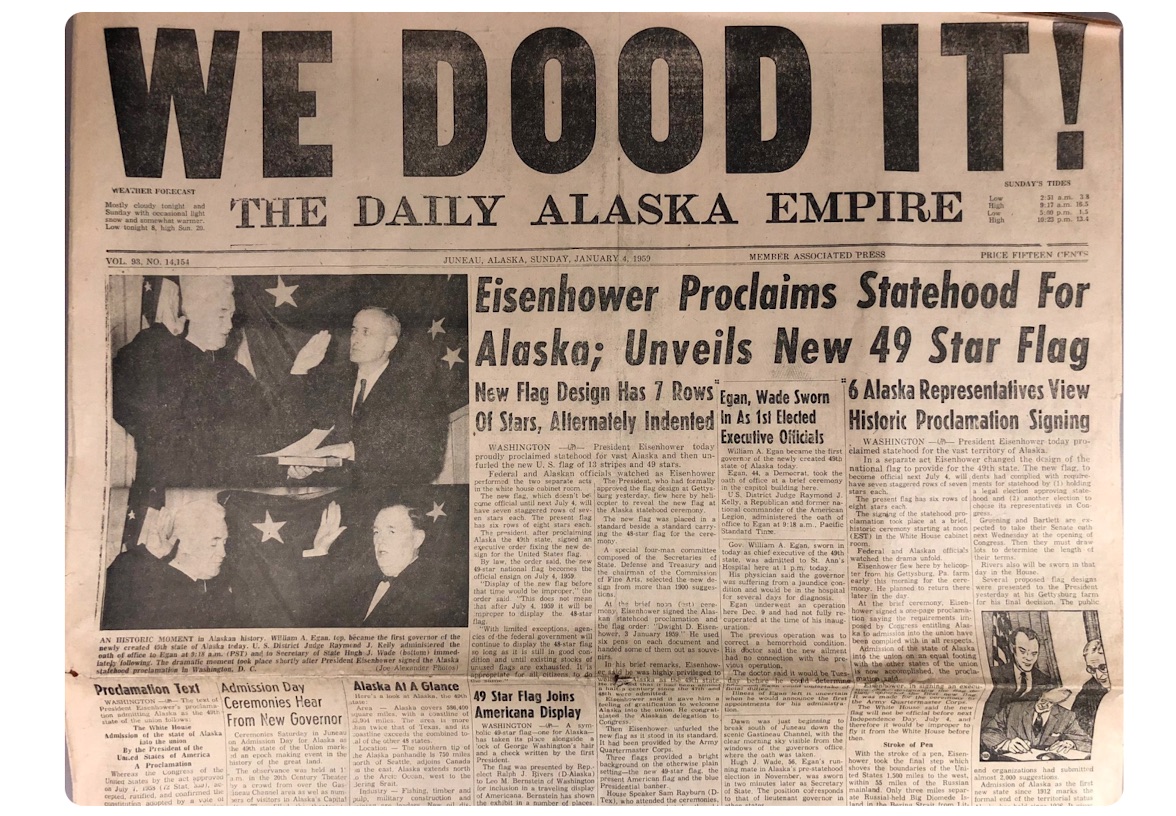
Alaska’s Journey to Statehood: The Last Frontier
The story of Alaska’s statehood is one of vast distances, incredible natural resources, and a strategic geopolitical importance that ultimately proved undeniable. Known as the “Last Frontier,” Alaska’s integration into the United States was a process that spanned nearly a century, from its purchase to its final admission.
A Land of Vastness and Resources
Before it became part of the United States, Alaska was known as Russian America. Russian explorers first arrived in the 18th century, establishing fur trading posts and exerting influence over the indigenous populations. However, the vastness of the territory, coupled with the logistical challenges of governing such a distant outpost, eventually led Russia to consider selling it. In 1867, Secretary of State William Seward negotiated the Alaska Purchase for $7.2 million, an act initially ridiculed as “Seward’s Folly” or “Seward’s Icebox.” Many in the contiguous United States questioned the value of such a remote, seemingly barren land.
However, the value of Alaska soon became apparent. The late 19th and early 20th centuries saw several gold rushes, most notably the Klondike Gold Rush, which brought an influx of prospectors and adventurers, rapidly increasing the population and drawing national attention to the territory’s rich mineral resources. Beyond gold, Alaska proved to be abundant in fishing grounds, timber, and, eventually, vast oil reserves. Despite its immense size – over twice the size of Texas – and incredible natural wealth, Alaska’s sparse population and distance from the rest of the United States meant it remained a district for years before becoming a territory in 1912. The challenges of developing infrastructure, establishing stable governance, and providing services across such a rugged and often unforgiving landscape were immense.
The Push for Statehood
The drive for Alaska’s statehood gained significant momentum after World War II. The war highlighted Alaska’s critical strategic importance, especially its proximity to the Soviet Union during the burgeoning Cold War. Military installations were built, and the territory became a vital defense outpost, leading to further population growth and federal investment. Alaskans argued that territorial status limited their self-governance, stifled economic development, and deprived them of full representation in Congress. They believed that statehood would allow them greater control over their vast natural resources and a stronger voice in national affairs.
Key figures like E.L. Bartlett, Alaska’s territorial delegate, tirelessly lobbied Congress. The “Tennessee Plan,” a strategy where a territory would draft a state constitution and elect a full slate of federal officials before congressional approval, was adopted by Alaska in 1955. This bold move demonstrated the territory’s readiness and determination for statehood. After considerable debate and overcoming opposition from those concerned about Alaska’s small population and perceived economic instability, President Dwight D. Eisenhower signed the Alaska Statehood Act on July 7, 1958. On January 3, 1959, Alaska officially became the 49th state of the United States.
Experiencing the 49th State Today
Today, Alaska remains a dream destination for travelers seeking adventure, pristine wilderness, and unique cultural experiences. Its major cities, such as Anchorage, Fairbanks, and the state capital Juneau, serve as gateways to incredible natural wonders. Anchorage, the largest city, offers a blend of urban amenities and quick access to wilderness, with attractions like the Alaska Native Heritage Center and the scenic Coastal Trail. Fairbanks, known as the “Golden Heart City,” is famous for its northern lights viewing opportunities and proximity to the Arctic Circle. Juneau, only accessible by air or sea, is nestled amidst mountains and glaciers, including the stunning Mendenhall Glacier.
For those interested in landmarks and nature, Denali National Park and Preserve, home to Mount Denali, North America’s highest peak, offers unparalleled wildlife viewing and hiking opportunities. A ride on the Alaska Railroad provides breathtaking views of the state’s interior. Tourism is a vital part of Alaska’s economy, with cruise ships navigating the scenic Inside Passage and remote lodges offering immersive wilderness accommodation. Whether it’s a luxury travel experience at a remote wilderness resort or a budget travel adventure camping under the stars, Alaska caters to diverse lifestyles. Visitors can engage in activities such as fishing, kayaking, dog sledding, and flightseeing, truly embracing the spirit of the Last Frontier. The state’s rich local culture, particularly its vibrant Native Alaskan traditions, offers deep insights into its long history.

Hawaii’s Path to the Union: Paradise Found
Thousands of miles southwest across the Pacific Ocean lies Hawaii, a tropical archipelago with a completely different history and journey to statehood. Its story involves a rich indigenous monarchy, foreign influence, and eventually, its embrace as the nation’s 50th state.
From Kingdom to Territory
Unlike Alaska’s history of foreign purchase, Hawaii was a sovereign nation for centuries. The Hawaiian Islands were unified under a single kingdom by King Kamehameha I in 1810, establishing a powerful monarchy that would rule for nearly a century. Throughout the 19th century, American missionaries and businessmen increasingly settled in Hawaii, establishing lucrative sugar and pineapple plantations and exerting growing economic and political influence.
This foreign influence ultimately led to the downfall of the monarchy. In 1893, American and European residents, with the support of the U.S. Minister to Hawaii and a contingent of U.S. Marines, orchestrated the overthrow of Queen Liliʻuokalani, the last reigning monarch. This controversial act led to the establishment of the Republic of Hawaii in 1894, governed by a small group of American and European descendants. Five years later, amidst the fervor of expansionism following the Spanish-American War, the United States officially annexed Hawaii in 1898. In 1900, Hawaii was organized as a U.S. territory, marking a significant shift in its political identity and setting the stage for its eventual statehood.

The Fight for the 50th Star
The path to statehood for Hawaii was fraught with its own set of challenges, distinct from Alaska’s. Opposition often centered on concerns about Hawaii’s multi-ethnic population, which many on the mainland feared was not “American” enough. There were also concerns about the islands’ distance from the mainland and the potential impact of statehood on the powerful agricultural interests that dominated the territorial economy.
However, World War II dramatically altered perceptions of Hawaii’s strategic importance. The devastating attack on Pearl Harbor on December 7, 1941, brought the United States into the war and underscored Hawaii’s critical role in Pacific defense. Thousands of Hawaiians, including many of Japanese descent, served bravely in the U.S. military, demonstrating their loyalty and patriotism. This shared sacrifice significantly bolstered the argument for statehood. Post-war, public opinion within Hawaii overwhelmingly favored statehood, and a powerful lobbying effort began. Figures like John A. Burns, who would later become a governor of Hawaii, tirelessly campaigned for the cause.
Finally, after years of legislative wrangling and overcoming lingering racial and political objections, Congress passed the Hawaii Admission Act in March 1959, nearly two months after Alaska’s admission. On August 21, 1959, President Eisenhower signed the proclamation, officially making Hawaii the 50th state of the United States.
Discovering the Aloha State
Today, the “Aloha State” is synonymous with paradise, offering an unparalleled blend of stunning natural beauty, rich local culture, and luxurious travel experiences. Each island, from Oahu to Maui, Kauai, and the Big Island (Hawaii Island), offers distinct attractions and experiences.
Oahu is home to the bustling capital city of Honolulu and its famous Waikiki Beach, a hub for hotels, resorts, and vibrant nightlife. Iconic landmarks include Diamond Head for hiking and panoramic views, and the historically significant USS Arizona Memorial at Pearl Harbor, a poignant reminder of its past. Maui is celebrated for its road to Hana, stunning beaches like Ka’anapali Beach, and the sunrise views from Haleakala National Park. Kauai, the “Garden Isle,” boasts the dramatic cliffs of the Na Pali Coast and the vast Waimea Canyon. The Big Island is unique for its active volcanoes within Hawaii Volcanoes National Park, as well as black sand beaches and diverse ecosystems.
Accommodation options are plentiful and varied, from ultra-luxurious resorts like the Four Seasons Resort Maui at Wailea and historical hotels like The Royal Hawaiian in Waikiki to charming boutique apartments and vacation villas. Hawaii caters to all lifestyles, from luxury travel honeymooners to family trips and adventure seekers. Popular activities include surfing, snorkeling, scuba diving, hiking, and experiencing a traditional luau, which offers an immersive dive into Hawaiian culture and food. The emphasis on respecting and preserving the local culture and environment is a crucial tip for any visitor, ensuring a responsible and enriching tourism experience.
The Impact and Legacy of 1959
The admission of Alaska and Hawaii into the United States in 1959 was more than just adding two new stars to the flag; it was a profound statement about the nation’s identity and its evolving geographical reach. These two states, separated by thousands of miles from the contiguous 48 and from each other, brought unprecedented diversity in landscape, climate, culture, and demographics.
For Alaska, statehood brought increased political autonomy and greater control over its vast natural resources, especially oil. The discovery of oil on the North Slope at Prudhoe Bay in 1968, and the subsequent construction of the Trans-Alaska Pipeline System, dramatically transformed the state’s economy, leading to immense wealth and a unique permanent fund that benefits all Alaskans. Statehood also amplified its strategic role during the Cold War and solidified its position as a key gateway to the Arctic. The integration of Native Alaskan rights and land claims through landmark legislation like the Alaska Native Claims Settlement Act (ANCSA) in 1971 further shaped its modern landscape, balancing development with cultural preservation.
For Hawaii, statehood cemented its place as a multicultural beacon in the Pacific. It transformed the islands from a strategically important but racially marginalized territory into a full and equal part of the American fabric. Statehood stimulated significant federal investment and vastly increased tourism, becoming the primary driver of its economy. The transition from an economy dominated by agricultural plantations to one focused on tourism and military presence was largely facilitated by its new status. This brought both prosperity and challenges, including increased development pressures and the complexities of preserving the fragile environment and unique Hawaiian culture. The influx of visitors led to the development of world-class hotels and resorts, making Hawaii a premier destination for luxury travel, family trips, and adventure seekers alike.
In essence, the year 1959 represents a crucial chapter in the narrative of the United States, showcasing its capacity to integrate territories with distinct histories, geographies, and cultures. Both Alaska and Hawaii have not only enriched the nation with their unique contributions but have also become global icons for their stunning natural beauty, vibrant communities, and unforgettable travel experiences. Whether one seeks the raw, untamed wilderness of the subarctic or the warm, tranquil allure of a tropical paradise, these two states offer a testament to the diverse fabric of America, inviting travelers to explore their rich histories and breathtaking present-day wonders.
LifeOutOfTheBox is a participant in the Amazon Services LLC Associates Program, an affiliate advertising program designed to provide a means for sites to earn advertising fees by advertising and linking to Amazon.com. Amazon, the Amazon logo, AmazonSupply, and the AmazonSupply logo are trademarks of Amazon.com, Inc. or its affiliates. As an Amazon Associate we earn affiliate commissions from qualifying purchases.