
Navigating the vast expanse of Texas can be an exhilarating experience, whether you’re embarking on a road trip, planning a business venture, or immersing yourself in the local culture. However, a crucial, often overlooked, detail for any traveler or visitor is understanding the time zone in Texas. This seemingly simple piece of information can significantly impact your travel plans, from catching flights and booking accommodations to scheduling meetings and experiencing local events. Texas, a state of immense geographic diversity and economic importance, operates under a unified time zone system, but the implications of this understanding extend far beyond mere chronological awareness. For the discerning traveler, a grasp of Texas’s temporal landscape is an essential element of a seamless and enjoyable journey.
Understanding the Central Time Zone in Texas
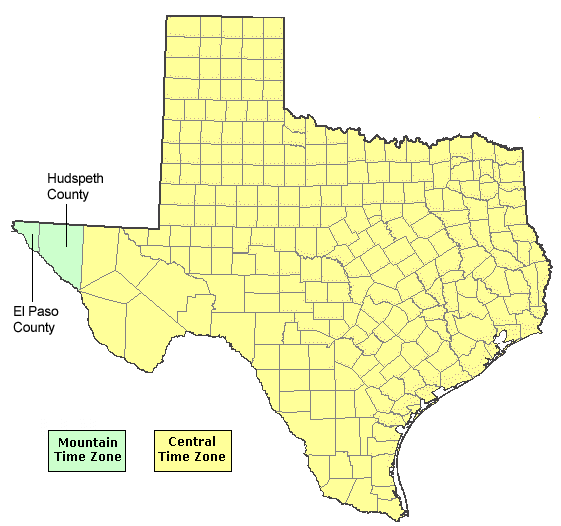
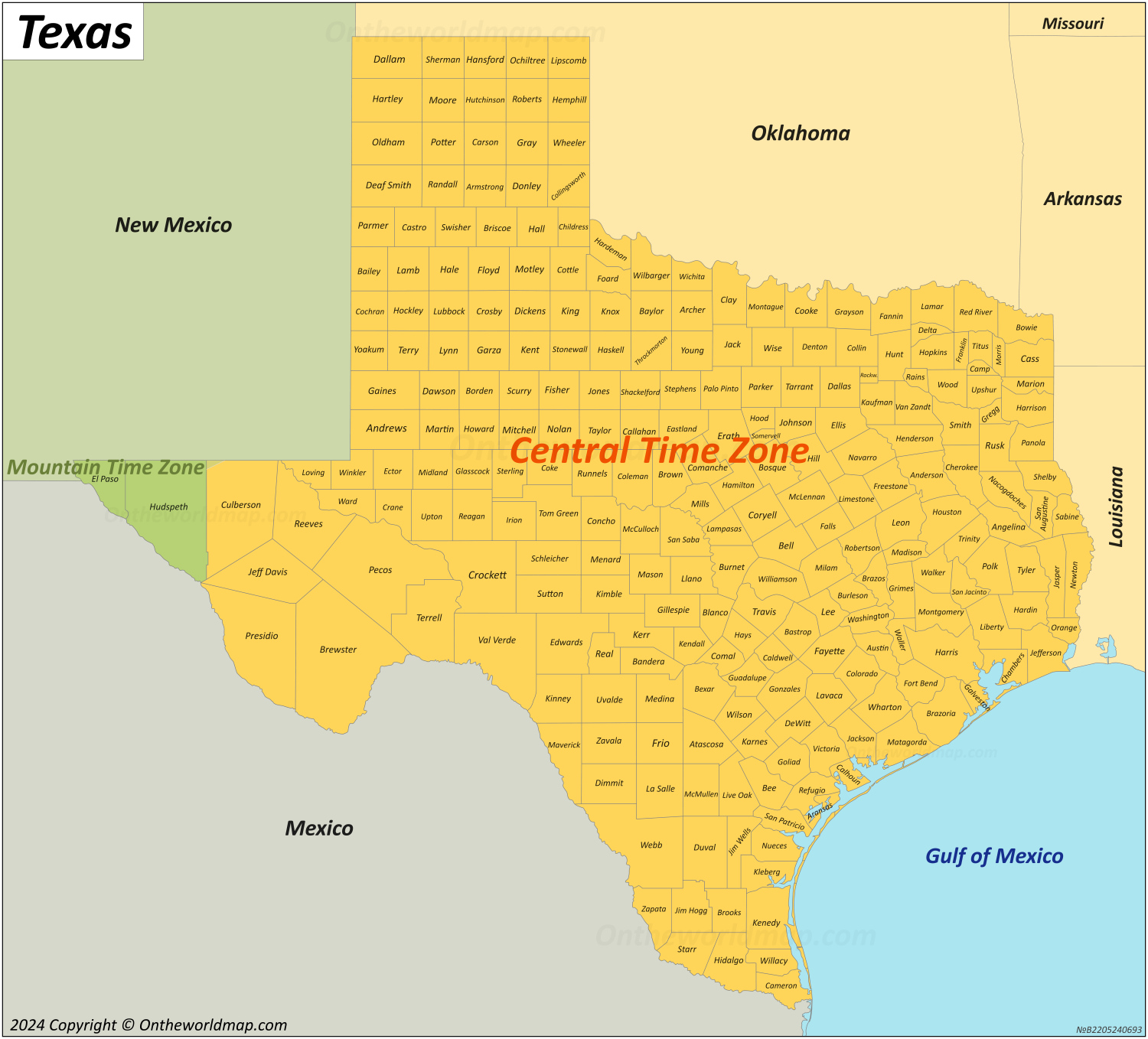
The Lone Star State primarily observes the Central Time Zone (CT). This encompasses the vast majority of the state, from the bustling metropolis of Houston and the state capital, Austin, to the sprawling ranches of West Texas and the historic charm of San Antonio. Central Time is further divided into two distinct periods: Central Standard Time (CST) during the winter months and Central Daylight Time (CDT) during the warmer months.
Central Standard Time (CST)
From the second Sunday in November through the first Sunday in March, Texas operates on Central Standard Time (CST). During this period, CST is UTC-6. This means that when it is 12:00 PM CST in Texas, it is 6:00 PM Coordinated Universal Time (UTC). This is the standard time observed by many other states across the Midwest and South, as well as parts of Canada. For travelers arriving from or departing to regions observing other time zones, understanding this offset is critical for accurate scheduling. For instance, a flight departing from New York City, which observes Eastern Standard Time (EST, UTC-5), will be one hour ahead of CST. Therefore, when it is 12:00 PM EST, it is 11:00 AM CST. This seemingly minor difference can lead to significant confusion if not properly accounted for, particularly when coordinating arrival times or onward travel.
Central Daylight Time (CDT)
As the days lengthen and warmer weather arrives, Texas, like most of the continental United States, observes Central Daylight Time (CDT). This transition typically occurs on the second Sunday in March and concludes on the first Sunday in November. During CDT, the clocks are advanced by one hour, placing Texas on UTC-5. This means that when it is 12:00 PM CDT in Texas, it is 5:00 PM UTC. This shift is designed to maximize the use of natural daylight during the warmer months. For travelers, it’s essential to remember that the time difference between Texas and regions observing Eastern Daylight Time (EDT, UTC-4) remains consistent: EDT is still one hour ahead of CDT. However, the difference with regions that do not observe daylight saving time will change. For example, a location observing UTC-6 year-round would be two hours behind Texas during CDT. Understanding these shifts is paramount for international travelers as well, as the UTC offset will change relative to their home time zone depending on whether daylight saving is in effect in either location.
The Exception: El Paso and Hudspeth County
While the vast majority of Texas adheres to the Central Time Zone, there is a notable exception: the westernmost parts of the state, specifically the city of El Paso and much of Hudspeth County, observe the Mountain Time Zone (MT). This region is geographically closer to New Mexico and Colorado, which also fall within this time zone.
Mountain Standard Time (MST)
During the winter months, when Texas is on CST, El Paso and Hudspeth County observe Mountain Standard Time (MST), which is UTC-7. This means that during standard time, El Paso is two hours behind the rest of Texas. So, when it is 12:00 PM CST in Houston, it is 10:00 AM MST in El Paso. This geographical anomaly can present challenges for businesses operating across the state or for travelers planning to visit both regions within a short timeframe. It’s crucial for anyone coordinating events, meetings, or travel itineraries involving El Paso to be acutely aware of this time difference.
Mountain Daylight Time (MDT)
Similar to the rest of the state’s observance of daylight saving, El Paso and Hudspeth County switch to Mountain Daylight Time (MDT) during the summer months, aligning with the CDT schedule. MDT is UTC-6. Therefore, during daylight saving, the time difference between El Paso and the rest of Texas shrinks to one hour. When it is 12:00 PM CDT in Houston, it will be 11:00 AM MDT in El Paso. This reduction in the time difference can sometimes lead to overlooking the persistent hour-long gap, especially during the transition periods of daylight saving. Careful attention to the calendar and current time zone status is essential.
Implications for Travel and Tourism in Texas
Understanding the time zone in Texas is not merely an academic exercise; it has tangible implications for travelers, tourists, and anyone planning an itinerary within the state. From booking flights to experiencing the vibrant local scene, temporal awareness is key to a smooth and enjoyable visit.
Flight Schedules and Airport Operations
For those flying into or out of Texas, knowing the time zone is fundamental for navigating flight schedules. Major airports like Dallas/Fort Worth International Airport (DFW), George Bush Intercontinental Airport in Houston (IAH), and Austin-Bergstrom International Airport (AUS) operate on Central Time. However, flights arriving from or departing to El Paso will need to account for the Mountain Time Zone difference. Misinterpreting flight times, especially when crossing between time zones within Texas, can lead to missed connections, late arrivals, and unnecessary stress. Always double-check departure and arrival times, noting whether they are listed in local time for the origin and destination.
Accommodation and Booking
When booking hotels, vacation rentals, or any form of accommodation across Texas, time zone awareness is crucial, particularly when dealing with check-in and check-out times. While most hotels will display times in the local zone of their operation, it’s good practice to confirm. For instance, if you’re staying in Dallas (Central Time) and then plan to drive to El Paso (Mountain Time) for the latter half of your trip, you’ll need to adjust your perception of time accordingly. A 3:00 PM check-out in Dallas is 3:00 PM Central, but arriving at a hotel in El Paso at what feels like the same time might mean you’re an hour earlier than anticipated. This is especially important if you’re relying on GPS or online mapping services that might default to your current device’s time zone rather than the destination’s.

Scheduling Activities and Experiencing Local Culture
Texas boasts an incredibly diverse range of activities, from the live music scene in Austin to the historical missions in San Antonio and the museums in Dallas. Many tours, performances, and dining reservations operate on strict schedules. For example, a sunset tour of the Big Bend National Park (which is in the Mountain Time Zone) would need to be booked and planned with its local time in mind, distinct from the Central Time experienced in much of the rest of the state. Similarly, catching a performance at the Majestic Theatre in San Antonio requires adherence to Central Time. Understanding the local time zone ensures you arrive on time to fully appreciate these experiences and avoid disappointment.
Business and Communication
For business travelers, punctuality is paramount. Coordinating meetings across different cities in Texas, especially when one might be in El Paso and another in Houston, requires careful attention to the one or two-hour time difference. A conference call scheduled for 10:00 AM in Dallas will need to be adjusted for participants in El Paso, who will be attending at 9:00 AM. This is also relevant for international business, where the UTC offset of both CST/CDT and MST/MDT needs to be factored into communications.
Navigating Daylight Saving Time Shifts
The biannual shifts associated with Daylight Saving Time can be a source of confusion for travelers. In Texas, these transitions occur on specific Sundays in March and November.
The March Transition
On the second Sunday in March, clocks in the Central Time Zone spring forward by one hour, moving from CST (UTC-6) to CDT (UTC-5). For the El Paso region, this transition moves them from MST (UTC-7) to MDT (UTC-6). This means that the one-hour time difference between El Paso and the rest of Texas, which was present during standard time, is maintained. However, it’s crucial to remember that the entire state has effectively moved forward an hour relative to UTC and other non-daylight saving regions. Travelers should ensure their devices and any timed appointments are adjusted accordingly. This can be particularly tricky if you’re traveling across state lines where daylight saving might not be observed, or observed on different dates.
The November Transition
Conversely, on the first Sunday in November, clocks fall back by one hour, returning the Central Time Zone from CDT (UTC-5) to CST (UTC-6). In El Paso and Hudspeth County, the transition is from MDT (UTC-6) to MST (UTC-7). Again, the one-hour difference between El Paso and the rest of Texas is preserved. However, the entire state reverts to its standard time relative to UTC. This shift can sometimes feel more disorienting than the spring forward, as you effectively gain an hour back. Travelers should be mindful of this change, especially if their travel plans span this transition date. It’s always advisable to confirm the local time upon arrival, especially if your travel occurs on or around these transition dates.
Tips for Time Zone Management in Texas
To ensure a seamless travel experience in Texas, adopting a few proactive strategies for managing time zones is highly recommended.
Utilize Technology Wisely
Most smartphones and smart devices automatically adjust to local time zones when connected to a network. However, it’s wise to verify this functionality before your trip, especially if you plan to rely heavily on your device for navigation and scheduling. Consider setting alarms or calendar entries with explicit time zone notations to avoid confusion. For instance, instead of just “Meeting at 10:00 AM,” you might note “Meeting at 10:00 AM CST.”
Cross-Reference Information
When booking flights, accommodations, or tours, always cross-reference the times listed. Pay attention to whether the time provided is local to the venue or based on your departure point. If you are uncertain, contact the establishment directly to confirm the local time. This is especially important when dealing with entities that might operate across time zones, such as certain tour operators or even some national hotel chains.
Understand Local Customs and Routines
Beyond the literal time, understanding local customs can enhance your experience. For example, restaurant hours, shop opening and closing times, and the general pace of life can vary subtly even within the same time zone, and more so between Central and Mountain time in Texas. Researching the specific habits of the cities or regions you plan to visit can help you better synchronize your schedule with the local rhythm.
Be Mindful of State Lines
When planning travel that involves crossing into neighboring states, particularly New Mexico (which observes Mountain Time year-round) or states that observe Eastern Time, always double-check the time zone differences. The complexity of time zones can increase significantly as you move across borders.
By understanding and actively managing the time zone in Texas, travelers can transform potential logistical challenges into opportunities for smoother exploration. Whether you’re marveling at the Alamo in San Antonio, enjoying the vibrant nightlife of Dallas, exploring the vast landscapes near El Paso, or experiencing the unique culture of West Texas, a clear grasp of time will ensure you make the most of every moment.
LifeOutOfTheBox is a participant in the Amazon Services LLC Associates Program, an affiliate advertising program designed to provide a means for sites to earn advertising fees by advertising and linking to Amazon.com. Amazon, the Amazon logo, AmazonSupply, and the AmazonSupply logo are trademarks of Amazon.com, Inc. or its affiliates. As an Amazon Associate we earn affiliate commissions from qualifying purchases.