
When planning any trip, understanding the local time is a fundamental, yet often overlooked, aspect of ensuring a seamless experience. This is particularly true for a state as vast and diverse as Texas. Navigating its time zones, understanding daylight saving, and grasping the implications for travel itineraries, dining reservations, and event attendance are crucial for any visitor. Texas observes Central Standard Time (CST) and Mountain Standard Time (MST), and its adherence to Daylight Saving Time (DST) further adds to the temporal landscape. This guide aims to demystify the time situation in the Lone Star State, ensuring your visit is as punctual and enjoyable as possible.
Understanding Texas Time Zones
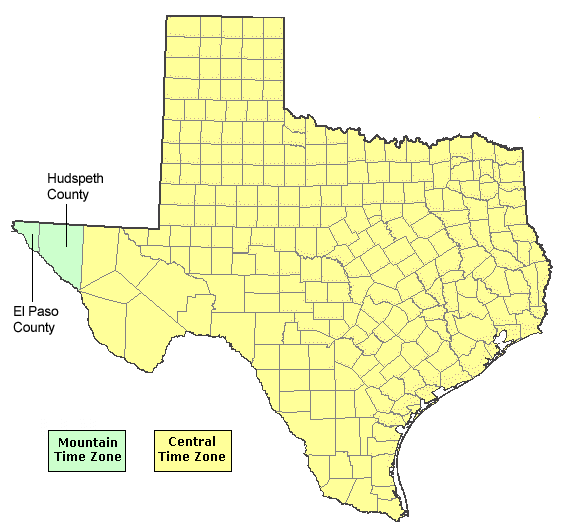
Texas, due to its immense geographical span, historically has encompassed two primary time zones: Central Time and Mountain Time. The vast majority of the state operates on Central Time, which is UTC-6 during standard time and UTC-5 during daylight saving time. This zone covers major metropolitan areas such as Houston, Dallas, San Antonio, Austin, and Fort Worth.
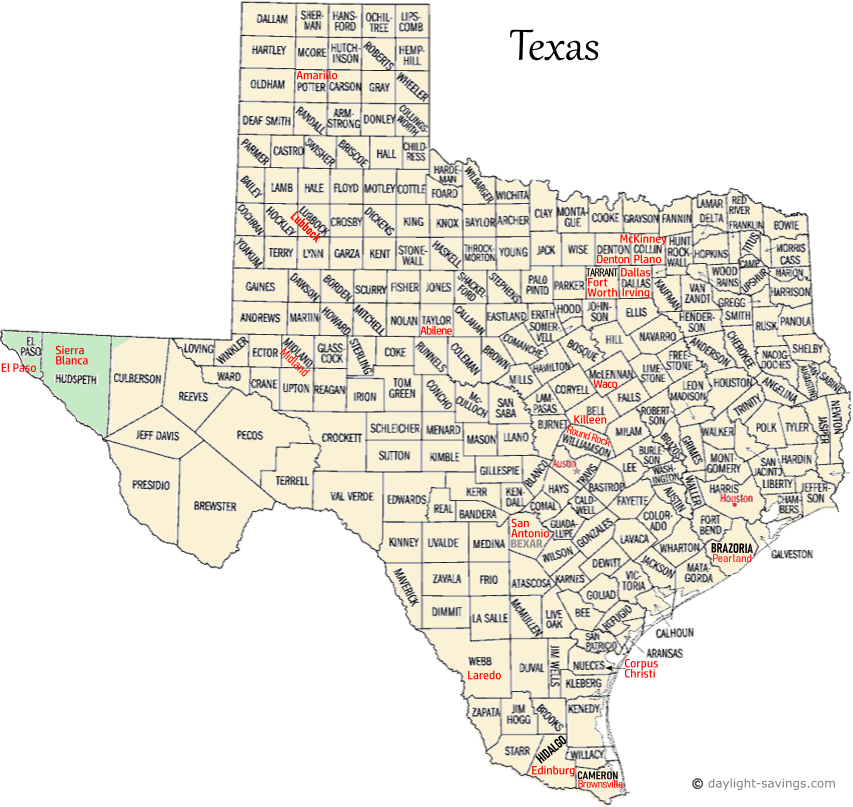
A small portion of western Texas, specifically the counties of El Paso and Hudspeth, observes Mountain Time. This is UTC-7 during standard time and UTC-6 during daylight saving time. This means that during standard time, El Paso is one hour behind the rest of Texas. This distinction, while geographically confined, is vital for anyone traveling to or from these westernmost communities, particularly if coordinating flights or meetings.
The Central Time Dominance
The overwhelming presence of Central Time means that for most visitors to Texas, understanding this zone is paramount. Central Time is a significant part of the North American time zone system, aligning with states like Illinois, Wisconsin, and Louisiana. Its adoption by the majority of Texas simplifies logistics for a large segment of travelers, from those attending events at AT&T Stadium to those exploring the historic missions of San Antonio.
The Western Anomaly: Mountain Time
The counties of El Paso and Hudspeth represent a unique temporal boundary within Texas. Situated in the far west, these areas share a border with New Mexico, which also observes Mountain Time. This geographical and temporal alignment makes sense for regional connectivity. Travelers flying into El Paso International Airport should be mindful of this one-hour difference when connecting with other parts of the state. For example, if it’s 2 PM in Dallas, it will be 1 PM in El Paso. This can impact flight schedules, car rental pickups, and hotel check-ins if not accounted for.
Daylight Saving Time in Texas
Like most of the United States, Texas observes Daylight Saving Time (DST). DST begins on the second Sunday in March and ends on the first Sunday in November. During DST, clocks are advanced by one hour. This means that Central Time becomes Central Daylight Time (CDT), shifting from UTC-6 to UTC-5. Similarly, Mountain Time becomes Mountain Daylight Time (MDT), shifting from UTC-7 to UTC-6.
The March Shift
As spring arrives, the transition to DST can catch some travelers off guard. On the second Sunday in March, clocks spring forward one hour. This effectively means losing an hour of sleep on that particular night, but it results in longer daylight hours in the evenings. For those visiting Texas Hill Country for spring festivals or outdoor activities, this extra daylight can significantly enhance the experience. However, it’s essential to adjust all personal and electronic devices accordingly to avoid missing early morning tours or appointments.
The November Transition

Conversely, as autumn deepens, DST concludes on the first Sunday in November. Clocks fall back one hour, returning to standard time. This means gaining an hour back, often celebrated with an extra hour of sleep. The return to standard time brings earlier sunsets, which is something to consider when planning evening excursions, such as a stroll along the San Antonio Riverwalk or attending a performance at the Majestic Theatre.
Implications for Travel Planning
Understanding the temporal nuances of Texas is not merely an academic exercise; it has direct and practical implications for any visitor. Accurate timekeeping is fundamental to a smooth and enjoyable travel experience, from booking flights to scheduling activities and making dining reservations.
Flight and Transportation Coordination
When booking flights into or out of Texas, it is imperative to confirm the time zone of the departure and arrival airports. For instance, a flight departing from Houston Hobby Airport (in Central Time) and arriving at El Paso International Airport (in Mountain Time) requires a careful calculation of the time difference. Always verify the departure and arrival times listed in the local time of the respective airports. Similarly, when arranging ground transportation or rideshares, ensure your driver understands the correct local time for your pickup.
Dining and Entertainment Reservations
Texas boasts a vibrant culinary scene and a rich tapestry of entertainment options, from live music venues in Austin to professional sports games across the state. When making dinner reservations or purchasing tickets for shows, always confirm the time in the local time zone where the establishment is located. A 7:00 PM reservation in Dallas is different from a 7:00 PM reservation in El Paso. Misunderstanding this can lead to missed reservations and a disappointing experience. Many reservation platforms automatically adjust for time zones, but it’s always wise to double-check, especially when booking across different parts of the state.
Business and Event Scheduling
For those visiting Texas for business conferences, meetings, or special events, punctuality is paramount. The state’s significant size means that inter-city travel can consume considerable time. If you have a meeting in Austin at 9 AM and are staying in a hotel in Dallas, you must factor in the approximately 3-hour drive and the time zone, which is the same. However, if the meeting is in El Paso, the one-hour difference becomes a crucial factor in your travel planning. Always confirm the exact local time for all scheduled engagements.
Navigating the Lone Star Time Continuum
The temporal landscape of Texas is a blend of broad uniformity and specific regional exceptions, overlaid with the annual shifts of Daylight Saving Time. By understanding the primary observance of Central Time, the western outlier of Mountain Time, and the predictable rhythm of DST, travelers can confidently plan their journeys.
Staying Informed and Prepared
In the digital age, staying informed about the current time is relatively straightforward. Most smartphones, smartwatches, and computers automatically update to the correct local time. However, it is always prudent to verify the time displayed on your devices, especially when crossing time zone boundaries within the state. Many travel apps and online resources provide real-time time zone converters. When in doubt, a quick search for “current time in [city name], Texas” will provide accurate information. For those relying on hotel alarm clocks or rental car GPS, ensure they are set correctly to avoid any temporal confusion.
Embracing the Texas Pace
While punctuality is important, Texas is also a state that embodies a certain relaxed yet efficient pace of life. Understanding the time zones is part of appreciating the state’s scale and diversity. Whether you’re enjoying a barbecue in Central Texas, exploring the vast landscapes of West Texas, or experiencing the vibrant culture of its major cities, a clear grasp of local time will allow you to immerse yourself fully in the Lone Star experience without the stress of temporal miscalculations. From catching a sunrise over the Big Bend National Park to enjoying an evening concert in Austin, time in Texas is best spent experiencing its many wonders.
LifeOutOfTheBox is a participant in the Amazon Services LLC Associates Program, an affiliate advertising program designed to provide a means for sites to earn advertising fees by advertising and linking to Amazon.com. Amazon, the Amazon logo, AmazonSupply, and the AmazonSupply logo are trademarks of Amazon.com, Inc. or its affiliates. As an Amazon Associate we earn affiliate commissions from qualifying purchases.