
As the democratic process unfolds across the vast and vibrant state of Texas, understanding the nuances of voting, particularly early voting, is paramount for engaged citizens. Early voting periods are designed to offer flexibility, allowing individuals to cast their ballots before the official Election Day. This extended window is crucial for ensuring higher voter turnout and accommodating diverse schedules. For residents of Texas, knowing precisely when this critical period concludes is essential for making informed decisions about when and where to exercise their civic duty. This guide will delve into the specifics of Texas early voting, focusing on its end date and the surrounding factors that influence it.

Understanding Texas Election Law and Early Voting
Texas law meticulously outlines the timelines for elections, including the designated early voting period. The Secretary of State oversees election administration in Texas and provides official guidance on all voting-related matters. Early voting in Texas is a statutory right, defined by the legislature to provide voters with more opportunities to cast their ballots. The period is typically set to commence 17 days before Election Day and conclude four days before Election Day. This consistency, while generally reliable, can be subject to specific election dates, such as those for federal, state, or local contests.
The Statutory Framework
The Texas Election Code specifies the commencement and conclusion of early voting. For general elections, the period begins on the 17th day before Election Day and ends on the fourth day before Election Day. For primary elections, the same timeline applies. Special elections or runoff elections may have slightly different schedules, but the principle of an extended early voting window remains. It is vital for voters to consult official election calendars released by the Texas Secretary of State or their local County Clerk for the most accurate dates for each specific election.
Key Dates and Their Significance
The end of early voting is a critical deadline. It marks the final opportunity for voters to cast their ballots in person at an early voting location. After this date, voters must wait until the official Election Day to cast their vote, unless they are eligible for and have already requested a mail-in ballot. The early voting period’s conclusion is a signal for election officials to prepare for the final push towards Election Day, including the tabulation of early votes and the readiness of polling places.
Determining the Exact End Date for Early Voting
The end date of early voting is directly tied to the date of the election itself. Since the early voting period concludes four days before Election Day, one must first know the Election Day date to calculate the end of early voting. Texas holds elections on specific dates throughout the year, including the first Tuesday after the first Monday in November for general elections. Primary elections are typically held in March.
Calculating the End Date
To calculate the end of early voting, simply subtract four days from the official Election Day. For example, if Election Day falls on a Tuesday, the last day of early voting will be the preceding Friday. It is crucial to note that this calculation applies to most statewide and federal elections. Local elections, such as municipal or school board elections, may follow a similar pattern but are often administered independently by individual counties and may have slightly different scheduling. Always verify with your local election authority.
Public Access to Election Calendars
The Texas Secretary of State‘s website is the primary source for official election calendars. These calendars provide definitive dates for all major election activities, including voter registration deadlines, the start and end of early voting, and Election Day. Local County Clerk offices also maintain detailed election information specific to their respective counties. Many counties offer online portals where residents can check their voter registration status, find their polling place, and view important election dates.
Factors Influencing Early Voting Schedules
While the statutory framework provides a general guideline, certain factors can influence the exact scheduling and availability of early voting. These include the specific type of election being held, potential statutory changes, and administrative decisions made by local election officials within the bounds of state law.
Types of Elections and Their Impact
- General Elections: These are held every even-numbered year and include federal, state, and local offices. The early voting period is consistently applied.
- Primary Elections: Held in the spring of even-numbered years, these elections determine party nominees. The early voting schedule mirrors that of general elections.
- Special Elections: These are called to fill vacancies in office or to vote on proposed constitutional amendments. Special elections may have modified early voting periods, so it is imperative to check the specific election calendar.
- Runoff Elections: If no candidate receives a majority of votes in a primary or general election, a runoff election is held between the top two vote-getters. The early voting period for a runoff election is typically shorter than for a regular election, usually lasting a week.
Administrative Considerations
Local election officials, such as County Clerks and Elections Administrators, are responsible for setting up and managing early voting locations and hours. While they must adhere to state-mandated timelines, they have some discretion in determining the number of early voting sites and their operating hours within the early voting period. This might include extending hours on certain days or offering weekend early voting to maximize accessibility.
Maximizing Your Early Voting Experience
Knowing when early voting ends is only one part of the equation. To ensure a smooth and successful early voting experience, voters should be proactive in gathering information and planning their visit.
Preparing to Vote Early
- Verify Your Voter Registration: Before heading to the polls, confirm that your voter registration is active and up-to-date. You can do this online through the Texas Secretary of State‘s website or your local County Clerk‘s office.
- Identify Early Voting Locations: While you can vote at any polling place in your county on Election Day, early voting often requires you to vote at a designated early voting location. Check your county’s election website for a list of these locations and their operating hours.
- Understand Identification Requirements: Texas law requires voters to present a valid form of photo identification at the polling place. Accepted forms include a Texas Driver’s License, Texas Election Identification Certificate, Texas Personal Identification Card, Texas Handgun License, U.S. Citizenship Certificate, U.S. Passport, or a U.S. Military ID.
- Check Election Ballots: Familiarize yourself with the candidates and ballot propositions before you go to vote. Many counties provide sample ballots online, allowing you to make informed decisions in advance.
The Importance of Early Voting
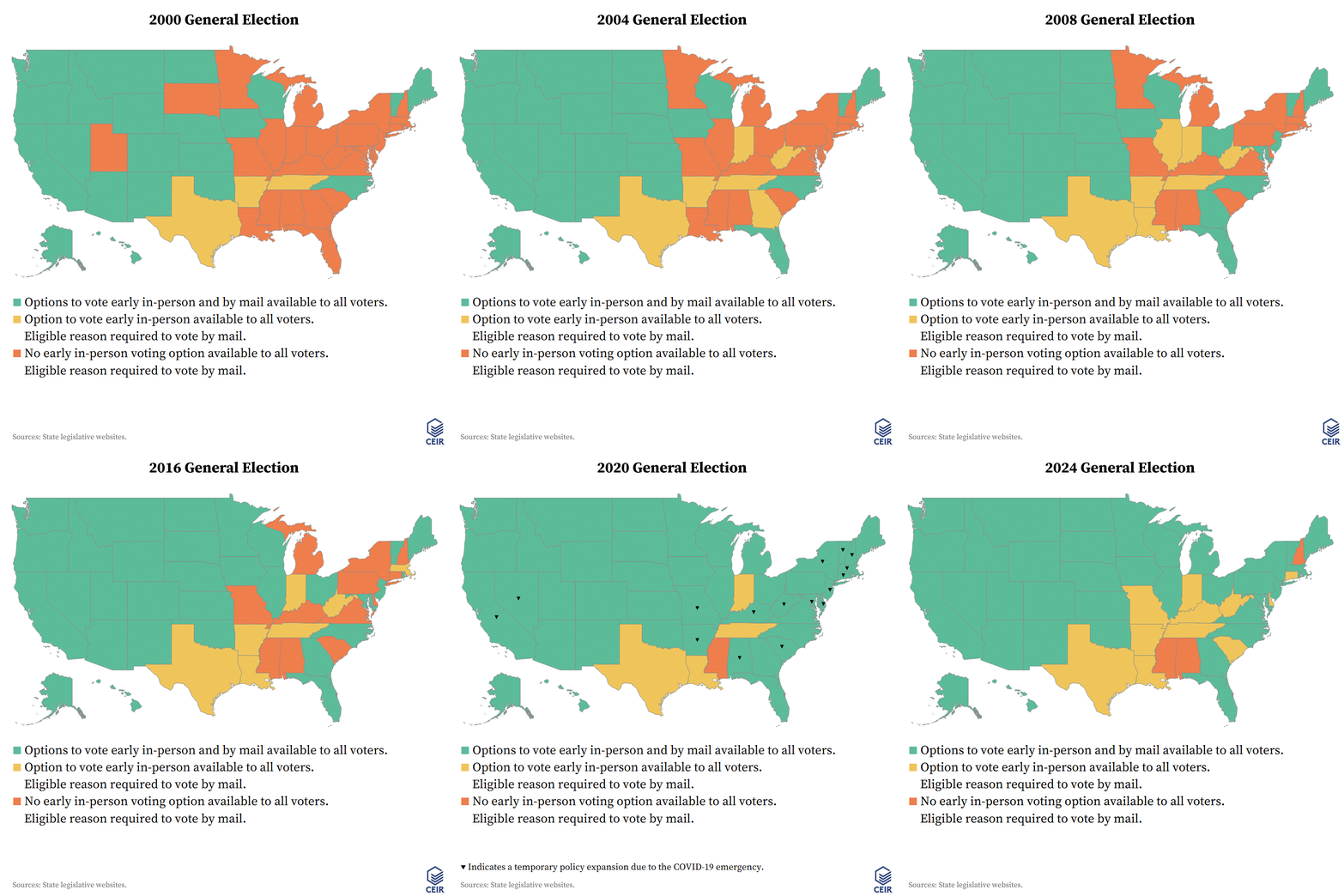
Early voting offers a valuable opportunity to participate in the democratic process without the potential rush or crowds often associated with Election Day. It allows individuals to fit voting into their personal schedules, whether it’s during a lunch break, on a weekend, or a dedicated trip. By extending the voting window, Texas aims to remove barriers to participation and encourage a more informed and engaged electorate. As the end of the early voting period approaches, it serves as a final call to action for those who wish to cast their ballot at their convenience. Staying informed about these deadlines is a cornerstone of responsible citizenship in the Lone Star State.
LifeOutOfTheBox is a participant in the Amazon Services LLC Associates Program, an affiliate advertising program designed to provide a means for sites to earn advertising fees by advertising and linking to Amazon.com. Amazon, the Amazon logo, AmazonSupply, and the AmazonSupply logo are trademarks of Amazon.com, Inc. or its affiliates. As an Amazon Associate we earn affiliate commissions from qualifying purchases.