
Texas, a state renowned for its vast landscapes and rich hunting heritage, offers a premier deer hunting experience. For many enthusiasts, understanding the nuances of hunting seasons, particularly rifle season for deer, is paramount to planning a successful and enjoyable trip. This guide delves into the specifics of Texas rifle deer seasons, offering insights for both seasoned hunters and those new to the pursuit.
Understanding Texas Deer Hunting Zones and Regulations
Texas operates under a complex system of wildlife management, with distinct zones and regulations designed to conserve deer populations and ensure sustainable hunting practices. The state is broadly divided into two main regions for deer hunting: the North Texas region and the South Texas region. These divisions are based on differences in climate, habitat, and deer population dynamics, which in turn influence the timing of hunting seasons.

North Texas Seasonality
The North Texas region, characterized by more temperate weather and varied habitats including forests and rolling hills, generally experiences earlier hunting seasons compared to its southern counterpart. The white-tailed deer in this area are adapted to these conditions, and the hunting season is strategically set to align with their biological cycles and to manage herd health.
Early Archery and Muzzleloader Seasons in North Texas
Before the advent of rifle hunting, archery and muzzleloader seasons provide early opportunities for hunters. These seasons typically commence in the early fall, allowing hunters to utilize different methods and often experience less crowded conditions. These preliminary seasons are crucial for shaping the overall hunting experience in the region.
The Core of North Texas Rifle Season
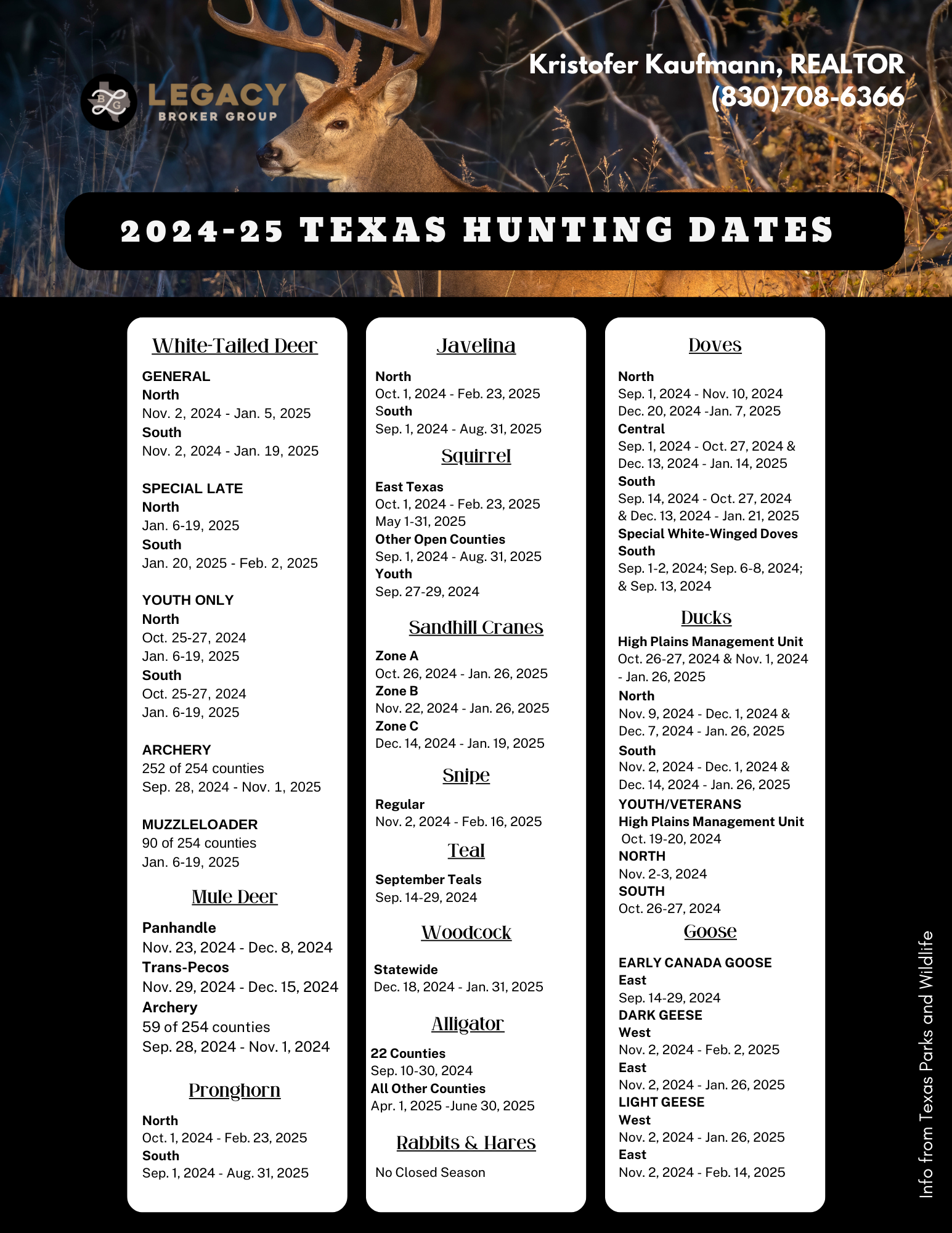
The rifle season in North Texas is the main event for many hunters. It generally opens in early November and extends through the end of the year or into early January, depending on the specific wildlife management unit (WMU) and county. The peak of the rut, the mating season for white-tailed deer, often occurs during this period, making the deer more active and visible, thus increasing the chances of a successful hunt.
South Texas Seasonality
The South Texas region, known for its drier climate, brush country, and iconic ranches, has a distinct hunting calendar. The warmer weather patterns and ecological differences dictate a slightly later opening for its primary hunting seasons.
Archery and Muzzleloader in South Texas
Similar to North Texas, archery and muzzleloader seasons offer initial opportunities in South Texas. These usually begin in late September or early October, providing a window for hunters to engage with the deer population before the general rifle season commences.
The South Texas Rifle Season Window
The rifle season in South Texas typically begins a bit later than in the north, often starting in mid-November. It generally runs through the end of December and sometimes into mid-January. This later opening allows the deer in this region to reach their peak physical condition before the intense hunting pressure of rifle season begins. The warmer climate can also influence deer behavior, with activity often increasing during cooler periods within the season.
Key Factors Influencing Rifle Season Dates
The dates for rifle deer season in Texas are not static and are subject to annual adjustments by the Texas Parks and Wildlife Department (TPWD). Several critical factors inform these decisions, ensuring the long-term health of deer populations and the sustainability of the hunting tradition.
The Texas Parks and Wildlife Department (TPWD) Role
The TPWD is the governing body responsible for setting and enforcing all hunting regulations in Texas. Their biologists and wildlife managers conduct extensive research on deer populations, habitat conditions, and hunter harvest data. This data is meticulously analyzed to determine season lengths, bag limits, and the precise opening and closing dates for each hunting season. The department’s primary objective is to manage wildlife populations for conservation and provide opportunities for regulated public hunting.
Biological Considerations: The Rut
A primary biological factor influencing the timing of rifle season is the white-tailed deer’s breeding season, known as the rut. The rut is a period of heightened activity for bucks as they actively seek out does. Biologists aim to open rifle season either just before, during, or immediately after the peak of the rut. Opening during this period often leads to increased buck movement and visibility, as bucks are less cautious while searching for mates. Conversely, an overly early opening might disrupt the rut, potentially impacting future breeding success. The TPWD carefully calibrates season dates to balance hunting opportunities with the biological needs of the deer population.
Habitat and Environmental Conditions
The diverse ecosystems across Texas play a significant role in season setting. Factors such as rainfall, drought conditions, and the availability of food sources can impact deer health and behavior. For example, in areas experiencing severe drought, the TPWD might consider adjusting season lengths or bag limits to alleviate pressure on a stressed population. Conversely, favorable conditions can support robust deer populations, allowing for more extended or liberal seasons. The specific habitat type – whether it’s the dense brush of South Texas, the piney woods of East Texas, or the open plains of the Panhandle – influences the deer’s movement patterns and vulnerability to hunting.
Hunter Harvest Data and Population Management
Hunter harvest data is a crucial component in the TPWD‘s management strategy. By monitoring the number of deer harvested each year, wildlife managers can assess the impact of hunting on the population. If harvest numbers are consistently below sustainable levels, seasons might be extended or bag limits increased. Conversely, if populations are declining or showing signs of overharvest, seasons may be shortened, or bag limits reduced. This dynamic approach ensures that hunting remains a sustainable activity that contributes to, rather than detracts from, the overall health of Texas’s deer herds.
Planning Your Texas Rifle Deer Hunt
A successful rifle deer hunt in Texas requires more than just knowing the season dates. Careful planning, understanding legal requirements, and respecting the land are essential for an ethical and enjoyable experience.
Obtaining Licenses and Permits
Before heading into the field, hunters must procure the necessary licenses and permits. The TPWD mandates specific hunting licenses for deer, and depending on the location and type of hunt, additional permits such as youth permits, antler restrictions permits, or special drawn permits may be required. It is imperative to familiarize oneself with the most current licensing requirements on the TPWD website or through authorized license vendors. Failure to comply with these regulations can result in significant penalties.
Understanding Antler Restrictions
Texas has implemented antler restrictions in many counties to promote the harvest of older, more mature bucks and to improve the overall quality of the deer herd. These restrictions typically dictate a minimum number of points on one antler or a minimum main beam length. Hunters must be acutely aware of the specific antler restrictions in the county or wildlife management unit where they plan to hunt. Ignorance of these regulations is not a defense and can lead to citations.
Choosing Your Hunting Location
Texas offers a plethora of hunting opportunities, from public lands managed by the TPWD to private ranches available for lease or guided hunts. Public hunting lands can provide accessible and affordable options, though they often experience higher hunter traffic. Private ranches, on the other hand, can offer more exclusive experiences, often with better-managed herds, but typically come at a higher cost. Researching different areas, considering your budget, and understanding the type of hunting experience you seek will guide your location choice. Popular destinations include the Hill Country, the Edwards Plateau, and the vast expanses of West Texas, each offering unique challenges and rewards.
Public Hunting Lands
The TPWD manages numerous Wildlife Management Areas (WMAs) across the state that offer public hunting opportunities. These areas are managed for conservation and provide access to diverse habitats. Hunters interested in public land opportunities should review the TPWD’s public hunting land maps and regulations, as specific draw hunts and general open seasons apply.
Private Ranch Hunts
For those seeking a more controlled and often luxurious hunting experience, private ranches are an excellent option. Many landowners offer guided hunts, providing expert knowledge of the terrain and deer behavior. These hunts can range from budget-friendly to high-end, with services that may include lodging, meals, and trophy care. Booking in advance is usually necessary, especially for prime dates during the rifle season.
Ethical Hunting Practices and Safety
Responsible hunting extends beyond legal compliance. Adhering to ethical practices and prioritizing safety are fundamental to the hunting tradition.
Respecting the Game and the Land
Ethical hunting involves a commitment to the humane treatment of game animals and a profound respect for the environment. This includes making clean, ethical shots that minimize suffering, properly field dressing and utilizing harvested game, and leaving no trace of your presence on the land. Hunters are stewards of the land and its wildlife, and their actions reflect on the entire hunting community.
Firearm Safety
Firearm safety is non-negotiable. Hunters must be proficient with their chosen rifle and understand safe handling procedures at all times. This includes always treating a firearm as if it were loaded, never pointing it in an unsafe direction, keeping fingers off the trigger until ready to shoot, and being certain of your target and what lies beyond it. Wearing appropriate blaze orange clothing during rifle season is also a crucial safety measure to ensure visibility to other hunters.
By understanding the specific timings of Texas rifle deer seasons, adhering to regulations, planning diligently, and committing to ethical and safe practices, hunters can look forward to a rewarding and memorable experience in the vast and wild landscapes of the Lone Star State.
LifeOutOfTheBox is a participant in the Amazon Services LLC Associates Program, an affiliate advertising program designed to provide a means for sites to earn advertising fees by advertising and linking to Amazon.com. Amazon, the Amazon logo, AmazonSupply, and the AmazonSupply logo are trademarks of Amazon.com, Inc. or its affiliates. As an Amazon Associate we earn affiliate commissions from qualifying purchases.