
Texas, a state renowned for its vast landscapes and diverse climates, presents unique challenges and opportunities for homeowners seeking to cultivate lush, healthy lawns. The key to achieving a vibrant green carpet lies not just in the type of grass or the quality of fertilizer, but critically, in the timing of application. Understanding the seasonal rhythms of Texas’s soil and grass species is paramount. This guide delves into the optimal fertilization schedule for Texas lawns, ensuring your turf thrives throughout the year, from the scorching Texas summers to its milder winters.
Understanding Texas Grass Types and Fertilization Needs
The success of any lawn care regimen, particularly fertilization, hinges on recognizing the distinct needs of Texas’s prevalent grass varieties. These can broadly be classified into two categories: warm-season grasses and cool-season grasses. Each has a unique growth cycle, dictating when they are most receptive to nutrient uptake and, consequently, when fertilization will yield the most beneficial results.
Warm-Season Grasses: The Summer Stalwarts
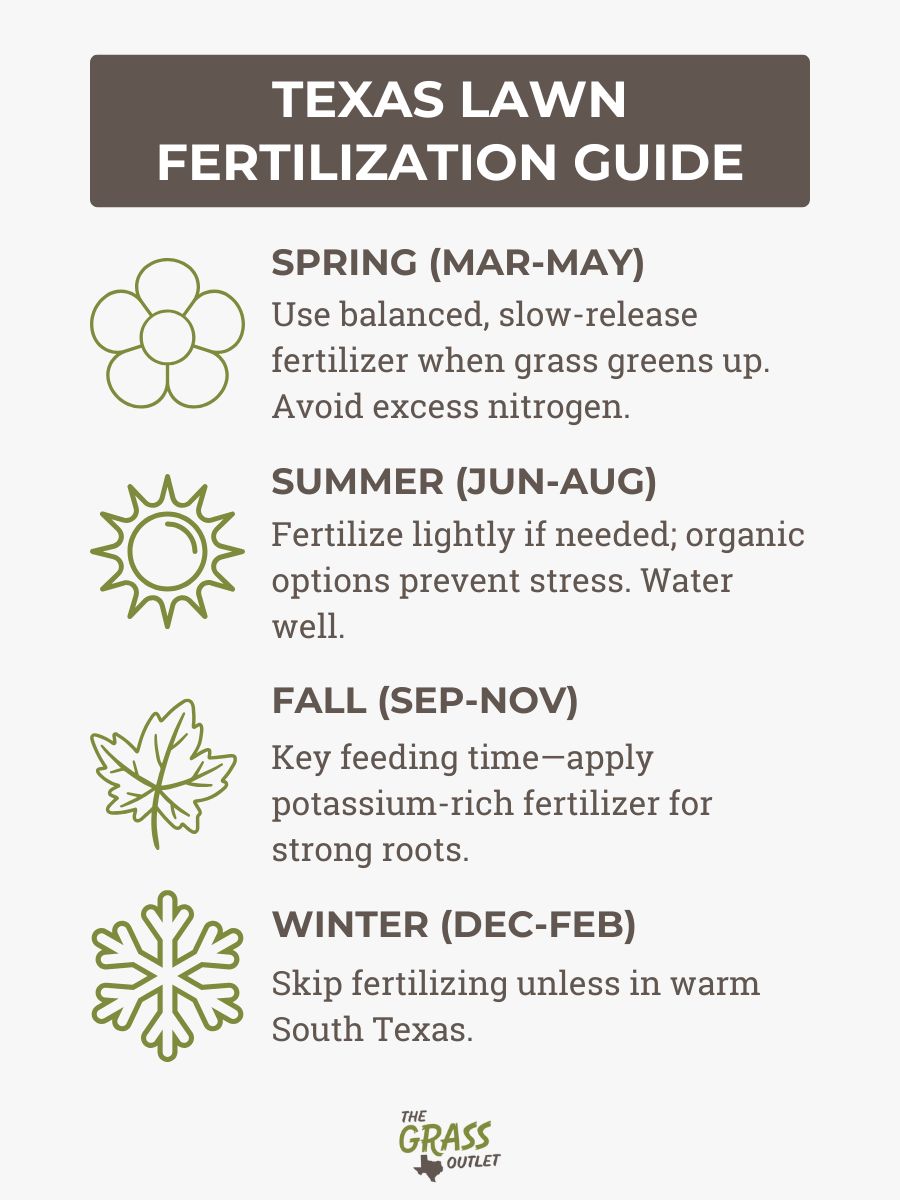
The majority of Texas lawns are dominated by warm-season grasses. These grasses, including popular varieties like Bermuda grass, Zoysia grass, and St. Augustine grass, thrive in the heat of the Texas sun. Their active growth period occurs from spring through fall, with peak performance during the warmer months. Fertilization for these grasses should align with their growth cycles to maximize nutrient absorption and promote vigorous development.
Spring Awakening: The First Feeding
The optimal time to apply the first fertilizer treatment to warm-season grasses is typically in late spring, once the grass has fully greened up and is actively growing. This usually falls between April and May. The purpose of this initial feeding is to provide the grass with the essential nutrients it needs to recover from winter dormancy and initiate strong, healthy growth for the upcoming season. A fertilizer with a balanced N-P-K (Nitrogen-Phosphorus-Potassium) ratio is often recommended, with a slight emphasis on nitrogen to encourage leafy growth. The exact timing can vary depending on the specific region within Texas; lawns in South Texas may be ready for fertilization a few weeks earlier than those in North Texas.
Mid-Summer Boost: Sustaining Growth
As temperatures rise and the grass continues its active growth phase, a second fertilization can be beneficial. This is typically applied in late June or early July. This application helps sustain the grass’s vigor through the stressful summer heat, promoting deeper root development and improving its resilience to drought and disease. Fertilizers with slow-release nitrogen are particularly effective during this period, as they provide a steady supply of nutrients without causing excessive top growth that can be detrimental in high heat.
Fall Finale: Preparing for Dormancy
The final fertilization for warm-season grasses should occur in early to mid-fall, usually around September or early October. This feeding is crucial for replenishing nutrient reserves depleted during the summer and preparing the grass for the cooler months ahead. It encourages the development of strong root systems and carbohydrate storage, which are vital for surviving winter and promoting a quick green-up in the spring. Avoid fertilizing too late in the fall, as this can stimulate new growth that is susceptible to frost damage.
Cool-Season Grasses: The Shaded Survivors
While less common for large, sun-drenched expanses, cool-season grasses like Fescue are often found in shaded areas or as components of specialized lawn mixes in Texas. These grasses prefer cooler temperatures and can struggle during the intense Texas summer heat. Their fertilization schedule is a mirror image of warm-season grasses, focusing on the cooler periods of the year.
Early Spring Feeding: Kickstarting Growth
For cool-season grasses, the first fertilization should occur in early spring, as soon as the grass shows signs of greening up after winter. This typically happens in February or early March. This feeding provides the necessary nutrients for rapid growth during the cooler spring months before the onset of summer heat. A balanced fertilizer, similar to the initial feeding for warm-season grasses, is appropriate.
Fall Rejuvenation: The Most Critical Application
The most important fertilization for cool-season grasses in Texas occurs in early to mid-fall, typically September through November. This application is vital for the grass’s survival and health. It helps the grass recover from summer stress, promotes root development, and builds up reserves for the winter. As with warm-season grasses, avoid fertilizing too late into winter, as this can cause damage.
Factors Influencing Fertilization Timing
Beyond the general seasonal guidelines, several other factors can influence the ideal timing for fertilizing your Texas lawn:
Soil Conditions and Testing
The most accurate way to determine your lawn’s fertilization needs is through a soil test. Conducted by your local Texas A&M AgriLife Extension office or a reputable private lab, a soil test will reveal the current nutrient levels in your soil, as well as its pH. This information allows you to select a fertilizer that specifically addresses any deficiencies, rather than applying a generic blend. Fertilizing when your soil already has sufficient levels of certain nutrients can be wasteful and even detrimental to grass health. The timing of the soil test itself is less critical than the accurate interpretation of its results and subsequent fertilization.

Grass Health and Appearance
Observing your lawn’s current condition is a practical indicator of its fertilization needs. If your grass appears pale green, exhibits slow growth, or has thinning patches, it may be signaling a need for nutrients. Conversely, if your lawn is already a vibrant green and growing vigorously, it might not require immediate fertilization. Fertilizing an already healthy and well-fed lawn can lead to over-fertilization, which can burn the grass, encourage disease, and contribute to excessive thatch buildup.
Weather Patterns
Texas weather is notoriously variable. Prolonged droughts, unseasonably warm winters, or unusually cool springs can all impact grass growth and its receptiveness to fertilizer.
- Drought Conditions: During severe drought, it is generally advisable to hold off on fertilizing. Fertilizer can exacerbate drought stress by promoting top growth that requires more water. If you must fertilize during a mild drought, use a slow-release nitrogen fertilizer and water deeply after application.
- Unseasonably Warm Winters: If the winter is unseasonably warm and your warm-season grass begins to show signs of greening up unusually early, you might consider a slightly earlier first fertilization. However, always err on the side of caution and wait until consistent warming trends are established to avoid stimulating growth that could be damaged by a late frost.
- Excessive Rainfall: Heavy rainfall can leach nutrients from the soil, particularly nitrogen. If you experience significant rainfall shortly after fertilizing, you may need to consider a follow-up application, although it’s often best to wait until the scheduled time for your next feeding.
Type of Fertilizer Used
The formulation of the fertilizer plays a significant role in how often and when it should be applied.
- Slow-Release Fertilizers: These are often the preferred choice for Texas lawns. They release nutrients gradually over an extended period, reducing the risk of burning the grass and providing a more consistent supply of food. This allows for fewer applications throughout the year, typically two to three applications for warm-season grasses.
- Quick-Release Fertilizers: These provide an immediate nutrient boost but are more prone to burning the lawn if over-applied or applied during stressful conditions. They may require more frequent applications but are generally less recommended for routine lawn care in Texas.
Best Practices for Fertilizing Your Texas Lawn
To ensure your fertilization efforts are successful, adhere to these best practices:
Read and Follow Label Instructions
This is perhaps the most critical rule. Fertilizer bags contain specific instructions regarding application rates, timing, and methods. Deviating from these instructions can lead to ineffective results, lawn damage, or environmental pollution.
Apply Evenly
Uneven application can result in streaks of dark green grass interspersed with yellow, unhealthy patches. Use a spreader (broadcast or drop spreader) to ensure uniform coverage. Calibrate your spreader according to the fertilizer bag’s instructions to apply the correct amount.
Water After Fertilizing
Watering the lawn after fertilization helps to dissolve the granules and move them into the soil, where the grass roots can access them. This also helps to wash any fertilizer off the grass blades, reducing the risk of burning. Water deeply but avoid overwatering, which can lead to nutrient runoff.
Consider Fertilizing During Active Growth
The most effective fertilization occurs when the grass is actively growing and can readily absorb the nutrients. Fertilizing dormant grass is largely ineffective and can be a waste of resources. For warm-season grasses, this means fertilizing when they are green and growing vigorously, and for cool-season grasses, during their cooler active periods.
Avoid Fertilizing Before Heavy Rain
While watering is beneficial, applying fertilizer just before a significant rainfall event can lead to nutrient runoff into storm drains and local waterways, contributing to water pollution. Check the weather forecast and adjust your fertilization schedule accordingly.
Proper Storage and Disposal
Store any leftover fertilizer in a cool, dry place, away from children and pets. Dispose of empty fertilizer bags and containers according to local regulations.
By understanding the specific needs of your Texas lawn, paying attention to the season, and following these best practices, you can cultivate a healthy, vibrant, and resilient turf that enhances the beauty of your property. Whether you are a resident of Houston, Dallas, or anywhere in between, a well-timed fertilization plan is a cornerstone of superior lawn care.
LifeOutOfTheBox is a participant in the Amazon Services LLC Associates Program, an affiliate advertising program designed to provide a means for sites to earn advertising fees by advertising and linking to Amazon.com. Amazon, the Amazon logo, AmazonSupply, and the AmazonSupply logo are trademarks of Amazon.com, Inc. or its affiliates. As an Amazon Associate we earn affiliate commissions from qualifying purchases.