
Understanding the tax implications of your retirement savings is crucial, especially when planning withdrawals. For residents of Alabama, a common question arises regarding the taxation of funds withdrawn from a 401(k) plan. This article delves into the specifics of how Alabama treats these distributions, aiming to provide clarity for individuals navigating their retirement income.
Alabama’s Stance on Retirement Income
Alabama, unlike some states, does not have a state income tax on retirement benefits, including pensions and withdrawals from defined contribution plans like 401(k)s. This means that when you withdraw funds from your 401(k), the amount you take out is generally not subject to Alabama state income tax. This policy is a significant advantage for retirees in Alabama, allowing them to retain a larger portion of their hard-earned retirement savings.
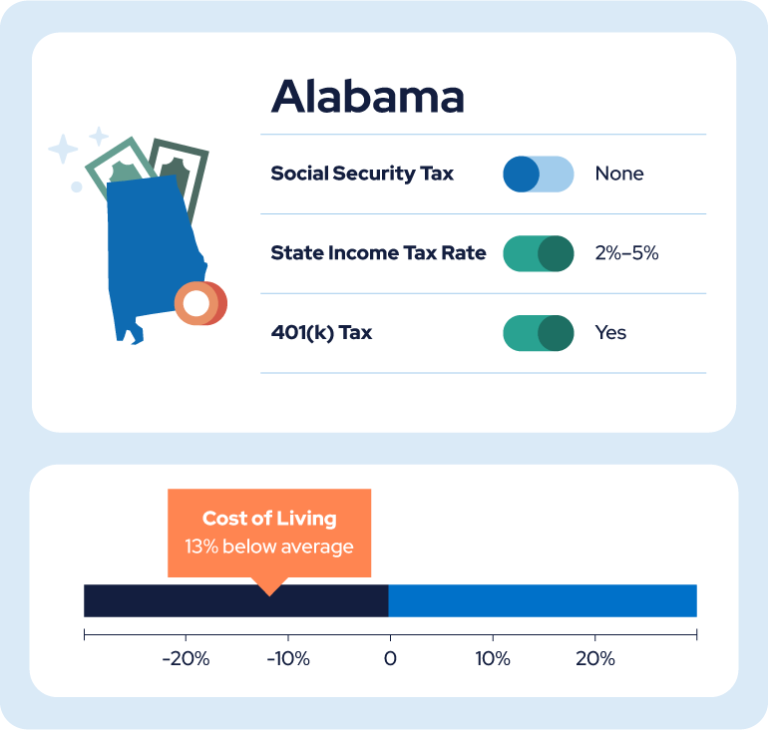
It is important to distinguish between state and federal taxation. While Alabama may not tax your 401(k) withdrawals, the Internal Revenue Service (IRS) still imposes federal income tax on these distributions. Therefore, you will need to report your 401(k) withdrawals on your federal tax return. The tax rate applied at the federal level depends on your overall taxable income for the year.
Federal Taxation of 401(k) Withdrawals
The IRS generally considers withdrawals from traditional 401(k) plans as taxable income in the year they are received. This is because contributions to traditional 401(k)s are typically made on a pre-tax basis, meaning they reduce your taxable income in the year of contribution. When you withdraw these funds in retirement, the government collects the taxes that were deferred.
There are specific rules regarding early withdrawals, typically before age 59½. The IRS imposes a 10% early withdrawal penalty on top of the regular income tax, unless an exception applies. However, these penalties are also federal, and Alabama does not add its own layer of penalties for early withdrawals.
Roth 401(k) Withdrawals
The tax treatment of Roth 401(k) withdrawals differs significantly from traditional 401(k)s. Contributions to Roth 401(k)s are made with after-tax dollars, meaning they do not provide an upfront tax deduction. However, qualified withdrawals from a Roth 401(k) are entirely tax-free at both the federal and state levels.
To qualify for tax-free withdrawals from a Roth 401(k), two conditions must be met:
- The account must have been open for at least five years (the “five-year rule”).
- You must be at least 59½ years old, disabled, or using the funds for a first-time home purchase (up to a lifetime limit of $10,000).
If these conditions are met, your Roth 401(k) withdrawals, including both your contributions and any earnings, will not be subject to federal or Alabama state income tax.
Understanding Your Specific Situation
While Alabama‘s tax policy on 401(k) withdrawals is generally favorable, it’s essential to understand your specific circumstances. Several factors can influence how your withdrawals are treated:
Rollovers vs. Direct Withdrawals
When you leave an employer or retire, you often have the option to roll over your 401(k) funds into an IRA or your new employer’s 401(k) plan. Rollovers, when done correctly, are not considered taxable events. The money simply moves from one retirement account to another, and taxes are deferred until you begin taking withdrawals from the new account.

Direct withdrawals, where you receive the money yourself, will trigger the taxation rules discussed above. It’s crucial to ensure that any rollover is handled properly to avoid accidental taxation. This typically involves having the funds transferred directly from one plan administrator to another or receiving a check made payable to the new plan custodian.
State Residency and Situs
Alabama taxes income based on residency. If you are a legal resident of Alabama when you receive the withdrawal, then Alabama‘s tax laws apply. If you have moved from another state to Alabama, the taxation of your 401(k) withdrawals will be governed by Alabama law from the point of residency change.
Conversely, if you are an Alabama resident but your 401(k) plan is administered by an employer in another state, or if you have moved out of Alabama after retirement and are withdrawing from a plan held elsewhere, the state where you reside at the time of withdrawal is generally the one that levies income tax. However, as established, Alabama itself does not tax these withdrawals for its residents.
Other Income Sources in Retirement
The taxability of your 401(k) withdrawals at the federal level is also influenced by your other retirement income sources. If you also receive Social Security benefits, pensions from other sources, or have income from investments, these will be added to your 401(k) withdrawals to determine your total taxable income for the year. This can push you into higher federal tax brackets.
For instance, if you are withdrawing a substantial amount from your 401(k) and also have significant income from other sources, the combined income could lead to a higher overall federal tax liability. Understanding this interplay is vital for effective retirement financial planning.
Planning Your Withdrawals Strategically
Given Alabama‘s tax-exempt status for 401(k) withdrawals, focusing on federal tax implications and optimizing withdrawal timing becomes paramount.
Minimizing Federal Tax Liability
While Alabama offers a tax advantage, managing your federal tax burden is key. Consider spreading your 401(k) withdrawals over multiple years to stay in lower federal tax brackets. This can be particularly beneficial if you have other income sources that fluctuate year to year.
Another strategy is to carefully consider the timing of Social Security benefits. Delaying Social Security can allow you to draw more heavily from your 401(k) in the early years of retirement when your overall income might be lower, potentially reducing your lifetime tax liability.
Understanding Required Minimum Distributions (RMDs)
The IRS mandates that individuals begin taking Required Minimum Distributions (RMDs) from their retirement accounts, including traditional 401(k)s, once they reach a certain age (currently 73, but subject to change by the IRS). These RMDs are taxable as ordinary income at the federal level. Alabama does not impose separate taxes on these mandatory withdrawals. Failure to take RMDs can result in significant penalties, so it’s crucial to be aware of these requirements.

Seeking Professional Advice
The intricacies of retirement planning and taxation can be complex. While Alabama‘s tax laws are relatively straightforward regarding 401(k) withdrawals, consulting with a qualified financial advisor or tax professional is always recommended. They can help you:
- Analyze your entire financial picture.
- Develop a tax-efficient withdrawal strategy.
- Ensure compliance with all federal and state regulations.
- Explore options for tax-loss harvesting or other investment strategies that can complement your withdrawal plan.
For residents of Alabama, the absence of state income tax on 401(k) withdrawals provides a welcome relief, allowing for more predictable retirement income. However, a comprehensive understanding of federal tax laws and strategic planning is essential to maximize the value of your retirement savings throughout your post-work years. This clarity empowers you to make informed decisions, ensuring your retirement is as financially secure and enjoyable as possible.
LifeOutOfTheBox is a participant in the Amazon Services LLC Associates Program, an affiliate advertising program designed to provide a means for sites to earn advertising fees by advertising and linking to Amazon.com. Amazon, the Amazon logo, AmazonSupply, and the AmazonSupply logo are trademarks of Amazon.com, Inc. or its affiliates. As an Amazon Associate we earn affiliate commissions from qualifying purchases.