
The Montgomery Bus Boycott stands as a monumental event in the annals of American history, a testament to the power of collective action and nonviolent resistance in the face of entrenched injustice. While often associated with the towering figure of Dr. Martin Luther King Jr., the genesis and sustained momentum of this pivotal protest were the result of a confluence of courageous individuals and foundational organizations within the Montgomery, Alabama community. Understanding its origins requires delving into the grassroots activism and strategic planning that preceded and ignited the boycott.
The Seeds of Dissatisfaction: A History of Segregation
For decades prior to the boycott, racial segregation, particularly on public transportation, was a deeply ingrained and humiliating reality for African Americans in the American South. The system of Jim Crow laws enforced a rigid social hierarchy, and the buses in Montgomery were a daily, visible manifestation of this oppressive order. Black passengers were relegated to the back of the bus, forced to give up their seats to white passengers if the front filled up, and often subjected to verbal abuse and indignity by bus drivers.
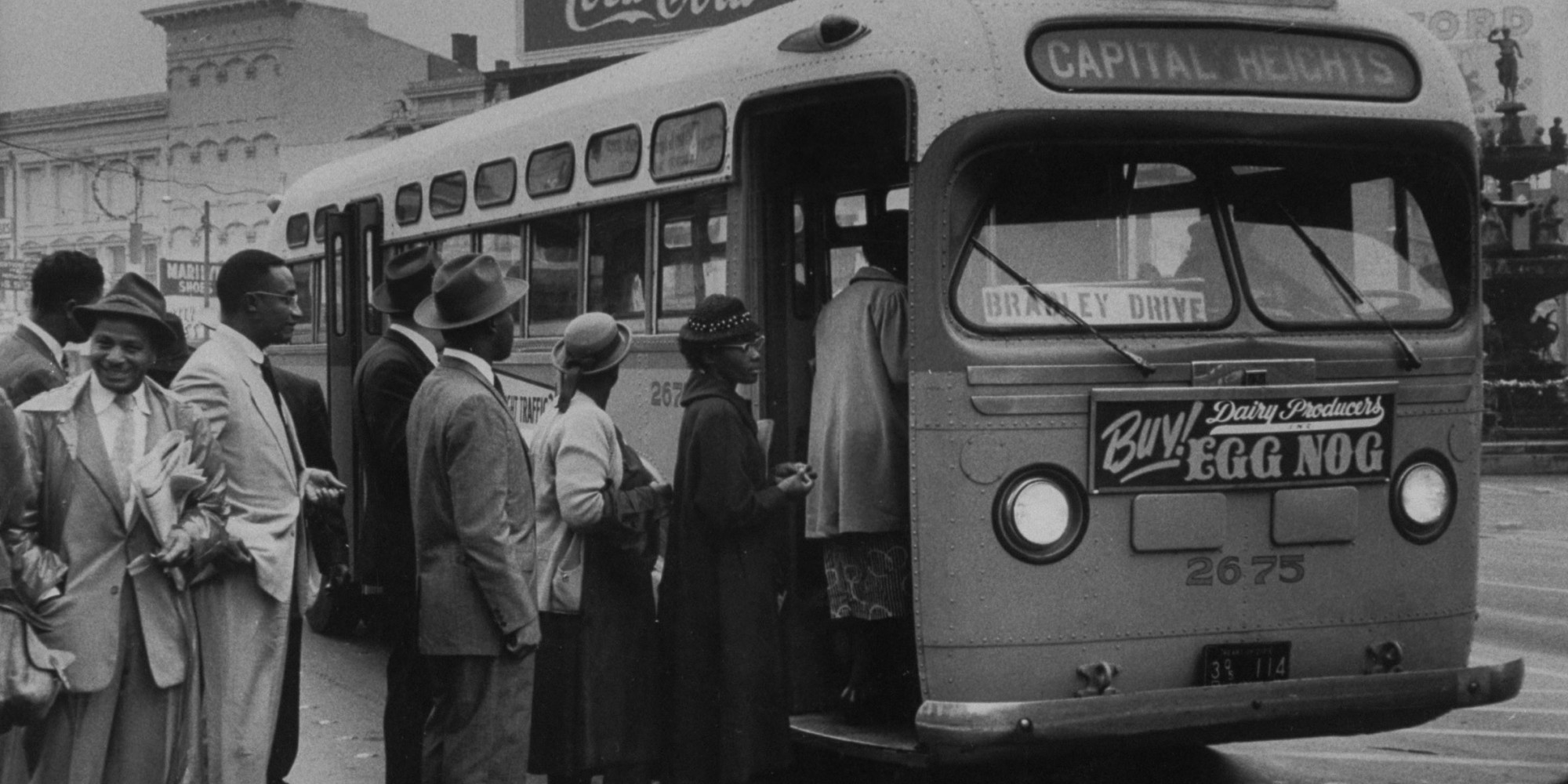
This pervasive discrimination was not a new phenomenon in 1955. Numerous incidents of mistreatment had occurred over the years, fostering a deep-seated resentment within the Black community. Activists and community leaders had been quietly organizing and advocating for change, seeking to challenge these discriminatory practices through various means, including petitions and legal challenges. However, a single, catalytic event was needed to galvanize widespread public support and translate simmering discontent into decisive action.
Earlier Acts of Defiance
It is crucial to acknowledge that Rosa Parks was not the first African American to resist bus segregation in Montgomery. Several women, including Claudette Colvin and Aurelia Browder, had been arrested for refusing to give up their seats on the buses in the months leading up to Parks’ arrest. These earlier acts of defiance, while not sparking a mass movement at the time, laid important groundwork. They demonstrated the courage of individuals willing to challenge the status quo and provided legal precedents that would later be utilized by civil rights attorneys. The legal challenges initiated by the NAACP in response to these arrests, including the case of Browder v. Gayle, were instrumental in the eventual dismantling of bus segregation.
The Spark: Rosa Parks and the Arrest That Changed History
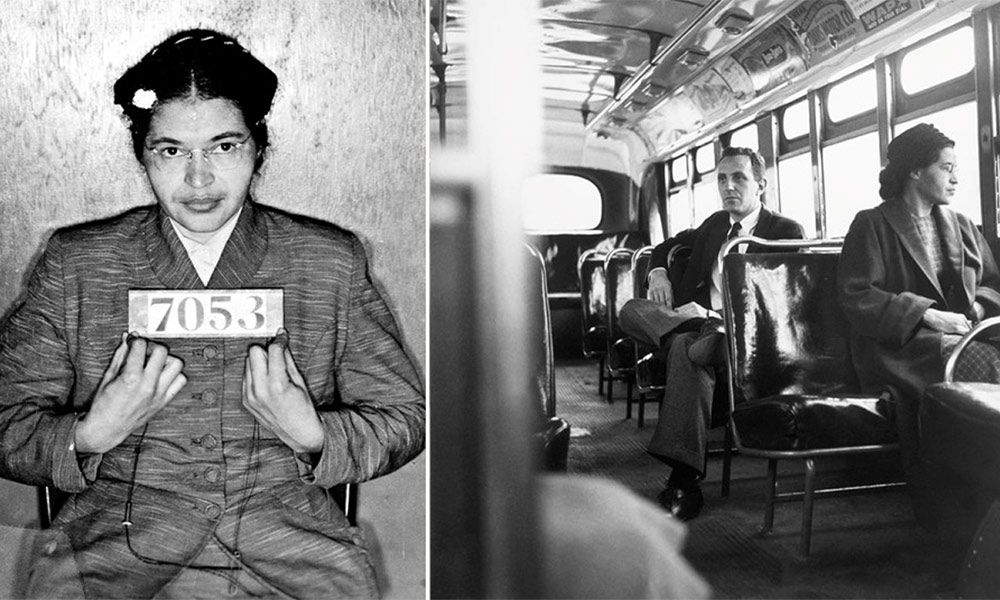
The name most indelibly linked to the start of the Montgomery Bus Boycott is that of Rosa Parks. On December 1, 1955, Parks, a respected seamstress and secretary of the Montgomery chapter of the NAACP, was traveling home on a segregated city bus. When the bus became crowded, the driver, James F. Blake, ordered Parks and three other Black passengers to give up their seats for white passengers. While the others complied, Parks refused. Her quiet act of defiance, rooted in a profound weariness of injustice, was an act of immense personal courage.
Parks’ arrest was not a spontaneous decision; it was the culmination of years of activism and a deep commitment to the principles of equality. She was a seasoned civil rights activist, having attended the Highlander Folk School, a center for training activists. Her decision to resist was a deliberate stand against the dehumanizing system of segregation. The news of her arrest spread rapidly through the Black community, igniting a firestorm of outrage and solidarity.
The Role of E.D. Nixon and the NAACP
While Rosa Parks provided the immediate catalyst, the organizational infrastructure and strategic foresight to transform her arrest into a mass movement were provided by other key figures. E.D. Nixon, a prominent African American businessman and a leading figure in the local NAACP, was one of the first to recognize the potential of Parks’ arrest. He bailed her out of jail and immediately began contacting other community leaders, including ministers and activists, to discuss a coordinated response.
Nixon, along with his compatriot Clifford Durr, a white lawyer sympathetic to the civil rights cause, understood that this incident could be the turning point. They recognized that Parks’ unimpeachable character and reputation within the community made her the ideal figure to rally behind. They quickly met with other leaders, including members of the Women’s Political Council, to plan a one-day bus boycott as a demonstration of protest.
The Birth of the Montgomery Improvement Association
The immediate aftermath of Rosa Parks’ arrest saw swift and decisive action from within the Black community. A group of ministers and community leaders convened on December 5, 1955, to discuss a unified response. This meeting led to the formation of the Montgomery Improvement Association (MIA), an organization specifically created to lead and sustain the bus boycott.
The MIA brought together a broad spectrum of the Black community, from professionals and business owners to laborers and students, united by a common purpose. Critically, the MIA elected a young, charismatic minister, Dr. Martin Luther King Jr., pastor of the Dexter Avenue Baptist Church, as its president. King’s eloquent oratory, his commitment to nonviolent resistance, and his ability to articulate the moral imperative of the struggle quickly made him the public face and inspirational leader of the boycott.
The First Day of the Boycott
On December 5, 1955, the Montgomery Bus Boycott officially began. The call for a one-day boycott, disseminated through flyers and word-of-mouth, was overwhelmingly heeded. An estimated 40,000 to 50,000 African Americans refused to ride the segregated buses. The streets of Montgomery were eerily quiet as the buses traversed their routes with few, if any, Black passengers. This remarkable display of unity and collective action demonstrated the power of the Black community to disrupt the city’s normal operations and signal their demand for change.
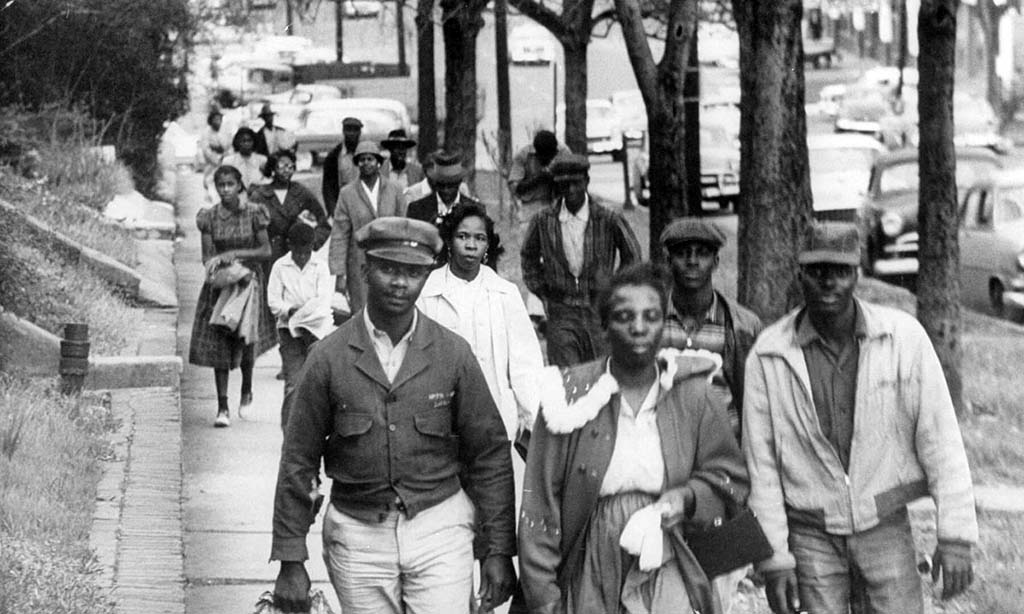
The success of the initial one-day boycott led to the decision to extend it indefinitely. The MIA, under the leadership of Dr. King, formulated a set of demands, including the desegregation of buses, courteous treatment by bus operators, and the hiring of Black bus drivers for predominantly Black routes. The boycott was sustained through a remarkable system of carpools, volunteer drivers, and walking, showcasing the ingenuity and resilience of the participants.
Sustaining the Movement: Leadership and Organization
The Montgomery Bus Boycott was not merely a spontaneous outburst; it was a meticulously organized and sustained campaign that lasted 381 days. The Montgomery Improvement Association played a pivotal role in its longevity. The MIA organized mass meetings, where speeches and testimonies reinforced the moral righteousness of the cause and bolstered morale. They coordinated the complex carpool system, ensuring that participants could still get to work and run errands.
The Role of Women
The vital contributions of women to the boycott cannot be overstated. The Women’s Political Council (WPC), led by figures like Jo Ann Robinson, was instrumental in the initial planning and dissemination of information about the boycott. They were among the first to propose a boycott and worked tirelessly behind the scenes to mobilize the community. Women formed the backbone of the carpool system and provided much of the grassroots organizing that kept the boycott alive.
The Legal Battle
Simultaneously, the legal arm of the civil rights movement was at work. The case of Browder v. Gayle, which challenged the constitutionality of bus segregation, proceeded through the courts. While the boycott pressured the city economically and socially, the legal challenge provided the ultimate victory. On November 13, 1956, the U.S. Supreme Court affirmed a lower court ruling that declared bus segregation unconstitutional. This landmark decision brought an end to the boycott, though the formal integration of the buses did not occur until December 21, 1956, when Dr. Martin Luther King Jr. rode the first integrated bus in Montgomery.
In conclusion, while Rosa Parks provided the courageous spark that ignited the Montgomery Bus Boycott, its origins are deeply rooted in the persistent efforts of countless activists, the organizational prowess of groups like the NAACP and the Women’s Political Council, and the strategic leadership of the Montgomery Improvement Association, particularly its president, Dr. Martin Luther King Jr.. It was a collective triumph, born from years of simmering injustice and fueled by the unwavering determination of an entire community to claim their rightful place as equal citizens.
LifeOutOfTheBox is a participant in the Amazon Services LLC Associates Program, an affiliate advertising program designed to provide a means for sites to earn advertising fees by advertising and linking to Amazon.com. Amazon, the Amazon logo, AmazonSupply, and the AmazonSupply logo are trademarks of Amazon.com, Inc. or its affiliates. As an Amazon Associate we earn affiliate commissions from qualifying purchases.