
The question of the distance between Alaska and Russia often sparks curiosity, evoking images of vast, icy expanses and the dramatic geographical proximity of two continents separated by water. While often perceived as incredibly distant, these two landmasses are, in fact, remarkably close at their nearest points. This proximity is not merely a geographical curiosity; it has shaped historical interactions, geopolitical considerations, and even inspired unique travel aspirations. Understanding this distance is key to appreciating the unique nature of the Bering Strait, the watery chasm that divides these two colossal territories.

The Narrowest Span: The Bering Strait
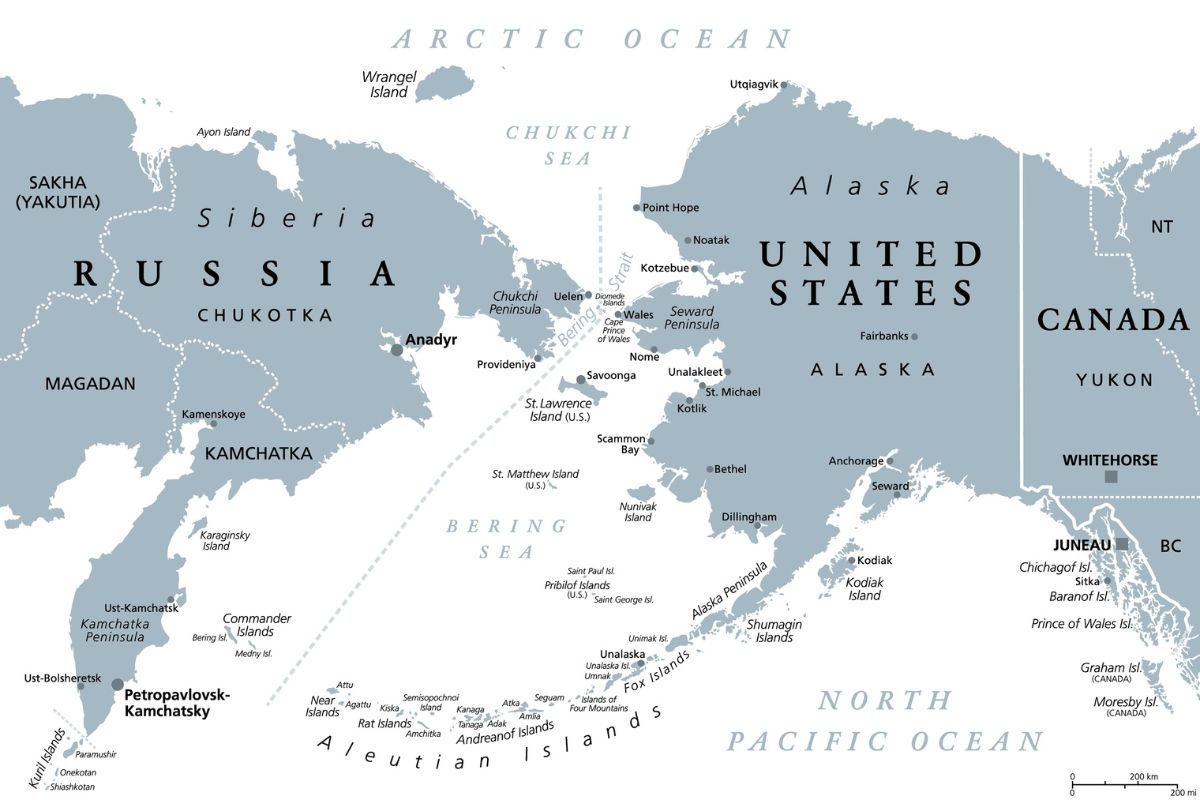
The most striking answer to “What is the distance between Alaska and Russia?” lies within the Bering Strait. This narrow waterway, connecting the Arctic Ocean to the Pacific Ocean, represents the closest geographical point between the two nations.
Diomede Islands: A Symbolic Divide
At its narrowest point, the Bering Strait measures approximately 55 miles (88 kilometers) across. However, the perceived distance is significantly reduced by the presence of the Diomede Islands. These two islands, Big Diomede (Russian territory) and Little Diomede (United States territory, part of Alaska), lie in the middle of the strait.
-
International Date Line: The International Date Line runs between Big Diomede and Little Diomede. This means that while the islands are only about 2.4 miles (3.8 kilometers) apart, there is a 21-hour time difference between them. A visitor standing on Little Diomede can, on a clear day, see Big Diomede and the coast of Russia. This visual proximity coupled with a significant temporal divide is one of the most fascinating aspects of this border region.
-
Seasonal Access: During the harsh Arctic winters, the Bering Strait can freeze over, creating an ice bridge between Alaska and Russia. While historically this allowed for movement, crossing the frozen strait is an extremely dangerous undertaking due to unpredictable ice conditions and severe weather. Modern travel between the two landmasses is primarily facilitated by air or sea, with limited, highly regulated crossings.
Broader Distances: From Coastal Cities to Inland Territories
While the Bering Strait represents the closest geographical link, the actual distance between major populated areas in Alaska and Russia is considerably larger.
Across the Pacific: Anchorage to Vladivostok
When considering more significant centers of population and commerce, the distances increase dramatically. For instance, the approximate great-circle distance between Anchorage, Alaska, and Vladivostok, a major port city in the Russian Far East, is around 3,000 miles (4,800 kilometers). Travel between these cities typically involves multiple flight legs, highlighting the vastness of the Pacific Ocean that separates them.
- Air Travel Realities: Direct flights are practically non-existent. Travelers usually transit through hubs like Seattle, San Francisco, Seoul, or Tokyo. This underscores the logistical challenges and the extensive journey required to traverse between these two key locations.
Arctic Frontiers: Nome to Provideniya
Even when focusing on the more remote Arctic regions, the distances remain substantial. The distance between Nome, an Alaskan frontier town, and Provideniya, a settlement on the Chukotka Peninsula in Russia, is still a considerable expanse of sea.
- Sea Travel and Logistics: While geographically closer than the major cities mentioned above, the journey across the Bering Sea between these communities is often undertaken by boat or small aircraft. The remoteness of these locations means that travel is heavily dependent on weather conditions and seasonal availability, making it an adventure in itself. The distance here might be in the hundreds of miles, but the logistical hurdles are significant.
Historical and Geopolitical Significance

The proximity of Alaska and Russia has profound historical and geopolitical implications. For millennia, indigenous peoples of the Bering Strait region, such as the Yupik and Chukchi, traversed these waters.
Bering’s Voyage and the Purchase of Alaska
The modern understanding of this geographical link was solidified during the Age of Exploration. Vitus Bering, a Danish explorer sailing for Russia, led expeditions in the early 18th century that charted the strait and explored the Alaskan coast. His voyages confirmed the proximity of the continents and set the stage for future interactions.
- The Alaska Purchase (1867): The sale of Alaska by Russia to the United States in 1867 for $7.2 million was heavily influenced by Russia’s geographical concerns. Facing potential difficulties in defending its sparsely populated Alaskan territory against rivals like Great Britain, and needing funds, Russia saw the sale as a strategic and financial advantage. This historic transaction cemented the current political boundary between the two nations across the Bering Strait.
Cold War and Modern Relations
During the Cold War, the Bering Strait became a potent symbol of the ideological divide between the United States and the Soviet Union. The visible proximity of Soviet and American territory, separated by only a few miles of water and a date line, was a constant reminder of the global tensions. Today, while the geopolitical landscape has changed, the shared border across the Bering Strait remains a point of interest for maritime security, environmental cooperation, and cultural exchange.
Experiencing the Proximity: Travel and Tourism
While direct travel between the closest points in Alaska and Russia is challenging and regulated, the region offers unique travel experiences for those interested in its geography, history, and culture.
Cruises and Expeditions
One of the most popular ways to experience the Bering Strait is through expedition cruises. These voyages typically depart from Alaska (often from Seward or Nome) and venture into the strait, sometimes stopping near the Diomede Islands.
-
Wildlife Viewing: These cruises offer unparalleled opportunities to witness the rich marine life of the region, including whales, seals, walruses, and a plethora of seabirds. The stark, dramatic landscapes of the Alaskan and Siberian coasts are awe-inspiring.
-
Cultural Encounters: Some itineraries may include opportunities to visit remote coastal communities in Alaska or, with special permissions, potentially limited access to parts of the Russian Far East. These experiences provide glimpses into the lives of indigenous peoples and the challenges of life in these remote environments.
Land-Based Exploration in Alaska
For travelers interested in the Alaskan side of the Bering Strait, towns like Nome and Wrangell offer a gateway to understanding the region.
-
Nome’s Rich History: Famous for the Iditarod Trail Sled Dog Race, Nome has a fascinating history tied to the gold rush and its role as a crucial hub in early 20th-century Alaska. Visitors can explore the town’s museum and learn about its frontier past.
-
Accessing the Strait: From Nome, one can charter flights or boats to get closer to the Bering Strait, offering views of the vast expanse of water and, on exceptionally clear days, the distant shores of Russia. However, it’s crucial to note that direct travel to the Russian side from Nome is not a standard tourist activity and requires extensive planning and special permits.
The distance between Alaska and Russia is a complex interplay of narrow straits, vast oceans, and historical narratives. While the geographical proximity at the Bering Strait is a mere few miles, the broader distances and logistical challenges underscore the immense scale of these two nations and the unique nature of their shared border.
LifeOutOfTheBox is a participant in the Amazon Services LLC Associates Program, an affiliate advertising program designed to provide a means for sites to earn advertising fees by advertising and linking to Amazon.com. Amazon, the Amazon logo, AmazonSupply, and the AmazonSupply logo are trademarks of Amazon.com, Inc. or its affiliates. As an Amazon Associate we earn affiliate commissions from qualifying purchases.