
Arizona, a state synonymous with breathtaking desert landscapes, vibrant cultural heritage, and a thriving tourism industry, is remarkably well-connected by air. For travelers planning a visit, understanding the breadth of its aviation infrastructure is key to unlocking the vast opportunities for exploration. While a single definitive number might elude precise, constant tracking due to the dynamic nature of aviation, we can categorize Arizona’s airports into several tiers, each serving distinct purposes and traveler needs. This exploration delves into the types of airports present in the Grand Canyon State, from its major international hubs to smaller, specialized airfields, providing a comprehensive overview for any potential visitor.
Major International and Commercial Airports
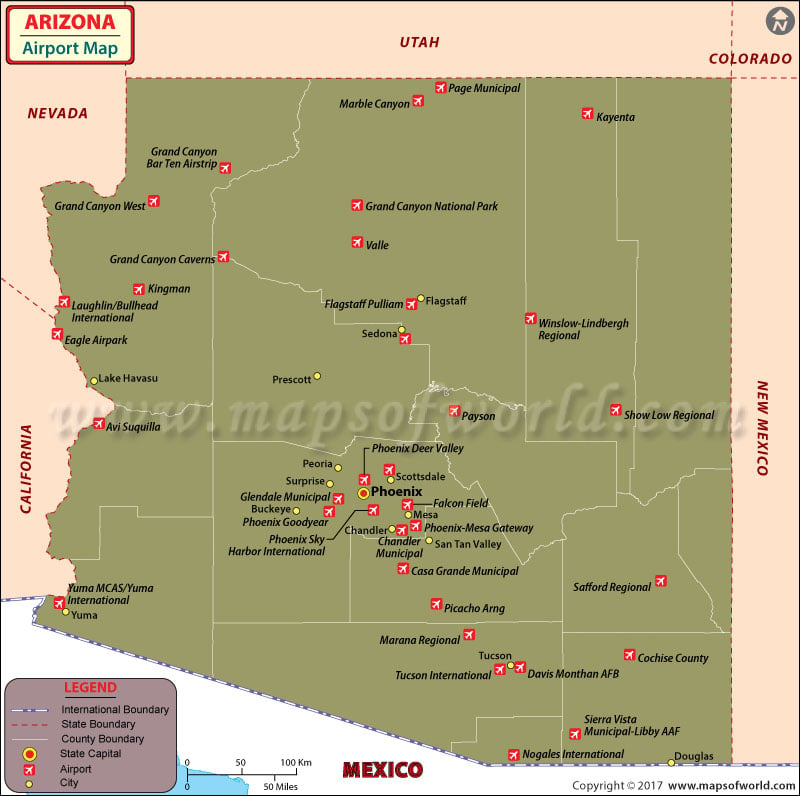
The primary gateways for most visitors arriving in Arizona are its major international and commercial airports. These facilities handle the bulk of passenger traffic, offering a wide array of domestic and international flight options. They are characterized by extensive infrastructure, including multiple terminals, extensive runway systems, and a comprehensive range of passenger services.
Phoenix Sky Harbor International Airport (PHX)
Without a doubt, Phoenix Sky Harbor International Airport is the cornerstone of Arizona’s air travel network. Located in Phoenix, it is one of the busiest airports in the United States, consistently ranking among the top airports for passenger traffic and aircraft movements. PHX serves as a major hub for several airlines, most notably American Airlines. Its three terminals facilitate millions of passengers annually, connecting them to destinations across the globe. The airport’s strategic location within the Phoenix metropolitan area makes it an exceptionally convenient entry point for exploring central and southern Arizona.
Tucson International Airport (TUS)
Serving southern Arizona, Tucson International Airport is the second-largest airport in the state. Located in Tucson, TUS handles a significant volume of passenger and cargo traffic. While it may not rival PHX in sheer scale, TUS offers a more relaxed and often quicker travel experience for those focusing on the unique attractions of southern Arizona, such as the Saguaro National Park and the Sonoran Desert Museum. It serves as a key gateway to the rich cultural tapestry and stunning natural beauty of the region.
Other Commercial Airports
Beyond the two largest, Arizona hosts several other airports that offer commercial passenger services, albeit on a smaller scale. These regional airports are vital for connecting smaller communities and providing alternative entry points to specific areas of the state.
- Flagstaff Pulliam Airport (FLG): Situated in Flagstaff, this airport is the primary air access point for northern Arizona, including the gateway to the Grand Canyon National Park. While flight options are more limited than at PHX or TUS, FLG is crucial for travelers aiming to experience the cooler climes of the San Francisco Peaks or visit nearby attractions like Sedona.
- Yuma International Airport (YUM): Located in Yuma, this airport serves southwestern Arizona. It provides essential air connectivity for residents and visitors to this historically significant region, known for its agricultural output and proximity to the Colorado River.
- Payson Airport (PAN): While primarily a general aviation airport, Payson sometimes sees limited commercial charter operations, particularly connecting to the scenic Mogollon Rim region.
General Aviation Airports
Arizona’s vastness and its appeal to aviation enthusiasts mean that a significant number of airports cater to general aviation (GA). These airports are crucial for private pilots, flight training, recreational flying, and smaller charter operations. While they don’t typically host major airline routes, their presence is fundamental to the state’s aviation ecosystem and accessibility for niche travel.
Municipal and Public Airports
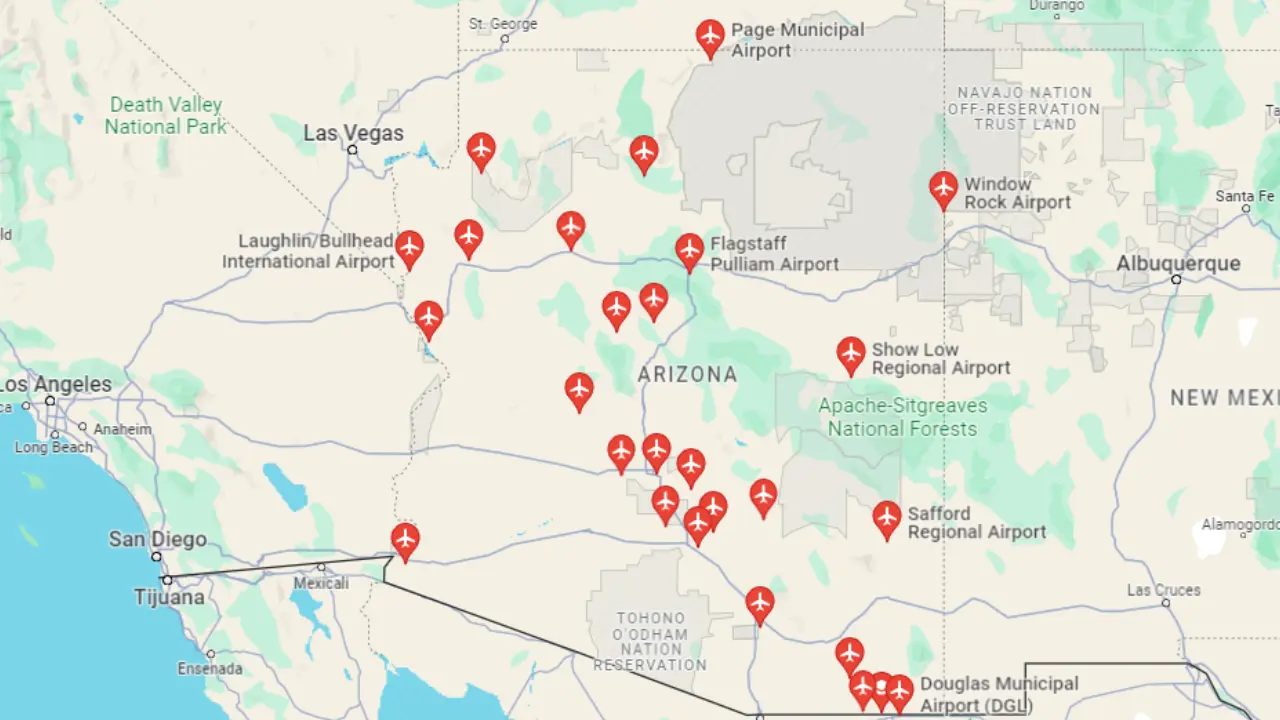
Across Arizona, numerous municipal and publicly owned airports serve local communities and private pilots. These can range from small grass strips to well-equipped general aviation facilities with paved runways, navigational aids, and basic services. They are often the lifeblood of smaller towns, providing essential transportation links and supporting local economies. Examples include airports in cities like Prescott, Kingman, Show Low, and Casa Grande. These airports facilitate fly-in events, offer scenic tours, and provide vital support for emergency services and aerial work.
Private Airfields and Airstrips
Beyond public facilities, Arizona also has a network of private airfields and airstrips. These are typically owned and operated by individuals, corporations, or aviation clubs. They are often more basic, sometimes consisting of a single runway, and are used for personal aircraft storage, private club operations, or specialized aviation activities. While less accessible to the general public, they contribute to the overall density of aviation infrastructure within the state.
Specialized Aviation Facilities
The unique geography and diverse industries of Arizona necessitate specialized aviation facilities that go beyond standard passenger or general aviation services.
Military Airfields
Arizona is home to several significant military installations that include air bases and airfields. These facilities are critical for national defense and are often restricted from public access. However, their presence contributes to the state’s overall aviation activity and can be a source of specialized aerospace jobs and technological development. Notable examples include Luke Air Force Base near Glendale and Davis-Monthan Air Force Base in Tucson.
Air Cargo and Logistics Hubs
While often integrated into major commercial airports, some facilities are specifically designed or heavily utilized for air cargo and logistics. These are crucial for the movement of goods and play a vital role in Arizona’s economic landscape, supporting industries that rely on swift and efficient transportation.
Heliports and Vertiports
In urban centers and for specialized operations, heliports are a common sight. These facilities are designed for helicopter operations and are vital for emergency medical services (EMS), law enforcement, executive transport, and tourism. The emergence of electric vertical take-off and landing (eVTOL) aircraft is also leading to the development of new “vertiports,” signaling a future evolution in aerial transportation within the state.
Estimating the Total Number
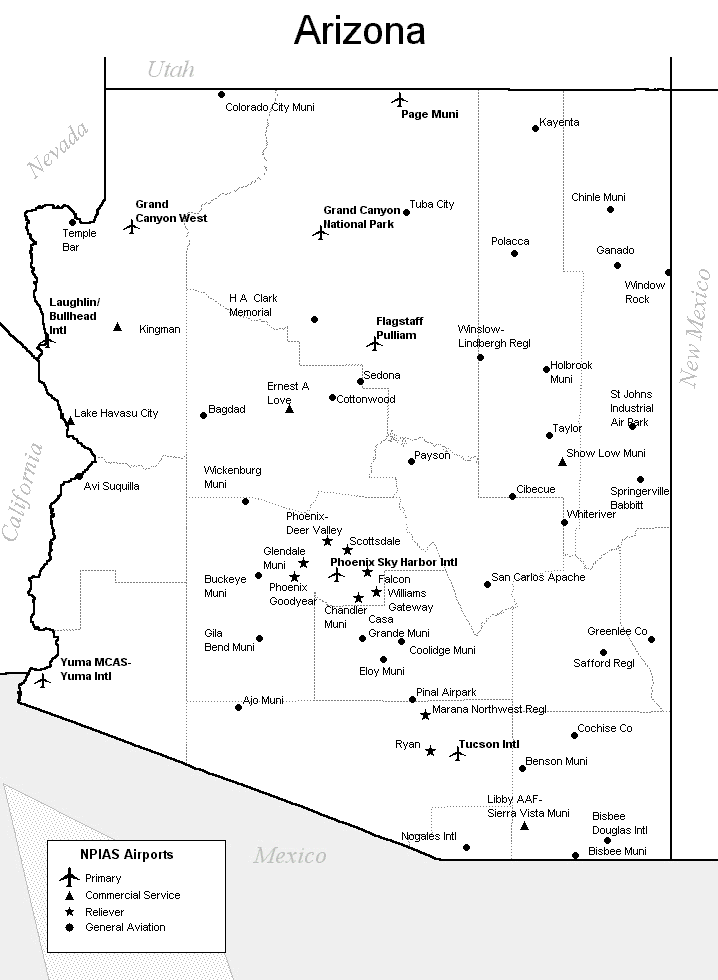
Providing an exact, up-to-the-minute count of every single landing strip, airstrip, and airport in Arizona is a complex task. The Federal Aviation Administration (FAA) maintains comprehensive databases, but the classification and operational status of some smaller facilities can fluctuate.
However, based on FAA data and common aviation industry knowledge, Arizona hosts:
- Over a dozen major commercial and public-use airports with scheduled airline service.
- Numerous general aviation airports, numbering in the hundreds, that serve private pilots, flight training, and local communities.
- A variety of specialized facilities, including military airfields, private airstrips, and heliports, adding further to the total count of aviation sites.
When considering all these categories, the total number of operational airports and airfields in Arizona easily surpasses 200, and likely approaches or exceeds 300 depending on the strictness of definition. For the traveler, this extensive network ensures that wherever their Arizona adventure takes them, from the bustling cities to the remote natural wonders, air travel is a readily available and often convenient option. Understanding this robust aviation infrastructure is the first step in planning an unforgettable journey through the Grand Canyon State.
LifeOutOfTheBox is a participant in the Amazon Services LLC Associates Program, an affiliate advertising program designed to provide a means for sites to earn advertising fees by advertising and linking to Amazon.com. Amazon, the Amazon logo, AmazonSupply, and the AmazonSupply logo are trademarks of Amazon.com, Inc. or its affiliates. As an Amazon Associate we earn affiliate commissions from qualifying purchases.