
Navigating the legal landscape to officially change your last name can feel like embarking on a significant journey, much like planning an itinerary for a once-in-a-lifetime trip. For those residing in Arizona, the process, while structured, requires careful attention to detail and adherence to state statutes. This guide aims to demystify the procedures involved, ensuring a smooth transition for individuals seeking to alter their surname, whether for personal preference, marital status, or other life events. Understanding the requirements and steps is paramount to achieving your desired outcome without unnecessary complications.
The Legal Framework for Name Changes in Arizona
Arizona law permits individuals to change their name through a formal court process. This legal alteration is not merely a personal decision but requires judicial approval to be officially recognized. The primary avenue for achieving this is through a petition filed with the Superior Court in the county where the petitioner resides. This process is governed by specific statutes designed to ensure the legitimacy and public record of name changes, preventing fraudulent or deceptive practices.
Understanding the Petition for Change of Name
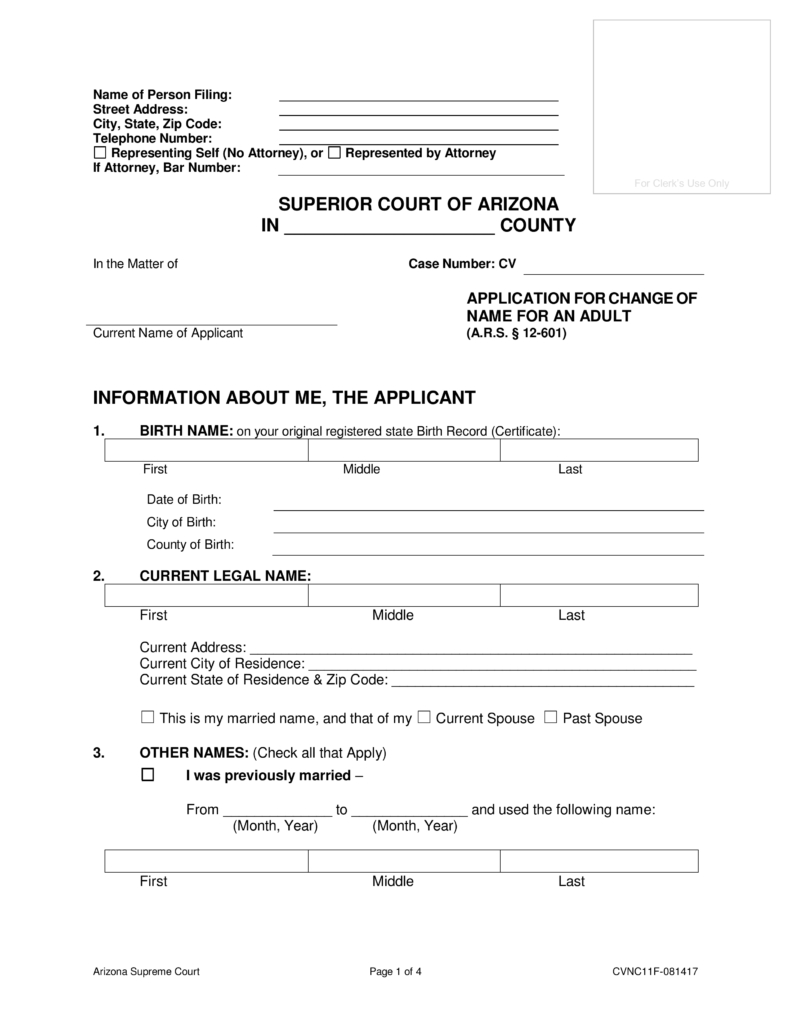
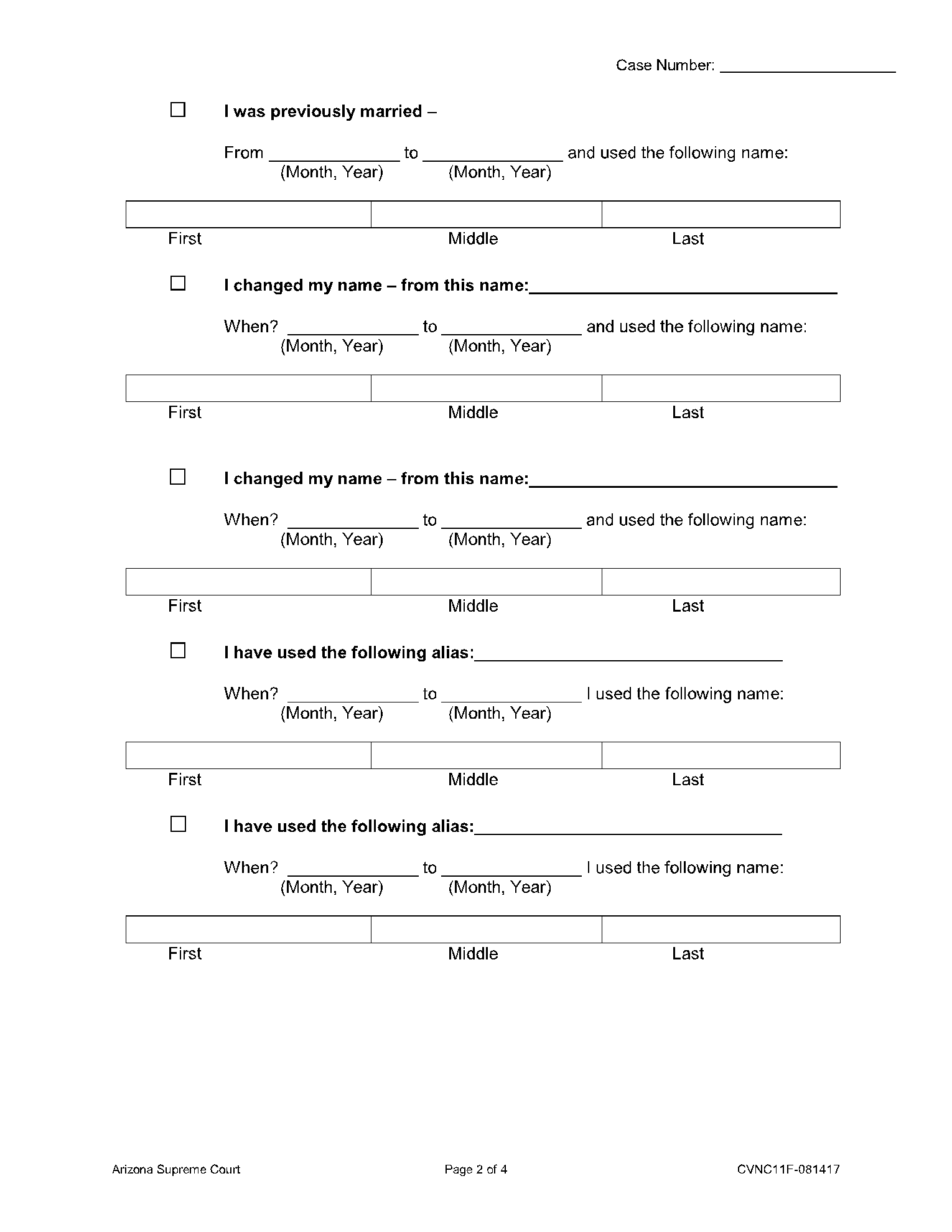
The cornerstone of the legal name change process in Arizona is the filing of a “Petition for Change of Name.” This document serves as the formal request to the court, outlining the reasons for the desired name change and providing essential personal information.
Key Information Required for the Petition
When preparing your petition, you will need to gather and accurately present several pieces of information:
- Full Legal Name: Your current full legal name as it appears on your birth certificate or other official documents.
- Desired New Name: The exact name you wish to be legally known by moving forward. Ensure this is written clearly and without ambiguity.
- Reason for the Name Change: While a broad range of reasons are acceptable, you must state your rationale. Common reasons include marriage, divorce, personal preference, or to honor a family member. It’s important to note that name changes for fraudulent purposes or to evade creditors or legal obligations are prohibited.
- Current Address: Your residential address in Arizona.
- Date and Place of Birth: Your birthdate and the city and state or country of your birth.
- Criminal History Information: You will likely need to disclose any prior felony convictions or pending criminal charges. This information is crucial for the court’s assessment.
- Affidavit of Identity: In many cases, you will need to submit an affidavit swearing to the truthfulness of the information provided in your petition.
Where to File Your Petition
The petition must be filed with the Superior Court in the county where you currently reside. Each county in Arizona has its own Superior Court. It is advisable to contact the clerk of the court in your county or visit their website for specific forms and filing procedures, as minor variations may exist.
The Court Process and Hearing
Once the petition is filed, the court will review it to ensure all requirements are met. This review is a critical stage, and any errors or omissions can lead to delays or rejection of your request.
Publication Requirements
A significant step in the Arizona name change process involves public notification. For most name changes, Arizona Revised Statutes require that notice of the pending petition be published in a newspaper of general circulation in the county where the petition was filed. This publication requirement serves to inform the public of the intended name change and provides an opportunity for any interested parties to object.
- Newspaper Selection: You will need to select a newspaper designated by the court as having general circulation. The court clerk can often provide a list of approved newspapers.
- Publication Schedule: The notice must typically be published once a week for a specified number of consecutive weeks (often three to four weeks). The exact duration will be stipulated by court rules.
- Affidavit of Publication: After the publication period concludes, the newspaper will provide you with an affidavit of publication. This affidavit must be filed with the court as proof that the required notice was given.
The Court Hearing
Following the publication period and the filing of the affidavit of publication, the court will typically schedule a hearing. This hearing is an opportunity for the judge to review your petition, the evidence presented (including the affidavit of publication), and to ask any questions they may have.
- Appearance: In most cases, you will be required to appear in court for the hearing. However, if there are no objections filed and the petition is in order, some courts may grant the name change without a formal hearing, especially for simpler cases. It is best to confirm this with your local court clerk.
- Objections: If any party has a valid legal reason to object to your name change, they may do so by filing an objection with the court. If an objection is filed, the hearing will become more formal, and you may need to present evidence to support your petition.
- Judge’s Decision: The judge will consider all the information presented, including the reasons for your name change and any potential objections. If satisfied that the name change is not for fraudulent purposes and meets all legal requirements, the judge will sign an Order for Change of Name.
Post-Order Procedures: Making Your Name Change Official
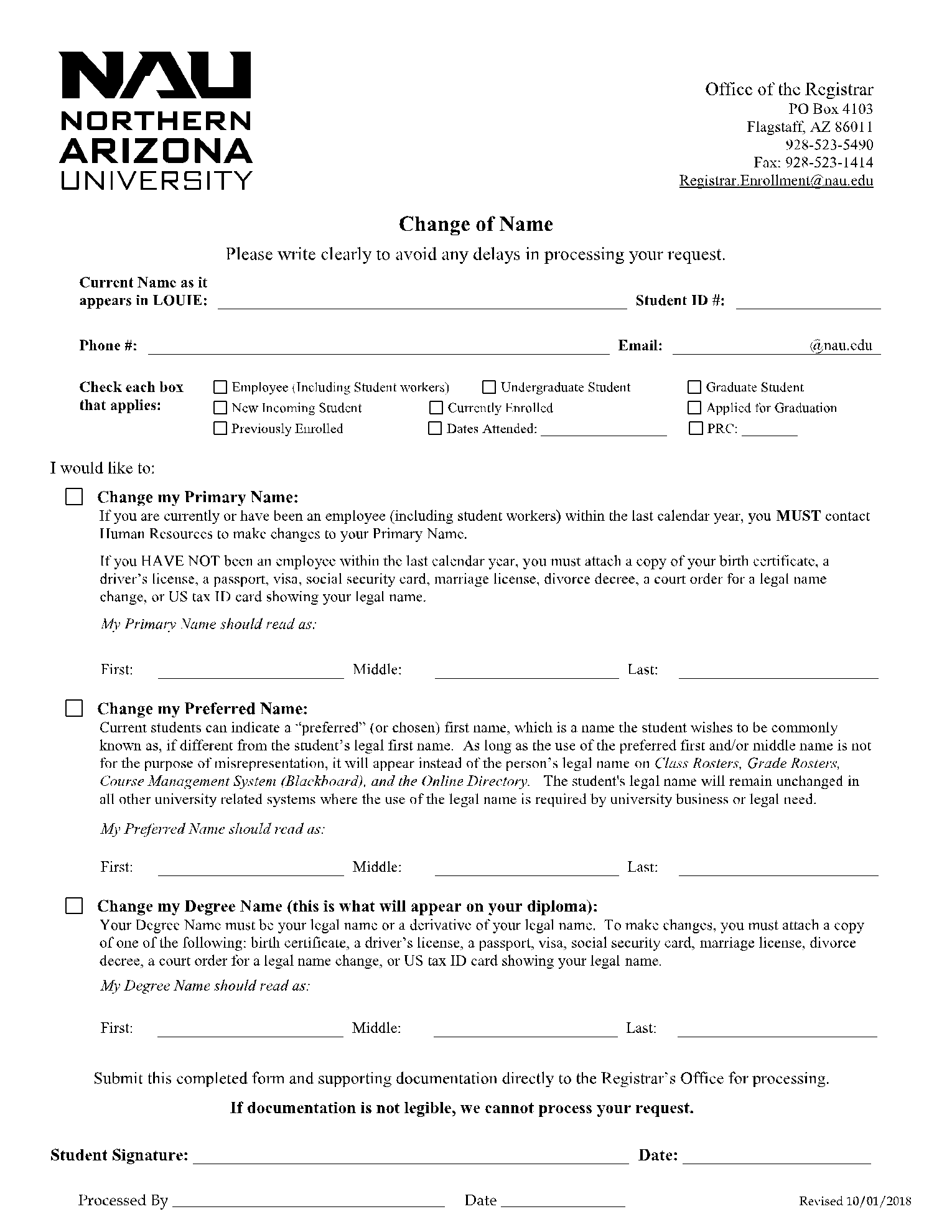
Receiving the signed Order for Change of Name from the court is a significant milestone. However, the legal process is not fully complete until you take steps to update your identification and notify relevant agencies and institutions. This is where the practical application of your new identity begins.
Updating Official Documents and Identification
The court order is the legal document that validates your new name. You will need to use certified copies of this order to update your identification and records with various government agencies and private entities.
- Social Security Administration: This is often the first place to update your name. You will need to provide proof of your name change (the court order) and proof of your identity. Updating your Social Security card is a crucial step as it is linked to many other forms of identification and financial accounts.
- Driver’s License/State ID: Visit the Arizona Motor Vehicle Division (MVD) to update your driver’s license or state identification card. You will need your court order and your existing identification.
- Passport: If you hold a U.S. passport, you will need to apply for a new one with your updated name. The process and required documentation are available through the U.S. Department of State.
- Birth Certificate: While a court order changes your legal name, it does not automatically alter your original birth certificate. Depending on the state where you were born, you may be able to request an amended birth certificate reflecting your new name. This process varies significantly by state.
- Voter Registration: Ensure your voter registration reflects your new name to avoid any issues when casting your ballot.
Notifying Other Institutions and Service Providers
Beyond official identification, numerous other entities need to be informed of your name change to ensure all your records are consistent.
- Financial Institutions: Banks, credit card companies, investment firms, and loan providers should be notified. You’ll likely need to present a certified copy of your court order.
- Employer: Inform your employer so they can update your payroll, benefits, and HR records.
- Insurance Providers: Update your auto, home, health, and life insurance policies.
- Utilities and Service Providers: Notify your electricity, gas, water, internet, and mobile phone providers.
- Landlord or Mortgage Company: If you rent or own property, update your lease agreement or mortgage records.
- Schools and Educational Institutions: If you are a student or have children attending school, update their records.
- Medical Providers: Inform your doctors, dentists, and other healthcare providers.
- Professional Licenses: If you hold any professional licenses (e.g., nursing, law, real estate), you will need to update them with the relevant licensing boards.
- Online Accounts and Subscriptions: While less critical, it’s good practice to update your name on various online accounts, loyalty programs, and subscription services.
Special Considerations and Alternatives
While the court process is the most common and legally sound method for changing your name in Arizona, there are some specific circumstances and alternatives to consider, particularly for individuals undergoing marriage or divorce.
Name Changes Through Marriage
When individuals marry, they often choose to adopt their spouse’s last name or hyphenate their surnames. In Arizona, the marriage license itself can serve as sufficient legal documentation for a name change following a wedding, provided the name change is indicated on the marriage license application.
- Indicate on Marriage License: During the marriage license application process, there is usually a section where you can specify your intent to change your surname.
- Use Marriage Certificate: The certified copy of your marriage certificate will then serve as your legal proof of name change for updating identification and records, similar to a court order. This is generally a simpler process than a formal court petition for individuals changing their name due to marriage.
Name Changes Through Divorce
Following a divorce, individuals may wish to revert to their maiden name or a previous surname. Arizona divorce decrees often include provisions for restoring a former name.
- Request in Divorce Decree: If you wish to change your name as part of a divorce, you must specifically request this in the divorce petition.
- Divorce Decree as Proof: If the judge grants the name change in the final divorce decree, this document will serve as your legal proof for updating your identification and records. This is typically a more straightforward path than filing a separate name change petition after the divorce is finalized.
Seeking Legal Counsel
While the process for changing your name in Arizona can be managed without an attorney, there are situations where seeking legal advice is highly recommended.
- Complex Cases: If you have a criminal record, if there are potential objections to your name change, or if the process becomes complicated, an attorney can provide invaluable guidance and representation.
- Ensuring Accuracy: A legal professional can ensure that all paperwork is filed correctly and that you meet all statutory requirements, minimizing the risk of delays or rejections.
By understanding and diligently following the outlined procedures, individuals in Arizona can successfully navigate the path to legally changing their last name, embarking on a new chapter with their updated identity.
LifeOutOfTheBox is a participant in the Amazon Services LLC Associates Program, an affiliate advertising program designed to provide a means for sites to earn advertising fees by advertising and linking to Amazon.com. Amazon, the Amazon logo, AmazonSupply, and the AmazonSupply logo are trademarks of Amazon.com, Inc. or its affiliates. As an Amazon Associate we earn affiliate commissions from qualifying purchases.