
Navigating the legal landscape of divorce can be a daunting prospect, especially when seeking to do so without the assistance of legal counsel. In Arizona, the process for filing for divorce, also known as dissolution of marriage, is designed to be accessible, allowing individuals to represent themselves. This approach, often referred to as proceeding “pro se,” requires careful attention to detail, a thorough understanding of the relevant legal procedures, and a commitment to accuracy. This guide aims to demystify the self-representation divorce process in Arizona, providing a clear roadmap for individuals seeking an amicable and straightforward dissolution.

Understanding the Basics of Divorce in Arizona
Before embarking on the process of filing, it’s crucial to grasp the fundamental requirements and terminology associated with divorce in Arizona. The state operates under a “no-fault” divorce system, meaning that neither spouse needs to prove wrongdoing by the other to obtain a dissolution. The only grounds required are that the marriage is “irretrievably broken,” signifying that there is no reasonable prospect of reconciliation.
Residency Requirements
To file for divorce in Arizona, at least one of the spouses must meet specific residency requirements. One party must have resided in the state for at least 90 days immediately preceding the filing of the Petition for Dissolution of Marriage. This ensures that the courts have jurisdiction over the matter.
Types of Divorce in Arizona
While the term “divorce” is commonly used, Arizona courts use the term “dissolution of marriage.” There are two primary paths to consider:
- Uncontested Divorce: This is the ideal scenario for self-representation. An uncontested divorce occurs when both spouses agree on all terms of the divorce, including the division of property and debts, spousal maintenance (alimony), child custody, and child support.
- Contested Divorce: If spouses cannot agree on one or more of these issues, the divorce becomes contested. While it is possible to represent oneself in a contested divorce, it is significantly more complex and often requires legal expertise to navigate court proceedings, negotiations, and potential trials. This guide primarily focuses on the uncontested path.
Key Terminology
Familiarizing yourself with common legal terms will make the process less intimidating:
- Petitioner: The spouse who initiates the divorce proceedings by filing the initial documents with the court.
- Respondent: The spouse who receives the divorce papers and must respond.
- Petition for Dissolution of Marriage: The legal document that officially begins the divorce process.
- Summons: A document informing the respondent that a lawsuit has been filed against them and outlining their rights and responsibilities.
- Decree of Dissolution of Marriage: The final court order that legally terminates the marriage.
- Maricopa County Superior Court: In Maricopa County, the process is handled by the Superior Court. Other counties will have their respective Superior Courts.
Steps to Filing for Divorce Pro Se in Arizona
Successfully filing for divorce without a lawyer involves a structured approach to completing and submitting the necessary legal forms. The Arizona Courts website provides a wealth of resources, including downloadable forms and self-help guides.
Step 1: Obtain and Complete the Necessary Forms
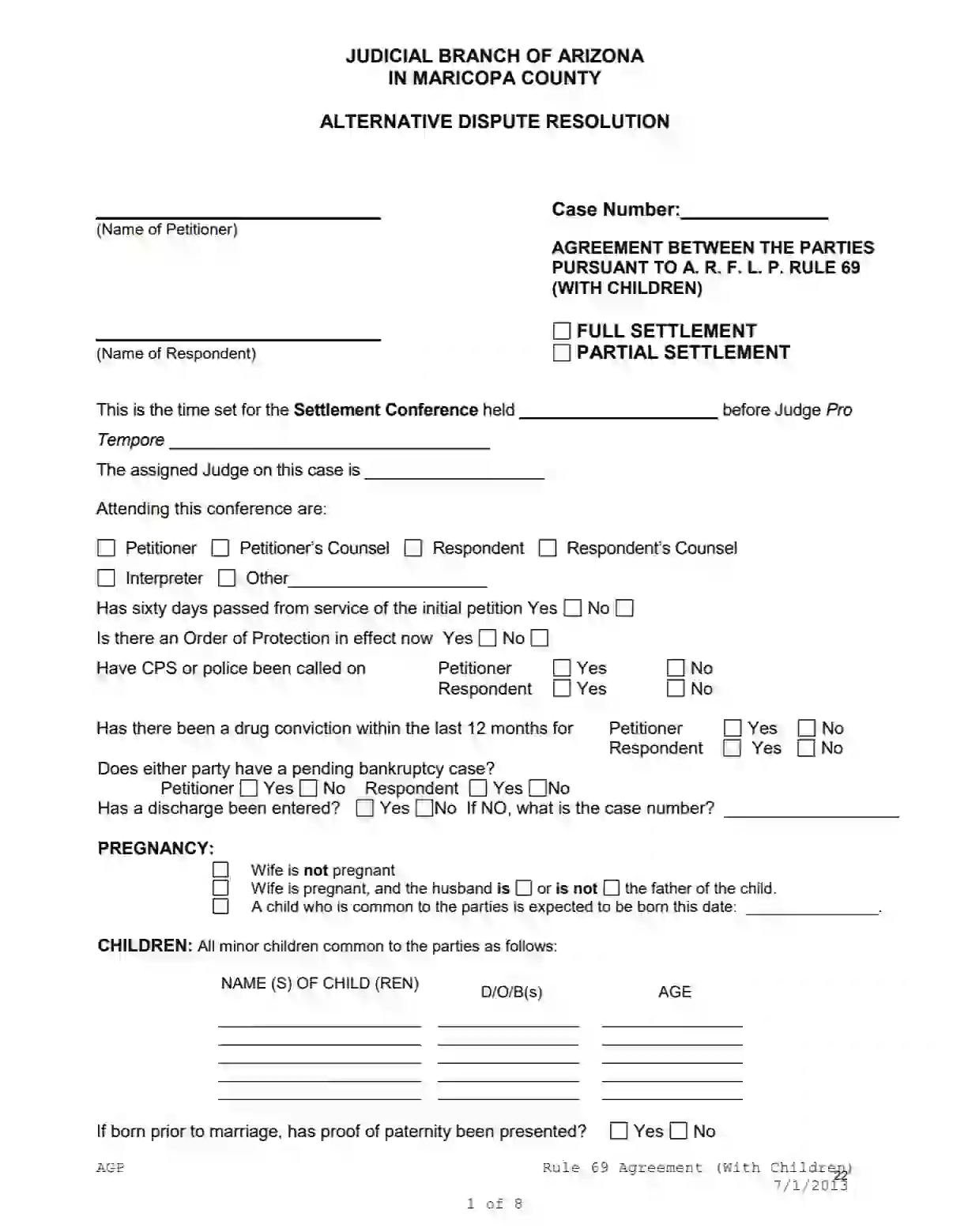
The first and most critical step is to gather the correct legal documents. For an uncontested dissolution of marriage, you will typically need:
- Petition for Dissolution of Marriage: This document provides basic information about the parties, the marriage, children (if any), and the grounds for divorce. It is filed by the Petitioner.
- Summons: This is a formal notification to the Respondent.
- Notice of Joinder of Issue: This form is filed after the Respondent has responded.
- Parenting Plan (if children are involved): This outlines custody arrangements, visitation schedules, and decision-making responsibilities.
- Child Support Worksheet (if children are involved): Used to calculate child support obligations based on Arizona guidelines.
- Decree of Dissolution of Marriage: The final document that the judge will sign to grant the divorce.
- Affidavit of Financial Information: This form requires a detailed disclosure of each party’s income, expenses, assets, and debts.
- Other potential forms: Depending on the specifics of your case, you might need forms related to property division, spousal maintenance, or other relevant matters.
When filling out these forms, accuracy and completeness are paramount. Double-check all dates, names, addresses, and financial figures. Mistakes can lead to delays or rejection of your filings. It’s advisable to fill out forms electronically if possible to avoid illegible handwriting.
Step 2: File the Documents with the Court
Once all necessary forms are completed, they must be filed with the Clerk of the Superior Court in the county where you or your spouse resides. There will be a filing fee associated with initiating the divorce. If you cannot afford the fee, you can apply for a fee waiver by submitting a “Request for Waiver of Filing Fees” and an “Affidavit of
Upon filing the Petition for Dissolution of Marriage and the Summons, the court will assign a case number. It is essential to keep this case number for all future court documents and correspondence.
Step 3: Serve the Respondent

After filing, the Respondent must be formally notified of the divorce proceedings. This is known as “service of process.” The Petitioner cannot personally serve the Respondent. Service must be carried out by a neutral third party, such as a sheriff’s deputy, a professional process server, or any adult (18 years or older) who is not a party to the case.
The server will deliver a copy of the filed Petition, the Summons, and any other filed documents to the Respondent. Proof of service, typically an Affidavit of Service, must be completed by the server and filed with the court. This demonstrates that the Respondent was properly notified.
There are alternative methods of service if direct service is not possible, such as service by certified mail or, in some cases, by publication. However, these methods have specific requirements and should only be used as a last resort with careful adherence to court rules.
Step 4: The Respondent’s Response
After being served, the Respondent has a specific timeframe (typically 20 days, or 30 days if served outside of Arizona) to file a response with the court. In an uncontested divorce where both parties are cooperating, the Respondent may sign a “Respondent’s Counterclaim/Answer” indicating agreement with the Petition’s terms or present their own terms. If the Respondent does not respond within the allotted time, the Petitioner may be able to proceed with a default judgment, although this is generally not the preferred route for an amicable dissolution.
Step 5: Finalizing the Divorce
If both parties agree on all terms, they will work together to finalize the Decree of Dissolution of Marriage. This typically involves:
- Submitting the Final Decree: Both parties should review and sign the final Decree of Dissolution of Marriage, ensuring all agreed-upon terms are accurately reflected.
- Financial Disclosures: If children are involved, the court will require finalized child support calculations and a clear parenting plan. Both parties must also submit their Affidavit of Financial Information.
- Court Review: The judge will review the submitted documents. If everything is in order and all legal requirements are met, the judge will sign the Decree of Dissolution of Marriage.
- Obtaining the Signed Decree: Once signed, the Decree is a legally binding document. Ensure you obtain a certified copy for your records.
This process can take anywhere from 60 days (the minimum waiting period in Arizona after service) to several months, depending on the court’s caseload and the complexity of the case.
Considerations for Self-Represented Divorces
While proceeding without a lawyer in Arizona is feasible, it comes with significant responsibilities. It is crucial to be aware of potential pitfalls and to utilize available resources to ensure the process is handled correctly.
Dealing with Children
If children are involved, the court’s primary concern is their best interests. A detailed and comprehensive Parenting Plan is essential. This plan should address:
- Legal Decision-Making: Who makes decisions regarding education, healthcare, and religious upbringing. This can be sole legal decision-making or joint legal decision-making.
- Physical Custody and Parenting Time: Where the children will live primarily, and a detailed schedule of when they will spend time with each parent.
- Child Support: As mandated by Arizona law, child support is calculated based on parental income and the number of overnights. The Child Support Worksheet is a critical tool for this.
Dividing Property and Debts
Arizona is a community property state. This means that any assets or debts acquired by either spouse during the marriage are considered jointly owned and must be divided equitably. This can include:
- Real Estate: Homes, land.
- Financial Accounts: Savings accounts, checking accounts, retirement funds.
- Vehicles: Cars, boats.
- Personal Property: Furniture, jewelry, collections.
- Debts: Mortgages, car loans, credit card debt, student loans.
Accurate disclosure of all assets and debts is vital. Failure to fully disclose can lead to legal repercussions.
Spousal Maintenance (Alimony)
Spousal maintenance, or alimony, may be awarded in Arizona under certain circumstances. Factors influencing a decision include the length of the marriage, the financial resources of each spouse, the standard of living during the marriage, and the ability of one spouse to meet their needs independently. If spousal maintenance is a consideration, careful review of relevant statutes is necessary.
Seeking Assistance When Needed
Even when aiming for a pro se divorce, there are instances where seeking limited legal advice can be beneficial. Many attorneys offer “unbundled services” or “limited scope representation,” where they can provide guidance on specific issues or review documents without taking on the entire case. Additionally, legal aid societies and pro bono services may be available for those with limited income. The Arizona State Bar website can be a resource for finding such services.
Self-representing in a divorce in Arizona requires diligence, patience, and a commitment to understanding and following legal procedures. By carefully preparing documents, adhering to timelines, and utilizing available resources, individuals can successfully navigate the dissolution process and achieve a satisfactory outcome.
LifeOutOfTheBox is a participant in the Amazon Services LLC Associates Program, an affiliate advertising program designed to provide a means for sites to earn advertising fees by advertising and linking to Amazon.com. Amazon, the Amazon logo, AmazonSupply, and the AmazonSupply logo are trademarks of Amazon.com, Inc. or its affiliates. As an Amazon Associate we earn affiliate commissions from qualifying purchases.