
Arizona, often lauded for its stunning desert landscapes and vibrant cities, is also a state that operates under a particular legal framework regarding employment. For both employers and employees navigating the professional landscape of the Grand Canyon State, understanding the concept of “at-will employment” is crucial. This principle dictates much of the employer-employee relationship, influencing hiring, firing, and the overall dynamics of the workplace. This article delves into what it means to be an at-will employment state, specifically in the context of Arizona, exploring its implications, exceptions, and practical considerations for those living and working within its borders.
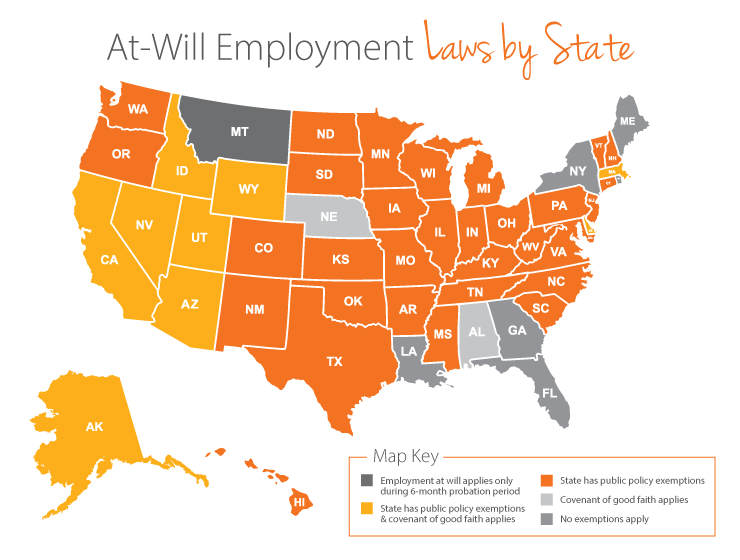
Understanding At-Will Employment in Arizona
At-will employment is a legal doctrine that signifies an employer or employee can terminate the employment relationship at any time, for any reason, or for no reason at all, as long as the reason is not illegal. This means that, in theory, an employer can fire an employee for a reason as simple as disliking their favorite sports team, provided that the disliking is not a pretext for illegal discrimination. Conversely, an employee can quit their job for any reason or no reason without facing legal repercussions.
The General Rule in Arizona
In Arizona, the default employment relationship is presumed to be at-will. This presumption is deeply embedded in the state’s legal tradition and is derived from common law principles. Unlike some other states that have moved towards more restrictive employment laws, Arizona has largely maintained this at-will doctrine as its foundation. This provides employers with significant flexibility in managing their workforce.
The rationale behind at-will employment is rooted in mutual freedom of contract. Both parties are seen as having the liberty to end the employment relationship when they deem it beneficial. For employers, this offers a streamlined approach to managing performance issues, restructuring their business, or adapting to changing market conditions without the procedural hurdles often associated with “just cause” employment systems.
Key Implications for Employers
For businesses operating in Arizona, the at-will doctrine has several key implications:
- Hiring Flexibility: Employers can hire individuals without necessarily having to prove a specific need or guarantee long-term employment.
- Termination Ease: Terminating an employee’s employment can be relatively straightforward, without the need for extensive documentation of progressive discipline or the requirement to demonstrate “just cause” for dismissal. This can be particularly beneficial during economic downturns or when an employee’s performance consistently falls short of expectations.
- Policy Considerations: While at-will employment is the default, employers must still be mindful of their own policies and handbooks. Language that suggests or implies a guarantee of continued employment or a specific termination process can inadvertently alter the at-will status.
Key Implications for Employees
For individuals employed in Arizona, understanding at-will employment is equally important:
- Job Security: Employees generally do not have an expectation of continued employment beyond their employer’s willingness to retain them. This means job security is largely dependent on satisfactory performance and the overall health of the business.
- Right to Resign: Employees have the freedom to leave their jobs at any time without needing to provide advance notice, although professional courtesy often dictates giving two weeks’ notice.
- Need for Due Diligence: When seeking employment, it is prudent for employees to understand their role, responsibilities, and the expectations of their employer. Building a strong performance record is the most reliable way to foster job stability in an at-will environment.
Exceptions to the At-Will Doctrine in Arizona
While Arizona operates under the at-will employment principle, this doctrine is not absolute. Several significant exceptions protect employees from wrongful termination. These exceptions are crucial for maintaining a fair and equitable workplace, ensuring that employers do not abuse their power and that employees are not subjected to illegal or unethical treatment.
Public Policy Exception
One of the most significant exceptions to at-will employment is the public policy exception. This exception prevents employers from terminating an employee for reasons that violate a clear mandate of public policy. This can include, but is not limited to, situations where an employee is fired for:
- Refusing to commit an illegal act: If an employer asks an employee to do something illegal, and the employee refuses, they cannot be fired for that refusal.
- Reporting illegal activities: Employees who report illegal activities by their employer to the appropriate authorities (whistleblowing) are protected from retaliation.
- Exercising a legal right: This can include things like filing a workers’ compensation claim, taking legally protected leave (such as FMLA), or serving on a jury.
- Assisting in a government investigation: Employees who cooperate with law enforcement or government agency investigations are also protected.
The public policy exception aims to ensure that employees do not have to choose between their job and upholding the law or their civic duties.
Implied Contract Exception

Another critical exception arises when an implied contract of employment exists. While Arizona law generally holds that employment contracts must be in writing to be enforceable, an implied contract can be created through an employer’s words or actions. This can occur in several ways:
- Employee Handbooks and Manuals: If an employer’s handbook or policy manual contains language that suggests a specific disciplinary procedure or promises employment for a defined period or under specific conditions, it may create an implied contract. For example, a handbook stating that an employee will only be terminated for “just cause” or after a series of written warnings could be interpreted as an implied contract altering the at-will status.
- Verbal Assurances: In some cases, specific verbal assurances made by a supervisor or company representative regarding job security or termination procedures might be considered to create an implied contract. However, these are often harder to prove than written statements.
- Established Practices and Customs: A long-standing company practice that deviates from the at-will principle might also be argued as creating an implied contract.
It is crucial for employers to carefully review their handbooks and to ensure that any communications with employees do not inadvertently create contractual obligations that alter the at-will employment relationship. Similarly, employees should pay close attention to the language used in their company’s policies and any assurances they receive.
Covenant of Good Faith and Fair Dealing
In Arizona, courts have recognized an implied covenant of good faith and fair dealing in certain employment relationships. This exception generally applies to situations where an employer acts in bad faith to deprive an employee of their earned wages or benefits, or engages in conduct that undermines the spirit of the employment agreement. This is not an exception that allows an employee to be fired for any reason; rather, it focuses on the employer’s conduct in relation to the termination.
Examples of conduct that might violate the covenant of good faith and fair dealing include:
- Terminating an employee to avoid paying earned commissions or bonuses.
- Falsely accusing an employee of misconduct to justify termination and prevent them from obtaining new employment.
- Creating a hostile work environment or fabricating performance issues to force an employee to quit.
This exception is often more narrowly construed than the public policy or implied contract exceptions and requires a strong showing of bad faith on the part of the employer.
Practical Considerations for Arizona Workplaces
Navigating the nuances of at-will employment in Arizona requires a proactive and informed approach from both employers and employees. Understanding these exceptions is not merely an academic exercise; it has tangible consequences for daily operations and individual careers.
For Employers: Mitigating Risks and Fostering Compliance
Employers in Arizona must be diligent in their employment practices to avoid potential legal challenges. This includes:
- Crafting Clear and Consistent Policies: Employee handbooks should be carefully drafted and regularly reviewed to ensure they do not contain language that could be construed as creating an express or implied contract for employment security. Explicitly stating that employment is at-will and that the handbook does not alter this status is a common and recommended practice.
- Consistent Application of Policies: Even in an at-will state, inconsistent application of policies can lead to claims of discrimination. Employers should ensure that disciplinary actions and termination decisions are based on objective performance standards and applied fairly across all employees.
- Documentation is Key: While not always required for termination in an at-will state, thorough documentation of performance issues, warnings, and any attempts at improvement can be invaluable in defending against wrongful termination claims, especially those alleging discrimination or retaliation.
- Training for Managers and Supervisors: Managers and supervisors are often on the front lines of employee relations. Providing them with training on employment law, company policies, and best practices for employee management is essential to prevent unintentional breaches of legal obligations.
- Consulting Legal Counsel: It is always advisable for employers to consult with an experienced employment attorney in Arizona when developing employment policies, addressing complex employee issues, or considering terminations that could be subject to legal scrutiny.
For Employees: Understanding Your Rights and Protections
Employees in Arizona should be aware of their rights and the protections afforded to them:
- Read Your Employment Documents Carefully: Pay close attention to offer letters, employment contracts, and employee handbooks. Understand the terms and conditions of your employment.
- Document Everything: Keep records of your performance reviews, communications with your employer, and any instances of unfair treatment or potential violations of company policy or law.
- Seek Clarification: If you are unsure about your employment status, company policies, or your rights, do not hesitate to ask your HR department or a trusted supervisor for clarification.
- Know When to Seek Professional Advice: If you believe you have been wrongfully terminated or have been subjected to illegal employment practices, consult with an employment attorney to understand your options.

Arizona’s Unique Employment Landscape
Arizona’s status as an at-will employment state shapes its business environment and the experiences of its workforce. While offering flexibility to employers, the existence of well-established exceptions ensures that fundamental employee protections remain in place. This balance aims to foster a dynamic economy while safeguarding against egregious injustices.
The presence of vibrant economic centers like Phoenix, Tucson, and Scottsdale means a diverse range of industries and employment opportunities. From the tech sector in Tempe to the growing healthcare industry and the perennial influence of tourism, businesses in Arizona operate within this legal framework. Understanding the implications of at-will employment is a cornerstone for successful professional engagement, whether you are a startup founder in Chandler or an individual seeking a new career path in Mesa.
The tourism and hospitality sectors, which are significant contributors to Arizona’s economy, also operate under these principles. Hotels, resorts, and attractions, from the iconic Grand Canyon National Park to the cultural hubs of Sedona, rely on a workforce that operates within the at-will doctrine. This means that while employers can adapt their staffing to meet seasonal demands or fluctuating visitor numbers, they must also adhere to the legal exceptions to prevent unfair dismissals. The ability to maintain a flexible workforce can be crucial for businesses in areas like the Sonoran Desert, which experience seasonal peaks and troughs in visitor traffic.
Ultimately, whether one is considering an investment in Arizona real estate for a business, seeking employment in the burgeoning creative industries, or simply enjoying the abundant outdoor activities like hiking in Camelback Mountain or visiting the Arizona-Sonora Desert Museum, an awareness of the state’s employment laws is an essential part of fully understanding its operational landscape. The at-will doctrine, with its attendant exceptions, forms a critical part of the legal and professional infrastructure of the state.
LifeOutOfTheBox is a participant in the Amazon Services LLC Associates Program, an affiliate advertising program designed to provide a means for sites to earn advertising fees by advertising and linking to Amazon.com. Amazon, the Amazon logo, AmazonSupply, and the AmazonSupply logo are trademarks of Amazon.com, Inc. or its affiliates. As an Amazon Associate we earn affiliate commissions from qualifying purchases.