
Understanding the time zone nuances of Arizona is a critical piece of knowledge for any traveler planning a visit to the Grand Canyon State. While most of the contiguous United States observes Daylight Saving Time, Arizona, with a few exceptions, remains steadfastly on Mountain Standard Time (MST) year-round. This unique characteristic can lead to confusion for visitors accustomed to the seasonal clock shifts and impacts everything from flight schedules to the timing of popular tours and activities.
Arizona’s Unique Time Zone Status
Arizona’s decision to opt out of Daylight Saving Time is a significant factor for travelers. Unlike the majority of the United States, which springs forward in March and falls back in November, Arizona maintains a consistent time. This means that for a portion of the year, Arizona is on the same time as its neighboring states to the east that observe DST, and for another portion, it aligns with states to the west.
The Mountain Standard Time (MST) Advantage
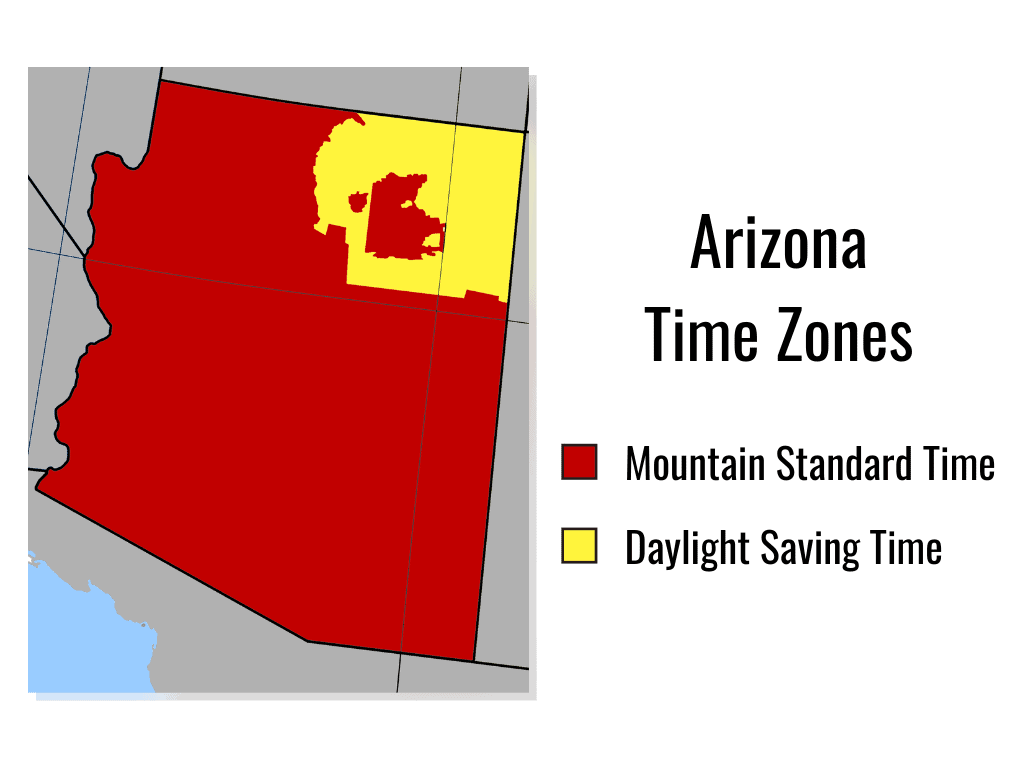
The primary time zone designation for Arizona is Mountain Standard Time (MST). This is the time zone that Greenwich Mean Time (GMT) minus seven hours. The key distinction is that Arizona does not advance its clocks for Daylight Saving Time. This results in a peculiar calendar dance with the rest of the United States.
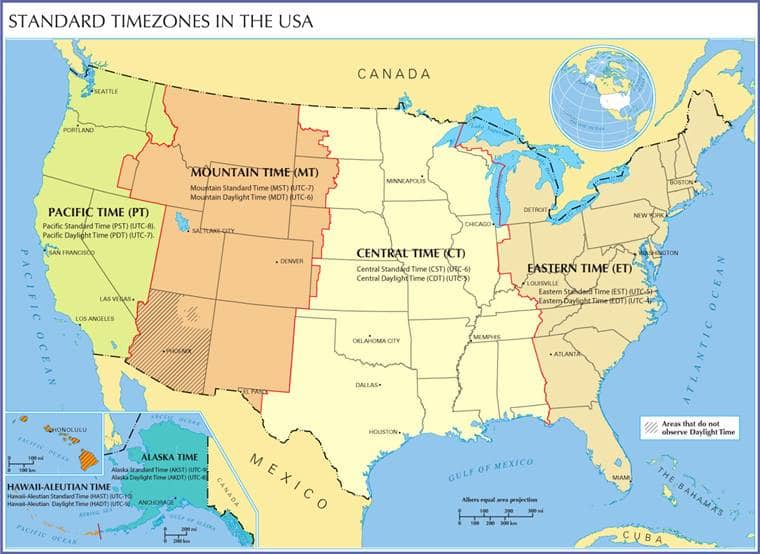
During the months when the rest of the country observes Daylight Saving Time (roughly March to November), Arizona is effectively one hour behind the Pacific Daylight Time (PDT) zone and three hours behind the Eastern Daylight Time (EDT) zone. However, when Daylight Saving Time ends and clocks are set back, Arizona finds itself aligned with the Mountain Time Zone of neighboring states like Colorado and Utah, which are then also on MST. This consistency simplifies planning for some, but can still be a point of confusion for first-time visitors or those making last-minute travel arrangements.
The Navajo Nation Exception
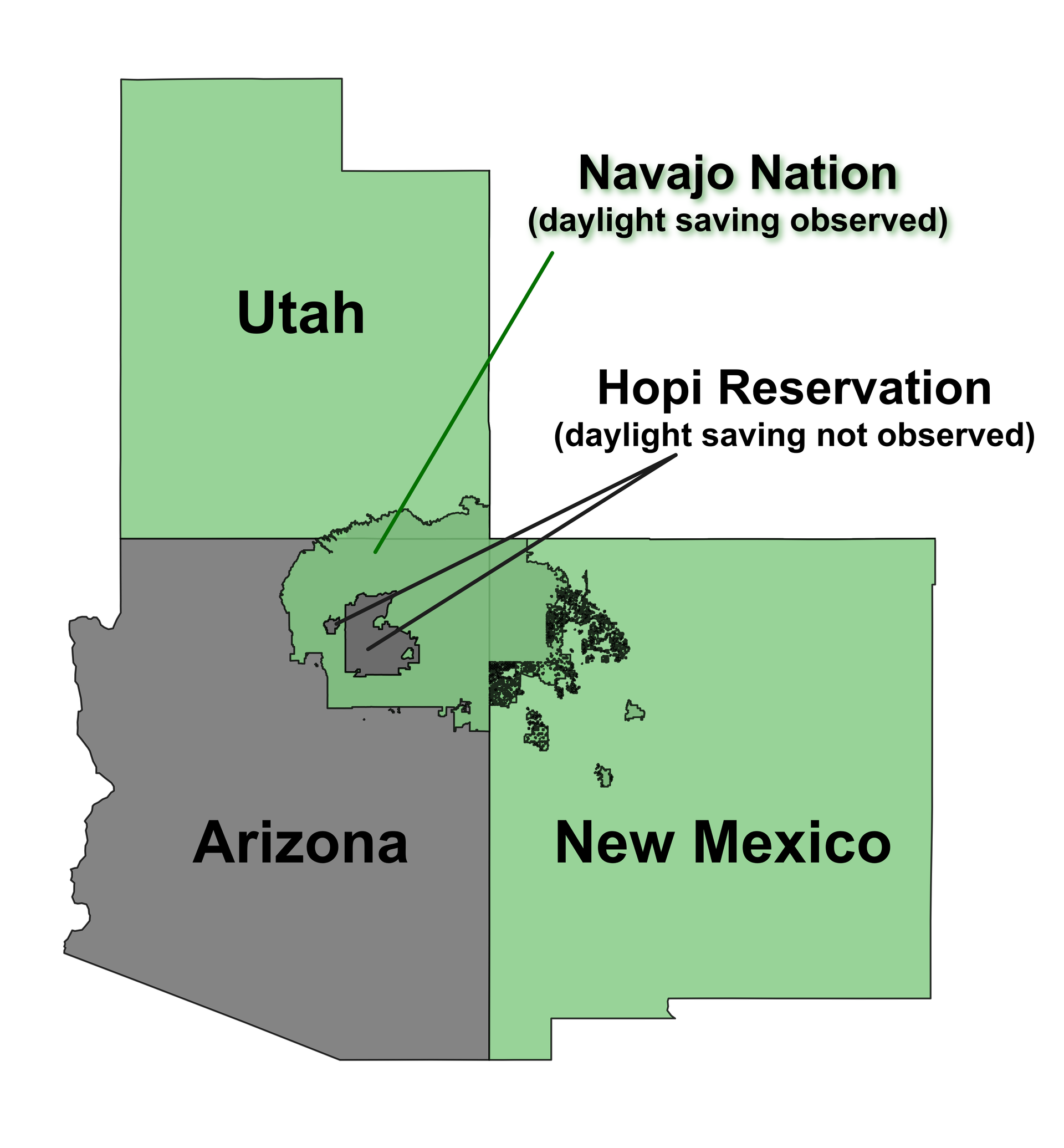
It is important to note that there is a notable exception to Arizona’s DST policy: the Navajo Nation. The Navajo Nation, which spans parts of Arizona, New Mexico, and Utah, does observe Daylight Saving Time. This means that during the DST period, the time within the Navajo Nation will be one hour ahead of the rest of Arizona.
This temporal divide within the state requires careful attention, especially for travelers planning visits to popular attractions located within the Navajo Nation, such as Monument Valley Navajo Tribal Park or the Grand Canyon National Park, which, while bordering the Navajo Nation, is located primarily on federal land and does not observe DST. This distinction is crucial for booking tours, making dinner reservations, or coordinating with local guides. Always confirm the specific time zone being used when making arrangements within or near the Navajo Nation.
Practical Implications for Travelers
Arizona’s time zone status has several practical implications for visitors. From coordinating arrival times to scheduling activities, being aware of MST and the DST observance in the Navajo Nation can prevent unnecessary stress and missed opportunities.
Airport Arrivals and Departures
When booking flights into airports like Phoenix Sky Harbor International Airport or McCarran International Airport in nearby Las Vegas, it is essential to confirm whether the listed flight times are in local Arizona time or the departure/arrival city’s local time. Most airlines will clearly indicate the time zone for arrival and departure. However, it is always prudent to double-check, especially when connecting through cities that do observe DST. A quick mental calculation can save you from arriving hours too early or, worse, missing your flight altogether.
For example, if you are flying from New York City (EDT) to Phoenix (MST) during DST, there is a three-hour difference. A 2 PM EDT departure would translate to an 11 AM MST arrival in Phoenix. Conversely, if you were flying from Los Angeles (PDT) to Phoenix, the difference would be only one hour. Always verify the time zone listed by the airline to ensure accurate arrival and departure planning.
Tour and Activity Scheduling
Arizona is renowned for its stunning natural landscapes and outdoor adventures. From hiking in the Sonoran Desert to exploring the vastness of the Grand Canyon, many popular activities are timed to take advantage of optimal daylight hours.
When booking guided tours, sunrise or sunset excursions, or even simple museum visits, pay close attention to the specified times. If your tour departs from a location within the Navajo Nation during DST, the stated time will be one hour ahead of the rest of Arizona. For instance, a 7 AM tour departure within the Navajo Nation would correspond to 6 AM MST in the rest of the state. This can significantly impact your morning or evening plans, so factor in this hour difference when coordinating transportation or planning your pre-tour activities.
Consider a popular sunrise hot air balloon ride over the Sonora Desert. If this is scheduled for 6 AM, and you are staying in a town outside the Navajo Nation, that is indeed 6 AM. However, if the launch site is within the Navajo Nation and it’s during DST, you’ll need to be there at what locals consider 6 AM, which is 5 AM MST in the rest of Arizona. This is a crucial detail for ensuring you don’t miss your once-in-a-lifetime experience.
Dining and Evening Entertainment
Evenings in Arizona can be magical, with opportunities for stargazing or enjoying local cuisine. Restaurants and entertainment venues will operate on local Arizona time. However, if you are dining in the Navajo Nation, especially during DST, the clocks will be set an hour forward. This means a 7 PM reservation in a Navajo Nation restaurant during DST is effectively a 6 PM MST reservation for those accustomed to Arizona time.
This can be particularly relevant when booking dinner reservations after a day of sightseeing. For instance, if you are visiting the Petrified Forest National Park, which is partly within the Navajo Nation, and plan to have dinner afterward, clarify the time zone for your reservation. Failure to do so might result in a slightly awkward wait or a rushed meal.
Navigating the Clock: Tips for a Smooth Trip
To ensure your Arizona adventure is as seamless as possible, here are some practical tips for navigating its unique time zone situation.
Double-Check Everything
The golden rule of travel in Arizona: always double-check the time zone when confirming any reservations or schedules, especially if your plans involve areas near or within the Navajo Nation. When booking online, look for explicit time zone indicators. If you are making reservations over the phone, ask the representative to confirm the time zone.
Sync Your Devices
Most modern smartphones and smartwatches automatically adjust to local time zones. However, it is a good practice to verify that your devices are set to update automatically. This will help minimize confusion, particularly when crossing into different time zones or the DST-observing areas of the Navajo Nation.
Communicate with Your Accommodation
If you are staying at a hotel, resort, or vacation rental, communicate with your hosts or the front desk about your itinerary. They are local experts and can provide invaluable advice on navigating local times, especially for any scheduled activities or excursions you might have booked. For example, a hotel in Flagstaff will operate on MST, but if you are planning a guided tour that departs from Kayenta, which is within the Navajo Nation, they can help you calculate the correct departure time.
Understand the “Why”
While the practical implications are most important for travelers, understanding the historical and practical reasons behind Arizona’s DST decision can also enhance your appreciation for the state. The arid climate and intense summer heat are often cited as primary reasons. The consistent MST is believed by many to offer benefits in terms of energy savings and reduced heat exposure, as daylight hours are not extended into the hottest parts of the evening. This unique approach to timekeeping is part of the distinctive character of the Grand Canyon State.
Embracing the Arizona Time
Arizona’s commitment to Mountain Standard Time year-round, with the exception of the Navajo Nation during DST, offers a degree of predictability for many visitors. While it requires a slight adjustment in thinking, especially for those accustomed to the biannual clock changes, it ultimately adds to the unique charm and logistical considerations of exploring this magnificent state. By being informed and prepared, travelers can ensure their Arizona journey is filled with seamless experiences, allowing them to fully immerse themselves in the breathtaking landscapes and vibrant culture that Arizona has to offer. From the red rocks of Sedona to the vast expanse of the Grand Canyon, understanding the time zone is simply another layer in the rich tapestry of planning an unforgettable trip.
LifeOutOfTheBox is a participant in the Amazon Services LLC Associates Program, an affiliate advertising program designed to provide a means for sites to earn advertising fees by advertising and linking to Amazon.com. Amazon, the Amazon logo, AmazonSupply, and the AmazonSupply logo are trademarks of Amazon.com, Inc. or its affiliates. As an Amazon Associate we earn affiliate commissions from qualifying purchases.