
Boston Terriers, with their distinctive tuxedo markings and charming personalities, are a beloved breed for many families. Often affectionately dubbed “the American Gentleman,” their compact size and generally amiable disposition make them seem like ideal companions for a wide range of activities, including those involving water. However, when considering water-based adventures, a crucial question arises for prospective and current Boston Terrier owners: Can Boston Terriers swim? The answer, while not a simple yes or no, delves into the breed’s physical characteristics and inherent capabilities, ultimately informing responsible pet ownership and ensuring the safety and enjoyment of these delightful dogs.

The short answer is that most Boston Terriers can technically swim, but they are not naturally gifted swimmers and often require supervision and precautions. Their physical build, while contributing to their unique appeal, presents certain challenges in the water. Understanding these characteristics is paramount for anyone planning to introduce their Boston Terrier to aquatic environments, from a leisurely dip in a backyard pool to a more adventurous day at the beach.
Understanding the Boston Terrier’s Aquatic Aptitude
The Boston Terrier’s physiology plays a significant role in their swimming ability, or lack thereof. Unlike breeds with longer snouts, webbed feet, or a more streamlined body shape that are naturally predisposed to efficient swimming, Boston Terriers possess a combination of traits that can impede their aquatic performance.
Body Shape and Buoyancy
Boston Terriers are a brachycephalic breed, meaning they have short muzzles and broad skulls. This characteristic, while endearing, can make it more difficult for them to keep their heads above water. Their chest is typically broad and deep, which can contribute to buoyancy, but their relatively short legs and compact bodies can make propulsion challenging. Unlike water-loving breeds such as Labrador Retrievers or Newfoundlands, Boston Terriers do not possess the same anatomical advantages for sustained swimming. Their head-to-head ratio can also mean they are more prone to taking on water when they exert themselves.
Breathing and Stamina
The brachycephalic nature of Boston Terriers can also affect their breathing, especially when exerting themselves. In water, this can be exacerbated. They may tire more quickly than other breeds due to the increased effort required to stay afloat and navigate the water. Their lung capacity, while sufficient for terrestrial activities, might be a limiting factor in sustained swimming, leading to fatigue and potential distress.
Temperament and Water Acclimation
Individual temperament also plays a crucial role. Some Boston Terriers might be naturally more adventurous and curious, potentially taking to water with less hesitation. Others may be more cautious or even fearful of the water. Introducing a Boston Terrier to water requires a patient and positive approach, focusing on gradual acclimation rather than forced immersion. Even a willing Boston Terrier can become anxious if they struggle to stay afloat or feel overwhelmed by the aquatic environment.
Essential Precautions for Boston Terriers in Water
Given their inherent limitations, responsible ownership dictates that several precautions be taken when a Boston Terrier is near or in water. These measures are not merely suggestions but vital steps to ensure their safety and well-being.
Life Vests: A Non-Negotiable Safety Gear
For any Boston Terrier who will be in or around water, a well-fitting life vest is an absolute necessity. These vests are designed to provide buoyancy, helping to keep the dog’s head above water and their rear end elevated. This significantly reduces the effort required to stay afloat and allows them to paddle more effectively, mimicking a more natural swimming motion. When selecting a life vest, ensure it has a strong D-ring for leash attachment, good buoyancy distribution, and adjustable straps for a secure fit. A vest that fits properly will prevent chafing and allow for freedom of movement.
Constant Supervision is Key
Never leave a Boston Terrier unattended near any body of water, including swimming pools, lakes, rivers, or even large puddles after a rainstorm. Even if a dog has shown an aptitude for swimming, their stamina can wane unexpectedly, or they could encounter unexpected currents or obstacles. Supervision should be active and vigilant, ensuring you can intervene immediately if your dog shows signs of distress, fatigue, or disorientation. This is especially critical in open water environments like the ocean or large lakes, where waves and currents can pose additional challenges.
Gradual Introduction and Positive Reinforcement
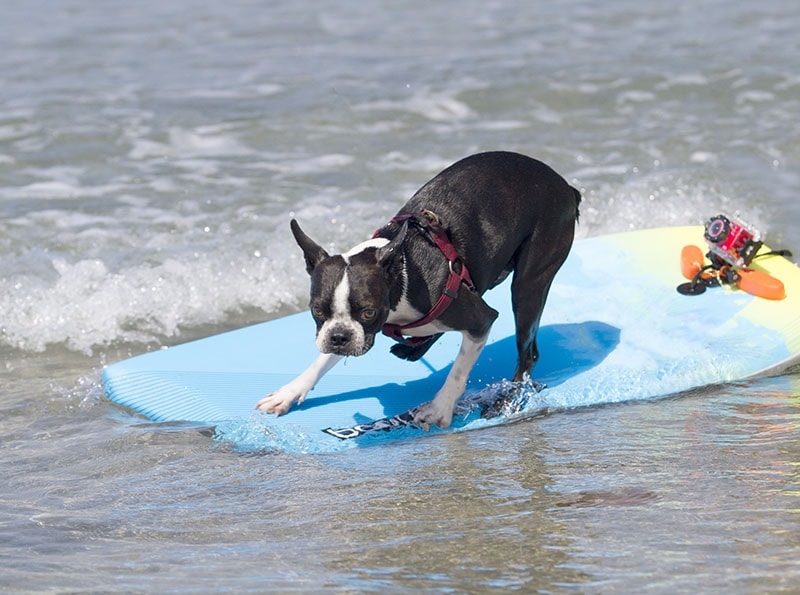
When introducing your Boston Terrier to water for the first time, do so gradually and in a controlled environment. Start with shallow water, such as a kiddie pool or the edge of a calm lake. Encourage them with treats, praise, and gentle encouragement. Never force them into the water. Let them explore at their own pace. You can enter the water with them, offering a reassuring presence. Celebrate small successes, like stepping into the water or paddling a short distance. The goal is to create positive associations with water, rather than a fear-inducing experience.
Exit Strategies and Pool Safety
If you own a swimming pool, ensure your Boston Terrier knows how to exit the pool safely. Many pools lack a gradual entry or steps that a dog can easily use. Teach your dog to locate the steps or ramp and to use them consistently. Regularly check that pool gates are secure to prevent accidental falls into the water when you are not present. For homes without easy exit points, consider a ramp or a portable dog pool ladder.
When is Swimming a Good Idea for a Boston Terrier?
While Boston Terriers are not natural swimmers, there are instances where supervised swimming can be a beneficial activity for them, offering a low-impact form of exercise and mental stimulation.
Low-Impact Exercise and Rehabilitation
For Boston Terriers prone to joint issues or requiring low-impact exercise due to age or injury, swimming can be an excellent option. The buoyancy of the water supports their body weight, reducing stress on their joints. This can be particularly useful for older dogs or those recovering from orthopedic surgery, under the guidance of a veterinarian. Hydrotherapy, often conducted in specialized facilities, can be highly beneficial for rehabilitation purposes.
Heat Relief on Hot Days
On scorching summer days, a supervised swim in a safe, shallow body of water can provide welcome relief for a Boston Terrier. However, it’s crucial to ensure the water temperature is not too extreme and that they don’t overexert themselves. Always follow up with fresh water to drink and a towel-dry to prevent skin issues. Visiting dog-friendly beaches on a warm day can be a pleasant outing, provided all safety precautions are observed.
Mental Stimulation and Bonding
For some Boston Terriers, water activities can provide a novel and stimulating experience. Learning to paddle and navigate in water, even for short periods, can challenge them mentally. The shared experience of a gentle swim or playing fetch at the water’s edge can also be a wonderful bonding opportunity between owner and dog, strengthening your relationship through shared adventures.
Recognizing Signs of Distress and Fatigue
It is imperative for owners to be able to recognize the signs that a Boston Terrier might be struggling in the water. Early detection can prevent a dangerous situation from escalating.
Signs of Struggling
- Head dipping or bobbing: The dog’s head may repeatedly dip below the water’s surface, indicating difficulty staying afloat.
- Frantic paddling: Uncoordinated and panicked paddling, often with the head held too high or too low.
- Whining or barking excessively: Vocalizations can indicate fear, distress, or exhaustion.
- Trying to climb on you: The dog may try to clamber onto their owner for support, which can be destabilizing for both.
- Swimming in circles: Disorientation or fatigue can lead to a lack of forward progress.
- Rapid, shallow breathing: A sign of increased exertion and potential respiratory distress.
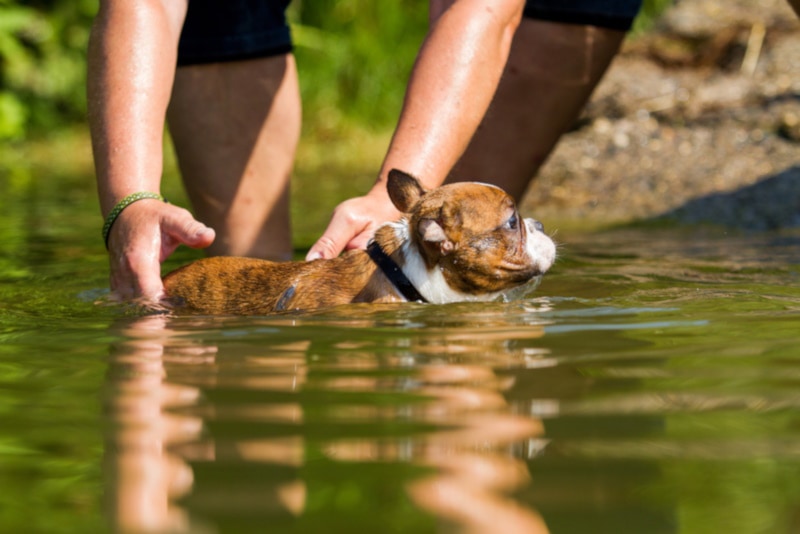
If you observe any of these signs, it is crucial to calmly and quickly remove your Boston Terrier from the water. Do not panic, as this can further agitate the dog. Gently guide them to an exit point or lift them out of the water, and then provide comfort and reassurance.
Post-Swim Care
After any water activity, it’s important to rinse your Boston Terrier with fresh water to remove any chlorine, salt, or debris from their coat and skin. Thoroughly dry their ears to prevent infections, especially if they are prone to them. Offer fresh water to rehydrate and check for any signs of irritation or fatigue.
In conclusion, while the question “Can Boston Terriers swim?” doesn’t elicit a definitive “yes” like it might for a Newfoundland, the answer is nuanced. With careful consideration of their physical attributes, unwavering adherence to safety protocols like life vests and constant supervision, and a patient, positive approach to introduction, many Boston Terriers can enjoy water-based activities safely and with moderate enjoyment. Responsible ownership means prioritizing their well-being above all else, ensuring that any aquatic adventure is a positive and safe experience for your beloved “American Gentleman.”
LifeOutOfTheBox is a participant in the Amazon Services LLC Associates Program, an affiliate advertising program designed to provide a means for sites to earn advertising fees by advertising and linking to Amazon.com. Amazon, the Amazon logo, AmazonSupply, and the AmazonSupply logo are trademarks of Amazon.com, Inc. or its affiliates. As an Amazon Associate we earn affiliate commissions from qualifying purchases.