
California, a land of diverse landscapes, iconic landmarks, and vibrant cities, offers an unparalleled experience for travelers and a unique lifestyle for its residents. From the sun-drenched beaches of San Diego to the majestic forests of Yosemite National Park and the bustling streets of Los Angeles, the Golden State beckons with adventure and opportunity. For those who prioritize personal safety and choose to carry a concealed weapon (CCW) as part of their lifestyle, navigating the state’s complex firearm laws is crucial. Unlike many other states, obtaining a CCW permit in California is known for its stringent requirements and varied application processes, largely depending on where you reside.
For both long-term residents planning their daily routines or exploring new destinations within the state, and potentially for business professionals or frequent travelers establishing residency, understanding the nuances of California’s CCW laws is more than just a legal exercise; it’s a critical aspect of responsible living and travel. This comprehensive guide will demystify the process, offering insights into the legal framework, application steps, and key considerations for those looking to obtain a CCW in California, all while keeping the broader context of travel, accommodation, and lifestyle in mind. Whether you’re considering a move, planning extended stays, or simply want to be informed about the rights and responsibilities of gun owners in this unique state, knowing “how do I get CCW in California?” is the first step toward informed decision-making.
Understanding California’s CCW Landscape
California’s approach to concealed carry permits has historically been one of the most restrictive in the nation. However, recent legal challenges and Supreme Court rulings, most notably New York State Rifle & Pistol Association Inc. v. Bruen, have significantly reshaped the landscape. Prior to Bruen, most issuing authorities in California required applicants to demonstrate “good cause” – a specific, compelling reason beyond general self-defense for needing to carry a concealed firearm. This often led to very few permits being issued, particularly in more urban or politically liberal counties.
The Bruen decision, however, invalidated “good cause” requirements nationwide, affirming that the Second Amendment protects an individual’s right to carry a handgun in public for self-defense. While this ruling did not eliminate all requirements for obtaining a CCW, it shifted the focus from proving a unique need to demonstrating eligibility based on objective criteria. This means that while the process might still be rigorous, the chances of approval have generally improved across the state, even if the specific implementation varies significantly from one county to another.
The Evolving Standard: From “Good Cause” to “Good Moral Character”
Post-Bruen, the primary subjective requirement for a California CCW permit has largely transitioned from “good cause” to “good moral character.” This term, while still somewhat open to interpretation, typically involves a review of an applicant’s background, including criminal history, mental health records, and even interviews that assess their temperament and judgment. Issuing authorities – local sheriffs for unincorporated areas and within their county, or police chiefs for specific cities – now primarily focus on ensuring applicants are responsible and law-abiding citizens who pose no undue risk to public safety.
This shift has a direct impact on the lifestyle choices of California residents. It means that an individual living in Riverside County might face a different application experience than someone in San Francisco or Alameda County, even under the same state law. Understanding the specific interpretation and application of “good moral character” by your local issuing authority is paramount. For those considering long-term accommodation or residency in California, researching the local sheriff’s or police department’s policies before settling on a location can be a significant factor in their ability to exercise their Second Amendment rights.

Issuing Authorities: Sheriffs and Police Chiefs
In California, the power to issue CCW permits rests with either the county sheriff or the chief of police of the applicant’s city of residence. An applicant can apply to only one of these authorities, depending on whether they reside within an incorporated city or in an unincorporated area of a county.
- County Sheriffs: If you live in an unincorporated area (outside the boundaries of any city) or if your city’s police department does not issue CCW permits, you will apply to the sheriff of your county of residence. Examples include the Los Angeles County Sheriff’s Department, Orange County Sheriff’s Department, or San Bernardino County Sheriff’s Department. These offices often have online portals with detailed instructions specific to their jurisdiction.
- Police Chiefs: If you live within an incorporated city, you may apply to the chief of police for that city. For example, a resident of Sacramento city would apply to the Sacramento Police Department, while a resident of Fresno would apply to the Fresno Police Department. However, some cities defer to the county sheriff even if they have their own police force. It is essential to verify which authority handles CCW applications for your specific address.
This dual system means that the experience of applying for a CCW permit can vary significantly even within a single geographic region. A traveler establishing a temporary business stay in Santa Clara County and living in San Jose would apply to the San Jose Police Department, while someone in an unincorporated part of the same county would apply to the Santa Clara County Sheriff’s Office. Each authority will have its own specific forms, interview procedures, and background investigation protocols. This local variability underscores the importance of thorough research based on your exact residential address.
The Application Process: A Step-by-Step Guide
Obtaining a CCW permit in California is a meticulous process that demands patience and strict adherence to all legal requirements. It’s not a quick transaction like booking a hotel suite or planning a luxury travel itinerary; it involves a detailed personal background check and a commitment to responsible firearm ownership.
Eligibility and Initial Requirements
Before embarking on the application journey, it’s vital to ensure you meet the fundamental eligibility criteria set by California law:
- Age: You must be at least 21 years old.
- Residency: You must be a resident of the county or city to which you are applying. Non-residents generally cannot obtain a California CCW permit, making it crucial for those with long-term accommodation plans to establish clear residency.
- Good Moral Character: As discussed, this is a subjective but critical standard. Issuing authorities will look for a history free of arrests, convictions, or any behavior that suggests a propensity for violence or irresponsible conduct. This includes a review of mental health history.
- No Prohibiting Factors: You must not be prohibited from owning firearms under state or federal law (e.g., due to felony convictions, certain misdemeanor convictions, domestic violence restraining orders, or certain mental health adjudications).
- Training: All applicants are required to complete an approved firearms training course.
Application Submission and Interview
The process typically begins with submitting a detailed application form, usually available on the website of your local sheriff’s department or police department. This form will require extensive personal information, including:
- Personal Identification: Driver’s license, proof of residency.
- Detailed Personal History: Employment history, residential history, military service (if applicable).
- Criminal Background Disclosure: Full disclosure of any arrests, even those that did not lead to conviction.
- References: Several personal references who can attest to your good moral character.
- Firearm Information: Details of the specific handguns you intend to carry (make, model, serial number). You may be permitted to list multiple firearms, typically up to three.
After submitting the application, the next step is usually an interview with an investigator from the issuing agency. This interview is a crucial part of assessing your good moral character and ensuring all information provided is accurate. Be prepared to discuss your reasons for wanting a CCW, your background, and your understanding of firearm safety and laws. Honesty and transparency are paramount. Any discrepancies or misleading information can lead to immediate denial.
Training Requirements
California mandates specific training for CCW applicants. This is not merely a suggestion but a legal requirement designed to ensure permit holders are proficient and responsible.
- Initial Course: Applicants must complete a training course, usually between 8 and 16 hours long, that covers firearm safety, shooting proficiency, and the legal aspects of carrying a concealed weapon, including justifiable use of force. The exact duration and curriculum can vary by county but must be approved by the issuing authority.
- Renewal Course: CCW permits are typically valid for two years for most citizens and up to five years for judges. Upon renewal, permit holders must complete a shorter refresher course, usually around 4 hours.
These courses are practical, hands-on, and often involve live-fire qualification with each handgun you intend to list on your permit. Choosing a reputable training provider, often recommended by the issuing agency, is critical to fulfilling this requirement successfully. For anyone making lifestyle choices related to self-defense, ongoing training and proficiency are key, regardless of legal mandates.
The Waiting Game and Permit Issuance
Once the application, interview, and training components are complete, the waiting period begins. This phase involves extensive background checks conducted by the issuing authority, which can include fingerprinting (LiveScan), mental health record checks, and contact with your references. The process can take several months, sometimes up to a year or more, depending on the volume of applications and the efficiency of the specific department.
If your application is approved, you will be notified to pick up your permit. The CCW permit is typically a small card that you must carry whenever you are carrying a concealed firearm. It will list the specific firearms you are authorized to carry. If your application is denied, the issuing authority must provide a reason, and you may have options for appeal, though these are often complex and vary by jurisdiction.
Navigating CCW with a Travel and Lifestyle Lens
While the process of obtaining a CCW in California focuses heavily on legal compliance, it’s equally important to understand the practical implications for your daily life and travel within the Golden State and beyond. Responsible CCW holders integrate their permit into their lifestyle by staying informed and acting prudently, particularly when exploring new destinations or choosing accommodation.
Where Can You Carry? California’s Restricted Zones
Obtaining a CCW permit in California does not grant universal permission to carry anywhere. The state has numerous “sensitive places” and “gun-free zones” where carrying a firearm, even with a permit, is strictly prohibited. Understanding these restrictions is paramount for avoiding serious legal trouble, especially when traveling or visiting popular attractions.
Common restricted locations include:
- Schools and Universities: K-12 schools, colleges, and universities are generally gun-free zones.
- Government Buildings: Courthouses, city halls, legislative offices, and polling places.
- Airports: Inside the sterile area of an airport, beyond security checkpoints.
- Public Transit: On public transportation vehicles and within their paid facilities.
- Polling Places: During an election.
- Private Property: Any private business or property where the owner has posted “no firearms” signs or verbally prohibited firearms. This could include hotels, resorts, restaurants, retail stores, and entertainment venues like Disneyland or Universal Studios Hollywood.
- Federal Facilities: Post offices, federal courthouses, military bases, and most national parks (though federal law allows carry in some federal lands, state prohibitions often override in practice).
- Restricted Areas by Local Ordinance: Some cities or counties may have additional local ordinances restricting carry in specific public places like parks, libraries, or other areas. Always check local laws when visiting new cities like Oakland, Berkeley, or Pasadena.
For tourists and residents exploring California’s famous landmarks and attractions, meticulous planning is essential. Before visiting, always research the specific rules of the venue or location. Many popular tourist spots, museums, and entertainment venues have clear policies prohibiting firearms, regardless of a state-issued CCW permit.
Traveling In and Out of California with Your CCW
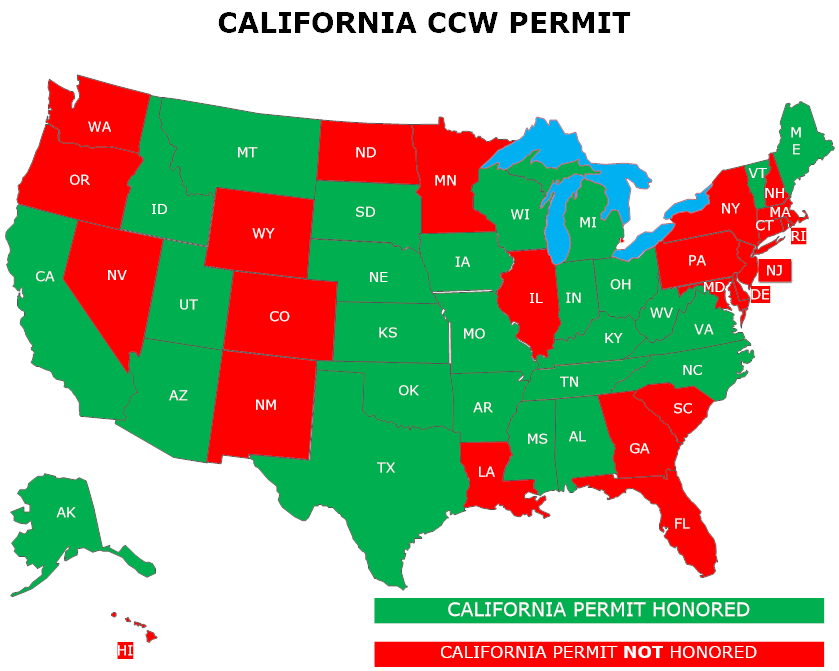
A California CCW permit is valid only within the state of California. California does not recognize CCW permits from any other state, nor are California permits recognized in most other states. This lack of reciprocity is a critical consideration for anyone who travels frequently for tourism, business, or family visits.
- Interstate Travel: If you plan to drive through or visit other states, you must be aware of their specific firearm laws. Carrying a concealed firearm in a state where your California permit is not recognized can lead to severe legal penalties. The safest approach when traveling out of state is often to secure your firearm unloaded in a locked container in your vehicle’s trunk, separate from ammunition, in compliance with federal interstate transportation laws (18 U.S.C. § 926A).
- Federal Law (LEOSA): The Law Enforcement Officers Safety Act (LEOSA) allows qualified active and retired law enforcement officers to carry concealed firearms nationwide, irrespective of state or local laws. This federal privilege does not extend to civilian CCW holders.
- Flying with Firearms: When flying, firearms must always be declared to the airline, unloaded, and transported in a locked, hard-sided container as checked luggage. Ammunition must be in its original packaging or a suitable container, separate from the firearm. Never attempt to carry a firearm or ammunition onto an aircraft in carry-on luggage. These rules apply universally, regardless of your CCW permit status.
For the intrepid traveler or the business executive whose work takes them across state lines, understanding these strict limitations is vital for maintaining a compliant and stress-free journey. Your California CCW permit is a local privilege, not a national passport for concealed carry.
Responsible Ownership and Training
Ultimately, obtaining a CCW permit is a profound responsibility that extends beyond merely complying with legal mandates. For those who choose this aspect of self-defense as part of their lifestyle, ongoing commitment to safety, training, and legal awareness is essential.
- Continuous Training: The initial training course is just the beginning. Regular practice at a shooting range, participation in advanced defensive shooting courses, and staying current with evolving self-defense techniques are crucial for maintaining proficiency and confidence.
- Legal Updates: Firearm laws in California are subject to frequent changes, often driven by legislative action or court rulings. Responsible permit holders subscribe to legal updates, follow reputable firearm rights organizations, and periodically review state and local regulations to ensure continued compliance.
- Situational Awareness: A firearm is a tool of last resort. Developing strong situational awareness and de-escalation skills are primary components of responsible self-defense. This mindful approach aligns with a broader lifestyle of preparedness and thoughtful decision-making, whether navigating bustling city streets or enjoying a serene retreat in Napa Valley.
In conclusion, “How do I get CCW in California?” leads down a path that is both legally intricate and deeply personal. It requires diligent adherence to state and local laws, a commitment to ongoing training, and a profound understanding of where and how a concealed firearm can be legally and responsibly carried. For residents and those considering a lifestyle rooted in the Golden State, this journey is about more than just a permit; it’s about embracing a significant responsibility within one of the nation’s most regulated environments. By approaching the process with thorough research and respect for the law, individuals can successfully navigate California’s CCW landscape, ensuring their choices align with a safe and compliant personal philosophy.
LifeOutOfTheBox is a participant in the Amazon Services LLC Associates Program, an affiliate advertising program designed to provide a means for sites to earn advertising fees by advertising and linking to Amazon.com. Amazon, the Amazon logo, AmazonSupply, and the AmazonSupply logo are trademarks of Amazon.com, Inc. or its affiliates. As an Amazon Associate we earn affiliate commissions from qualifying purchases.