
Navigating Communication in the Hub: Understanding Boston’s Area Codes
For travelers planning a visit to Boston, understanding the local area codes is a small but essential piece of practical knowledge that can smooth out communication, whether you’re contacting a hotel, making dining reservations, or reaching out to a local tour operator. Boston, often referred to as the “Hub of the Universe,” is a vibrant metropolitan area with a rich history and a dynamic modern pulse, attracting millions of visitors annually. Its telecommunications infrastructure reflects this growth and complexity, utilizing multiple area codes to serve its residents and businesses.

The Primary Area Code: 617
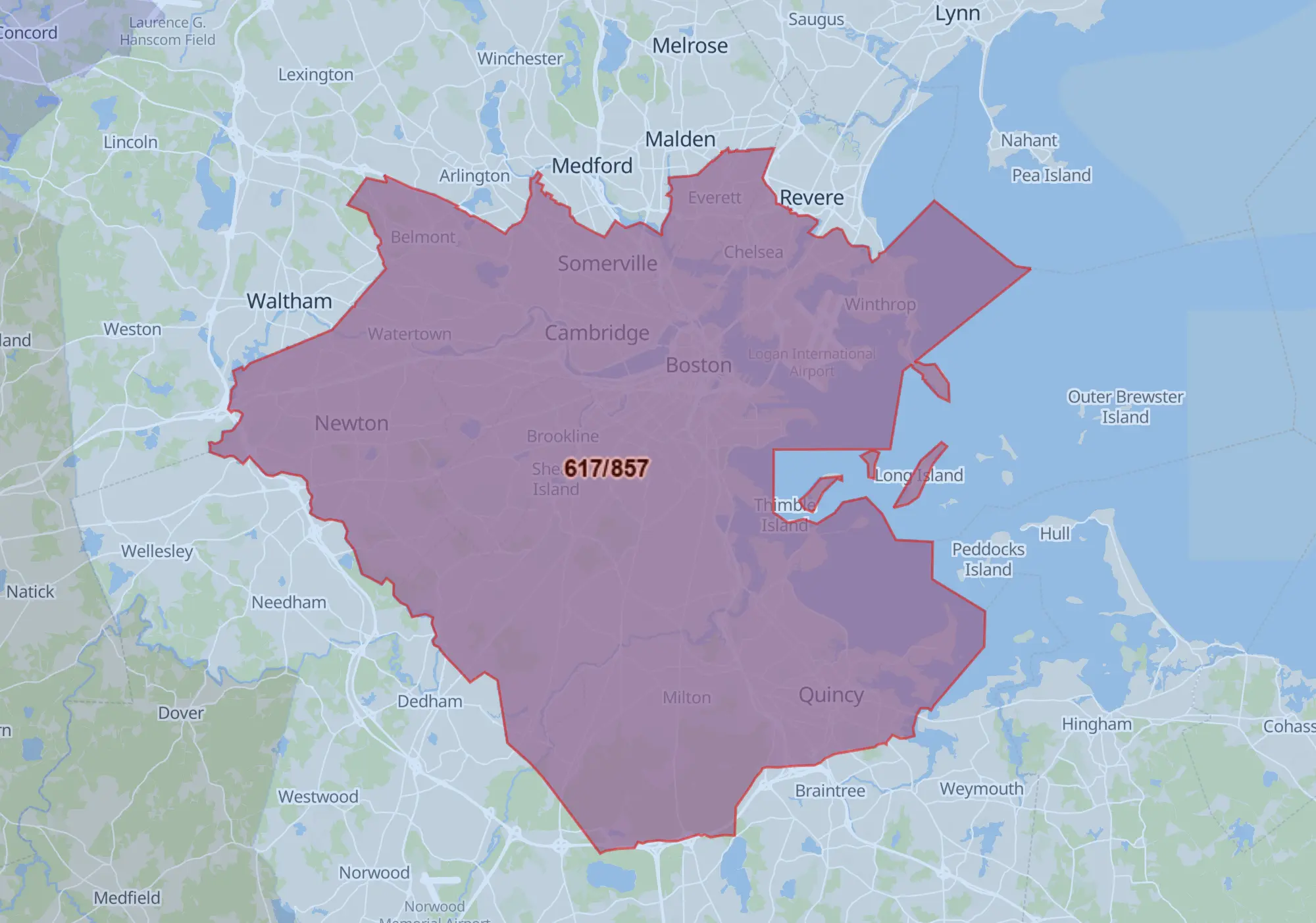
Historically, the original and most recognizable area code for Boston and many surrounding communities has been 617. Established in 1947, 617 was one of the original 86 area codes introduced by AT&T and Bell Labs. It primarily serves the core city of Boston itself, along with several densely populated and historically significant adjacent cities and towns. These include Cambridge, home to Harvard University and MIT; Somerville, known for its vibrant arts scene; Brookline, an affluent suburb bordering Boston; and parts of Quincy and Newton. When you see a number for a major landmark, a classic Boston restaurant, or a government office, chances are it will begin with 617. For many, 617 is synonymous with Boston and its immediate surroundings, carrying a certain historical weight and local identity.
Overlay Codes: 857 and 351
As the population and demand for telephone numbers in the Boston metropolitan area continued to surge, the supply of available 617 numbers began to dwindle. To address this, an overlay area code, 857, was introduced in 2001. An overlay means that new telephone numbers assigned in the same geographic region that previously used 617 would now receive the 857 prefix. This system avoids the need to split the geographic region, which would require existing users to change their numbers. Consequently, any phone number within the 617 service area could potentially also have the 857 prefix. This led to the implementation of mandatory 10-digit dialing for all local calls within this region, as calls between 617 and 857 numbers are considered local calls despite having different area codes.
Further expansion led to the approval of a third overlay code, 351, in 2022. While 351 is not yet as commonly encountered as 617 or 857, it is being phased in as new numbers are needed, primarily serving the same geographic areas as 617 and 857. For travelers, this means that you might encounter any of these three prefixes when looking up contact information for businesses, attractions, or services within Boston and its closest suburbs.
Why Multiple Area Codes? Historical Context and Growth
The evolution from a single area code (617) to a multi-overlay system (617, 857, 351) is a direct consequence of Boston’s significant growth and increasing demand for telecommunication services. As a thriving economic, educational, and tourism hub, Massachusetts and specifically the Boston metropolitan area, has seen an explosion in mobile phone adoption, business lines, and internet-based communication services. Each new phone line or mobile device requires a unique number, and area codes were designed to accommodate a finite number of combinations. Overlays are a practical solution to replenish the supply of available numbers without disrupting existing services through complex geographical splits. For a traveler, this history underscores the dynamic nature of Boston and explains why you should be prepared to dial all ten digits for any local call within the city.
Beyond the Digits: Essential Communication Tips for Travelers to Boston
Knowing the area codes is just the first step. For a seamless travel experience in Boston, understanding how to effectively use your phone for local calls, international communication, and emergencies is crucial.
Making Local Calls Within Boston
Given the overlay system, all local calls within the 617, 857, and 351 service areas require 10-digit dialing. This means you must dial the full three-digit area code followed by the seven-digit telephone number, even if you are calling from a phone with the same area code. For example, if you’re staying in a hotel with a 617 number and want to call a restaurant with an 857 number across town, you will dial 857-XXX-XXXX. This practice is standard across many major U.S. cities that employ overlay area codes. Familiarizing yourself with this habit before you arrive will prevent any frustration when trying to connect with local businesses or attractions.
Calling Boston from Outside the Area
If you are calling Boston from another part of the United States or Canada, you will simply dial “1” (the long-distance access code), followed by the full 10-digit number (e.g., 1-617-XXX-XXXX or 1-857-XXX-XXXX). This is the standard procedure for all domestic long-distance calls within the North American Numbering Plan.
International Roaming and Local SIM Cards for Visitors
For international travelers, relying solely on your home country’s mobile plan for calls and data can quickly become expensive due to roaming charges. Boston offers excellent connectivity, and several options are available to stay connected affordably:
- International Roaming Plans: Many international carriers offer specific travel plans that provide a bundle of data, calls, and texts for a daily or monthly fee. Check with your provider before your trip to see if they offer a suitable plan.
- Local SIM Cards: Upon arrival, you can purchase a prepaid local SIM card from major U.S. carriers like AT&T, Verizon, or T-Mobile. These are available at carrier stores, electronics retailers, and sometimes even at airport kiosks. This option often provides the most cost-effective way to get a local U.S. number (which would typically have a 617, 857, or 351 area code if purchased in Boston) with plenty of data and call minutes.
- eSIMs: For phones that support eSIM technology, you can purchase an eSIM plan online before you even leave home. This allows you to have a local U.S. number and data immediately upon landing, without needing a physical SIM card.
Having a local number or a cost-effective way to make calls is invaluable for coordinating travel plans, booking tours, or using ride-sharing services during your stay in Boston.
Emergency Services and Important Numbers
In any emergency situation in Boston or anywhere in the United States, the number to dial is 911. This will connect you to police, fire, or ambulance services. 911 calls are free from any phone, including cell phones, and do not require an area code. It is critical to know this number, even if you hope never to use it. Additionally, keep a list of non-emergency numbers for your accommodation, local consulate (if applicable), and travel insurance provider handy.
Exploring Boston: A Traveler’s Guide to Connectivity and Culture
Effective communication tools enhance any travel experience, allowing visitors to navigate, connect, and immerse themselves more deeply in Boston’s unique blend of history and modernity.
Staying Connected in Historic Neighborhoods
Boston’s charm lies in its diverse and historically rich neighborhoods. Walking through Beacon Hill with its gas-lit streets and federal-style rowhouses, or exploring the vibrant North End with its authentic Italian restaurants and bakeries, travelers often rely on their smartphones for navigation, finding information, or sharing their experiences. While mobile coverage is generally excellent throughout the city, visitors should be aware that older, denser urban areas or buildings with thick historical walls might occasionally experience weaker signals. However, this is rare, and overall connectivity is robust.
Wi-Fi Availability: Public Hotspots and Accommodation
Beyond cellular service, Wi-Fi is widely available throughout Boston. Most hotels, guesthouses, and vacation rentals offer complimentary Wi-Fi for guests. Public spaces such as coffee shops, restaurants, and many attractions also provide free Wi-Fi. The Boston Public Library branches are another reliable source of free public Wi-Fi. For travelers, this means you can often reduce your mobile data usage by connecting to Wi-Fi whenever possible, saving on costs and ensuring you stay connected without interruption. Checking for Wi-Fi availability at your accommodation or desired dining spot can be a useful pre-trip planning step.
Must-Visit Boston Attractions and How Connectivity Enhances the Experience
A reliable phone connection can significantly enhance your exploration of Boston’s iconic sites:
- The Freedom Trail: Follow this historic red-brick path with an app on your phone providing audio tours and historical context for sites like Paul Revere House, Old North Church, and the USS Constitution.
- Faneuil Hall Marketplace: Use your phone to find the best local eateries, check reviews, or simply navigate the bustling shops and street performers.
- Boston Common and Public Garden: Look up information about specific statues, monuments, or the famous “Make Way for Ducklings” sculpture while enjoying these urban oases.
- New England Aquarium: Download the aquarium’s app for show times, maps, and information about the marine life.
- Museum of Fine Arts: Many museums offer digital guides accessible via your smartphone, providing deeper insights into their vast collections.
- Fenway Park: If attending a Red Sox game, a connected device is essential for mobile ticketing, ordering concessions, and following live stats.
Your phone acts as a personal tour guide, translator, and information hub, making connectivity a crucial element of modern travel.
Practical Planning for Your Boston Trip
Beyond mere communication, your mobile device, empowered by understanding Boston’s area codes and connectivity options, becomes an indispensable travel tool.
Transportation and Navigation Apps
Boston is a walking city, but its public transportation system, the MBTA (affectionately known as “the T”), is extensive. Apps like Google Maps, Apple Maps, or dedicated MBTA apps are invaluable for navigating the subway, bus, and commuter rail lines. These apps provide real-time schedules, directions, and service alerts, ensuring you reach your destination efficiently. For ride-sharing services like Uber or Lyft, a reliable connection is absolutely necessary for booking and coordinating pickups.
Dining Reservations and Local Experiences
Boston’s culinary scene is vibrant, from fresh seafood in the Seaport District to historic taverns near Faneuil Hall. Many popular restaurants, especially those in the North End or Back Bay, require reservations, which can often be made online or by phone. Having a working phone with the ability to dial local numbers (remembering the 10-digit rule!) is perfect for confirming bookings or making last-minute changes. Furthermore, discovering local events, concerts, or hidden gems often involves quick online searches or calls to local venues.
Staying Safe and Connected While Exploring
While Boston is generally a safe city, being able to make calls, access maps, or contact emergency services quickly provides peace of mind. Keeping your phone charged, especially when venturing out for the day, is a good habit. Consider carrying a portable power bank, particularly if you’re using navigation or photo apps frequently. Sharing your itinerary or location with travel companions or family back home, facilitated by your connected device, is another layer of safety for solo travelers.

The Future of Boston Connectivity
As technology advances, so too will Boston’s connectivity landscape. The implementation of 5G networks is already widespread, offering faster data speeds and improved reliability. Future innovations like enhanced public Wi-Fi infrastructure and smarter city initiatives will continue to make communication and navigation even more seamless for residents and travelers alike. For now, understanding the simple concept of Boston’s 617, 857, and 351 area codes, and the necessity of 10-digit dialing, equips you with a foundational piece of knowledge for a well-prepared and enjoyable trip to this historic American city.
LifeOutOfTheBox is a participant in the Amazon Services LLC Associates Program, an affiliate advertising program designed to provide a means for sites to earn advertising fees by advertising and linking to Amazon.com. Amazon, the Amazon logo, AmazonSupply, and the AmazonSupply logo are trademarks of Amazon.com, Inc. or its affiliates. As an Amazon Associate we earn affiliate commissions from qualifying purchases.