
For over six decades, Disneyland California has stood as an iconic beacon of imagination, drawing millions of visitors each year to its magical gates. Often referred to simply as “Disneyland,” this legendary theme park in Anaheim, California, is much more than just a single park. It’s a sprawling complex, a premier travel destination, and a meticulously crafted resort designed to transport guests into fantastical realms. When asking about the acreage of Disneyland California, it’s crucial to understand that the answer isn’t a simple number. We must differentiate between the original Disneyland Park and the expansive Disneyland Resort that has grown around it.
This comprehensive guide will delve into the precise dimensions of this beloved landmark, exploring the footprint of its individual components, the ingenious design that maximizes every square foot, and how it compares to its global counterparts. From the vision of Walt Disney to its current status as a world-class tourism hub, understanding the physical scale of Disneyland California offers fascinating insights into its operational complexity, its capacity for wonder, and its enduring legacy as a cornerstone of family entertainment and adventure.
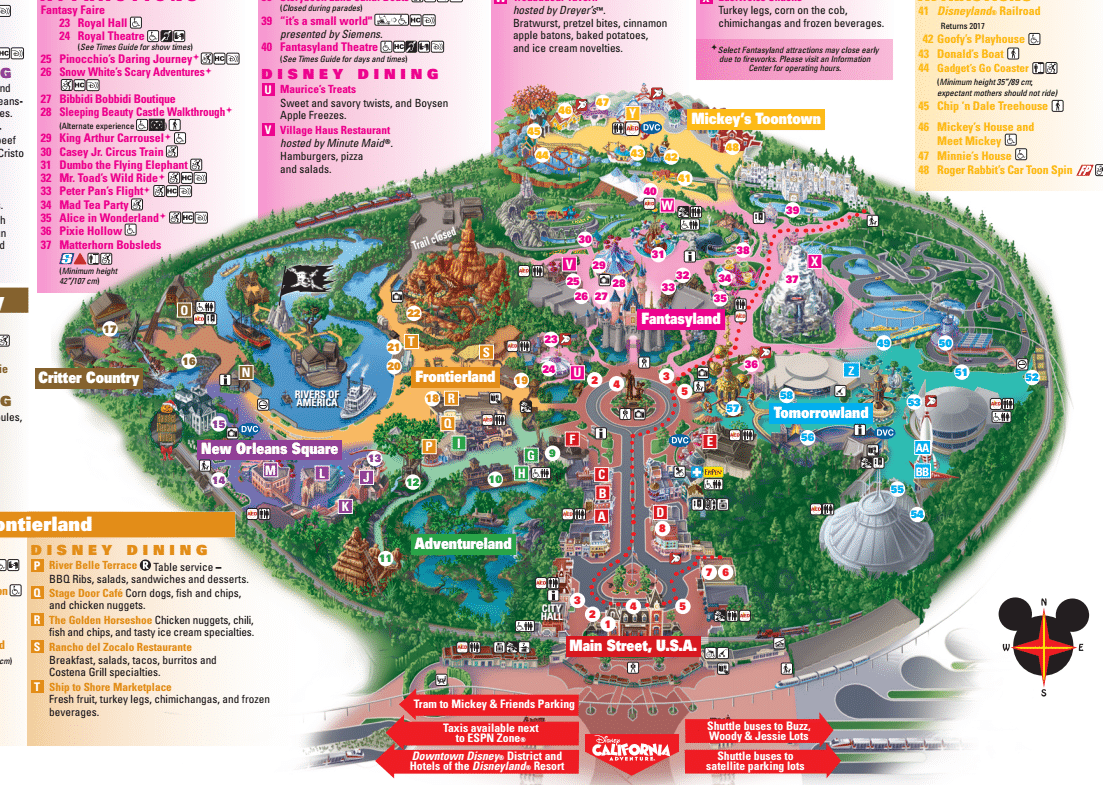
Unpacking the Footprint: Disneyland Park vs. The Disneyland Resort
To accurately address the question of how many acres Disneyland California occupies, we must clarify what we mean by “Disneyland.” The name commonly refers to two distinct entities: the original theme park and the larger resort complex that encompasses multiple attractions, hotels, and entertainment venues. Each has its own impressive scale.
The Original Vision: Disneyland Park’s Acreage
The original Disneyland Park, the brainchild of Walt Disney, opened its gates on July 17, 1955. This historic park was built on a relatively modest plot of land when compared to today’s mega-resorts. Walt Disney famously bought 160 acres of orange groves in Anaheim, Orange County, to construct his dream. However, not all of that land was immediately developed into the theme park itself. The actual footprint of Disneyland Park is approximately 85 acres.
Within these 85 acres, Walt Disney and his Imagineers created a revolutionary concept: a single, immersive theme park divided into distinct themed lands. These original lands included Main Street, U.S.A., Adventureland, Frontierland, Fantasyland, and Tomorrowland. Over the decades, new areas like New Orleans Square, Critter Country, and Mickey’s Toontown were added, meticulously integrated into the existing framework. The park’s relatively compact size is part of its charm, fostering an intimate and easily navigable experience where guests can seamlessly transition from one fantastical realm to another. Despite its smaller footprint compared to some other Disney Parks, Disneyland Park packs an incredible density of attractions, shows, dining, and shopping, making every acre count in delivering unparalleled travel experiences.

The Grand Expansion: The Disneyland Resort’s Vast Domain
While Disneyland Park retains its original footprint, the surrounding area has been transformed into the sprawling Disneyland Resort, a much larger entity. The entire Disneyland Resort encompasses approximately 500 acres. This impressive acreage includes not just the original park, but a wealth of other attractions, accommodation options, and support infrastructure essential for a world-class tourism destination.
The 500 acres of the Disneyland Resort are comprised of several key components:
- Disneyland Park (85 acres): The original theme park.
- Disney California Adventure Park (72 acres): Opened in 2001, this second theme park celebrates the diverse culture, history, and natural beauty of California. Its themed lands, such as Grizzly Peak, Paradise Gardens Park, Hollywood Land, and the incredibly immersive Cars Land, offer a distinct but equally magical experience.
- Downtown Disney District: An outdoor shopping, dining, and entertainment promenade that connects the two theme parks and the resort hotels. This vibrant area provides a perfect spot for guests to relax and enjoy the resort’s atmosphere without needing park admission.
- Three Official Resort Hotels:
- Disneyland Hotel: The original hotel, offering classic Disney charm and history.
- Disney’s Grand Californian Hotel & Spa: A luxurious, Craftsman-style hotel with direct access to Disney California Adventure Park and Downtown Disney District.
- Pixar Place Hotel: Recently re-themed, this hotel offers a playful atmosphere inspired by Pixar Animation Studios.
These hotels provide various accommodation options, from luxury suites to family-friendly rooms, catering to diverse guest needs and enhancing the overall travel experience.
- Parking Structures and Transportation Hubs: Massive parking facilities like the Mickey & Friends Parking Structure and the Pixar Pals Parking Structure are crucial for managing the immense visitor traffic. These, along with internal transportation systems, take up a significant portion of the resort’s land.
- Backstage Areas and Support Facilities: A substantial amount of the acreage is dedicated to behind-the-scenes operations, including administrative offices, maintenance shops, costume departments, parade floats storage, cast member facilities, and utility infrastructure. These unseen areas are vital for the seamless operation of the resort and ensuring the magic is always present for guests.
The expansion from 160 original acres to a 500-acre resort illustrates the growth and evolution of Disneyland California into a truly comprehensive vacation destination, offering not just attractions but also diverse dining, shopping, and world-class accommodation.
A Masterpiece of Design and Efficiency: Maximizing Every Square Foot
The relatively compact size of Disneyland Park within the larger Disneyland Resort is a testament to the ingenuity of its design. Unlike some newer parks built on vast, undeveloped tracts, Disneyland California was born from a vision of intimate immersion, making every acre incredibly valuable and meticulously utilized.
Ingenuity in Park Layout
Walt Disney’s directive was to create a place where guests could step out of their everyday lives and into a story. To achieve this within a finite space, his Imagineers pioneered numerous design techniques that create an illusion of grandeur and endless discovery:
- Forced Perspective: Iconic structures like Sleeping Beauty Castle and buildings on Main Street, U.S.A. are built with diminishing scale towards the top, making them appear taller and more imposing than they are. This technique makes the park feel more expansive.
- Weenie Architecture: Each land features a prominent “weenie” or visual landmark (e.g., Matterhorn Bobsleds, Indiana Jones Adventure) that draws guests deeper into the park, making the journey feel purposeful and exciting.
- Seamless Transitions: The transitions between themed lands are carefully designed to minimize harsh breaks, using natural landscaping, changes in path materials, and soundscapes to ease guests from one immersive environment to the next. This creates a cohesive narrative flow that makes the park feel larger than the sum of its parts.
- Vertical Expansion: As land became scarce, Imagineers began to build “up” and “down.” Attractions like the Pirates of the Caribbean and “it’s a small world” feature significant portions below ground level, while rides like the Indiana Jones Adventure utilize multiple levels, stacking experiences within a smaller physical footprint. This verticality dramatically increases the park’s capacity for rides and shows without requiring additional land.
- Efficiency in Pathways and Queue Management: The pathways are designed to manage crowd flow effectively, providing clear routes while also offering nooks and crannies for exploration. Queue lines for attractions are often long and winding, designed to immerse guests in the theme even before they board the ride, effectively using space while entertaining waiting guests.
This masterful use of design not only optimizes the use of its 85 acres but also significantly enhances the guest experience, making Disneyland Park feel both grand and intimate—a perfect environment for family trips and memorable adventures.
Beyond the Gates: Backstage Operations and Infrastructure
While the magic happens within the park gates, a substantial portion of the Disneyland Resort’s 500 acres is dedicated to the complex operations that support the entire ecosystem. These backstage areas are essential for maintaining the illusion and ensuring a smooth, safe, and clean environment for visitors.
- Maintenance and Fabrication Shops: Given the intricate nature of theme park attractions, extensive facilities are required for maintenance, repair, and even fabrication of new elements. These shops are often industrial in scale, requiring significant space.
- Costuming and Laundry Facilities: With thousands of cast members in themed costumes and numerous shows requiring elaborate outfits, massive costume and laundry facilities are a necessity.
- Central Kitchens and Warehouses: The resort operates numerous restaurants and food stalls across both parks and Downtown Disney District. Central kitchens prepare large volumes of food, while warehouses store supplies for merchandise, food, and operational needs.
- Cast Member Support: The thousands of individuals who work at the Disneyland Resort require administrative offices, break rooms, locker facilities, and dedicated transportation to and from their work areas, all of which occupy valuable land.
- Utility Infrastructure: Power plants, water treatment facilities, waste management systems, and sophisticated IT infrastructure are all hidden from guest view but occupy considerable space, ensuring the seamless operation of a mini-city that hosts tens of thousands daily.
- Transportation Networks: Beyond guest parking, internal roadways and transportation systems are needed for deliveries, cast member movement, and the discreet transfer of equipment and supplies.
These unseen, yet vital, components of the Disneyland Resort demonstrate how even outside the direct guest areas, every acre plays a critical role in supporting the magical guest experience. The thoughtful integration of these operational elements within the larger 500-acre footprint allows the magic to flourish unobstructed.
Comparing Disney’s Realms: Disneyland California in a Global Context
The size and scale of Disneyland California become even more interesting when compared to other Disney Parks around the world. Each resort was developed under different circumstances, with varying land availability and strategic goals, leading to diverse footprints.
Disneyland Versus Walt Disney World Resort
Perhaps the most significant comparison is between Disneyland California and its much larger sibling, Walt Disney World Resort, in Florida.
- Disneyland Resort (California): Approximately 500 acres. It features two theme parks (Disneyland Park and Disney California Adventure Park), a shopping district, and three resort hotels. Its compact nature often leads to a more concentrated, walkable experience.
- Walt Disney World Resort (Florida): A staggering 27,000 acres (about 43 square miles). This makes Walt Disney World roughly 54 times larger than the Disneyland Resort. It boasts four theme parks (Magic Kingdom, Epcot, Disney’s Hollywood Studios, Disney’s Animal Kingdom), two water parks, over two dozen resort hotels, multiple golf courses, and vast undeveloped areas acting as conservation lands and future expansion zones.
The enormous difference in size stems from their origins. Disneyland Park was built on a relatively small, accessible plot near Los Angeles, intended as a local attraction that grew into a resort. Walt Disney World, on the other hand, was conceived by Walt Disney as the “Florida Project,” a massive undertaking purchased secretly to create a self-contained vacation destination, an Experimental Prototype Community of Tomorrow (EPCOT) that would manage its own infrastructure and development, free from external municipal interference. This allowed for unparalleled scale and future growth potential, something Disneyland California could never achieve due to its urban setting.
International Footprints: Tokyo, Paris, Hong Kong, and Shanghai
Comparing Disneyland California to international Disney Parks further illustrates the varied approaches to resort development:
- Tokyo Disney Resort (Japan): Covers approximately 120 acres for its two parks (Tokyo Disneyland and Tokyo DisneySea) and surrounding areas. While the parks themselves are larger than Disneyland Park, the overall resort footprint is still considerably smaller than Walt Disney World, though larger than Disneyland California in terms of developed park area.
- Disneyland Paris (France): Occupies around 4,900 acres, making it the second-largest Disney Resort in terms of total land area, after Walt Disney World. It includes two parks (Disneyland Park and Walt Disney Studios Park), multiple hotels, a golf course, and significant undeveloped land. Its design mirrors the ambition of the Florida project, allowing for substantial future expansion.
- Hong Kong Disneyland Resort (China): The smallest Disney Resort in total size, at approximately 310 acres. It currently features one theme park and three hotels, with plans for ongoing expansion within its limited footprint.
- Shanghai Disney Resort (China): Encompasses about 963 acres for its initial phase, with ample room for future growth. It features one theme park (Shanghai Disneyland), two resort hotels, and a shopping district, designed with a focus on large, open spaces and unique attractions tailored to the local culture.
These comparisons highlight that Disneyland California, despite being the original and one of the most beloved Disney Parks, operates within a significantly more constrained urban environment than many of its global counterparts. This necessitates a unique approach to development and expansion.
The Future of Expansion: Adapting to Growth and Innovation
Given its relatively compact footprint within a densely populated urban area, the Disneyland Resort faces unique challenges and opportunities for future growth. Unlike the vast, undeveloped tracts available to Walt Disney World or Disneyland Paris, expansion at Disneyland California often involves creative solutions, vertical development, and strategic re-purposing of existing areas.
Past Expansions and Future Possibilities
Over the decades, Disneyland Park and the wider Disneyland Resort have continually evolved. Major expansions and additions demonstrate a commitment to innovation and guest experience, despite the space limitations:
- New Orleans Square (1966): The first entirely new land added to Disneyland Park after its opening, built on formerly undeveloped land within the original footprint.
- Star Wars: Galaxy’s Edge (2019): This ambitious 14-acre land in Disneyland Park was a marvel of planning, requiring the removal of some older attractions and the strategic expansion into areas previously used for backstage facilities. It showcased how Disney could carve out significant new experiences within tight constraints.
- Avengers Campus (2021): A new themed land in Disney California Adventure Park, built on the site of the former “A Bug’s Land.” This demonstrated the resort’s ability to refresh and reimagine existing spaces for new IP.
- Mickey’s Toontown Reimagining (2023): This revitalization project updated an existing land in Disneyland Park, introducing new attractions and green spaces while improving accessibility and guest flow, again working within existing boundaries.
The challenge of limited surrounding space in Anaheim means that future expansion often looks inward or upward. The resort is continually evaluating its property for opportunities to enhance the guest experience, whether through new attractions, dining venues, or renovated hotel spaces.
One key aspect of future development is the ongoing “Forward-Looking Plan” for the Disneyland Resort, which seeks to modernize the district with flexibility for future developments. This plan allows Disney to invest more freely in theme park, hotel, shopping, and dining projects within its existing land, adapting to evolving tourism trends and guest expectations. Instead of acquiring new large tracts of land, which is largely impossible in its urban setting, the focus is on optimizing existing plots, potentially consolidating parking, and building vertically or in layers to create new experiences. This could mean multi-level attractions, elevated walkways, or even more integrated entertainment complexes that blur the lines between parks, hotels, and entertainment districts.
The future of Disneyland California is not about boundless horizontal expansion, but rather about innovative, dense, and immersive development. It’s about maximizing every square inch of its 500 acres to continue delivering the unparalleled magic, thrilling attractions, and cherished family memories that have defined it for generations, solidifying its place as a premier destination for travel and lifestyle experiences.

In conclusion, while Disneyland Park maintains its original 85-acre footprint, the larger Disneyland Resort now spans an impressive 500 acres. This comprehensive resort, encompassing two theme parks, three resort hotels, and a vibrant entertainment district, is a testament to ingenious design and continuous innovation. Its relatively compact size compared to some global counterparts has fostered a unique charm and efficiency, demonstrating how meticulous planning and creative expansion can transform a finite space into an endless realm of wonder and a timeless landmark of imagination.
LifeOutOfTheBox is a participant in the Amazon Services LLC Associates Program, an affiliate advertising program designed to provide a means for sites to earn advertising fees by advertising and linking to Amazon.com. Amazon, the Amazon logo, AmazonSupply, and the AmazonSupply logo are trademarks of Amazon.com, Inc. or its affiliates. As an Amazon Associate we earn affiliate commissions from qualifying purchases.