
When travelers journey to Boston, the vibrant capital of Massachusetts, one of the most distinctive cultural elements they often encounter is its unique way of speaking. The Boston Accent, instantly recognizable and frequently parodied, is more than just a quirk; it’s a living relic of history, a marker of identity, and a fascinating insight into the city’s deep-rooted heritage. Understanding where this accent comes from not only enriches a visitor’s experience but also offers a linguistic window into the very foundation of New England.
The Historical Tapestry: Early Settlers and Linguistic Roots
The origins of the Boston Accent are deeply intertwined with the earliest European settlements in North America. Unlike many parts of the United States where accents have largely converged or adopted a more generalized “American” sound, Boston’s linguistic heritage has remained remarkably distinct, preserving features that were common in England centuries ago.
English Dialects and Colonial Influence
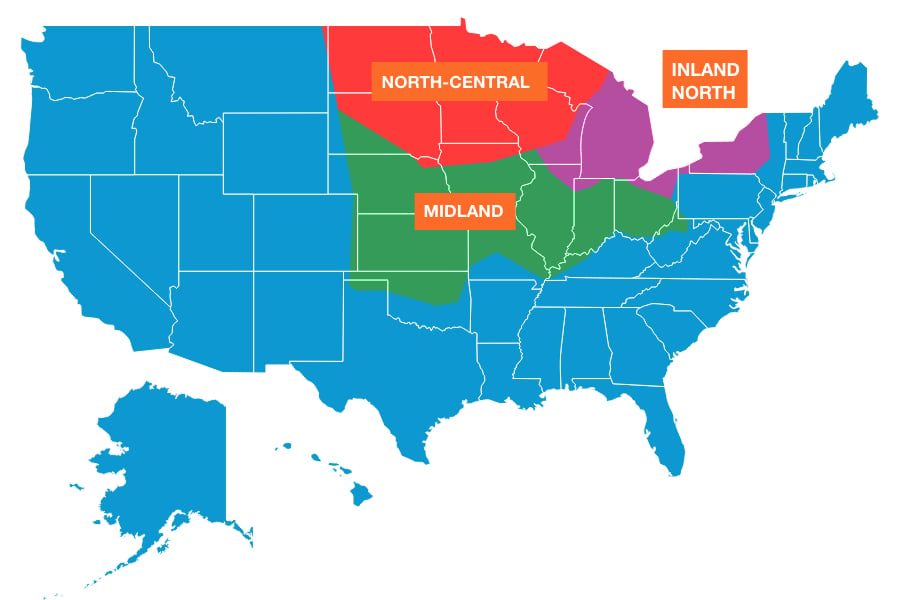
The earliest European settlers of the Massachusetts Bay Colony, predominantly Puritans arriving in the 17th century, largely hailed from East Anglia and the southeastern regions of England. At this time, the English spoken in these areas shared common characteristics that would eventually form the bedrock of the Boston Accent. The standard English of London was still evolving, and the dialects brought by these settlers were far from uniform. Many of these foundational speech patterns included features like non-rhoticity – the dropping of the ‘r’ sound at the end of words or before consonants – which was prevalent across a significant portion of Southern England.
As the colonies grew, particularly in Boston, which rapidly became a major port and cultural center, these initial linguistic traits became ingrained. The city’s relative isolation from other nascent American population centers for a considerable period allowed these features to solidify and evolve independently, rather than being diluted by constant influxes of different English dialects as occurred elsewhere. This historical isolation acted as a linguistic incubator, preserving archaic pronunciations that have long since faded from most other American English dialects and even some parts of England.
The Great Vowel Shift and Rhoticity
The key to understanding the historical underpinnings of the Boston Accent lies in a linguistic phenomenon known as the Great Vowel Shift, which dramatically altered the pronunciation of English vowels between the 14th and 18th centuries. While this shift impacted English globally, its consequences, combined with regional variations, played a crucial role in Boston. More specifically, the concept of rhoticity is paramount.
In early modern English, many dialects, including those that contributed to the formation of the Boston Accent, were non-rhotic. This meant that the ‘r’ sound was not pronounced when it appeared after a vowel and was not followed by another vowel (e.g., “car,” “park,” “sister”). While much of America eventually adopted rhoticity (pronouncing the ‘r’ in all positions), Boston and a few other eastern seaboard cities, along with parts of the American South, retained this non-rhotic trait. This linguistic conservatism is one of the most striking features that distinguishes the Boston Accent from General American English. It’s not that Bostonians drop their ‘r’s; rather, they simply never fully adopted the rhotic pronunciation that became standard elsewhere.
Distinctive Features: Decoding the Boston Sound
For visitors, understanding the key phonetic characteristics of the Boston Accent makes the local speech not just charming, but comprehensible. These aren’t random changes; they are systematic shifts that give the accent its unique melodic and rhythmic qualities.
Non-Rhoticity: The Dropped ‘R’
This is undeniably the most famous and defining characteristic of the Boston Accent. Words like “car” become “cah,” “park” becomes “pahk,” and “Harvard” becomes “Hahvahd.” This non-rhoticity is consistent and applies in all positions where an ‘r’ follows a vowel and isn’t immediately followed by another vowel. However, the ‘r’ is often inserted where it doesn’t belong if the next word starts with a vowel – a phenomenon known as the “intrusive r.” For example, “idea” might sound like “idear” if followed by a word like “of,” as in “the idear of it.” This is a natural consequence of the non-rhotic system, maintaining a smooth flow of speech. For tourists, this feature is often the first and most memorable aspect of the local dialect, adding a distinct flavor to interactions from ordering a coffee to asking for directions.
The Broad ‘A’: When ‘Aunt’ Sounds Like ‘Ahnt’
Another prominent feature is the pronunciation of the ‘a’ sound in words like “aunt,” “bath,” “can’t,” and “dance.” In the Boston Accent, this ‘a’ is often pronounced with a broad ‘ah’ sound, similar to the ‘a’ in “father.” So, “aunt” becomes “ahnt,” and “can’t” becomes “cahnt.” This particular pronunciation is also a holdover from historical English dialects and sets it apart from the flatter ‘a’ sound found in many other American accents. It contributes significantly to the perceived “sound” of Bostonian speech.
Unique Vowel Shifts and Mergers
Beyond the famous ‘r’-dropping and broad ‘a’, the Boston Accent features a series of other subtle but significant vowel shifts and mergers:
- Cot-Caught Merger: Many Bostonians do not distinguish between the vowel sounds in words like “cot” and “caught,” or “don” and “dawn.” Both tend to be pronounced with the ‘aw’ sound, as in “caught.” This is a widespread feature in many parts of the United States, but it’s particularly strong in Boston.
- The ‘o’ and ‘aw’ Sounds: The vowel sound in words like “boat” often takes on a slightly different quality, sometimes sounding closer to “bow-ut.” Conversely, the ‘o’ in words like “dog” or “coffee” is often pronounced with a very open ‘aw’ sound, almost like “dawg” or “cawfee.”
- “Short A” Raising: In certain contexts, the “short a” sound (as in “trap”) can be raised and tensed, sometimes approaching the ‘e’ in “bed,” especially before nasal consonants. This can make “man” sound a bit like “men” to an unfamiliar ear.
These intricate phonetic patterns, when combined, create the distinctive linguistic tapestry that defines the Boston Accent.
Social and Cultural Evolution of the Accent
While the historical roots provide the foundation, the Boston Accent has continued to evolve within the city’s rich social and cultural landscape, shaping its variations and strengthening its role as a cultural identifier.
Urbanization and Immigration
Boston’s history is also one of massive immigration. Waves of Irish, Italian, Portuguese, and other European immigrants, particularly in the 19th and early 20th centuries, poured into the city. While these groups largely adopted the existing non-rhotic speech patterns of Boston, they also contributed to the city’s unique lexicon and some subtle intonational patterns. For instance, areas like South Boston (“Southie”) and East Boston, historically strongholds for specific immigrant communities, developed localized nuances in their speech that, while still recognizably “Bostonian,” carried distinct undertones. The shared experience of these communities, often in working-class neighborhoods, fostered a sense of solidarity and distinct local identity, further preserving and even reinforcing the accent.
Class and Regional Variations
Like most major cities, Boston exhibits some degree of socio-economic and regional variation in its accent. Historically, the non-rhoticity was associated with prestige in England (and early New England), but over time, as rhoticity became standard in most of the United States, the Boston Accent became more associated with local identity rather than universal prestige. Today, while the core non-rhoticity remains, there can be subtle differences. The classic “Southie” accent, for example, is often perceived as more pronounced and rougher-edged, frequently depicted in popular culture, versus a more educated or upper-class Boston accent, which might be less extreme in its vowel shifts. Visitors exploring different neighborhoods, from the historic North End to the academic enclaves of Cambridge, might pick up on these nuances, adding another layer of cultural immersion to their trip.
The Accent’s Place in Boston Culture and Tourism
Today, the Boston Accent is more than just a linguistic curiosity; it’s a vital part of the city’s brand and a point of pride for many locals, offering visitors an authentic connection to Boston’s character.
Pop Culture Representation
The Boston Accent has been immortalized in countless films, television shows, and literature, often adding a layer of authenticity and grit to characters and narratives set in the city. From classic movies like The Friends of Eddie Coyle and Good Will Hunting to contemporary dramas such as The Departed and The Town, the accent is frequently employed, sometimes exaggerated for comedic or dramatic effect. This representation in media has cemented its status as one of America’s most recognizable and distinct regional accents, piquing the curiosity of travelers before they even arrive. For many, hearing the accent in person is part of the immersive experience of visiting Boston, a tangible connection to the cultural fabric they’ve encountered through stories.

A Mark of Identity for Locals and an Attraction for Visitors
For Bostonians, the accent is a powerful marker of identity and belonging. It signifies a connection to the city’s history, its neighborhoods, and its unique spirit. While some younger generations or those influenced by national media may exhibit a less pronounced accent, the core features persist, particularly in casual speech and among those who have spent their lives in the area.
For tourists, encountering the Boston Accent is part of the authentic Boston experience. It’s a sensory detail that complements the cobblestone streets of Beacon Hill, the historic sites along the Freedom Trail, and the bustling atmosphere of Faneuil Hall. It transforms a simple interaction, like asking for directions to Fenway Park or ordering a “lobstah roll,” into a memorable cultural exchange. Far from being just a way of speaking, the accent is a narrative thread woven into the very fabric of Boston’s local culture, inviting visitors to listen closely and appreciate the enduring echoes of its storied past.
LifeOutOfTheBox is a participant in the Amazon Services LLC Associates Program, an affiliate advertising program designed to provide a means for sites to earn advertising fees by advertising and linking to Amazon.com. Amazon, the Amazon logo, AmazonSupply, and the AmazonSupply logo are trademarks of Amazon.com, Inc. or its affiliates. As an Amazon Associate we earn affiliate commissions from qualifying purchases.