
Traveling across the continental United States from the sunny coasts of California to the bustling metropolis of New York is a journey undertaken by millions annually, whether for business, leisure, or family visits. The question of “how long” this flight takes is paramount for planning, scheduling, and managing expectations. While a simple answer might suffice, understanding the nuances behind flight durations reveals a complex interplay of geography, aviation logistics, and even meteorological phenomena. This comprehensive guide will dissect the journey, offering insights into typical timings, influencing factors, and strategies for optimizing your transcontinental travel experience.
Understanding the Transcontinental Journey
The journey from California to New York spans nearly the entire width of the United States, crossing multiple time zones and vast geographical regions. This significant distance is the primary determinant of flight length, but it’s far from the only one.
Geographical Distance and Its Implications
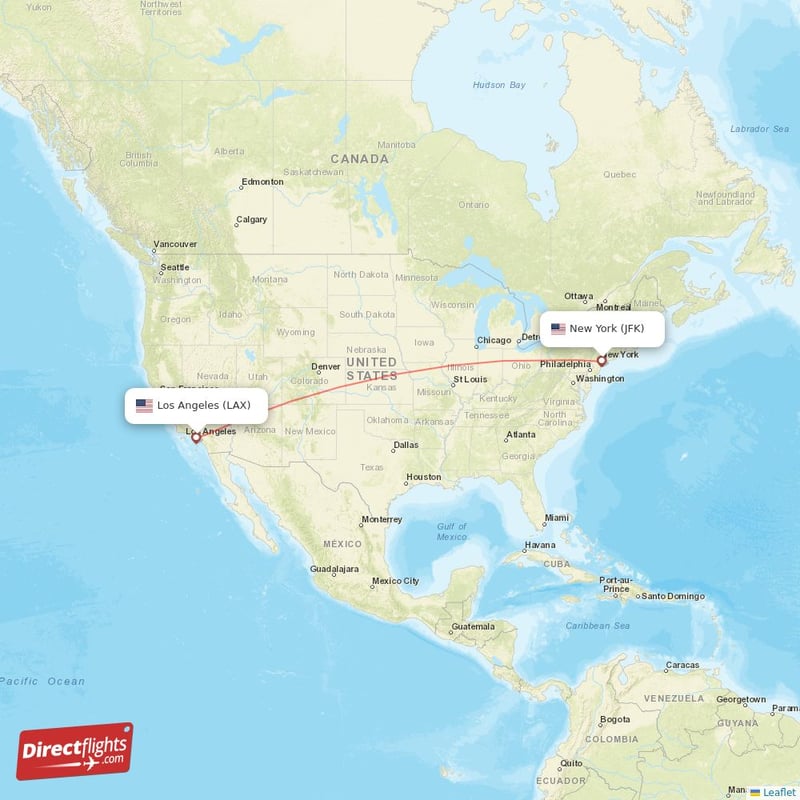
The air distance between major cities like Los Angeles (LAX) and New York City (JFK, LGA, EWR) is approximately 2,450 to 2,500 miles (around 3,940 to 4,020 kilometers). From San Francisco (SFO) to New York City airports, the distance is slightly further, closer to 2,570 miles (about 4,135 kilometers). This substantial distance necessitates the use of commercial jet aircraft capable of sustained high speeds and long ranges. The flight path typically crosses states such as Arizona, New Mexico, Texas, Oklahoma, Missouri, Illinois, Ohio, and Pennsylvania, traversing diverse landscapes from deserts to farmlands.
Factors Influencing Flight Duration
While distance is constant, several dynamic elements can significantly alter the actual flight time:
- Jet Stream: The most impactful natural phenomenon is the jet stream, a powerful current of air flowing west to east at high altitudes. Eastbound flights often benefit from this tailwind, which can add 30-60 mph to the aircraft’s ground speed, potentially shortening flight times by 30 minutes to an hour. Conversely, westbound flights face headwinds, which can extend the journey by a similar margin.
- Aircraft Type: Modern commercial airliners, such as the Boeing 737, Airbus A320 series (for shorter, higher-frequency routes), or larger Boeing 757, 767, 777, 787 Dreamliner, and Airbus A330 (for longer, premium routes), all have different cruising speeds. While the difference might be marginal across models operating similar routes, it’s still a factor.
- Air Traffic Control (ATC) and Route Optimization: ATC directives play a crucial role. Flights might be rerouted to avoid congested airspace, severe weather, or military operations, adding time to the journey. Airlines also continually optimize routes for fuel efficiency and speed, adapting to real-time conditions.
- Takeoff and Landing Delays: Ground delays, often due to airport congestion, runway availability, or adverse weather conditions at either departure or arrival airports, can extend the total travel time beyond the scheduled flight duration. New York City airports, known for their high traffic volume, are particularly susceptible to such delays.
Typical Flight Durations: Non-Stop vs. Connecting Flights
The most significant factor in your total travel time will be whether you opt for a non-stop flight or one with layovers.
Non-Stop Flight Timings from Major California Airports
Non-stop flights offer the most efficient way to traverse the country, minimizing time spent in transit.
Los Angeles (LAX) to NYC (JFK, LGA, EWR)
Flights departing from Los Angeles International Airport (LAX), one of the busiest airports in the world, to the major New York City area airports typically range from 5 hours and 15 minutes to 5 hours and 45 minutes in the air. This duration largely depends on the specific destination airport:
- To John F. Kennedy International Airport (JFK): Generally, flights are towards the longer end of this spectrum, often around 5 hours 30 minutes to 5 hours 45 minutes, due to its location further out in Queens and slightly longer taxiing times.
- To LaGuardia Airport (LGA): Flights might be marginally shorter in airtime, typically 5 hours 15 minutes to 5 hours 30 minutes, due to its more central location. However, LGA primarily serves domestic routes and is undergoing significant reconstruction, which can sometimes affect ground times.
- To Newark Liberty International Airport (EWR): Serving New Jersey but a key hub for New York City access, flights to EWR are comparable to JFK, usually around 5 hours 30 minutes.
San Francisco (SFO) to NYC (JFK, LGA, EWR)
From San Francisco International Airport (SFO), flights are generally a bit longer than from Los Angeles due to the slightly increased distance. Expect non-stop flights to take between 5 hours and 30 minutes to 6 hours and 15 minutes. Similar variations apply depending on the specific New York City airport.
Other California Airports
For travelers departing from other California cities such as San Diego (SAN), Sacramento (SMF), or Oakland (OAK), non-stop options to New York City are less frequent, if available at all. When they exist, the durations will be comparable to LAX or SFO flights, potentially slightly longer if the originating airport is further north in California.
The Reality of Connecting Flights
While non-stop flights offer convenience, connecting flights are often more budget-friendly or may be the only option from smaller regional airports.

Impact of Layover Time and Location
A connecting flight will significantly increase your total travel duration. The total time can range anywhere from 8 hours to 12+ hours, depending heavily on the layover:
- Layover Duration: This is the most variable component. A short, efficient layover might be 1.5 to 2 hours, while longer layovers can extend to 4-6 hours or even overnight.
- Layover Airport: Popular connecting hubs for flights between California and New York include Chicago O’Hare (ORD), Dallas/Fort Worth (DFW), Denver International Airport (DEN), Atlanta Hartsfield-Jackson (ATL), or Charlotte Douglas (CLT). The efficiency of these airports, including terminal transfers and potential for delays, will affect your overall journey.
Benefits and Drawbacks
Benefits: Connecting flights can be substantially cheaper and offer more flexibility in departure times or airline choices. They also provide a chance to stretch your legs and grab a meal off the plane.
Drawbacks: The primary disadvantage is the extended travel time and the increased risk of missing a connection due to delays in the first leg. Baggage handling can also be a concern.
Optimizing Your Flight Time and Experience
Beyond simply knowing the average duration, smart travelers can employ strategies to make their cross-country journey as smooth and efficient as possible.
Choosing the Right Airport Pair
Consider not just the airtime, but the total door-to-door travel time. For New York City destinations, evaluate which airport (JFK, LGA, or EWR) is most convenient for your final destination, factoring in ground transportation time and cost. For example, LGA might have shorter flights but often worse traffic to and from Manhattan.
The Best Time to Fly
Flying early in the morning can often minimize the risk of cumulative delays that build up throughout the day. Red-eye flights from California to New York can also be efficient, allowing you to sleep on the plane and arrive early in the morning, ready to start your day. However, these flights may be longer due to less favorable jet stream conditions at night or less direct routing.
Considerations Beyond Airtime: Total Travel Duration
Remember that “flight time” only refers to the time the aircraft is airborne. Your total travel duration includes:
- Pre-flight: Travel to the airport, security checks, boarding, and taxiing to the runway (typically 2-3 hours before departure).
- In-flight: The actual time in the air.
- Post-flight: Taxiing from the runway, deplaning, baggage claim, and ground transportation to your final destination (typically 1-2 hours after landing).
A 5.5-hour flight can easily translate into an 8-10 hour travel day when all these factors are included.
Navigating Time Zones and Jet Lag
The journey from California to New York involves crossing three time zones (Pacific, Mountain, Central, Eastern). This significant shift can lead to jet lag, impacting your energy and well-being upon arrival.
The Three-Hour Difference
When you fly from California to New York, you gain three hours. If you depart at 9:00 AM Pacific Time and land after a 5.5-hour flight, it will be 5:30 PM Eastern Time. While this sounds convenient for arriving earlier, your body will still be on California time, registering 2:30 PM. This “lost” three hours can disrupt your circadian rhythm.
Strategies for Minimizing Jet Lag
- Adjust Before You Go: A few days before your trip, try to shift your sleep schedule by an hour or two towards your destination’s time zone.
- Hydrate: Drink plenty of water before, during, and after your flight. Avoid excessive alcohol and caffeine, which can dehydrate you and disrupt sleep.
- Adjust Immediately: Upon arrival, try to switch to the local time for meals and sleep as quickly as possible. Expose yourself to natural light during the day to help reset your internal clock.
- Move Around: During the flight, get up and walk around the cabin periodically to promote blood circulation and reduce stiffness.
Beyond the Clock: Enhancing Your In-Flight Experience
While minimizing flight time is often a priority, the quality of those hours can significantly impact your overall travel satisfaction.
Aircraft Type and Comfort
Different airlines operate various aircraft on the transcontinental routes. Wider-body aircraft like the Boeing 787 or Airbus A330 often offer more spacious cabins, better air filtration, and a quieter ride compared to single-aisle jets like the Boeing 737 or Airbus A321. Researching the specific aircraft for your flight can help manage expectations regarding comfort and amenities. Many airlines also offer premium economy or first-class options with enhanced seating and services for a more comfortable journey.
In-Flight Entertainment and Amenities
A long flight is an ideal time to catch up on movies, read a book, or get some work done. Most major airlines operating California to New York routes offer seat-back entertainment systems, Wi-Fi (often for a fee), and charging ports. Downloading content onto personal devices before departure ensures you have entertainment even without Wi-Fi. Many flights also offer complimentary meal services on these longer domestic routes, particularly in first or business class, with snacks and beverages available for all passengers.

Staying Hydrated and Active
The dry cabin air at cruising altitude can be dehydrating. Continuously drinking water or non-caffeinated beverages is crucial. Additionally, regular movement helps prevent stiffness and potential health issues. Perform simple stretches in your seat or take short walks down the aisle when permitted. Compression socks can also be beneficial for long flights to aid circulation.
In conclusion, a non-stop flight from California to New York will typically range from 5 hours 15 minutes to 6 hours 15 minutes in the air, with eastbound flights often being shorter due to the jet stream. However, the total travel experience is a sum of many parts, extending well beyond mere airtime. By understanding these factors and planning accordingly, your cross-country journey can be as efficient and comfortable as possible.
LifeOutOfTheBox is a participant in the Amazon Services LLC Associates Program, an affiliate advertising program designed to provide a means for sites to earn advertising fees by advertising and linking to Amazon.com. Amazon, the Amazon logo, AmazonSupply, and the AmazonSupply logo are trademarks of Amazon.com, Inc. or its affiliates. As an Amazon Associate we earn affiliate commissions from qualifying purchases.