
The California Roll, an enduring icon of fusion cuisine, transcends its humble origins to become a global culinary phenomenon. Far more than just a simple sushi item, it represents a pivotal moment in gastronomic history, a bridge between traditional Japanese culinary artistry and the evolving tastes of the Western world. For many, it was their first foray into the world of sushi, a delicious and approachable introduction that paved the way for a deeper appreciation of Japanese cuisine. On a website dedicated to travel, hotels, tourism, and lifestyle, understanding the California Roll is not merely about following a recipe; it’s about delving into a cultural narrative, appreciating culinary innovation, and perhaps, even discovering a unique travel experience.
The allure of the California Roll lies in its harmonious blend of flavors and textures, its visual appeal, and the clever ingenuity behind its creation. It perfectly encapsulates the spirit of its namesake state: innovative, diverse, and effortlessly appealing. Learning to make this classic roll is more than just acquiring a new cooking skill; it’s an immersive journey into the history of food adaptation and a celebration of the vibrant lifestyle that defines California. Whether you’re dreaming of a culinary tour through its sun-drenched cities or simply wishing to bring a taste of its laid-back elegance into your own home, mastering the California Roll is a delightful adventure.
A Culinary Journey Through California’s Iconic Roll
To truly appreciate the California Roll is to embark on a culinary journey that begins in the bustling kitchens of a bygone era and winds its way through diverse cultural landscapes. This sushi roll is a testament to gastronomic innovation, born out of necessity and a desire to adapt to new palates. Its evolution transformed the perception of sushi for millions, making it accessible and beloved across continents. Understanding its history enriches the experience of making and tasting it, connecting us to the broader narrative of food and cultural exchange.
Tracing the Origins: A Taste of Innovation
The precise origin of the California Roll is a topic of friendly debate, often attributed to two distinct locations. One widely accepted theory points to Los Angeles, California, in the late 1960s or early 1970s. Chef Ichiro Mashita of Tokyo Kaikan Restaurant is frequently credited with its invention. Faced with a shortage of toro (fatty tuna), he began experimenting with avocado as a substitute due to its similar fatty texture. Additionally, he ingeniously started making the roll inside-out (uramaki-style) to hide the nori (seaweed) on the inside, as many Western diners were initially put off by the dark, unfamiliar seaweed wrapper. This simple yet revolutionary change immediately made sushi more appealing to a broader audience in America.
Another compelling claim comes from Vancouver, Canada, where chef Hidekazu Tojo claims to have created a similar inside-out roll with crab and avocado in 1971, which he dubbed the “Tojo Roll.” Regardless of the exact birthplace, the essence of the California Roll lies in its pioneering spirit. It was an adaptation, a culinary bridge built to introduce a traditional cuisine to a new culture. The use of cooked imitation crab (surimi), avocado, and cucumber, along with the inside-out technique, removed many of the perceived barriers to eating raw fish and unfamiliar textures, transforming sushi from an exotic delicacy into a mainstream favorite. Its popularity quickly soared, establishing it as a cornerstone of Japanese-American fusion cuisine and inspiring countless other innovative sushi creations worldwide. This story highlights the dynamic interplay between tradition and innovation, a theme often encountered in global culinary tourism.

Embracing the Californian Lifestyle: The Art of Crafting Your Own Roll
The California Roll is more than just food; it’s a reflection of a vibrant lifestyle – fresh, innovative, and effortlessly cool. Learning to craft this iconic roll at home is an immersive experience, a delightful way to bring a piece of California’s culinary culture into your kitchen. It transforms cooking into an active engagement with a travel destination, offering a tangible connection to the places and flavors you might explore on a future trip. Imagine perfecting your technique, then sharing your homemade creations with friends, each bite a reminder of golden beaches and sun-drenched vineyards. This isn’t just a recipe; it’s an opportunity to embrace a lifestyle that values fresh ingredients, healthy eating, and a touch of gourmet flair.
The Essential Ingredients: Sourcing for Authenticity
The quality of your California Roll hinges significantly on the freshness and authenticity of your ingredients. Sourcing these components can itself be a mini-adventure, reminiscent of exploring local markets in a new travel destination. For many, this might involve a trip to an Asian grocery store or a specialty food market, places that offer a glimpse into diverse food cultures.
- Sushi Rice (Short-Grain Japanese Rice): This is non-negotiable. Its sticky texture and delicate flavor are crucial for holding the roll together and providing the perfect base. Look for brands specifically labeled “sushi rice” or “short-grain Japanese rice.”
- Nori (Dried Seaweed Sheets): Opt for high-quality, crisp nori. The flavor difference is subtle but noticeable.
- Imitation Crab (Surimi): While real crab meat can be used for a luxurious upgrade, imitation crab is traditional for the California Roll. Choose a reputable brand for better texture and flavor.
- Fresh Avocado: This is key. Select a perfectly ripe avocado – one that yields slightly to gentle pressure but isn’t mushy. Slice it thinly just before use to prevent browning.
- Cucumber: English or Persian cucumbers work best. They are less watery and have smaller seeds. Cut them into thin matchsticks.
- Toasted Sesame Seeds: White or black sesame seeds, lightly toasted, add a nutty flavor and appealing visual contrast.
- Rice Vinegar, Sugar, Salt: For seasoning the sushi rice, forming the essential “sushi-zu.”
- Optional Accompaniments: Wasabi, soy sauce, and pickled ginger (gari) are crucial for the complete sushi experience, enhancing the flavors of your homemade roll.
Exploring neighborhoods like Little Tokyo in Los Angeles or Japantown in San Francisco reveals an abundance of specialty stores where you can find these ingredients. Even in major cities like New York, dedicated Asian markets offer a treasure trove of authentic options, making the ingredient-sourcing process an enjoyable part of the culinary journey.
Tools of the Trade: Setting Up Your Sushi Station
Just as a traveler prepares with maps and guides, a home sushi chef needs the right tools to navigate the art of roll-making. Setting up a dedicated sushi station streamlines the process and ensures a more enjoyable experience.
- Bamboo Rolling Mat (Makisu): This flexible mat is indispensable for shaping your rolls.
- Sharp Knife: A very sharp knife is crucial for clean, precise slices. A chef’s knife or a Japanese sushi knife (yanagiba) works best. Keep a damp cloth handy to wipe the blade between cuts.
- Cutting Board: A stable surface for preparing ingredients and slicing your rolls.
- Bowl of Water with a Splash of Rice Vinegar: Keep this nearby to moisten your hands. It prevents the sticky rice from clinging to your fingers, making it easier to handle.
- Plastic Wrap: Essential for covering the bamboo mat when making inside-out rolls, preventing rice from sticking to the mat.
Having these tools at the ready transforms the process from a daunting task into an organized, almost meditative culinary activity, allowing you to focus on the craft itself.
A Step-by-Step Culinary Adventure: Crafting Your California Roll
Now, let’s dive into the hands-on adventure of making the California Roll. This is where the theoretical aspects of ingredients and tools culminate in a delightful act of creation. Think of this as a personalized culinary workshop, a private class in the comfort of your own kitchen, culminating in a dish that’s both delicious and a source of personal satisfaction.
Preparing the Rice: The Foundation of Flavor
The sushi rice is the soul of your roll, and its proper preparation is paramount.
- Rinse the Rice: Measure 2 cups of sushi rice into a fine-mesh sieve. Rinse under cold running water, stirring with your hand, until the water runs clear (this removes excess starch).
- Cook the Rice: Transfer the rinsed rice to a medium saucepan with a tight-fitting lid. Add 2.5 cups of cold water. Bring to a boil, then reduce heat to low, cover, and simmer for 15-20 minutes, or until all the water is absorbed. Do not lift the lid during cooking.
- Rest the Rice: Remove from heat and let it steam, covered, for another 10-15 minutes. This allows the rice grains to firm up.
- Prepare Sushi-zu: In a small bowl, combine 4 tablespoons rice vinegar, 2 tablespoons sugar, and 1 teaspoon salt. Heat gently until sugar and salt dissolve, then let cool.
- Season the Rice: Transfer the cooked rice to a large, non-metallic bowl. Slowly add the sushi-zu mixture, gently folding it into the rice with a wooden spoon or rice paddle. Use a cutting motion to separate the grains, being careful not to mash them.
- Cool the Rice: Fan the rice (with a fan or a piece of cardboard) while continuing to gently fold until it reaches room temperature. This step is crucial for achieving shiny, distinct grains and proper texture. Keep it covered with a damp cloth until ready to use to prevent drying out.

Assembling Your Masterpiece: Rolling Techniques
This is where the magic happens, transforming individual ingredients into a cohesive, beautiful roll.
- Prepare Your Station: Lay your bamboo rolling mat on a clean, flat surface. Cover it completely with a sheet of plastic wrap – this is essential for inside-out rolls to prevent rice from sticking.
- Lay the Nori: Place one sheet of nori, shiny side down, on the plastic-wrapped mat.
- Spread the Rice: Dip your hands in the vinegar water. Take about ½ to ¾ cup of seasoned sushi rice and spread it evenly over the entire surface of the nori, going edge to edge. Don’t press too hard; a gentle, even layer is key.
- Add Sesame Seeds: Sprinkle toasted sesame seeds generously over the rice.
- Flip the Nori: Carefully flip the nori sheet over so the rice-and-sesame side is now facing down on the plastic wrap, and the plain nori side is facing up.
- Arrange Fillings: Along the edge closest to you, about an inch from the bottom, arrange your fillings: a line of imitation crab, followed by avocado slices, and then cucumber matchsticks. Don’t overfill, or your roll will be difficult to close.
- Start Rolling: Lift the edge of the bamboo mat closest to you, gently bringing it up and over the fillings. Press down firmly to tuck the fillings in, then continue rolling forward, applying gentle, even pressure to create a tight cylinder. Each time you roll, lift the mat, adjust, and continue rolling until you reach the end.
- Seal the Roll: Once rolled, apply a little pressure to shape it into a perfect cylinder.
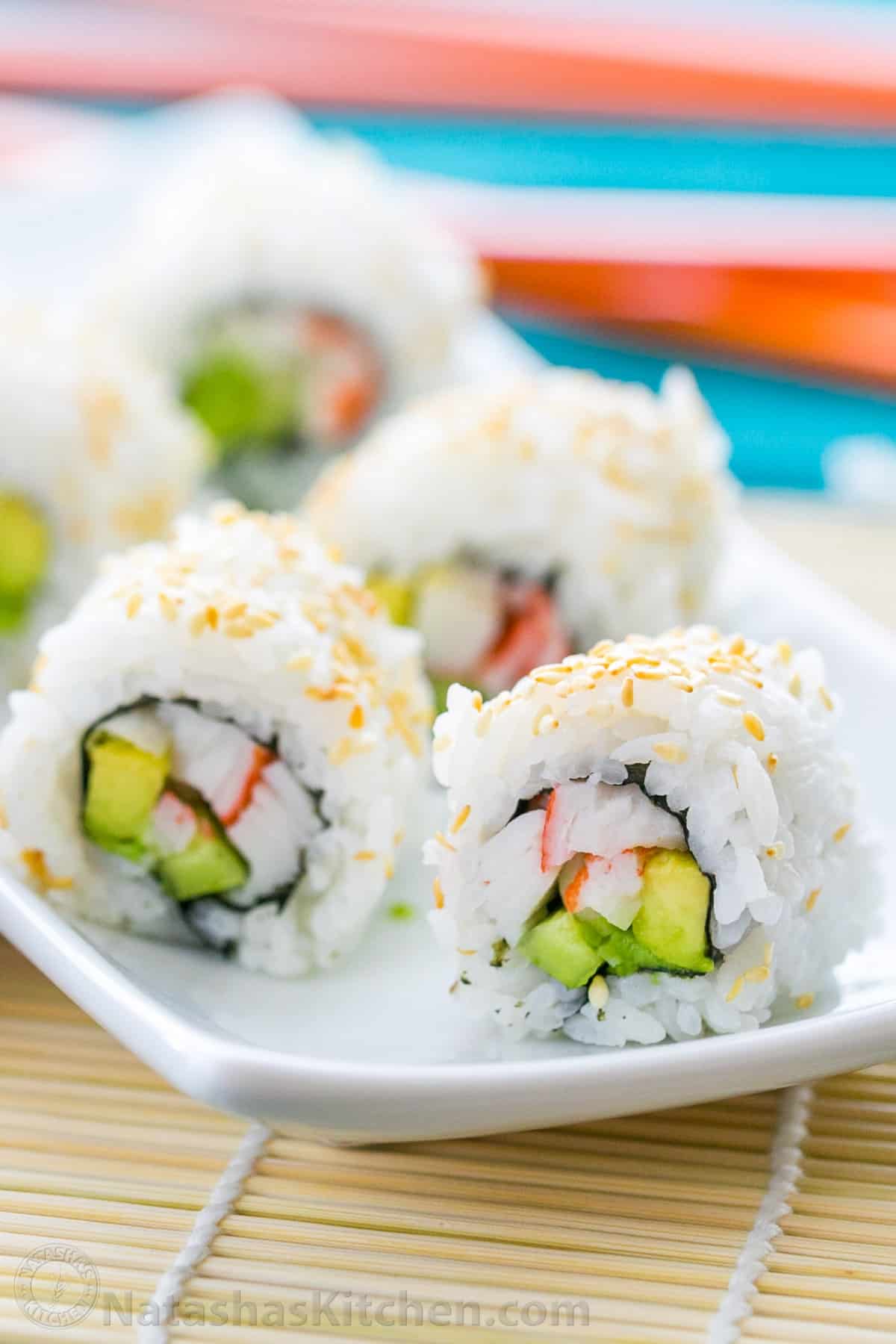
- Slice the Roll: With a very sharp, damp knife, slice the roll. First, cut it in half, then cut each half into 3 or 4 equal pieces, making 6 or 8 pieces per roll. Wipe the knife blade with a damp cloth between each cut for clean slices.
Presentation and Pairing: Completing the Experience
The final touch is all about presentation and complementing your freshly made California Roll with the perfect accompaniments.
- Garnish: Arrange your sushi pieces artfully on a platter. The vibrant colors of the avocado, cucumber, and crab, contrasted with the white rice and speckled sesame seeds, create an inviting visual.
- Serve with: Small bowls of good quality soy sauce for dipping, a dab of wasabi for a kick, and a few slices of pickled ginger (gari) to cleanse the palate between bites.
- Beverage Pairings: To elevate the experience, consider pairing your California Roll with a crisp sake, a light Japanese beer, or even a refreshing glass of California Sauvignon Blanc or sparkling wine. These pairings enhance the flavors and contribute to the overall gourmet experience, much like enjoying fine dining during your travels.
Beyond the Kitchen: The California Roll’s Place in Global Tourism and Lifestyle
The journey of the California Roll doesn’t end in your kitchen. Its influence extends far into the realms of global tourism and contemporary lifestyle. It has become a staple on menus in diverse travel destinations, from hotel resorts in Santa Monica to bustling eateries in Tokyo. This iconic roll serves as a testament to how food can transcend borders, sparking culinary trends and inspiring travelers to seek out authentic and innovative food experiences wherever they go. Its universal appeal makes it a comfortable, familiar option even in unfamiliar locales, yet its origins tether it firmly to the relaxed, health-conscious lifestyle often associated with California.
Culinary Classes and Workshops: An Immersive Travel Experience
For the discerning traveler seeking more than just sightseeing, culinary classes offer a fantastic way to engage with local culture and gastronomy. Sushi-making workshops, often featuring the California Roll as a foundational lesson, are increasingly popular activities. Imagine a luxury resort in Napa Valley or a boutique hotel in Laguna Beach offering guests a hands-on sushi class as part of their experience packages. These aren’t merely cooking lessons; they are immersive cultural experiences, allowing you to connect with local chefs, learn about regional ingredients, and gain a deeper understanding of food traditions. Participating in such a class abroad or even locally can be a memorable highlight of any trip, providing both a delicious skill and a unique story to share. Many travel guides now recommend hands-on culinary experiences as essential elements of a rich travel itinerary, bridging the gap between simply observing and actively participating in a destination’s lifestyle.
Exploring California’s Food Scene: Where to Savor the Best
While making your own California Roll is a rewarding endeavor, experiencing it in its birthplace, California, adds another layer of appreciation. The state boasts an incredible food scene, from high-end dining to casual beachside cafes, with sushi playing a prominent role. When planning a trip to California, consider including culinary explorations. Visit renowned sushi establishments in Los Angeles, perhaps venturing into areas famous for their Japanese culinary heritage. In San Francisco, explore the bustling markets for fresh seafood, and consider how these pristine ingredients contribute to the local sushi scene. Sampling California Rolls from different chefs and restaurants can offer fascinating insights into regional variations and personal touches, turning a simple meal into a delightful part of your travel story. It’s a culinary pilgrimage that celebrates the ingenuity and vibrant spirit of Californian cuisine.
The California Roll stands as a delicious emblem of culinary innovation and cultural fusion. From its debated origins in Los Angeles or Vancouver to its current status as a global favorite, it tells a compelling story of adaptation and accessibility. Learning how to make this iconic roll is not just about following a recipe; it’s an invitation to engage with a piece of history, to explore diverse flavors, and to bring a slice of the vibrant Californian lifestyle into your home. Whether you’re making it as a fun family activity, a healthy meal option, or as preparation for a future culinary adventure, the California Roll offers a rewarding and delicious experience that bridges the gap between everyday cooking and exciting travel aspirations. It reminds us that food is a powerful gateway to understanding culture, fostering connection, and creating unforgettable memories, both in the kitchen and on journeys abroad.
LifeOutOfTheBox is a participant in the Amazon Services LLC Associates Program, an affiliate advertising program designed to provide a means for sites to earn advertising fees by advertising and linking to Amazon.com. Amazon, the Amazon logo, AmazonSupply, and the AmazonSupply logo are trademarks of Amazon.com, Inc. or its affiliates. As an Amazon Associate we earn affiliate commissions from qualifying purchases.