
California, often lauded for its stunning coastlines, innovative tech hubs, and diverse cultural landscapes, is equally known for its dynamic and often challenging accommodation market. For anyone considering a move to the Golden State or planning an extended stay, understanding the cost of an apartment is paramount. The state’s immense size and economic diversity mean that rental prices are far from uniform, presenting a complex tapestry of options ranging from eye-wateringly expensive urban centers to more accessible suburban and rural communities. Navigating this landscape requires insight into regional variations, apartment types, and the myriad factors that collectively shape the final monthly cost. This guide delves into the intricacies of California’s rental market, offering a comprehensive look at what to expect when searching for accommodation.
The Diverse Landscape of California’s Rental Market
California’s status as an economic powerhouse and a desirable place to live profoundly impacts its accommodation costs. From the tech mecca of the San Francisco Bay Area to the sprawling metropolis of Los Angeles and the agricultural heartland of the Central Valley, each region presents a unique set of circumstances that dictate rental prices. This variability makes a blanket answer to “how much is an apartment in California?” impossible, necessitating a closer examination of the underlying factors.
A State of Contrasts: Economic and Geographic Influences
The primary driver of high rental costs in California is robust demand coupled with limited supply, particularly in job-rich urban areas. Major economic centers, especially those with flourishing tech, entertainment, or finance industries, naturally attract a large influx of residents, creating intense competition for housing. Geographic constraints, such as mountains, oceans, and protected lands, further restrict new construction in highly desirable coastal regions, exacerbating the supply shortage. This combination creates an environment where rent prices in cities like San Francisco, San Jose, and parts of Los Angeles can be among the highest in the nation. Conversely, areas further inland or in smaller communities often offer significantly more affordable options, reflecting differing economic opportunities and population densities. Understanding these fundamental economic and geographic forces is the first step in comprehending the state’s accommodation dynamics.
Key Determinants of Rental Costs
Beyond broad regional economics, several specific factors influence the price of an individual apartment. The most apparent is location within a city or town; an apartment in a trendy, walkable neighborhood with excellent schools and amenities will invariably cost more than a similar unit in a less desirable area. Size and layout are also crucial, with studios and one-bedroom apartments being the most common entry points and subsequently less expensive than two-bedroom or larger units. Apartment amenities play a significant role: features like in-unit laundry, a gym, a swimming pool, covered parking, or a pet-friendly policy can add hundreds of dollars to the monthly rent. The age and condition of the building also factor in; newer, luxury developments with modern finishes typically command higher prices than older, more modest buildings. Finally, lease terms can affect the price, with shorter-term leases (e.g., 6 months) often carrying a premium compared to standard 12-month agreements.
Regional Breakdown: Unpacking Rental Prices Across California
The vastness of California necessitates a detailed look at its distinct regions to truly understand apartment costs. Each area presents a unique housing market, shaped by its economy, geography, and lifestyle offerings.
The Peak of Affordability: San Francisco Bay Area
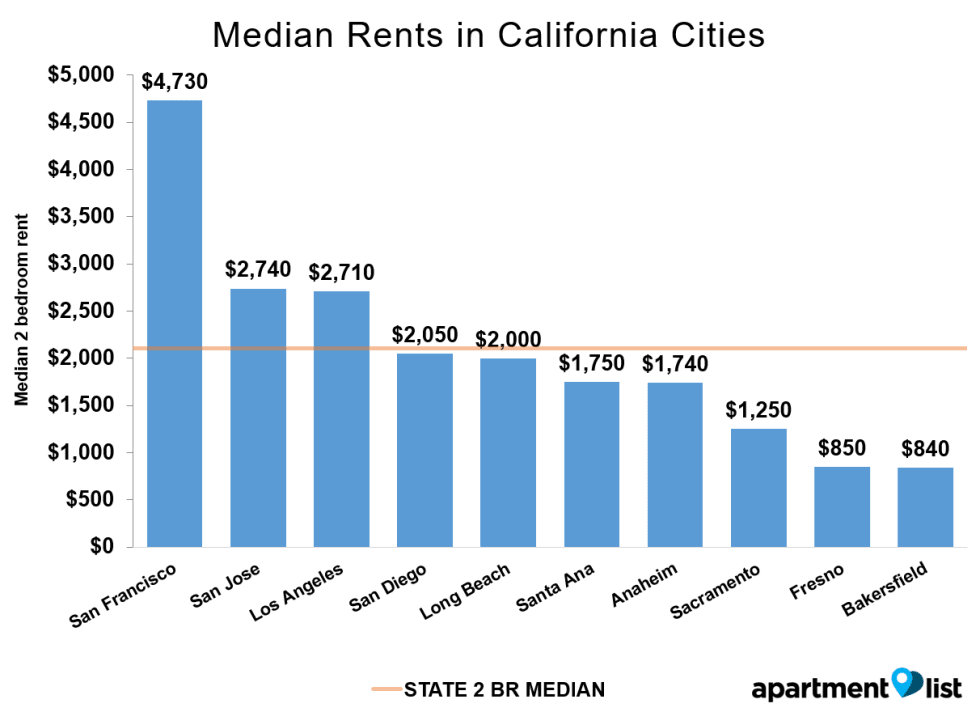
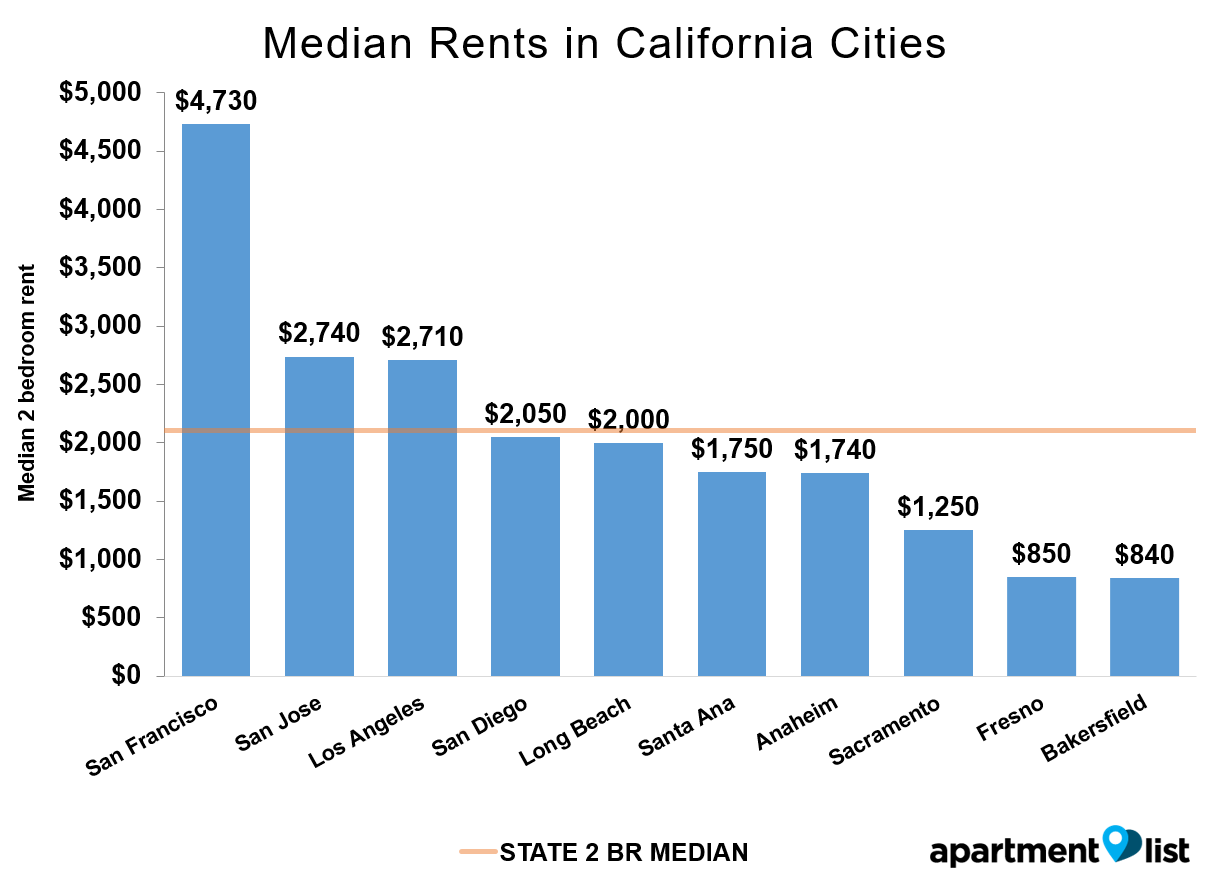
Consistently ranking among the most expensive rental markets globally, the San Francisco Bay Area is a prime example of high demand meeting limited supply. In cities like San Francisco, San Jose, and Oakland, a studio apartment can range from $2,200 to $3,000+, while a one-bedroom unit often falls between $2,800 and $3,800+. Two-bedroom apartments in desirable neighborhoods frequently exceed $4,000, with luxury units commanding significantly more. The strong presence of tech giants and highly paid professionals drives these prices, making it a challenging market for those on a tighter budget. Commuting from more affordable outlying areas is a common strategy, though this adds time and transportation costs.
Southern California’s Varied Market
Southern California presents a more varied picture. Los Angeles County, particularly areas close to employment hubs, beaches, or popular entertainment districts, is notoriously expensive. A studio in central Los Angeles can cost $1,800-$2,500, with one-bedrooms typically ranging from $2,200 to $3,200+. However, move further inland to neighborhoods like the San Fernando Valley, and prices can decrease slightly. Orange County offers similar pricing, especially in coastal cities like Newport Beach or Irvine. San Diego, known for its relaxed lifestyle and beautiful beaches, also commands high rents, with one-bedroom apartments averaging $2,000-$2,800. The key to finding value in Southern California often lies in exploring the vast suburban sprawl and considering commutes.
Northern and Central California: Discovering Value
Beyond the San Francisco Bay Area, Northern California offers some respite. Sacramento, the state capital, provides a more accessible market, with one-bedroom apartments typically ranging from $1,500 to $2,000. This region has seen growth but remains more affordable than coastal giants. Similarly, the Central Valley cities like Fresno or Bakersfield represent some of the most budget-friendly options in the state, with one-bedroom apartments often available for $1,200-$1,600. While these areas may lack the immediate access to coastal attractions or major urban amenities, they provide a viable alternative for those prioritizing lower accommodation costs. Coastal cities north of the San Francisco Bay Area, such as Santa Cruz or Monterey, blend scenic beauty with a higher cost of living, with one-bedrooms typically in the $2,000-$2,800 range due to their desirability.
The Inland Empire and Beyond: Alternative Options
The Inland Empire, encompassing cities like Riverside and San Bernardino, has become an increasingly popular option for those priced out of coastal Southern California. Here, one-bedroom apartments often range from $1,600 to $2,200, offering a significant saving compared to Los Angeles or Orange County, albeit often with longer commutes. Further east into the desert regions like Palm Springs, prices can fluctuate based on seasonality and the type of rental, but often present more affordable long-term options outside the peak tourist season. These areas represent strategic choices for individuals and families seeking more space and lower costs, willing to trade proximity to major urban centers for affordability.
Apartment Types and Their Price Points
The size and configuration of an apartment are fundamental determinants of its rental price in California. Understanding the typical costs associated with different unit types can help narrow down the search and align expectations with budget.
Studios and One-Bedroom Apartments
Studio apartments are typically the most affordable entry point into the California rental market. They combine living, sleeping, and kitchen areas into a single room, with a separate bathroom. Prices for studios can range dramatically, from approximately $1,200 in more affordable regions like the Central Valley to upwards of $3,000 in prime areas of San Francisco or Silicon Valley. They are ideal for single occupants or those on a tighter budget who prioritize location over space.
One-bedroom apartments offer a separate sleeping area, providing more privacy and often a larger overall footprint than a studio. These are a popular choice for singles or couples. The cost for a one-bedroom in California typically starts around $1,500 in less expensive markets and can easily reach $2,800-$3,800 in high-demand cities like Los Angeles or San Diego, and even exceed $4,000 in parts of the San Francisco Bay Area.
Two-Bedroom and Larger Units
Two-bedroom apartments are suitable for small families, roommates, or individuals desiring a home office or guest room. These units command significantly higher prices due to increased space and functionality. Expect to pay anywhere from $1,800 in regions like Sacramento or the Inland Empire to $3,500-$5,000+ in prime Southern California and Bay Area locations. The premium for an additional bedroom is substantial, making roommate situations a common strategy to mitigate costs.
For three-bedroom and larger apartments, which are less common in urban centers and more prevalent in suburban areas, prices can range from $2,500 in more affordable counties to $6,000+ in exclusive neighborhoods of Los Angeles or the San Francisco Bay Area. These larger units often cater to families or multiple roommates pooling resources.
Furnished vs. Unfurnished: What to Expect
While most long-term apartment rentals in California are unfurnished, there are options for furnished units, particularly in areas with a transient population or for corporate housing. Furnished apartments, which include essential furniture and sometimes utilities, typically come at a significant premium, often 15-30% higher than unfurnished equivalents. They offer convenience but require a higher monthly budget. For long-term stays (12 months or more), purchasing furniture often proves more cost-effective than renting a furnished unit, provided the initial investment is feasible. However, for shorter-term stays (3-6 months), a furnished apartment can be a practical solution, bridging the gap between a hotel stay and a traditional unfurnished lease.
Beyond the Rent: Essential Costs and Smart Budgeting
While the quoted monthly rent is the largest component of accommodation expenses, securing an apartment in California involves numerous other costs that prospective tenants must factor into their budget. Overlooking these can lead to unexpected financial strain.
Understanding Additional Monthly Expenses
Beyond the base rent, tenants are typically responsible for utilities. This includes electricity, gas, water, sewage, and trash collection. In some older buildings, water and trash might be included, but usually, these are separate. Internet and cable TV are almost always additional expenses. Depending on usage and location, these utilities can add anywhere from $100 to $300+ to a monthly budget. Apartments with air conditioning in hot regions like the Central Valley or Inland Empire will see significantly higher electricity bills during summer months. Additionally, if the apartment complex offers amenities like a gym or pool, sometimes a separate amenity fee is charged. Parking fees are also common, particularly in dense urban areas where street parking is scarce. These can range from $50 to $200+ per month per space. Finally, for pet owners, pet rent (an additional monthly fee, typically $25-$75 per pet) and pet deposits are standard.
Initial Out-of-Pocket Costs
Moving into an apartment in California requires a substantial upfront financial commitment. The most common initial costs include:
- Security Deposit: This is usually equivalent to one or two months’ rent, depending on credit history and the property type. By law, it cannot exceed two months’ rent for an unfurnished unit or three months’ rent for a furnished unit.
- First Month’s Rent: Paid upfront, often along with the security deposit.
- Application Fees: Landlords or property management companies charge a non-refundable fee (typically $30-$50) to cover the cost of background checks and credit reports.
- Pet Deposit: If applicable, an additional deposit for pets, which can range from $300 to $500 per pet and is often non-refundable or only partially refundable.
- Moving Costs: Depending on the distance and amount of belongings, moving expenses can range from a few hundred to several thousand dollars.
- Renter’s Insurance: While not always legally mandated, many landlords require tenants to carry renter’s insurance, protecting against loss of personal property due to theft or disaster. This is usually an affordable monthly premium, around $10-$20.

Strategies for Securing Your Ideal California Accommodation
Given the competitive nature of California’s rental market, especially in desirable areas, proactive strategies are essential. Be prepared to act quickly when you find a suitable apartment, as good units are often rented within days. Have all necessary documentation ready: identification, proof of income (pay stubs, offer letters), bank statements, and references. A strong credit score is highly advantageous. Consider looking slightly outside the most popular neighborhoods or exploring communities with good public transport links to save on rent. Negotiating rent is rarely possible in hot markets, but understanding all the costs upfront can prevent surprises. For those needing a long-term stay, patience, diligence, and flexibility are key to finding accommodation that aligns with both budget and lifestyle preferences in the diverse landscape of California.
LifeOutOfTheBox is a participant in the Amazon Services LLC Associates Program, an affiliate advertising program designed to provide a means for sites to earn advertising fees by advertising and linking to Amazon.com. Amazon, the Amazon logo, AmazonSupply, and the AmazonSupply logo are trademarks of Amazon.com, Inc. or its affiliates. As an Amazon Associate we earn affiliate commissions from qualifying purchases.