
Embarking on a journey through the Golden State often involves navigating its vast road networks, from the stunning coastal drives of Highway 1 to the bustling urban sprawls of Los Angeles and San Francisco. For travelers, whether they’re residents on a spontaneous road trip or visitors planning to purchase a vehicle, understanding the nuances of temporary vehicle permits from the California Department of Motor Vehicles (DMV) is crucial. While the phrase “one-day permit” might suggest an extremely short-term authorization, the California DMV primarily issues Temporary Operating Permits (TOPs) designed to facilitate short-term vehicle operation under specific circumstances. These permits, while not strictly “one-day” in their explicit validity period, serve the essential purpose of keeping your travel plans on track when full registration isn’t immediately possible.
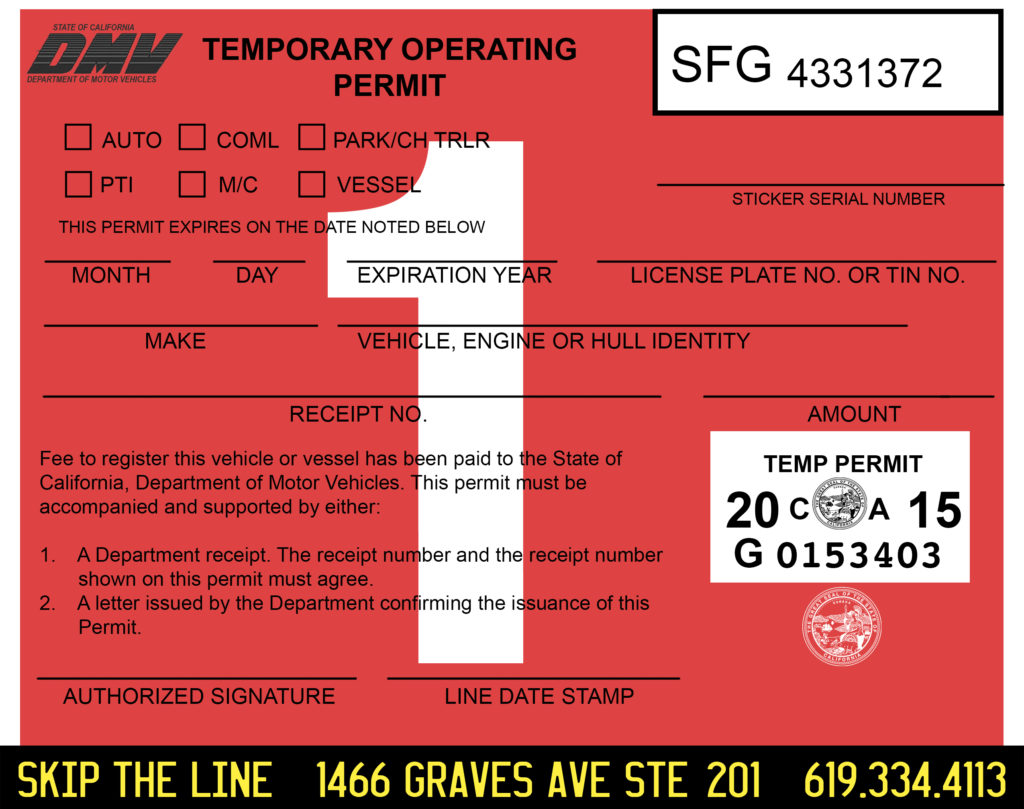
Unpacking California DMV Temporary Operating Permits: A Traveler’s Essential
Navigating the administrative landscape of vehicle registration can seem daunting, especially when your focus is on the open road. However, for many travelers and new vehicle owners in California, a Temporary Operating Permit (TOP) from the DMV is an indispensable tool. It bridges the gap between various vehicle status changes and the legal requirement to operate a registered vehicle.
Beyond the “One Day” – What a TOP Truly Means
Despite the common query about a “one-day permit,” the standard temporary permit issued by the California DMV is generally valid for a more extended period, typically 30 days. This duration provides ample time for individuals to complete the full registration process, address an administrative oversight, or move a newly acquired vehicle. The “one-day” notion often arises from the immediate, short-term need for such a permit – perhaps to move a vehicle from a point of sale to a repair shop, or to simply drive it home after purchase before its permanent plates arrive. Therefore, while the permit itself offers a month’s validity, its practical application frequently addresses a momentary requirement to operate a vehicle legally without current plates or registration. It’s an essential placeholder, ensuring your journey, however brief or extended within that 30-day window, remains compliant.
When a TOP Becomes Indispensable for Your California Travels
For travelers and new residents alike, several scenarios necessitate obtaining a TOP to ensure uninterrupted movement and compliance with California’s vehicle codes. Understanding these situations is key to proactive travel planning:
- Recent Vehicle Purchase: Perhaps the most common reason. If you purchase a vehicle from a private party or a dealership, it may take time for the permanent license plates and registration sticker to arrive. A TOP allows you to immediately drive your new vehicle legally, enabling you to travel home, visit local attractions, or commence a planned road trip without delay. This is particularly relevant for out-of-state visitors considering buying a car for an extended stay or a cross-country journey starting in California.
- Lost, Stolen, or Damaged License Plates/Stickers: Imagine you’re midway through a scenic drive along Big Sur, and you discover your license plate has fallen off or been stolen. Or, your registration sticker becomes illegible. A TOP can provide immediate legal authorization to continue your travels while you await replacement plates or stickers. This prevents potential citations for operating a vehicle without proper identification or current registration.
- Non-Resident Vehicle Transport: If you’re relocating to California from another state or bringing a vehicle into California for an extended stay, you might need a TOP to legally operate it while you complete the out-of-state vehicle registration process. This ensures that even before your California plates are issued, you can move your belongings or explore your new surroundings.
- Smog Check Requirements: Sometimes, a vehicle cannot be registered until it passes a smog check, and a TOP might be necessary to legally drive the vehicle to and from the smog station if its registration is expired or incomplete. This is a critical step for many vehicles sold in California.
In essence, a TOP is a travel enabler, providing peace of mind and legal standing for your vehicle during transitional periods.
Cost Implications and Permit Duration
Understanding the financial and temporal aspects of a California DMV TOP is crucial for budgeting and planning your travels effectively. While the explicit cost for just a “one-day permit” doesn’t exist, the fees associated with obtaining a TOP are generally minimal when compared to the fines for operating an unregistered vehicle.
The Fee Structure for California TOPs
The California DMV does not typically charge a separate, standalone fee solely for the issuance of a Temporary Operating Permit. Instead, the cost of a TOP is usually integrated into other transactions or issued when certain conditions prevent immediate full registration. For instance, if you purchase a vehicle from a dealership, the cost for the temporary tag (which serves as your TOP) is often bundled into the overall sales transaction and processing fees. If you are applying for a TOP due to lost plates or an expired registration while awaiting renewal, there might be a small processing fee for issuing the temporary permit itself, or it could be covered by the fees for your replacement plates or registration renewal.
It’s important to differentiate this from vehicle registration fees, which are an annual cost based on the vehicle type, value, and other factors. A TOP simply allows you to operate the vehicle while these registration processes are underway or pending. Travelers should anticipate that while the TOP itself might not carry a hefty direct fee, it is an administrative solution to a larger registration requirement that does incur costs. For the most accurate and current fee information, particularly for unique situations, consulting the official California DMV website or visiting a local office is always recommended.
Understanding the Standard 30-Day Validity
As mentioned, the standard Temporary Operating Permit (TOP) in California is valid for 30 days. This duration is designed to give vehicle owners sufficient time to complete all necessary registration requirements, such as obtaining a smog certificate, submitting paperwork, or waiting for permanent license plates to be mailed. For travelers, this 30-day window is invaluable. It means that even if you only need the permit for a specific trip over a few days – perhaps driving a newly purchased car from San Diego to Napa Valley – you have a full month of legal operating status. This flexibility can be a lifesaver for those with fluid travel plans or unexpected delays in their vehicle’s permanent registration.
Potential for Extensions and Special Circumstances
In rare instances where an individual cannot complete the registration process within the initial 30-day period due to unforeseen circumstances beyond their control (e.g., specific vehicle inspection delays, complex title issues), the DMV may issue an extension. However, these extensions are not guaranteed and are typically granted on a case-by-case basis after a review of compelling evidence. It’s crucial for travelers to aim to finalize their registration within the initial 30 days to avoid complications. Relying on an extension should not be part of your initial travel planning. Always plan to complete your full registration well before the 30-day TOP expires to ensure continuous legal operation of your vehicle throughout your California adventures.
Streamlining Your Application: A Guide for Road Trippers and New Arrivals

Obtaining a Temporary Operating Permit in California doesn’t have to be a bureaucratic nightmare, especially with proper preparation. For travelers, understanding the application process is key to minimizing delays and maximizing time exploring the state.
Essential Documents to Prepare
Before you begin the application process, gather the necessary documents. Having these readily available will significantly expedite your request for a TOP:
- Proof of Ownership: This is paramount. For a newly purchased vehicle, you’ll need the Bill of Sale and/or the signed-off vehicle title. If you’re applying for a TOP due to lost plates, you’ll need proof of your existing registration or vehicle title.
- Proof of California Insurance: California law mandates that all vehicles operating on public roads must have current liability insurance. Be prepared to show proof of insurance coverage for the vehicle in question.
- Valid Identification: A current driver’s license or state-issued ID is usually required. For non-residents, an out-of-state or international driver’s license may be accepted, along with other supporting identity documents.
- Application Form (if applicable): While TOPs are often issued as part of another transaction, for specific situations (like replacing lost plates), you might need to fill out a specific DMV form.
- Smog Certificate (if required): For many vehicles, particularly those being registered for the first time in California or after a sale, a valid smog check certificate is a prerequisite for permanent registration. While not always needed for the TOP itself, it’s essential for the subsequent full registration.
The Application Process: Online, Mail, or In-Person at a DMV Office
The method of obtaining a TOP can vary depending on your specific situation:
- In-Person at a DMV Office: This is often the most straightforward way to get a TOP, especially if you need it immediately or have complex questions. Visiting a DMV field office allows you to speak directly with a representative, submit all your documents, and receive your temporary permit on the spot. Be prepared for potential wait times, especially in major cities like Sacramento or San Jose. Using the DMV’s appointment system can significantly reduce waiting.
- Through a Licensed Dealership: If you purchase a vehicle from a licensed dealership in California, they are typically authorized to issue a temporary operating permit at the point of sale. This is the most convenient method as it’s part of the vehicle purchase transaction.
- By Mail or Online (Limited): Certain transactions, such as renewing registration or requesting replacement plates, can be initiated online or by mail. In these cases, a temporary operating permit might be automatically issued or available for download/print while your permanent documents are processed and mailed. However, for initial vehicle purchases or complex scenarios, an in-person visit is often required.
Ensuring Compliance for a Smooth Journey
Once you receive your TOP, it’s critical to display it correctly. Typically, this involves securely affixing the temporary permit to the designated area on your rear license plate (if you have one) or, for vehicles without plates, to the lower-left corner of the rear window. Ensure it is clearly visible from the outside. Failure to display your TOP properly, or operating the vehicle after its expiration, can lead to costly fines and potential vehicle impoundment, severely disrupting your travel plans. Always carry your vehicle’s registration paperwork (or proof of application) and your driver’s license with you when operating the vehicle.
Travel Scenarios and Pro Tips for Using Your TOP
Integrating the TOP into your travel itinerary is a smart move for specific situations, ensuring your journey through California is both enjoyable and legally sound.
Navigating a Recent Vehicle Purchase Across California
Imagine you’ve flown into Los Angeles with the intention of buying a car for an epic road trip north to Redwood National Park and back. A TOP becomes your immediate ticket to freedom. Once you finalize the purchase, whether from a dealership or a private seller, ensure you receive a temporary permit. This allows you to drive the vehicle off the lot and embark on your adventure without waiting for permanent plates. Keep all purchase documentation with you, especially during the initial days of your travel, as proof of recent acquisition.
Addressing Lost or Stolen Plates While on the Road
Discovering a missing license plate while on a long-distance drive, perhaps after a stop in a busy city like Oakland or during an overnight stay in Palm Springs, can be distressing. Your first step should be to report the lost or stolen plate to local law enforcement. With the police report in hand, proceed to the nearest DMV office to apply for a replacement plate and, crucially, a TOP. This temporary permit will allow you to continue your travels legally while the replacement plate is mailed to your registered address (or a designated address if you are still traveling). Don’t risk driving without one; the potential hassle and cost of a citation far outweigh the effort of obtaining a TOP.
Out-of-State Visitors and Vehicle Relocation
For those moving to California or bringing a vehicle into the state for an extended visit (beyond what your out-of-state registration allows), the TOP facilitates a smooth transition. You might need to obtain a TOP while awaiting California registration. This is especially true if your out-of-state registration is nearing expiration or if there are specific California inspection requirements (like smog checks) that need to be met before full registration. Plan to visit a DMV office shortly after your arrival to initiate the process.

Integrating Your TOP into Your Travel Planning
- Pre-Plan DMV Visits: If you anticipate needing a TOP, factor in time to visit a DMV office. Use the online appointment system to minimize wait times, especially in popular tourist areas.
- Keep Documents Accessible: Always have your driver’s license, proof of insurance, and the vehicle’s temporary permit/registration readily available, preferably in an easily accessible glove compartment or your travel bag.
- Understand Expiration Dates: Be acutely aware of your TOP’s expiration date. Mark it on your calendar or set a reminder. Plan to complete your permanent registration well in advance to avoid any last-minute stress or legal issues during your travels.
While the “one-day permit” from the California DMV is more accurately a 30-day Temporary Operating Permit, its function is undeniably to serve immediate, short-term needs for legal vehicle operation. For travelers navigating the beautiful and diverse landscapes of California, understanding and utilizing this permit can prevent unnecessary roadblocks, ensuring your focus remains on the incredible experiences the state has to offer.
LifeOutOfTheBox is a participant in the Amazon Services LLC Associates Program, an affiliate advertising program designed to provide a means for sites to earn advertising fees by advertising and linking to Amazon.com. Amazon, the Amazon logo, AmazonSupply, and the AmazonSupply logo are trademarks of Amazon.com, Inc. or its affiliates. As an Amazon Associate we earn affiliate commissions from qualifying purchases.