
Navigating the complexities of applying for permanent disability in California can be a daunting process, significantly impacting one’s lifestyle, financial stability, and overall well-being. This guide aims to demystify the application journey, offering insights into the various programs available, the critical steps involved, and how to best position your claim for a successful outcome. Understanding these processes is crucial for individuals facing long-term health challenges that prevent them from maintaining gainful employment and a consistent lifestyle.
Understanding Permanent Disability Programs in California
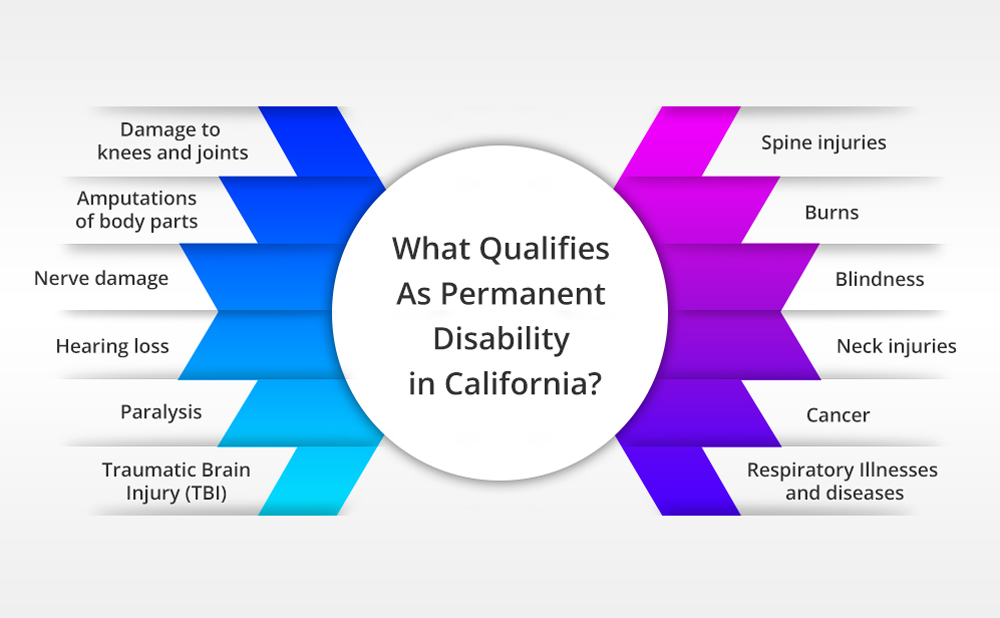
California residents have several avenues to pursue permanent disability benefits, each with distinct eligibility criteria and application procedures. It’s vital to identify which program best suits your circumstances, as this will dictate your application strategy.
Social Security Disability Insurance (SSDI)
Social Security Disability Insurance (SSDI) is a federal program administered by the Social Security Administration (SSA). It is designed for individuals who have worked long enough and recently enough to have paid Social Security taxes on their earnings. Eligibility for SSDI hinges on having a medical condition that meets the SSA’s definition of disability, meaning it’s expected to last for at least one year or result in death, and prevents you from engaging in any substantial gainful activity (SGA). The amount of your monthly benefit depends on your average lifetime earnings.
Supplemental Security Income (SSI)
Supplemental Security Income (SSI) is another federal program, also managed by the SSA, but it is a needs-based program. Unlike SSDI, eligibility for SSI does not depend on work history or Social Security tax contributions. Instead, it is for disabled adults and children who have limited income and resources, regardless of their work history. The medical criteria for disability are the same as for SSDI. Many individuals who qualify for SSI in California may also be eligible for Medi-Cal, California’s Medicaid program.
California State Disability Insurance (SDI)
California State Disability Insurance (SDI) provides short-term wage replacement benefits to eligible California workers who are unable to work due to a non-work-related illness or injury, or a pregnancy. While primarily short-term, in cases where the disability extends for a prolonged period, it can serve as a bridge while applying for federal permanent disability benefits. It’s crucial to understand that SDI is not a permanent disability program itself, but can be an important component of your overall financial strategy during a period of disablement. Benefits are typically paid for a maximum of 52 weeks.
Workers’ Compensation Permanent Disability
If your disability is a direct result of a work-related injury or illness, you may be eligible for Workers’ Compensation benefits, including permanent disability payments. In California, Workers’ Compensation is an employer-funded insurance program. Permanent disability in this context refers to any lasting effects of a work injury or illness that reduce your ability to compete in the open labor market. The level of permanent disability is determined by a medical evaluation and is expressed as a percentage. Payments are calculated based on this percentage and your earnings before the injury. It’s important to note that you cannot receive Workers’ Compensation and SDI benefits for the same period.
The Application Process: A Step-by-Step Guide
Regardless of the program you pursue, the application process for permanent disability is typically extensive and requires meticulous attention to detail.
Step 1: Gather Comprehensive Medical Evidence
This is arguably the most critical step. Permanent disability claims are primarily approved based on compelling medical evidence.
- Medical Records: Collect all relevant medical records, including doctor’s notes, hospital stays, test results (X-rays, MRIs, CT scans), laboratory reports, and prescription lists.
- Diagnosis and Prognosis: Ensure your medical records clearly state your diagnosis, the severity of your condition, and your prognosis (how long your condition is expected to last, and its impact on your ability to work).
- Treatment History: Document all treatments you have received, including surgeries, therapies, medications, and their effectiveness.
- Doctor’s Statements: Obtain detailed statements from your treating physicians outlining your limitations and how they prevent you from performing work-related activities. The more specific and comprehensive these statements are, the stronger your case.
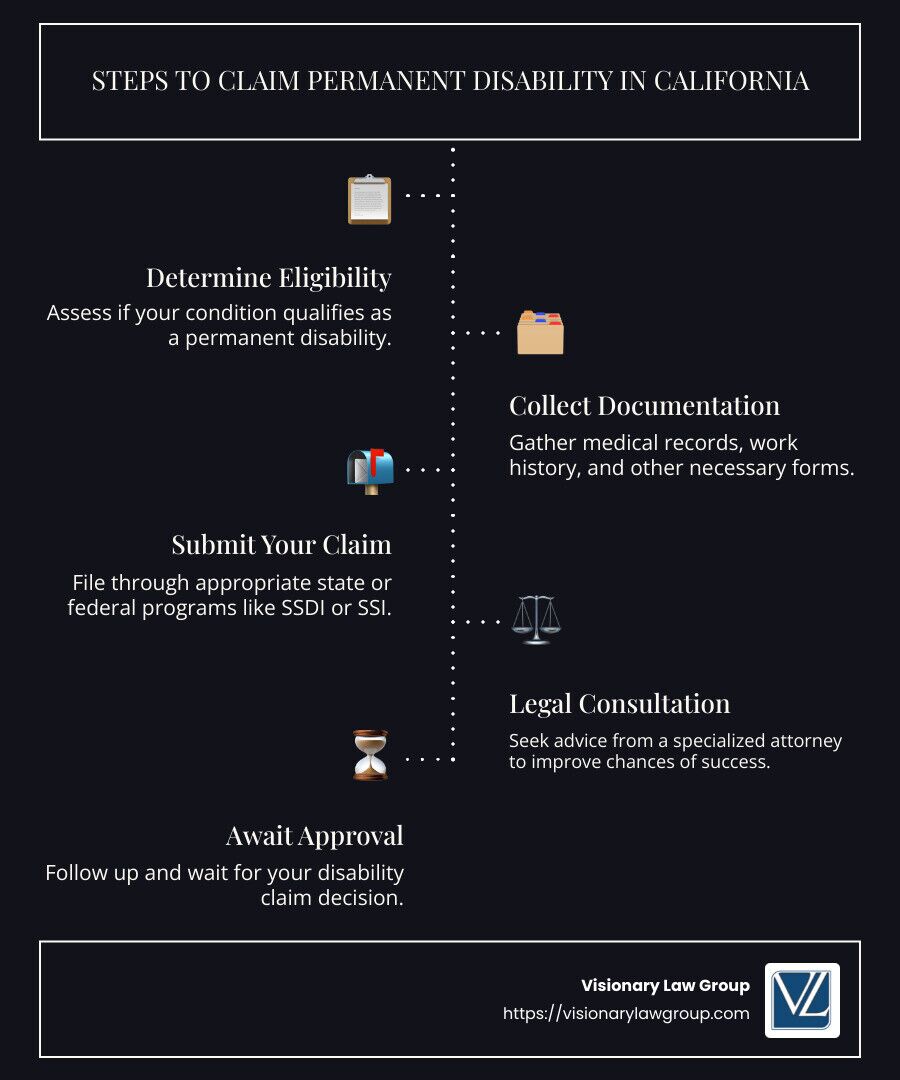
Step 2: Complete the Application Forms Accurately
Each program has its own set of application forms, which must be filled out completely and accurately.
- SSDI/SSI: You can apply online via the SSA website, by phone, or in person at a local Social Security office. Be prepared to provide extensive information about your medical conditions, work history, and daily activities.
- California SDI: Applications are typically filed online through the Employment Development Department (EDD) website. You’ll need a doctor’s certification.
- Workers’ Compensation: Report your injury to your employer immediately. You will need to file a DWC-1 claim form with your employer, who then forwards it to their Workers’ Compensation insurance carrier.
Step 3: Be Prepared for Evaluations and Reviews
After submitting your application, you may be required to undergo further evaluations.
- SSA Consultative Exams (CE): If the SSA determines your existing medical evidence is insufficient, they may schedule you for a consultative examination with one of their contracted doctors. It’s crucial to attend these appointments.
- Workers’ Compensation Qualified Medical Evaluator (QME): For Workers’ Compensation claims, if there’s a dispute over medical issues, a QME may be appointed to provide an impartial medical opinion on your condition, treatment, and permanent disability level.
Common Challenges and How to Overcome Them
Applying for permanent disability in California is rarely a straightforward process. Many applicants face denials and must navigate an appeals process.
Initial Denials Are Common
It’s a statistical reality that a significant percentage of initial SSDI and SSI applications are denied. This can be disheartening, but it’s important not to give up. Many successful claims are approved at the reconsideration or hearing level.
The Appeals Process
If your application is denied, you have the right to appeal. The appeals process typically involves several stages:
- Reconsideration (for SSDI/SSI): Your case will be reviewed by a different SSA examiner who was not involved in the initial decision. New medical evidence can be submitted at this stage.
- Hearing Before an Administrative Law Judge (ALJ): If reconsideration is denied, you can request a hearing before an ALJ. This is often your best chance of approval, as you can present your case in person, with or without legal representation, and call witnesses.
- Appeals Council Review: If the ALJ denies your claim, you can request a review by the Appeals Council.
- Federal Court Review: The final step in the SSDI/SSI appeals process is to file a lawsuit in federal court.
For Workers’ Compensation claims, the appeals process involves filing an Application for Adjudication of Claim with the Workers’ Compensation Appeals Board (WCAB) and potentially attending hearings before a WCAB judge.
The Importance of Legal Assistance
Given the complexity of disability law and the high rate of initial denials, many applicants find it beneficial to seek legal assistance. An experienced disability attorney can:
- Help you gather and organize medical evidence.
- Ensure all forms are completed accurately and submitted on time.
- Represent you at hearings and interact with the SSA or WCAB on your behalf.
- Improve your chances of approval, particularly at the appeals stages.
Most disability attorneys work on a contingency basis, meaning they only get paid if you win your case, and their fees are capped by law.

Managing Your Lifestyle During the Application Period
The application process can be lengthy, often taking many months or even years, especially if appeals are necessary. This period can be financially and emotionally draining, significantly impacting your lifestyle.
- Financial Planning: Explore all available resources, including California SDI (if eligible), short-term disability insurance, savings, and assistance programs offered by non-profits.
- Healthcare Access: Ensure you maintain access to necessary medical care. Medi-Cal may be an option for low-income individuals.
- Emotional Support: Dealing with a disability and the application process can be isolating. Seek support from family, friends, support groups, or mental health professionals. Maintaining a positive outlook, despite the challenges, is vital for your overall well-being.
- Stay Organized: Keep meticulous records of all communications, forms, and medical documentation. This organization will be invaluable as you navigate the process.
Applying for permanent disability in California is a journey that demands patience, persistence, and thorough preparation. By understanding the available programs, diligently preparing your application, and seeking appropriate support, you can significantly improve your chances of securing the benefits you need to adapt your lifestyle and ensure your long-term well-being.
LifeOutOfTheBox is a participant in the Amazon Services LLC Associates Program, an affiliate advertising program designed to provide a means for sites to earn advertising fees by advertising and linking to Amazon.com. Amazon, the Amazon logo, AmazonSupply, and the AmazonSupply logo are trademarks of Amazon.com, Inc. or its affiliates. As an Amazon Associate we earn affiliate commissions from qualifying purchases.