
For anyone living in or planning extensive travel within the golden state of California, understanding the nuances of the Real ID program is no longer just a recommendation – it’s a vital aspect of modern-day life, especially concerning domestic air travel and access to secure federal facilities. In an era where seamless travel experiences, efficient accommodation bookings, and hassle-free exploration of destinations are paramount, having the correct identification can make all the difference. This comprehensive guide will demystify the Real ID in California, explaining its origins, the application process, its benefits for travelers and residents, and what you need to know to ensure your lifestyle and travel plans remain uninterrupted.
Understanding Real ID: More Than Just a Driver’s License
The concept of Real ID emerged from the recommendations of the 9/11 Commission, which highlighted critical vulnerabilities in the security of identification documents. To address these concerns and enhance national security, the United States Congress passed the REAL ID Act of 2005. This act set forth minimum security standards for state-issued driver’s licenses and identification cards, making them acceptable for certain federal purposes. For Californians, this translates into a crucial choice regarding their primary form of identification.
The Federal Mandate and Its Impact on Travel
The primary driver behind the push for Real ID compliance is its requirement for domestic air travel within the United States. As of the federal enforcement deadline, individuals aged 18 and older will need a Real ID compliant driver’s license or identification card, or another acceptable form of identification, to board federally regulated commercial flights. This impacts every Californian who plans to fly, whether for a quick business trip from San Francisco to Los Angeles, a family vacation to Disneyland in Anaheim, or an adventure to a national park like Yosemite National Park.
Beyond air travel, a Real ID is also necessary for accessing secure federal facilities, such as military bases, federal courthouses, and other federal buildings. While many Californians might not frequent these locations, the air travel requirement alone makes Real ID a significant consideration for the vast majority of the population. The Department of Homeland Security (DHS) is the federal agency responsible for overseeing the implementation of the REAL ID Act, working in conjunction with state Departments of Motor Vehicles (or equivalent agencies) to ensure compliance.
Real ID vs. Standard Driver’s License/ID Card
In California, you essentially have two main options when applying for a new or renewed driver’s license or identification card: a Real ID compliant card or a standard federal non-compliant card. Both types of cards allow you to drive legally (if it’s a driver’s license), vote, and verify your age. However, their acceptability for federal purposes differs significantly.
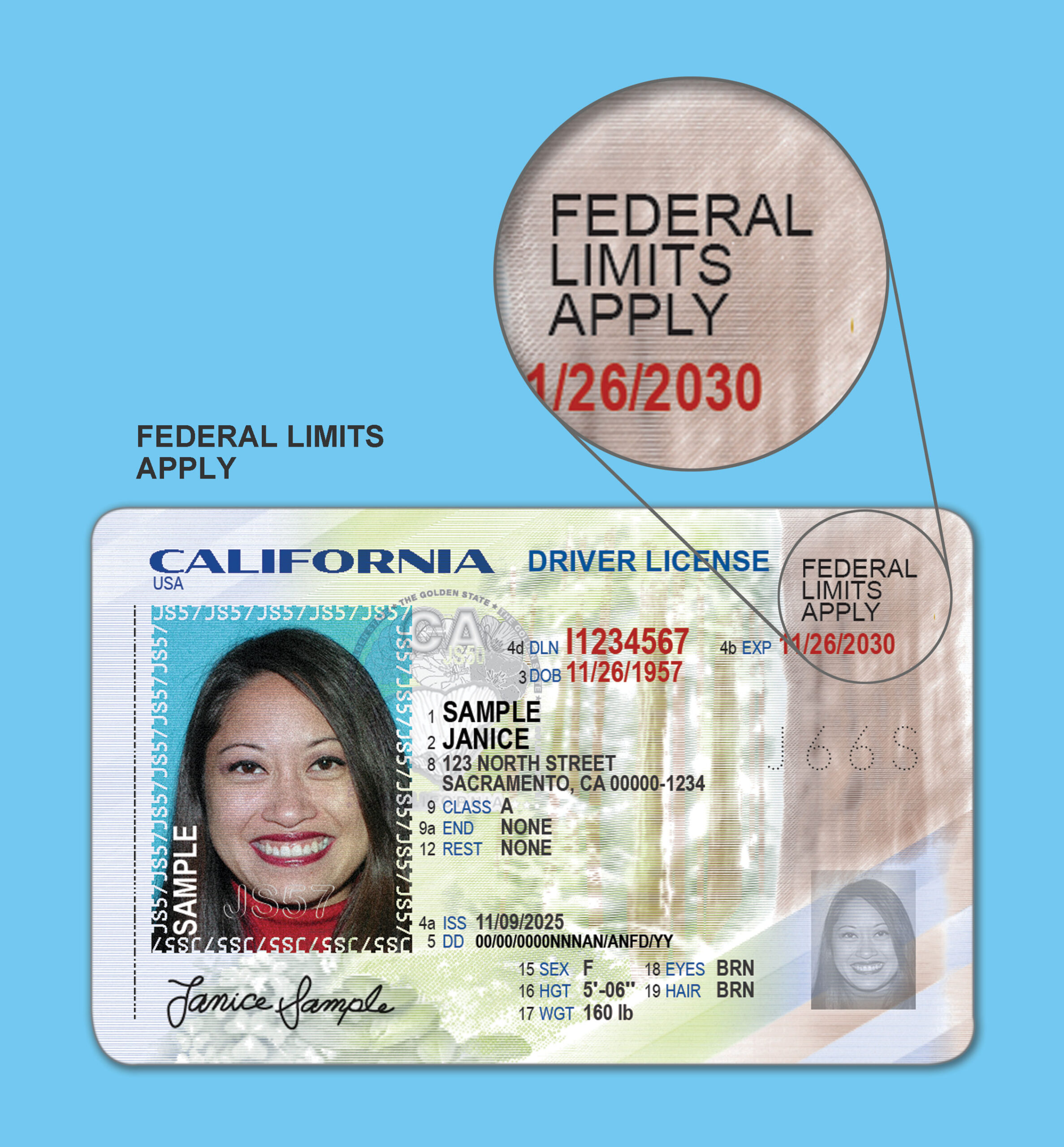
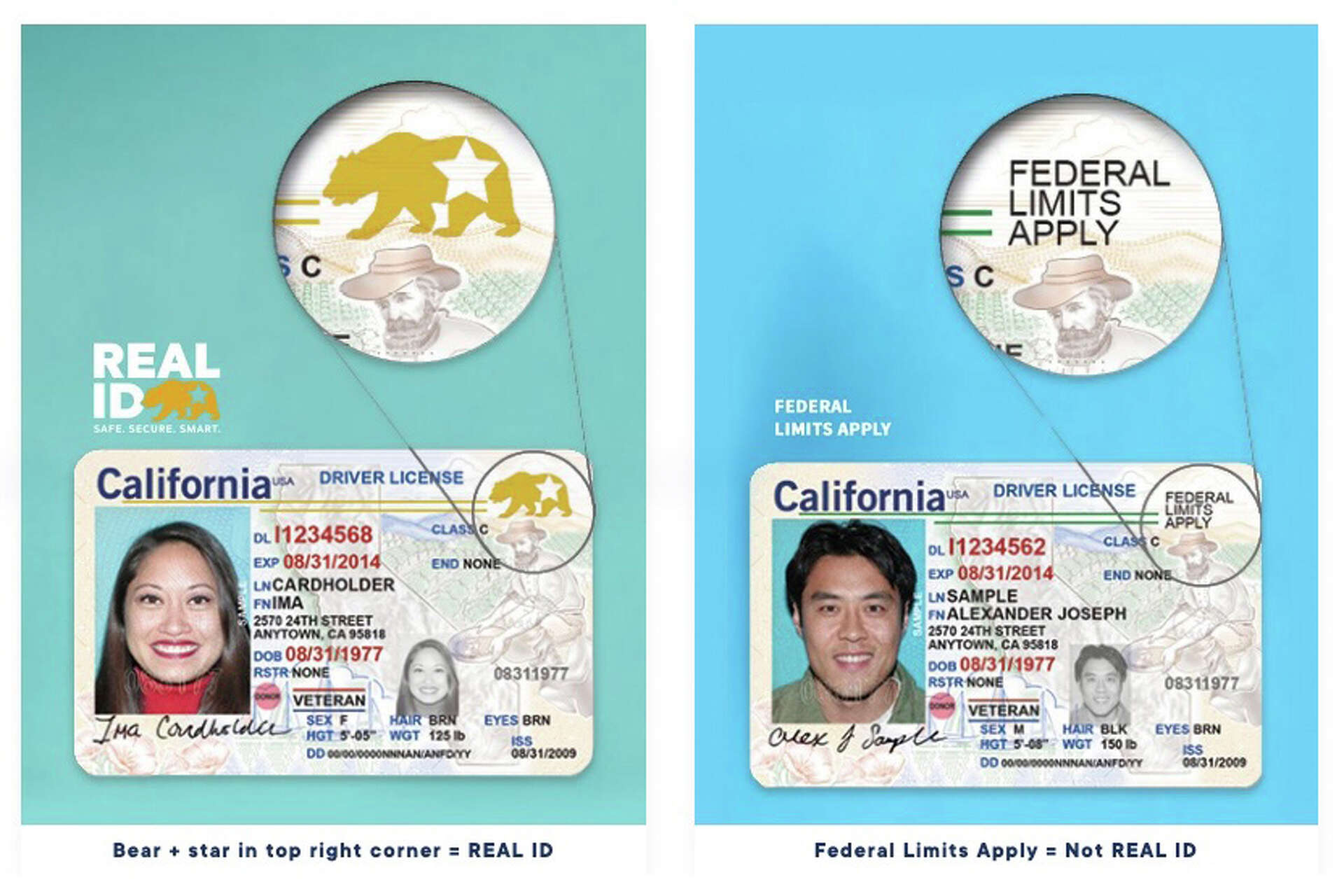
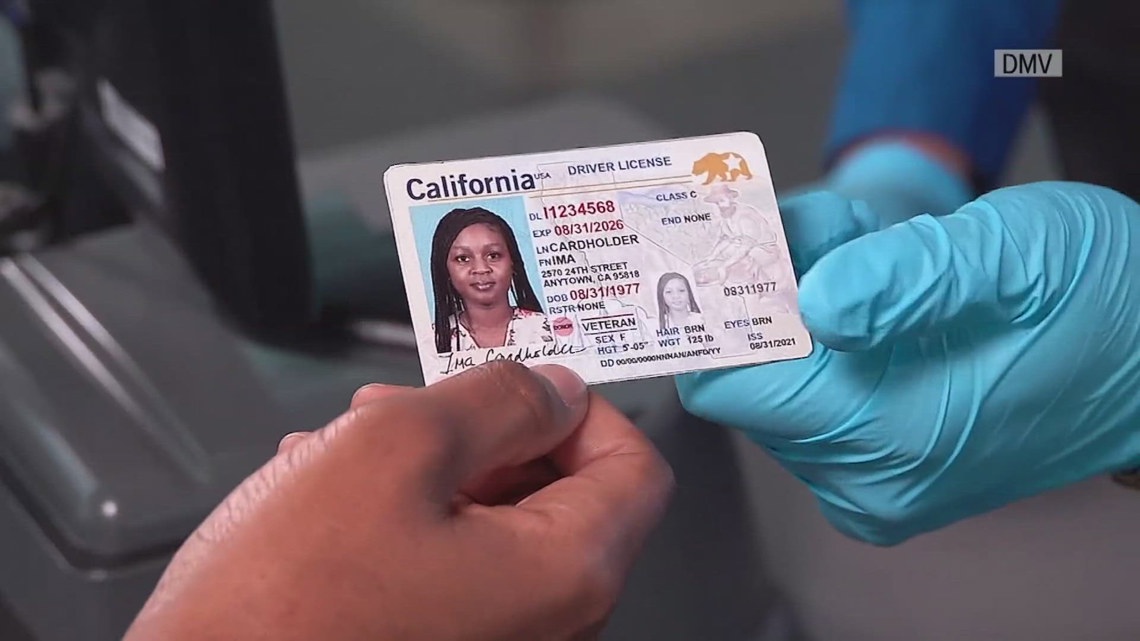
A California Real ID card is easily identifiable by a distinctive golden bear icon with a white star in the upper right-hand corner. This symbol signifies that the card meets the stringent federal security standards. In contrast, a standard California driver’s license or ID card, which is federal non-compliant, will display “FEDERAL LIMITS APPLY” in the upper right-hand corner instead of the star and bear. This distinction is critical because, after the enforcement deadline, the standard card will not be accepted by the Transportation Security Administration (TSA) for domestic air travel, nor will it grant access to secure federal facilities.
It’s important to clarify that choosing a standard ID does not mean you are unauthorized to drive or perform other state-level functions. It simply means you will need an alternative, federally accepted form of identification, such as a U.S. Passport or Passport Card, to board domestic flights or enter federal buildings. For many, the convenience of having one primary identification card that covers all bases makes the Real ID the more practical choice, streamlining their travel and daily interactions.
Navigating the Application Process in California
Obtaining a Real ID in California involves a straightforward, but specific, application process managed by the California DMV. Unlike a standard driver’s license renewal, applying for a Real ID requires an in-person visit to a DMV office and the presentation of specific original documents. This step ensures the highest level of identity verification, aligning with federal security standards.
Essential Documents: What You’ll Need
The most crucial part of the Real ID application process is gathering the correct documentation. The California DMV requires applicants to provide proof of identity, proof of Social Security number, and two proofs of California residency. All documents must be originals or certified copies; photocopies are generally not accepted.
-
Proof of Identity: You’ll need one document from this category. Acceptable documents include:
- A valid, unexpired U.S. Passport or Passport Card.
- An original or certified copy of a U.S. birth certificate.
- A Certificate of Naturalization or Citizenship.
- An unexpired foreign passport with a valid U.S. visa and approved I-94 form.
- An unexpired Permanent Resident Card (Green Card).
-
Proof of Social Security Number (SSN): One document from this category is required. Examples include:
- Your Social Security card.
- A W-2 form or SSA-1099 form.
- A pay stub with your name and SSN.
- Proof of California Residency: You need two different documents from this category. These must show your California street address (P.O. boxes are not accepted). Examples include:
- Utility bills (gas, electric, water, cable, cell phone).
- Rental or lease agreements, or a deed/title for property.
- Mortgage bills.
- Bank statements.
- Insurance documents (vehicle, home, health).
- Medical documents.
- Employment documents.
It’s also important to note that if your current name is different from the name on your identity document (e.g., due to marriage or divorce), you will need to provide original legal documents showing the name change (e.g., marriage certificate, divorce decree, adoption papers). The DMV website offers an interactive checklist to help you identify the specific documents you’ll need, which is an invaluable tool for preparation.
The DMV Experience: Tips for a Smooth Application
Visiting the DMV can sometimes be a lengthy process, but with proper preparation, you can significantly streamline your Real ID application. The California DMV encourages applicants to start the process online.
-
Complete the Online Application: Before heading to a DMV office, visit the official California DMV website and complete the online Real ID application form. This pre-fills much of your information, saving time during your in-person visit. You’ll receive a confirmation code, which you’ll need to present at the office.
-
Schedule an Appointment: Appointments are highly recommended to minimize wait times. You can schedule an appointment online for a specific DMV office and time. Given the popularity of the Real ID, booking well in advance, especially in major metropolitan areas like Los Angeles, San Diego, Oakland, or Sacramento, is advisable.
-
Bring All Original Documents: Double-check your documents against the DMV checklist before you leave. It’s better to bring more documents than you think you need, rather than being turned away for missing something. Remember, only original documents or certified copies are accepted.
-
Be Prepared for the Photo and Fingerprints: As part of the security measures, your photo will be taken, and your thumbprint will be digitally captured. You will also need to provide your signature.
-
Payment: Be ready to pay the application fee. While the exact fee can vary, it’s typically the same as a standard driver’s license or ID card. The DMV accepts various payment methods.
Following these steps will ensure your visit to the DMV for your Real ID is as efficient and stress-free as possible, allowing you to quickly move on to planning your next adventure, whether it’s exploring the vineyards of Napa Valley or the pristine beaches of Santa Barbara.
Why a California Real ID is Essential for Travelers and Residents
Beyond the federal mandate, possessing a California Real ID offers tangible benefits that enhance convenience, reduce stress, and ensure your ability to fully participate in aspects of modern life, especially within the context of travel and lifestyle. For residents, it’s an investment in uninterrupted access and peace of mind.
Seamless Domestic Air Travel and Access to Federal Facilities
The most immediate and significant advantage of a Real ID is its acceptance for domestic air travel. Imagine arriving at Los Angeles International Airport (LAX), San Francisco International Airport (SFO), or any of the bustling airports across California – such as San Jose, Burbank, or Oakland – only to be turned away by TSA because your ID is not federally compliant. This scenario is easily avoidable with a Real ID. It streamlines the security checkpoint process, allowing you to proceed smoothly to your gate and focus on enjoying your trip, whether it’s a family getaway, a romantic escape, or a crucial business meeting.
For those who travel frequently to cities like San Diego for conferences, Palm Springs for relaxation, or even within California’s diverse regions, the Real ID becomes an indispensable tool. It eliminates the need to carry an additional form of identification, like a U.S. Passport, for domestic flights, thereby simplifying your travel preparations and reducing the risk of losing vital documents. Furthermore, for military personnel, federal employees, or contractors, a Real ID ensures unhindered access to their workplaces and other secure government installations across the United States.
Real ID and Your Travel Lifestyle: Beyond the Airport
The benefits of a Real ID extend far beyond just boarding a plane. For those who embrace a comprehensive travel lifestyle, whether it involves luxury resorts, budget-friendly accommodations, family trips, or business stays, the assurance of a federally compliant ID provides peace of mind. When planning a road trip along scenic Highway 1 to iconic destinations like Big Sur or Monterey, or venturing to the snowy peaks around Lake Tahoe, while your driver’s license is sufficient for driving, knowing your primary ID is also Real ID compliant adds an extra layer of security.
Consider a situation where you might need to quickly book a last-minute flight for an emergency, or your travel plans involve connecting flights that demand rapid processing at security. A Real ID helps prevent any unnecessary delays or complications. This aligns perfectly with the desire for seamless and enjoyable travel experiences, allowing you to focus on the local culture, explore attractions like the Golden Gate Bridge or Hearst Castle, savor local food, and fully immerse yourself in the destination without ID-related worries. For families, ensuring every adult has a Real ID means less stress during airport check-ins and more time to enjoy attractions like Universal Studios Hollywood or the beaches of Santa Monica.
The Future of Identification: What Happens Without Real ID?
While getting a Real ID is strongly recommended, it is not mandatory. You can still opt for a standard California driver’s license or ID card. However, choosing the standard card means you will need an alternative, federally approved form of identification for domestic air travel and entry into federal facilities after the enforcement deadline.
Accepted alternatives include:
- U.S. Passport
- U.S. Passport Card
- Military ID (for active duty and veterans)
- Enhanced Driver’s License (EDL) from participating states (Note: California does not issue EDLs)
- Other DHS-approved documents
Relying solely on a standard driver’s license could lead to unexpected travel disruptions. Imagine showing up at LAX for a flight to New York City and realizing your standard ID won’t suffice. While carrying a passport is a viable solution, many find it less convenient than having their primary driver’s license serve both purposes. For those who rarely fly or access federal facilities, a standard ID might be sufficient. However, for the majority of Californians, particularly those residing in travel hubs like Orange County or the San Joaquin Valley, securing a Real ID is a practical step towards future-proofing their identification and ensuring uninterrupted mobility.
Real ID Alternatives and Special Considerations
While the Real ID offers unmatched convenience for travel and federal access, it’s important to understand that it’s not the only acceptable form of identification. For some individuals, alternative documents may already suffice, or they may choose to utilize these instead of obtaining a Real ID. However, each alternative comes with its own set of considerations.
Other Acceptable Forms of Identification
The TSA and other federal agencies accept several forms of identification in lieu of a Real ID compliant driver’s license or ID card. These include:
- U.S. Passport: The gold standard for international travel, a valid U.S. Passport is universally accepted for domestic air travel and access to federal facilities. Many frequent international travelers already carry a passport, making the Real ID less of an immediate necessity for them, though having a compliant driver’s license can still be a convenient backup.
- U.S. Passport Card: A wallet-sized version of the passport that is valid for land and sea travel to Canada, Mexico, the Caribbean, and Bermuda, but crucially, it is also accepted for domestic air travel. It offers a compact alternative for those who don’t want to carry their full passport book.
- Military ID: Active duty U.S. military IDs are accepted.
- Permanent Resident Card (Green Card): For lawful permanent residents, this card serves as a federally accepted form of identification.
- DHS-designated enhanced driver’s licenses (EDLs): While California does not issue EDLs, some other states do. These cards include a radio frequency identification (RFID) chip and are accepted at land and sea ports of entry from Canada, Mexico, and the Caribbean.
- Federally recognized tribal IDs.
- Other specific forms of identification: A complete list can always be found on the TSA website, including certain airline-issued IDs, DHS trusted traveler cards (like Global Entry or TSA PreCheck), and border crossing cards.
The key takeaway is that if you choose not to obtain a Real ID, you must be diligent about carrying one of these alternative documents whenever you plan to fly domestically or access a federal facility.
Planning Your Next Trip: Ensuring Real ID Compliance
For travelers in California, whether you’re exploring the vineyards of Sonoma Valley, the vibrant city life of Long Beach, or the natural wonders of Death Valley National Park, ensuring your identification is compliant is a foundational step in travel planning. The Federal Aviation Administration (FAA) works closely with DHS and TSA to ensure consistent application of these rules.
Here are some tips to integrate Real ID considerations into your travel lifestyle:
- Check Your ID Early: Before booking any domestic flights, check the upper right-hand corner of your California driver’s license or ID card. If it says “FEDERAL LIMITS APPLY,” plan to either get a Real ID or ensure you have a valid passport or another acceptable alternative.
- Allow Ample Time for Application: The process of obtaining a Real ID involves an in-person DMV visit and mail delivery of the card. Do not wait until the last minute before a trip to apply. The DMV recommends allowing several weeks for the entire process, especially during peak travel seasons.
- Educate Family Members: If you’re planning a family vacation, ensure all adult family members understand the Real ID requirements and have the necessary identification. This is particularly important for college students returning home to the Central Valley or older relatives who may not be as familiar with the new rules.
- Real ID is Not for International Travel: It is crucial to remember that a Real ID is not a substitute for a passport for international travel. If your next adventure takes you beyond the borders of the United States, a valid U.S. Passport remains essential.
In conclusion, the California Real ID is a critical document that simplifies modern life, especially for those who travel domestically or interact with federal facilities. By understanding its requirements, preparing the necessary documents, and navigating the application process efficiently, Californians can ensure uninterrupted access to the diverse opportunities and experiences that this dynamic state, and indeed the entire United States, has to offer. Whether you’re flying for business or leisure, embarking on a grand adventure, or simply navigating daily life, a Real ID is your key to a smoother, more secure journey.
LifeOutOfTheBox is a participant in the Amazon Services LLC Associates Program, an affiliate advertising program designed to provide a means for sites to earn advertising fees by advertising and linking to Amazon.com. Amazon, the Amazon logo, AmazonSupply, and the AmazonSupply logo are trademarks of Amazon.com, Inc. or its affiliates. As an Amazon Associate we earn affiliate commissions from qualifying purchases.