
Understanding property tax in California is a critical component for anyone considering long-term accommodation, investing in rental properties, or purchasing a vacation home within the state. Far from being a simple, flat fee, California’s property tax system is renowned for its unique structure, primarily shaped by Proposition 13. For those looking to establish a permanent residence, secure a seasonal escape, or diversify their portfolio with accommodation assets, comprehending this system is paramount to sound financial planning. This comprehensive guide delves into the intricacies of California property tax, tailored for the accommodation sector.
The Foundation: Understanding Property Tax for California Accommodation
Property tax is an ad valorem tax, meaning it is based on the assessed value of real estate. In California, these taxes are levied by local governments—counties, cities, and special districts—to fund a wide array of public services, including schools, fire protection, law enforcement, and local infrastructure. For individuals or entities acquiring accommodation in California, whether a single-family home in San Diego, a multi-unit apartment complex in Los Angeles, or a luxury villa in Palm Springs, this annual expense is a significant factor in the overall cost of ownership or investment return.
The system begins with the county assessor determining the market value of your property. This valuation, known as the “base year value,” becomes the bedrock upon which future taxes are calculated. Unlike many other states where properties are reassessed frequently based on current market values, California’s system, thanks to Proposition 13, offers a degree of predictability that can be highly advantageous for long-term accommodation planning.
Proposition 13: A Cornerstone of California Real Estate Finance
No discussion of California property tax is complete without a deep dive into Proposition 13, a landmark amendment to the state’s constitution passed in 1978. This proposition fundamentally altered how real property is assessed and taxed, offering significant protections to property owners. For those considering long-term accommodation or investment properties, understanding Proposition 13 is crucial for forecasting future expenses.
Base Year Value and Reassessment Triggers
Under Proposition 13, a property’s “base year value” is established at the time of purchase or new construction. This value is generally the purchase price or the completed construction value. Once established, this base year value can only increase by a maximum of 2% per year, regardless of how much the property’s market value may appreciate. This cap provides immense stability for long-term homeowners and investors, protecting them from rapid increases in property tax that would otherwise follow a booming real estate market.
However, the base year value can be reassessed to current market value under specific circumstances:
- Change of Ownership: When a property is sold, transferred, or otherwise changes ownership, a new base year value is established, typically reflecting the new purchase price. This is a crucial point for investors acquiring existing rental accommodation or individuals buying vacation homes.
- New Construction: Any new construction on an existing property, such as adding a room, building a guest house, or renovating a significant portion of a rental unit, will trigger a reassessment for the value of the new construction. The original structure retains its existing base year value, while the new additions receive a new one.
This mechanism means that while annual increases are capped, acquiring a property, especially in competitive markets like San Francisco or Orange County, means starting with a fresh, often higher, tax base.
Annual Inflationary Adjustments
While the base year value is primarily locked in, it is subject to an annual inflationary adjustment. Proposition 13 limits this adjustment to the lesser of 2% or the percentage change in the California Consumer Price Index (CPI). This ensures that the assessed value, and thus the property tax, keeps pace, albeit modestly, with inflation. This predictable annual increase is a key advantage for long-term accommodation planning, allowing owners to budget effectively without the shock of sudden, large tax hikes.
Calculating Your Property Tax Liability for California Properties
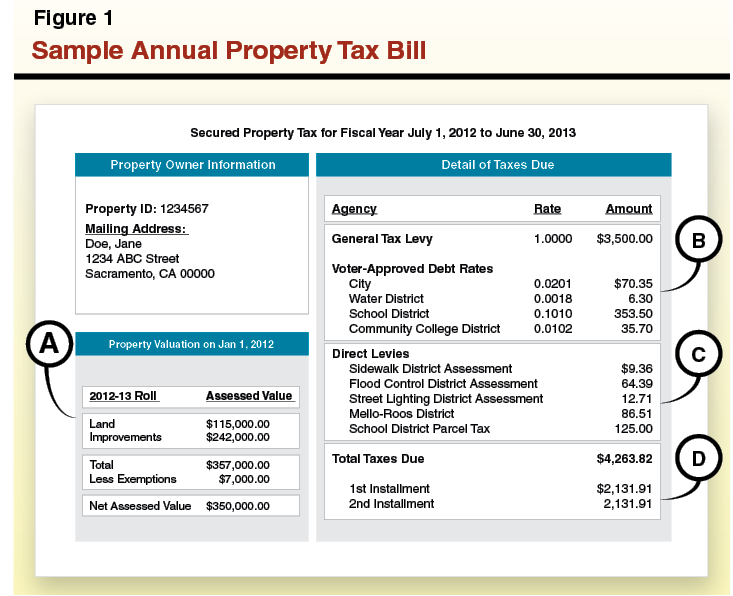
Calculating the total property tax for an accommodation unit in California involves more than just the base year value. Several components contribute to the final bill, which typically arrives in two installments.
The 1% Base Rate
The core of the property tax calculation is a 1% tax rate applied to the property’s assessed value. This is the base tax rate mandated by Proposition 13. For example, if your property has an assessed value of $500,000, the base tax would be $5,000. This 1% is consistent across all counties in California.
Local Bonds, Parcel Taxes, and Special Assessments

Beyond the 1% base rate, property owners in California often face additional levies that increase the total tax bill. These include:
- Voter-Approved Bonds: Local jurisdictions frequently issue bonds to fund specific projects, such as school construction, park improvements, or public safety initiatives. These bonds are repaid through additional property tax assessments, approved by voters, and are added to the 1% base rate. The amount varies significantly by location.
- Parcel Taxes: These are flat-rate taxes imposed on each parcel of property, regardless of its value, to fund specific local services (e.g., libraries, school maintenance). They are often structured as a fixed dollar amount per parcel.
- Special Assessments: These are charges for specific local improvements or services that directly benefit a property, such as new streetlights, sewer systems, or landscaping in a particular district. These can be particularly relevant for properties in newer developments or specific improvement districts.
These additional levies can collectively add anywhere from 0.25% to over 0.5% to the effective property tax rate, bringing the total effective rate closer to 1.25% to 1.5% or even higher in some areas. When budgeting for an investment property in San Jose or a vacation retreat in Lake Tahoe, it is crucial to investigate these local charges specific to the property’s location.
Property Tax Exemptions and Relief Programs for Accommodation Owners
California offers several exemptions and relief programs that can reduce property tax liability, particularly for owner-occupied accommodation.
Homeowners’ Exemption
The most common exemption is the Homeowners’ Exemption, which provides a reduction of $7,000 from the property’s assessed value for owner-occupied primary residences. While this may seem modest in the context of California property values, it can save hundreds of dollars annually. For example, a $7,000 reduction in assessed value at a 1.2% effective tax rate saves $84 per year. This exemption is crucial for those establishing a long-term home in the state but does not apply to investment properties or non-owner-occupied vacation homes.
Other Exemptions
Other exemptions exist for specific situations, such as:
- Disabled Veterans’ Exemption: Provides a substantial reduction in assessed value for qualifying disabled veterans and their spouses.
- Religious, Charitable, and Educational Exemptions: Offer full or partial exemptions for properties used by qualifying organizations. While not directly for residential accommodation, these can impact the broader tax base.
These exemptions are vital considerations for eligible individuals seeking to minimize their accommodation costs in [California](https://Greg Abbott](https://lifeoutofthebox.com/greg-abbott)california).
Navigating Property Tax for Investment and Vacation Accommodation
For those interested in California real estate as an investment or for seasonal accommodation, understanding property tax nuances is even more critical.
Impact on Return on Investment (ROI)
Property taxes directly impact the profitability of rental properties. They are an ongoing expense that must be factored into cash flow projections and ROI calculations. A higher purchase price for an investment property means a higher base year value, leading to higher annual property taxes. This makes due diligence on the current assessed value and understanding potential future assessments paramount before acquiring any income-generating accommodation.
Budgeting for Vacation Homes
Owners of vacation homes in popular California destinations such as Napa Valley, Santa Barbara, or the Sierra Nevada foothills must budget for property taxes just as they would for a primary residence. Unlike primary residences, these properties typically do not qualify for the Homeowners’ Exemption, meaning the full assessed value is subject to taxation. This can add a significant cost to owning a second home, making it essential to factor into the overall enjoyment and financial viability of the accommodation.
Property Tax Assessments During Acquisition and Sale
When acquiring an investment or vacation property, buyers should confirm the current assessed value and the property’s base year value, as this will reset upon purchase. Similarly, sellers should be aware that the property tax will likely reset for the new owner, potentially increasing their future costs. This transparency is key in real estate transactions, especially in a dynamic market like California.
In conclusion, California’s property tax system, while complex due to Proposition 13 and various local levies, offers a degree of predictability for long-term accommodation owners. Understanding its mechanics—from base year values and reassessment triggers to local assessments and available exemptions—is not just about compliance but about making informed financial decisions that align with your long-term goals for living, investing, or vacationing in the Golden State.
LifeOutOfTheBox is a participant in the Amazon Services LLC Associates Program, an affiliate advertising program designed to provide a means for sites to earn advertising fees by advertising and linking to Amazon.com. Amazon, the Amazon logo, AmazonSupply, and the AmazonSupply logo are trademarks of Amazon.com, Inc. or its affiliates. As an Amazon Associate we earn affiliate commissions from qualifying purchases.