
Understanding the landscape of pre-employment and ongoing drug testing in California is crucial for job seekers and employees alike. While specific company policies can vary widely, certain industries and roles are more likely to implement drug screening due to federal regulations, safety concerns, or the nature of the work. As a state at the forefront of cannabis legalization, California’s drug testing protocols are also continuously evolving, creating a complex environment for both employers and potential hires. This article explores the common sectors that require drug tests and the legal framework governing these practices in the Golden State.
Understanding Drug Testing Laws in California
California operates under a complex set of laws regarding workplace drug testing, balancing employers’ rights to maintain a safe and productive environment with employees’ rights to privacy. Unlike some states with explicit statutes governing drug testing, California’s framework is largely derived from court decisions interpreting the state’s constitutional right to privacy.
Legal Framework and Employee Rights
Employers in California generally must have a compelling reason to conduct drug tests. Blanket testing of all applicants or employees is often viewed skeptically by courts, except in specific, safety-sensitive roles or where federal regulations mandate it. The key principle is that the employer’s interest in drug testing must outweigh the employee’s privacy rights. This typically means that a drug test must be job-related and consistent with business necessity. For pre-employment testing, many courts have held that an employer may test applicants only after a job offer has been extended, making the offer conditional upon a negative test result. Random drug testing of employees is generally permissible only for those in safety-sensitive positions, where impaired performance could lead to immediate and serious harm to the employee, coworkers, or the public. Otherwise, employers usually need a reasonable suspicion of drug use to test an existing employee.
Pre-Employment vs. Random vs. Post-Accident Testing
Different types of drug tests are subject to varying legal standards:
- Pre-Employment Testing: This is the most common form of drug testing. In California, it’s generally permissible if conducted uniformly for all applicants in a particular job category, after a conditional offer of employment has been made. The employer must demonstrate that the job has certain safety or security risks that justify the test.
- Random Testing: As mentioned, random testing of current employees is highly scrutinized in California and generally restricted to safety-sensitive positions, particularly those regulated by federal agencies like the Department of Transportation (DOT). For non-federally regulated positions, employers face significant legal challenges if they implement random testing without clear, compelling safety justifications.
- Post-Accident Testing: Permissible when there is reasonable suspicion that drug use contributed to an accident or injury in the workplace. The test must be conducted as soon as possible after the incident, and there must be an objective basis for suspecting drug or alcohol use.
- Reasonable Suspicion Testing: Allowed when an employer has specific, articulable observations concerning an employee’s appearance, behavior, or speech that indicate drug or alcohol use. These observations should be documented by trained supervisors.
- Return-to-Duty and Follow-Up Testing: Often required after an employee has violated a company’s drug policy and has gone through a rehabilitation program. These tests are part of a regulated process to ensure the employee remains drug-free.
Industries with Prominent Drug Testing Policies
Several sectors in California are well-known for their stringent drug testing policies, often driven by federal mandates or inherent safety risks.
Transportation and Logistics
This is arguably the most heavily regulated sector for drug testing due to the Department of Transportation (DOT) regulations. Any employee whose job falls under DOT jurisdiction is subject to mandatory drug and alcohol testing. This includes:
- Commercial Drivers: Truck drivers, bus drivers, and other commercial motor vehicle operators regulated by the Federal Motor Carrier Safety Administration (FMCSA). They face pre-employment, random, post-accident, reasonable suspicion, return-to-duty, and follow-up testing for substances listed in the Controlled Substances Act.
- Airline Industry: Pilots, flight attendants, aircraft mechanics, and other safety-sensitive aviation employees fall under the Federal Aviation Administration (FAA) regulations.
- Railroad Workers: Employees in safety-sensitive positions on railroads are subject to testing by the Federal Railroad Administration (FRA).
- Maritime Workers: Crew members on commercial vessels are regulated by the U.S. Coast Guard.
- Pipeline Workers: Employees involved in pipeline operations are regulated by the Pipeline and Hazardous Materials Safety Administration (PHMSA).
These federal mandates supersede California’s state-level privacy protections regarding drug testing, making these jobs almost universally drug-tested.
Healthcare and Public Safety
While not always federally mandated to the same extent as DOT roles, many positions in healthcare and public safety involve a high degree of responsibility for human life and public well-being, leading to common drug testing practices.
- Healthcare Professionals: Nurses, doctors, pharmacists, medical technicians, and others often undergo drug screening, particularly pre-employment, due to access to controlled substances and the critical nature of patient care. Hospitals and clinics typically have strict policies.
- Law Enforcement and First Responders: Police officers, firefighters, paramedics, and other emergency personnel are regularly tested. Their roles demand unimpaired judgment and physical capability, often in high-stress situations. Random testing is more common in these fields given the public safety implications.
- Security Services: Positions requiring handling sensitive information or protecting valuable assets, such as airport security or armored vehicle services, frequently include drug testing.
Government and Federal Contracts
Many government agencies, both state and federal, implement drug testing policies for their employees, particularly for roles requiring security clearances or involving public trust. Companies that hold federal contracts may also be subject to federal drug-free workplace requirements, which often include drug testing. This can extend to various administrative, technical, and operational roles within government entities or their contractors.
Manufacturing and Heavy Industry
Sectors involving heavy machinery, dangerous chemicals, or intricate assembly lines often implement drug testing to mitigate workplace accidents.
- Construction: Workers on construction sites, especially those operating heavy equipment, frequently face drug tests due to the high risk of injury.
- Oil and Gas: The inherently dangerous nature of oil and gas extraction and refining operations necessitates strict drug testing policies.
- Utilities: Employees working for electric, water, and gas utilities, especially in fieldwork or power generation, are often tested to ensure safety and service reliability.
- Nuclear Power: Facilities regulated by the Nuclear Regulatory Commission (NRC) have some of the most stringent drug and alcohol testing requirements due to the extreme safety risks involved.
Evolving Landscape and Cannabis Legalization
California’s progressive stance on cannabis has significantly impacted workplace drug testing, creating new considerations for employers and employees.
Impact of Prop 64 and AB 2188
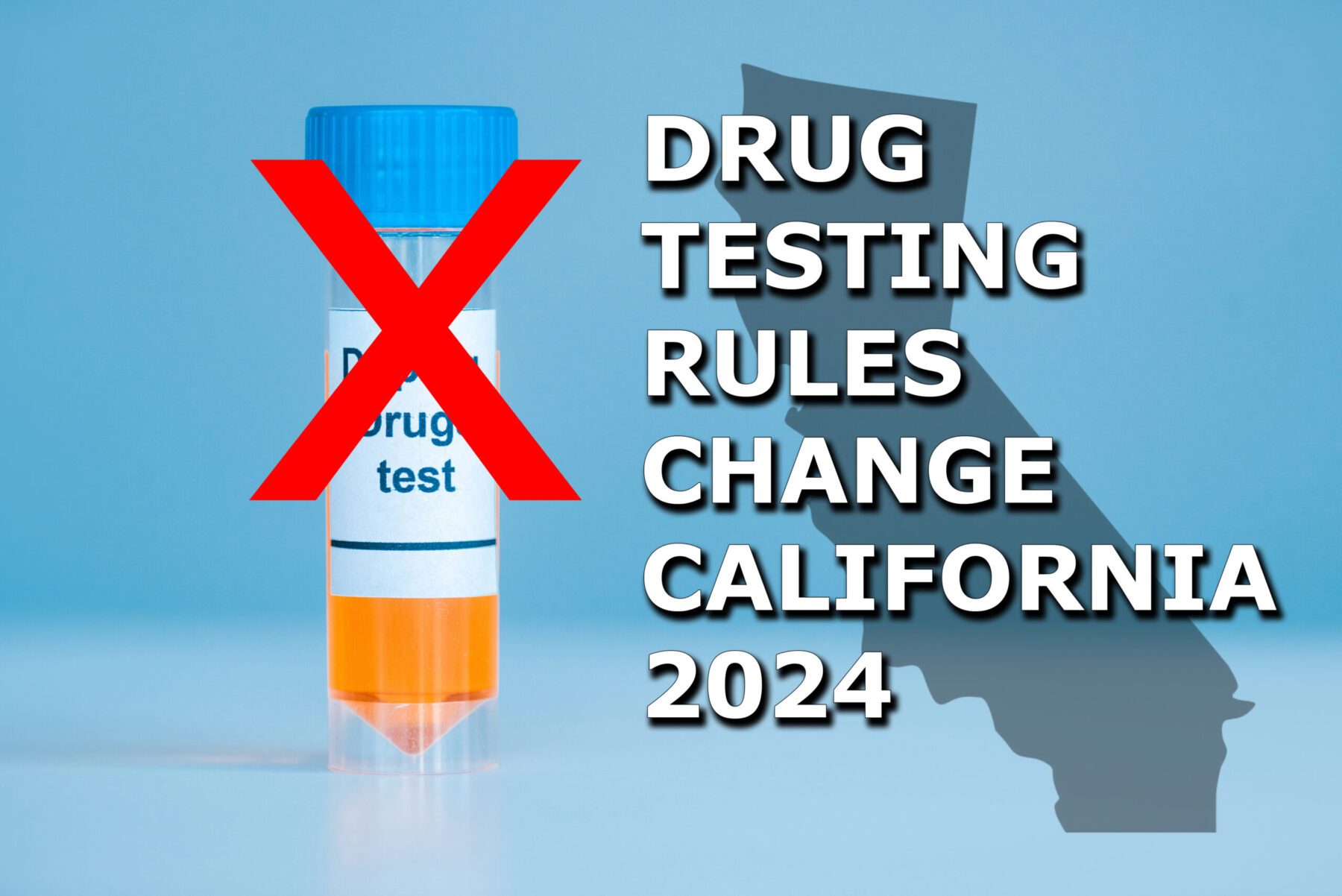
The passage of Proposition 64 in 2016 legalized recreational cannabis use for adults in California. Initially, employers largely retained the right to maintain drug-free workplaces and test for cannabis, even if used off-duty. However, new legislation, Assembly Bill 2188 (AB 2188), which became effective on January 1, 2024, significantly altered this. AB 2188 makes it unlawful for employers to discriminate against an employee for off-duty, off-site cannabis use. It also prohibits employers from using drug tests that detect non-psychoactive cannabis metabolites (which can stay in the system for weeks) when assessing an applicant or employee for cannabis. Instead, employers must use tests that identify the presence of psychoactive cannabis components, indicating recent use and impairment. This means traditional urine tests for cannabis metabolites are generally no longer permissible as a basis for hiring or firing decisions under state law.
Exceptions and Safety-Sensitive Roles
Crucially, AB 2188 includes significant exceptions. It does not apply to:
- Federal Mandates: Employers are still required to conduct drug tests for positions regulated by federal laws (e.g., DOT employees) or if federal contracts require it.
- Safety-Sensitive Positions: The law does not preempt an employer’s ability to prohibit an employee from possessing or being impaired by cannabis on the job. It explicitly permits drug testing for psychoactive cannabis components for employees in “safety-sensitive” positions, as defined by the law. This typically includes roles where impairment could cause injury or death to the employee or others, or damage property.
- Building and Construction Trades: The law specifically excludes employees in the building and construction trades. This means drug testing, including for cannabis metabolites, remains permissible in these sectors.
This new legal landscape means that while many jobs in California may no longer test for cannabis (or at least, not in ways that detect only past off-duty use), jobs subject to federal regulations or deemed safety-sensitive will continue to test and can take action based on positive results for active impairment or presence of cannabis.
Navigating the Job Market: Tips for Applicants
For those seeking employment in California, understanding potential drug testing requirements is a key part of the job search.
Researching Company Policies
Before applying or accepting a job offer, research the company’s drug testing policy. Large corporations often publish their policies online or include them in their hiring information. For smaller businesses, it may be necessary to inquire during the interview process or after a conditional job offer has been extended. Be aware that job descriptions for roles in federally regulated industries will often explicitly mention drug testing requirements.
Understanding Different Test Types
Familiarize yourself with the various types of drug tests. While urine tests have been the most common, their utility for detecting active cannabis impairment is limited. Employers may increasingly turn to oral fluid (saliva) tests, which detect recent use (typically within a few days), or hair follicle tests for longer detection windows (up to 90 days for substances other than cannabis, as per AB 2188 changes). Blood tests are less common for routine pre-employment screening but are used in post-accident or reasonable suspicion scenarios to measure active impairment.
Rights and Resources
Know your rights as an applicant or employee in California. If you believe you have been subjected to unfair or illegal drug testing practices, you can consult with the California Department of Fair Employment and Housing (DFEH) or seek legal counsel. Understanding the nuances of California’s laws, especially concerning cannabis, is vital for protecting your employment opportunities and privacy rights.
LifeOutOfTheBox is a participant in the Amazon Services LLC Associates Program, an affiliate advertising program designed to provide a means for sites to earn advertising fees by advertising and linking to Amazon.com. Amazon, the Amazon logo, AmazonSupply, and the AmazonSupply logo are trademarks of Amazon.com, Inc. or its affiliates. As an Amazon Associate we earn affiliate commissions from qualifying purchases.