
Planning a visit to the sun-drenched oasis of Palm Springs, California? One of the first practical considerations for any traveler, whether coordinating flights, scheduling activities, or simply calling loved ones, is understanding the local time. Palm Springs operates within the Pacific Time Zone, a standard that governs a significant portion of the western United States. This means that during different parts of the year, the city observes either Pacific Standard Time (PST) or Pacific Daylight Time (PDT).
Knowing the precise time isn’t just a matter of convenience; it’s crucial for seamless travel. From booking coveted tee times at championship golf courses to securing reservations at a chic downtown restaurant or ensuring you’re on schedule for an architectural tour, understanding the local clock dictates the rhythm of your entire trip. Palm Springs is a destination synonymous with relaxation, luxury, and a vibrant lifestyle, attracting visitors drawn to its distinctive desert landscape, mid-century modern architecture, and a laid-back, yet sophisticated, atmosphere. This article will delve into the intricacies of time in Palm Springs, while also serving as a comprehensive guide to what makes this desert gem an unforgettable experience, covering everything from top attractions and diverse accommodation options to unique lifestyle offerings and essential travel tips.
Understanding Palm Springs Time: More Than Just an Hour
For many travelers, particularly those arriving from different parts of the globe or even other United States time zones, adjusting to local time is the first step in acclimatizing to a new destination. In Palm Springs, this means navigating the nuances of the Pacific Time Zone.
Pacific Time Zone Explained
The Pacific Time Zone (PT) is typically observed in states along the western coast of the United States and Canada, as well as parts of Mexico. It is 8 hours behind Coordinated Universal Time (UTC-8) during Pacific Standard Time (PST), which is observed during the fall and winter months. When Daylight Saving Time comes into effect, usually starting on the second Sunday in March and ending on the first Sunday in November, Palm Springs switches to Pacific Daylight Time (PDT), moving one hour forward to UTC-7.
For travelers, this time shift can impact several aspects of their journey. Flights arriving from the Eastern Time Zone (3 hours ahead) or Central Time Zone (2 hours ahead) will experience a significant time difference, potentially leading to jet lag. Conversely, those arriving from the Mountain Time Zone (1 hour ahead) will have a slightly easier adjustment. Understanding this differential is paramount for managing your energy levels, preventing missed appointments, and making the most of every precious moment in your itinerary. Moreover, if you’re planning virtual meetings or phone calls with contacts in other time zones, particularly those in Alaska (1 hour behind PT) or Hawaii (2 hours behind PT), precise time conversion tools become invaluable.
Keeping track of Daylight Saving Time is also important. The change in March means “springing forward,” resulting in an extra hour of daylight in the evenings, perfect for enjoying Palm Springs’ famous sunsets and outdoor activities. The “fall back” in November returns that hour, signaling the official start of the cooler, peak tourist season. This annual shift needs to be factored into travel plans, particularly if your trip spans these transition dates.
Planning Your Perfect Palm Springs Getaway
Beyond the immediate question of time, a trip to Palm Springs unfolds into a world of rich experiences across travel, tourism, accommodation, and lifestyle. This vibrant destination in the Coachella Valley offers a unique blend of natural beauty, cultural sophistication, and recreational opportunities.
Top Attractions and Activities
Palm Springs and its surrounding areas boast an impressive array of attractions, catering to diverse interests:
- The Palm Springs Aerial Tramway: A must-do experience, this rotating tramcar ascends over 8,500 feet up the sheer cliffs of the San Jacinto Mountains. In just 10 minutes, you’re transported from the desert floor to an alpine wilderness at Mount San Jacinto State Park, offering breathtaking panoramic views, hiking trails, and even snow in winter.
- Indian Canyons: Owned and managed by the Agua Caliente Band of Cahuilla Indians, these sacred grounds offer stunning natural beauty. Explore Andreas Canyon, Palm Canyon, and Murray Canyon with their lush oases, towering palm trees, and well-maintained hiking trails.
- The Living Desert Zoo and Gardens: Located in nearby Palm Desert, this accredited zoo and botanical garden specializes in the deserts of the world. It’s an engaging experience for all ages, with fascinating animals from North America and Africa, botanical gardens, and conservatories.
- Moorten Botanical Garden and Cactarium: A smaller, charming private botanical garden showcasing a vast collection of cacti and desert plants from around the world. It’s a peaceful retreat and a great spot for unique photo opportunities.
- Palm Springs Art Museum: Home to a permanent collection of modern and contemporary art, photography, and Native American art, the museum also features rotating exhibitions. Its Architecture and Design Center focuses specifically on the region’s iconic mid-century modern aesthetic.
- Mid-Century Modern Architecture Tours: Palm Springs is an international mecca for mid-century modern architecture. Take a guided tour to admire the works of legendary architects and celebrity homes, including the Bob Hope Estate and Frank Sinatra’s Twin Palms Estate. Events like Modernism Week celebrate this heritage annually.
- Golf and Wellness: The Coachella Valley is a golfer’s paradise, with over 100 courses, including renowned names like PGA West. Beyond golf, the region is famous for its luxurious spas and wellness retreats, offering everything from mineral springs to holistic treatments.
- Festivals and Events: Palm Springs hosts numerous events throughout the year, from the world-famous Coachella Valley Music and Arts Festival and Stagecoach Festival (held in nearby Indio) to the prestigious BNP Paribas Open tennis tournament in Indian Wells. Always check the local event calendar to align your visit with your interests.
Where to Stay: Hotels and Accommodation
Palm Springs offers an incredibly diverse range of accommodation options, catering to every budget and travel style. From opulent resorts to intimate boutique hotels and private vacation rentals, the choices are plentiful.
- Luxury Resorts: For those seeking unparalleled pampering, resorts like The Parker Palm Springs, known for its eccentric luxury, or the rooftop pool paradise of Kimpton Rowan Palm Springs in the heart of downtown, offer exquisite amenities, gourmet dining, and often private villas or suites. Outside Palm Springs in neighboring cities, options like the Hyatt Regency Indian Wells Resort & Spa, JW Marriott Desert Springs Resort & Spa in Palm Desert, or the serene Ritz-Carlton, Rancho Mirage provide sprawling grounds, championship golf, and world-class spa facilities.
- Boutique Hotels: Reflecting the city’s unique aesthetic, boutique hotels offer a more personalized and stylish experience. Places like Ace Hotel & Swim Club Palm Springs or Arrive Palm Springs blend retro charm with modern amenities, often featuring vibrant pool scenes and popular dining spots. These are perfect for travelers seeking a chic, social atmosphere.
- Vacation Rentals and Villas: For families, groups, or those desiring a longer stay, vacation rentals, from charming mid-century homes to sprawling private villas with pools, are a popular choice. Platforms for booking accommodation offer numerous options, allowing guests to experience the local lifestyle with the comfort and privacy of their own space. It’s advisable to read reviews and compare options thoroughly to find the perfect fit.
- Budget-Friendly Stays: While Palm Springs is known for luxury, there are also a range of budget-friendly motels and hotels, particularly during the off-peak summer months. These provide comfortable, clean accommodations without the premium price tag, allowing more resources for exploring attractions and dining.
Lifestyle and Experiences
The Palm Springs lifestyle is as appealing as its attractions, offering a spectrum of experiences for every type of traveler.
- Luxury Travel: Indulge in designer shopping along El Paseo in Palm Desert, dine at Michelin-starred restaurants, or enjoy exclusive spa treatments. The city caters to a discerning clientele seeking sophistication and high-end services.
- Budget Travel: Experience the magic of the desert without breaking the bank. Visit free attractions like the Palm Springs Walk of Stars, explore hiking trails, or enjoy happy hour specials. Traveling during the shoulder seasons (spring or fall) can also yield better deals on accommodation and flights.
- Family Trips: Palm Springs is surprisingly family-friendly. Kids will love the Living Desert Zoo and Gardens, the excitement of the Palm Springs Aerial Tramway, and the numerous resort pools with water slides and lazy rivers. Many hotels offer dedicated children’s programs and family suites.
- Business Stays: With its convenient Palm Springs International Airport and a range of convention facilities, Palm Springs is also a popular destination for conferences and corporate retreats. Many resorts offer comprehensive business services, meeting spaces, and excellent connectivity.
- Wellness and Retreats: The serene desert environment lends itself perfectly to wellness. From yoga retreats in Desert Hot Springs to mineral bath spas, Palm Springs provides a calming backdrop for rejuvenation and self-care.
Making the Most of Your Palm Springs Visit
Maximizing your trip to Palm Springs involves strategic planning, from choosing the ideal time to visit to understanding local transportation and potential day trips.
Best Time to Visit
The desert climate dictates the best times to visit Palm Springs:
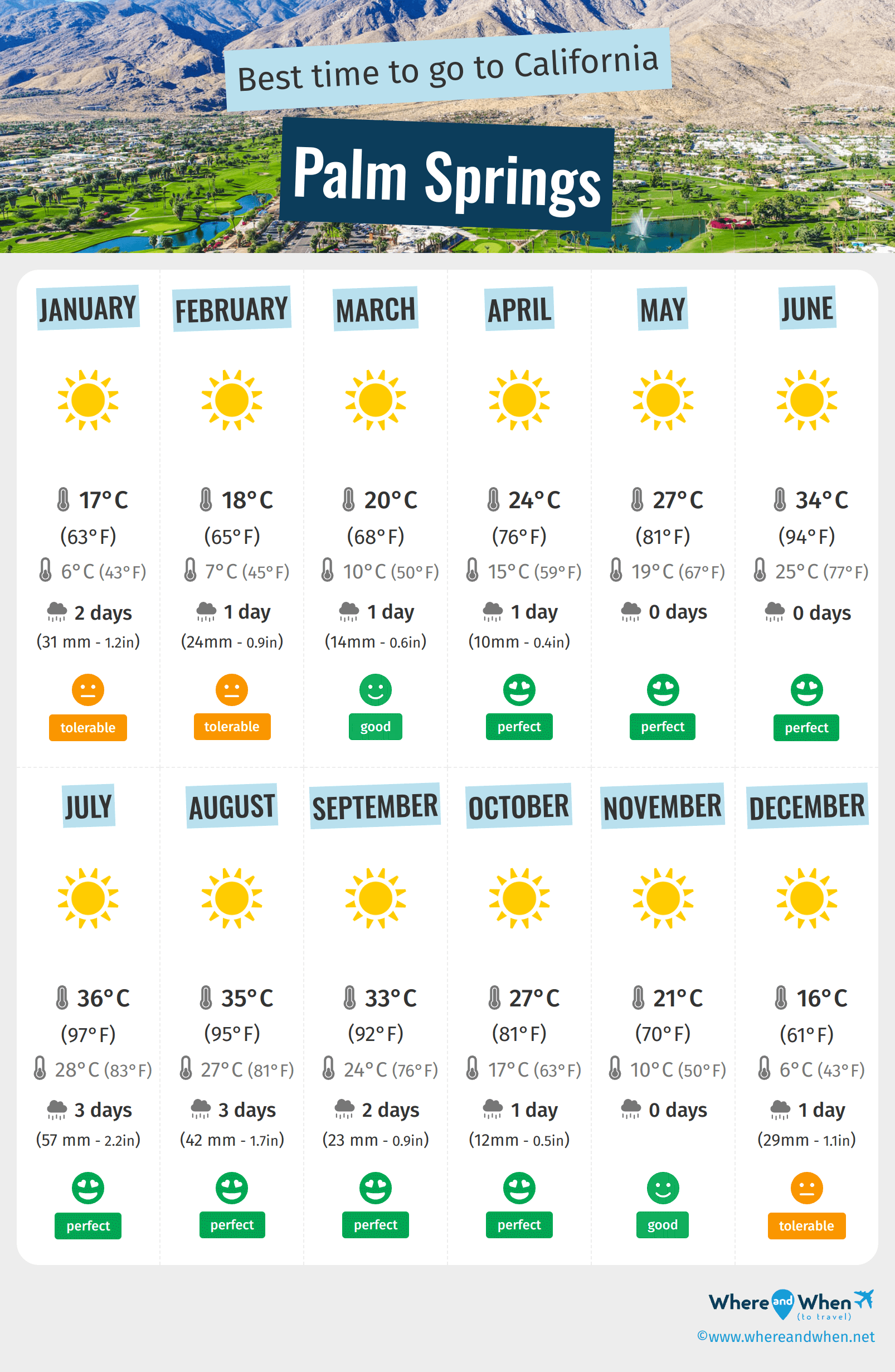
- Peak Season (Winter/Spring): From November to May, temperatures are delightfully mild and sunny, ranging from the 70s to 80s Fahrenheit (21-29°C). This is the most popular time for visitors, with vibrant event calendars and ideal weather for outdoor activities. However, accommodation prices are highest, and attractions can be crowded. Booking well in advance is essential.
- Shoulder Seasons (Late Spring/Early Fall): May, early June, and late September/October offer pleasant temperatures (though June and September can still be hot) and fewer crowds. You might find better deals on hotels and flights during these periods.
- Off-Peak Season (Summer): June through September sees intense desert heat, with daily temperatures often exceeding 100°F (38°C). While some businesses slow down, many hotels offer significant discounts, and amenities like air-conditioning and swimming pools become paramount. It’s a great time for budget travelers who don’t mind the heat, focusing on indoor activities, early morning excursions, and enjoying the pool.
Navigating the Destination
Getting around Palm Springs and exploring beyond is relatively straightforward with a little planning.
-
Transportation:
- Air Travel: Palm Springs International Airport (PSP) is conveniently located just a few miles from downtown, offering direct flights to many major United States and Canada cities.
- Car Rental: A rental car is highly recommended for exploring the wider Coachella Valley and venturing on day trips. Most major rental agencies operate at the airport.
- Ride-Sharing and Taxis: Services like Uber and Lyft are readily available, as are traditional taxis, especially in the downtown area.
- The Buzz Trolley: For navigating downtown Palm Springs and Cathedral City, “The Buzz” is a free, weekend-only trolley service that provides convenient access to popular attractions, restaurants, and shopping areas.
-
Day Trips: Palm Springs serves as an excellent base for exploring Southern California’s diverse landscapes.
- Joshua Tree National Park: Just an hour’s drive away, this iconic national park offers surreal rock formations, unique desert flora (the Joshua Tree), and incredible stargazing opportunities.
- The Salton Sea and Imperial Valley: For an offbeat adventure, explore the ghostly beauty of the Salton Sea, Salvation Mountain, East Jesus, and Slab City to the south.
- Pioneertown: A living movie set from the 1940s, offering a glimpse into the Old West, complete with live music at Pappy and Harriet’s Pioneertown Palace.
- Coastal Cities: While a longer drive, day trips to Los Angeles or San Diego (each about 2-2.5 hours) are feasible for those wanting a change of scenery from the desert.
- Route 66 and Mojave Desert: Head north to explore historical sites and ghost towns along the famous highway.
-
Packing Essentials: Regardless of the season, essentials for Palm Springs include sunscreen, a wide-brimmed hat, sunglasses, and a reusable water bottle to stay hydrated. Layers are recommended during the cooler months, as desert evenings can be crisp, even after warm days.
In conclusion, knowing that the current time in Palm Springs, California, operates on the Pacific Time Zone is your first step to a well-organized and enjoyable trip. But beyond the clock, this vibrant desert city promises a wealth of experiences – from thrilling outdoor adventures and cultural explorations to luxurious relaxation and unforgettable dining. Whether you’re chasing the sun by the pool or ascending to alpine peaks, Palm Springs offers a unique slice of Southern California paradise, perfectly suited for every traveler’s dreams. Plan wisely, set your watch, and prepare to immerse yourself in the timeless allure of this iconic destination.
LifeOutOfTheBox is a participant in the Amazon Services LLC Associates Program, an affiliate advertising program designed to provide a means for sites to earn advertising fees by advertising and linking to Amazon.com. Amazon, the Amazon logo, AmazonSupply, and the AmazonSupply logo are trademarks of Amazon.com, Inc. or its affiliates. As an Amazon Associate we earn affiliate commissions from qualifying purchases.