
The sight of rolling hills ablaze with vibrant orange California poppies (Eschscholzia californica) is a quintessential spring experience that draws travelers from around the globe to the Golden State. This ephemeral spectacle transforms landscapes into breathtaking canvases of color, offering an unparalleled opportunity for nature enthusiasts and photographers alike. Timing is everything when planning a trip to witness this natural wonder, as the bloom is highly dependent on a complex interplay of environmental factors. Understanding the typical bloom windows and the conditions that influence them is key to a successful poppy-viewing adventure.

The Golden State’s Ephemeral Spectacle
California’s state flower, the poppy, is renowned for its resilience and striking beauty. Unlike many cultivated flowers, these wildflowers thrive in various challenging environments, from coastal cliffs to desert plains, signaling the arrival of spring with their brilliant display. For travelers, the poppy bloom is more than just a floral event; it’s an immersive experience that connects them directly with the wild heart of California.
Understanding the California Poppies
The California poppy is a hardy annual or perennial plant characterized by its cup-shaped, four-petaled flowers, typically a brilliant orange but sometimes yellow, red, or even pinkish. These flowers have a unique circadian rhythm, opening with the warmth of the morning sun and closing as evening approaches or on overcast days. This daily dance adds to the dynamic beauty of the poppy fields, making mid-morning to late afternoon the ideal viewing time. Their presence in mass signifies a healthy ecosystem and ample winter rainfall, painting vast swathes of land in their signature hue.
Factors Influencing Bloom Times
The precise timing and intensity of the California poppy bloom are highly variable, making a definitive calendar difficult to provide years in advance. Several critical environmental factors dictate when and how prolifically these wildflowers will appear:
- Rainfall: The most crucial factor is sufficient winter rainfall. A wet winter saturates the soil, allowing poppy seeds to germinate and develop robust root systems. Too little rain means a sparse bloom; too much rain can lead to flooding and wash away seeds or young plants.
- Temperature: Mild spring temperatures are ideal for sustained blooming. Early warm spells can accelerate the bloom, while late frosts can damage emerging plants. Consistent sunshine is also essential for the flowers to open daily.
- Soil Conditions: Poppies prefer well-drained, sandy, or gravelly soils, which are common in many parts of California.
- Elevation and Geography: Different regions of California experience varying microclimates, leading to staggered bloom times. Lower elevations and warmer southern regions typically see blooms earlier than higher elevations or cooler northern areas.
These factors combine to create a dynamic forecast, making real-time updates from park services and local visitor centers invaluable for travelers planning their trip.
Prime Time for Poppy Peak Viewing
While the exact window shifts annually, travelers can generally anticipate the California poppy bloom to occur within a certain period, with regional variations playing a significant role.
General Bloom Window
Typically, the California poppy season begins in late February or early March in the southernmost and lowest elevation areas. The bloom then progresses northward and to higher elevations, reaching its peak in mid-March through April. By early to mid-May, most poppy displays begin to wane as temperatures rise and moisture diminishes. For most popular viewing spots, aim for the heart of spring to maximize your chances of witnessing a vibrant display.
Regional Variations Across California
- Southern California Deserts (e.g., Anza-Borrego Desert State Park): These areas often see the earliest blooms, sometimes starting as early as late January or February, with peak typically in late February to early March. The desert environment means the bloom can be shorter-lived due to rapidly rising temperatures.
- Antelope Valley California Poppy Reserve (High Desert): As the state’s most famous poppy destination, its peak bloom usually falls from late March to mid-April. This region’s unique high desert climate makes it particularly susceptible to fluctuations in rainfall and temperature.
- Central California (e.g., Carrizo Plain National Monument): Often experiences its peak bloom in late March to mid-April, sometimes extending into early May, frequently offering a more diverse mix of wildflowers alongside the poppies.
- Coastal Areas and Foothills: Blooms here can be more scattered and less dense than in desert areas but typically follow a similar late March to April peak.
The Superbloom Phenomenon
Every few years, under exceptional conditions of abundant, well-timed winter rains followed by mild spring temperatures, California experiences a “superbloom.” During a superbloom, vast expanses of desert and hillsides are carpeted in an extraordinary display of wildflowers, including poppies, often creating truly unforgettable scenes. These events are rare and unpredictable, making them highly sought-after travel experiences. While a superbloom cannot be guaranteed, even an average year can offer stunning displays of poppies.
Top Destinations to Witness the Bloom
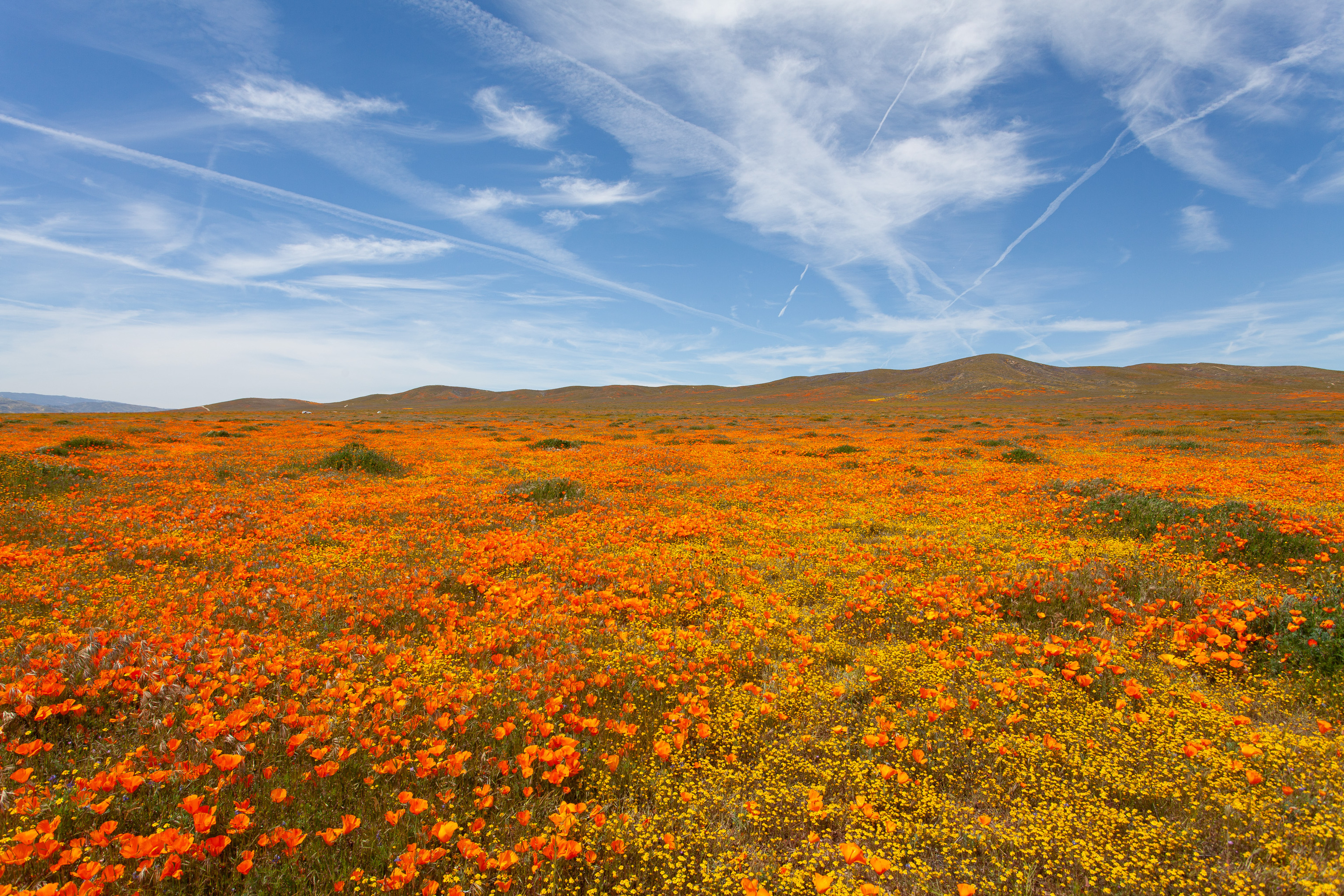
For travelers eager to immerse themselves in the golden spectacle, several key locations across California are renowned for their poppy displays.
Antelope Valley California Poppy Reserve
Located in the Mojave Desert near Lancaster, this is arguably the premier destination for poppy viewing. The reserve is specifically managed to protect and showcase California poppies and other native wildflowers. It features 8 miles of hiking trails, including a paved section for accessibility, allowing visitors to wander through fields of poppies without disturbing them. The best time to visit is typically late March through mid-April, but check their live “PoppyCam” and bloom updates before your trip.
Anza-Borrego Desert State Park
California’s largest state park, located in San Diego County, is famous for its desert wildflowers, including impressive poppy displays, especially during superbloom years. The bloom here is usually earlier, often peaking in February or early March. The exact locations of the best blooms vary year to year, so visiting the park’s visitor center upon arrival for current information is highly recommended.
Carrizo Plain National Monument
Situated in the central part of the state, east of San Luis Obispo, the Carrizo Plain is a vast, undeveloped landscape that can explode with color, particularly poppies and a mosaic of other wildflowers, in good rain years. The remoteness adds to its allure, offering an expansive and less crowded experience. Peak bloom is often late March to mid-April, but road conditions can be challenging after heavy rains, so plan accordingly.
Other Notable Spots
- Chino Hills State Park: In Orange County, this park can offer beautiful hillside poppy displays, especially in areas like Rolling Hills Trail.
- Point Dume State Preserve: Along the Malibu coast, this preserve sometimes features poppies blending with other coastal wildflowers, offering stunning ocean backdrops.
- Walker Canyon (near Lake Elsinore): While famously inundated during superblooms, this area can still offer substantial poppy displays in good years. Due to extreme popularity in peak years, always check local advisories regarding access and crowds.
Planning Your Poppy-Watching Adventure
A successful trip to see the poppies requires a bit of foresight and preparation to ensure an enjoyable and responsible experience.
Best Practices for Visiting
- Check Bloom Status: Always check official park websites, social media, or call visitor centers shortly before your trip for the most current bloom reports. Conditions can change rapidly.
- Go Early or Late: To avoid crowds, especially at popular spots like Antelope Valley, arrive early in the morning shortly after sunrise or later in the afternoon. The poppies will open as the sun warms them.
- Weekdays vs. Weekends: Weekday visits are generally less crowded than weekends.
- Be Patient: While the main display might be in a certain area, poppies can appear in unexpected spots. Keep your eyes open.
Essential Gear
- Water and Snacks: Many poppy viewing areas are remote with limited services.
- Sun Protection: Hats, sunglasses, and sunscreen are crucial, even on overcast days.
- Comfortable Walking Shoes: You’ll likely be walking on uneven terrain.
- Camera: To capture the beauty, but remember to stay on designated paths.
- Layered Clothing: California spring weather can be unpredictable, with cool mornings and warm afternoons.
Local Considerations & Etiquette
- Stay on Trails: This is paramount. Wandering off trails damages delicate ecosystems, crushes flowers, compacts soil, and prevents future blooms. “Leave No Trace” principles are vital.
- Do Not Pick Flowers: It is illegal to pick California poppies and other wildflowers in state parks and reserves. Enjoy their beauty where they grow.
- Pack It In, Pack It Out: Dispose of all trash properly.
- Respect Wildlife: You are in their habitat. Observe from a distance.
- Drone Restrictions: Drones are often prohibited in parks and reserves to protect wildlife and ensure visitor safety and peace. Check specific park regulations.

Beyond the Poppies
While the poppies are the main draw, consider extending your trip to explore nearby attractions. Many poppy viewing areas are close to charming small towns with local eateries, unique shops, and other natural wonders. For instance, a trip to Antelope Valley could include a visit to the Lancaster Museum of Art and History, while Anza-Borrego offers incredible stargazing opportunities. Integrating these experiences will enrich your California travel adventure, making it a comprehensive exploration of the state’s diverse offerings.
The California poppy bloom is a testament to nature’s artistry, an unmissable travel experience that requires thoughtful planning and respectful engagement. By understanding when and where to go, and how to best appreciate this golden spectacle, you can ensure a memorable and sustainable adventure into the heart of California’s wild beauty.
LifeOutOfTheBox is a participant in the Amazon Services LLC Associates Program, an affiliate advertising program designed to provide a means for sites to earn advertising fees by advertising and linking to Amazon.com. Amazon, the Amazon logo, AmazonSupply, and the AmazonSupply logo are trademarks of Amazon.com, Inc. or its affiliates. As an Amazon Associate we earn affiliate commissions from qualifying purchases.