
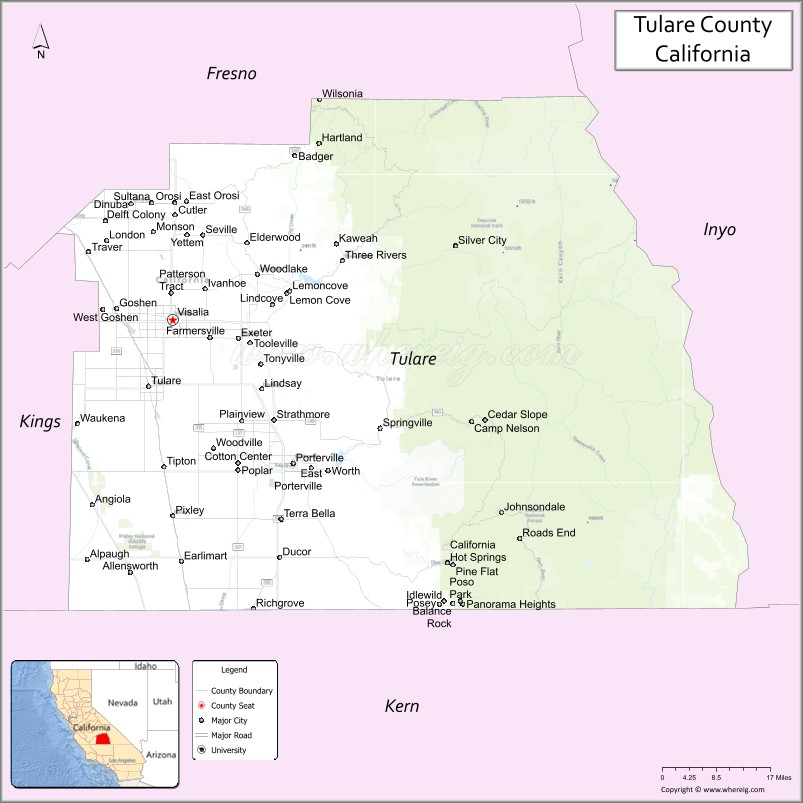
Tulare County, a name that resonates with both agricultural bounty and majestic natural beauty, holds a significant position within the vast and diverse landscape of California. For those planning a visit or simply seeking to understand the Golden State’s geography, pinpointing this region is crucial. It sits proudly in the south-central part of the state, firmly rooted in the expansive Central Valley yet extending eastward into the formidable western slopes of the Sierra Nevada Mountains. This unique dual identity makes Tulare County a pivotal destination, bridging the gap between fertile farmlands and towering peaks.

Geographically, Tulare County is bordered by Fresno County to the north, Kern County to the south, and Kings County to the west. Its eastern boundary extends deep into the Sierra Nevada, encompassing some of the most dramatic and awe-inspiring landscapes in the entire United States. This location imbues Tulare County with a distinct character, offering a spectrum of experiences from the agricultural heartland to alpine wilderness.
The Geographical Heart of California’s Agricultural Belt
Tulare County’s location within the Central Valley places it squarely in one of the most productive agricultural regions globally. The flat, fertile plains, fed by rivers descending from the Sierra Nevada, create an ideal environment for growing a vast array of crops. This agricultural dominance is not just an economic fact but a defining characteristic of the county’s identity and culture.
Strategic Location and Accessibility
The county’s position offers remarkable accessibility to travelers from various parts of California and beyond. Major transportation arteries traverse the region, including Golden State Highway (CA-99), which runs north-south through the San Joaquin Valley portion of the county, connecting it to larger metropolitan areas like Fresno to the north and Bakersfield to the south. Interstate 5, while not directly passing through Tulare County, is easily accessible a short distance to the west. For air travelers, Fresno Yosemite International Airport (FAT) serves as the closest major hub, providing convenient access to the region.
This strategic location makes Tulare County an excellent base for exploring a wide range of California experiences. Visitors can enjoy the serene rural beauty of the valley floor, delve into the rich agricultural heritage, or venture eastward into the spectacular mountain wilderness within a relatively short drive.
Key Cities and Their Role
The cities and towns within Tulare County each contribute to its unique character. Visalia, the county seat, is the largest city and serves as the economic and cultural hub. It offers a blend of urban amenities, historical charm, and a gateway feel to the natural attractions further east. Visalia’s tree-lined streets, historic downtown, and growing culinary scene make it a pleasant stop for visitors.
Further south, Porterville is another significant urban center, known for its strong community spirit and access to the southern Sierra Nevada foothills. Towns like Lindsay, Exeter, Farmersville, and Woodlake are deeply rooted in the agricultural landscape, often featuring charming downtowns with murals depicting local history and produce. Three Rivers, located at the western entrance of Sequoia National Park and Kings Canyon National Park, is particularly important for travelers heading into the mountains, offering services and lodging at the edge of the wilderness.
Gateway to Natural Wonders: National Parks and Forests
Perhaps the most compelling reason to pinpoint Tulare County on the map is its role as the primary gateway to two of California’s most iconic national parks: Sequoia National Park and Kings Canyon National Park. These parks, often managed as one contiguous unit, represent the pinnacle of the Sierra Nevada’s grandeur.
Sequoia and Kings Canyon National Parks
The western entrances to both Sequoia and Kings Canyon National Parks are situated within Tulare County. This means that a significant portion of these protected lands, including the famous giant sequoia groves, falls within the county’s boundaries. The majestic General Sherman Tree, the world’s largest tree by volume, resides within Sequoia National Park’s Giant Forest, easily accessible from Tulare County. Similarly, Kings Canyon National Park boasts the General Grant Tree within Grant Grove, another spectacular giant sequoia.
These parks offer a breathtaking escape into nature, characterized by deep canyons, crystal-clear rivers, soaring peaks, and, of course, the ancient, towering giant sequoias. The elevation changes dramatically, from the low foothills to the highest point in the contiguous United States, Mount Whitney, which borders Tulare County’s eastern edge.
Giant Sequoias and Majestic Landscapes
The allure of the giant sequoias is undeniable. These living giants inspire awe and a profound sense of history. Visiting groves like the Giant Forest or Grant Grove allows travelers to walk among trees that have stood for thousands of years, offering a unique connection to ancient natural history. Beyond the trees, the parks feature diverse ecosystems, from chaparral and oak woodlands in the foothills to subalpine forests and meadows at higher elevations. The scenic drives, such as Generals Highway, provide stunning vistas and access to numerous trailheads.
Outdoor Activities for Every Adventurer

Tulare County and its adjacent national parks are a paradise for outdoor enthusiasts. Hiking is paramount, with trails ranging from easy, paved loops suitable for families to strenuous multi-day backcountry treks. Rock climbing, mountaineering, and backpacking opportunities abound, especially in the higher elevations and the wilderness areas of Sequoia National Forest and Giant Sequoia National Monument which also lie within the county.
For water-based activities, Lake Kaweah, fed by the Kaweah River, offers boating, fishing, and swimming, especially popular during the warmer months. Further south, Lake Success on the Tule River provides similar recreational opportunities. During winter, snowshoeing and cross-country skiing become popular activities in the higher elevations of the national parks and surrounding national forests. The diverse topography ensures that there is an adventure for every season and skill level.
A Rich Tapestry of Culture and History
While its natural wonders are a major draw, Tulare County also boasts a rich cultural and historical landscape, largely shaped by its agricultural roots and pioneer spirit.
Agricultural Heritage and Agritourism
The vast farmlands of Tulare County produce an astounding variety of crops, from citrus and grapes to almonds, cotton, and dairy products. This agricultural heritage is celebrated and integrated into the local culture. Agritourism is a growing sector, allowing visitors to experience farm life firsthand through tours, roadside stands, and U-pick farms. Many local restaurants emphasize fresh, seasonal ingredients sourced directly from nearby farms, offering a true “farm-to-fork” experience. Exploring the charming small towns, you’ll often find murals depicting the county’s agricultural history, reflecting the pride in its productive land.
Local Festivals and Events
Throughout the year, Tulare County hosts numerous festivals and events that showcase its community spirit, agricultural bounty, and diverse cultural influences. From county fairs and harvest festivals celebrating specific crops like citrus or stone fruits to art walks and music events in Visalia and Exeter, there’s almost always something happening. These events provide an excellent opportunity for travelers to engage with the local community, sample regional delicacies, and gain a deeper understanding of the county’s vibrant culture. Smaller, unique towns like Springville and California Hot Springs offer more localized charms, often with specific events that highlight their unique history or natural features.
Planning Your Tulare County Exploration
Understanding “Where is Tulare County?” is the first step; the next is planning how to experience it fully.
Best Time to Visit
The ideal time to visit Tulare County depends on your interests. Spring (April to June) offers pleasant temperatures in both the valley and foothills, with wildflowers blooming and rivers flowing strong, perfect for hiking and general sightseeing before the summer heat. Summer (July to September) is hot in the valley but ideal for exploring the high country of Sequoia and Kings Canyon National Parks, with all roads and trails typically open. Fall (October to November) brings comfortable temperatures, stunning autumn foliage in the mountains, and harvest festivals in the valley. Winter (December to March) offers a chance for snow sports in the national parks, though some roads may be closed, while the valley remains mild.
Getting Around
A personal vehicle is highly recommended for exploring Tulare County due to the distances between attractions and the varying terrain. The road network is well-maintained, but be prepared for winding mountain roads when heading into the national parks. Gas stations are available in the major towns, but can be sparse in the mountain areas, so plan accordingly.
Accommodation Options
From chain hotels in Visalia and Porterville to charming bed and breakfasts in Exeter or rustic lodges and cabins near the national park entrances in Three Rivers, Tulare County offers a range of accommodation options. Camping is also popular within Sequoia and Kings Canyon National Parks, as well as in the surrounding national forests.
Must-Do Experiences
- Stand beneath the General Sherman Tree: An iconic, humbling experience in Sequoia National Park.
- Drive Generals Highway: A scenic route connecting the two national parks, offering breathtaking views.
- Explore Visalia’s Historic Downtown: Enjoy local shops, restaurants, and the charming atmosphere.
- Visit a local farm or fruit stand: Experience the agricultural heart of the region and taste fresh produce.
- Hike in the Giant Forest: Wander among ancient sequoias on well-maintained trails.
- Discover the murals of Exeter: A vibrant display of local history and artistry.
In essence, Tulare County is not just a point on the map; it’s a diverse destination offering a compelling mix of agricultural heritage, vibrant communities, and unparalleled access to some of California’s most spectacular natural wonders. Its strategic location makes it an essential stop for any traveler looking to experience the full breadth of what the Golden State has to offer.
LifeOutOfTheBox is a participant in the Amazon Services LLC Associates Program, an affiliate advertising program designed to provide a means for sites to earn advertising fees by advertising and linking to Amazon.com. Amazon, the Amazon logo, AmazonSupply, and the AmazonSupply logo are trademarks of Amazon.com, Inc. or its affiliates. As an Amazon Associate we earn affiliate commissions from qualifying purchases.