
The question of whether California belonged to Mexico is not merely a historical curiosity but a fundamental inquiry into the origins of a significant North American region. The answer is an unequivocal yes, albeit for a relatively brief, yet profoundly impactful, period. To truly understand this historical chapter and its enduring legacy, one must delve into the complex interplay of empires, nascent republics, and the inexorable march of expansion that shaped the landscape and identity of what is now the Golden State. The history of California is a rich tapestry woven from Spanish colonial ambitions, Mexican national aspirations, and American Manifest Destiny, leaving behind a wealth of historical landmarks that tell this fascinating story.
The Historical Tapestry of Alta California
To comprehend California’s status under Mexican rule, one must first trace its journey from a sparsely settled frontier of the Spanish Empire. For centuries, California remained largely unexplored by Europeans, known primarily through maritime expeditions. It was the strategic and religious imperatives of Spain that eventually brought sustained European presence to this distant corner of North America.
Spanish Colonial Roots
The story of European settlement in California begins with the vast colonial entity of New Spain, headquartered in what is now Mexico City. By the late 18th century, concerns over Russian and British encroachment on its northern Pacific claims prompted Spain to establish a permanent presence in Alta California, the upper portion of its California territory. This monumental undertaking was spearheaded by two figures: Gaspar de Portolá, a military governor, and Father Junipero Serra, a Franciscan friar.
Beginning in 1769 with the founding of Mission San Diego de Alcalá, the Spanish established a chain of 21 missions stretching along the coast from San Diego to Sonoma. These California Missions were more than just religious centers; they were the primary agents of Spanish colonization, intended to convert indigenous populations, teach European farming methods, and solidify Spain’s claim to the land. Alongside the missions, military presidios (forts) like those in San Diego, Santa Barbara, Monterey, and San Francisco, and civilian pueblos (towns) such as Los Angeles and San Jose, formed the backbone of Spanish colonial society. These sites, many of which are preserved as historical landmarks today, represent the very first European structures in California and reflect the architectural style, planning, and societal structure brought by the Spanish.
The Birth of Mexican California
The Spanish colonial era in Alta California lasted for over fifty years, but events far to the south would dramatically alter its trajectory. In 1821, after a decade-long struggle, Mexico achieved its independence from Spain. With this profound shift, Alta California automatically ceased to be a Spanish colony and became a territory of the newly formed Mexican Republic.
For the next quarter-century, California was indeed Mexican territory. The transition brought about significant changes, most notably the secularization of the missions in the 1830s. The vast lands held by the missions were distributed, often as large land grants called “ranchos,” to influential Mexican citizens and former soldiers. This era saw the rise of the Californio ranchero class, who presided over sprawling cattle ranches, forming a distinct aristocracy. Life in Mexican California was characterized by a vibrant blend of Spanish traditions, indigenous influences, and the burgeoning identity of a new nation. While still remote from the centers of Mexican power, the territory developed its own unique culture, visible today in the preserved adobes, rancho estates, and community layouts found in places like Old Town San Diego State Historic Park and the Pueblo de Los Angeles Historical Monument. These landmarks are crucial in understanding the practical application of Mexican governance and the daily lives of its citizens on the frontier.
A Shifting Frontier: American Expansion and Manifest Destiny
Even as Alta California developed its Mexican identity, external forces were gathering that would soon challenge its sovereignty. The burgeoning United States, fueled by westward expansionist fervor, looked to the Pacific with increasing interest.
Early American Incursions
From the 1820s onwards, American trappers, traders, and eventually settlers began to trickle into Mexican California. Figures like Jedediah Smith and John C. Frémont conducted expeditions that mapped the interior, publishing accounts that ignited public imagination back east. The concept of Manifest Destiny—the belief that the United States was divinely ordained to expand across the North American continent—became a powerful ideological driver for annexation. The fertile lands and strategic Pacific ports of California were irresistible to American expansionists.
Mexican authorities, often spread thin and facing internal political instability, struggled to control their vast northern territories. The growing American population within California, combined with diplomatic tensions between Mexico City and Washington D.C., set the stage for conflict.
The Bear Flag Revolt
In June 1846, as tensions escalated on the U.S.-Mexican border, a small group of American settlers in Alta California, encouraged by elements within the United States government (including John C. Frémont), launched the Bear Flag Revolt. They captured the Mexican garrison at Sonoma, raised a crudely fashioned flag depicting a bear and a star, and declared the short-lived California Republic.
This revolt, a dramatic precursor to the larger Mexican-American War, signaled the effective end of Mexican administrative control in the northern part of Alta California. The site of the revolt, now part of the Sonoma State Historic Park, stands as a significant landmark commemorating this turbulent moment when Californian identity was pulled between two competing nations.
The Mexican-American War and the Treaty of Guadalupe Hidalgo
The ultimate question of California’s belonging to Mexico was settled by direct military conflict and subsequent treaty. The Mexican-American War proved to be a pivotal event that reshaped the map of North America.
The Outbreak of War
The war officially began in May 1846, primarily over a border dispute in Texas, which had recently been annexed by the United States. However, the conflict quickly extended to California. American naval forces, already positioned in the Pacific, swiftly moved to occupy coastal towns like Monterey and San Francisco. Land-based forces, including those under John C. Frémont and later General Stephen W. Kearny, converged on the territory.
Despite resistance from Californio militias, most notably in Los Angeles, American military superiority soon became evident. By early 1847, all of Alta California was under American occupation, its fate sealed by battles fought far from its borders. The historical markers and monuments found in these cities today often recount the swift and decisive military actions that transitioned California from Mexican to American control.
The Treaty of Guadalupe Hidalgo
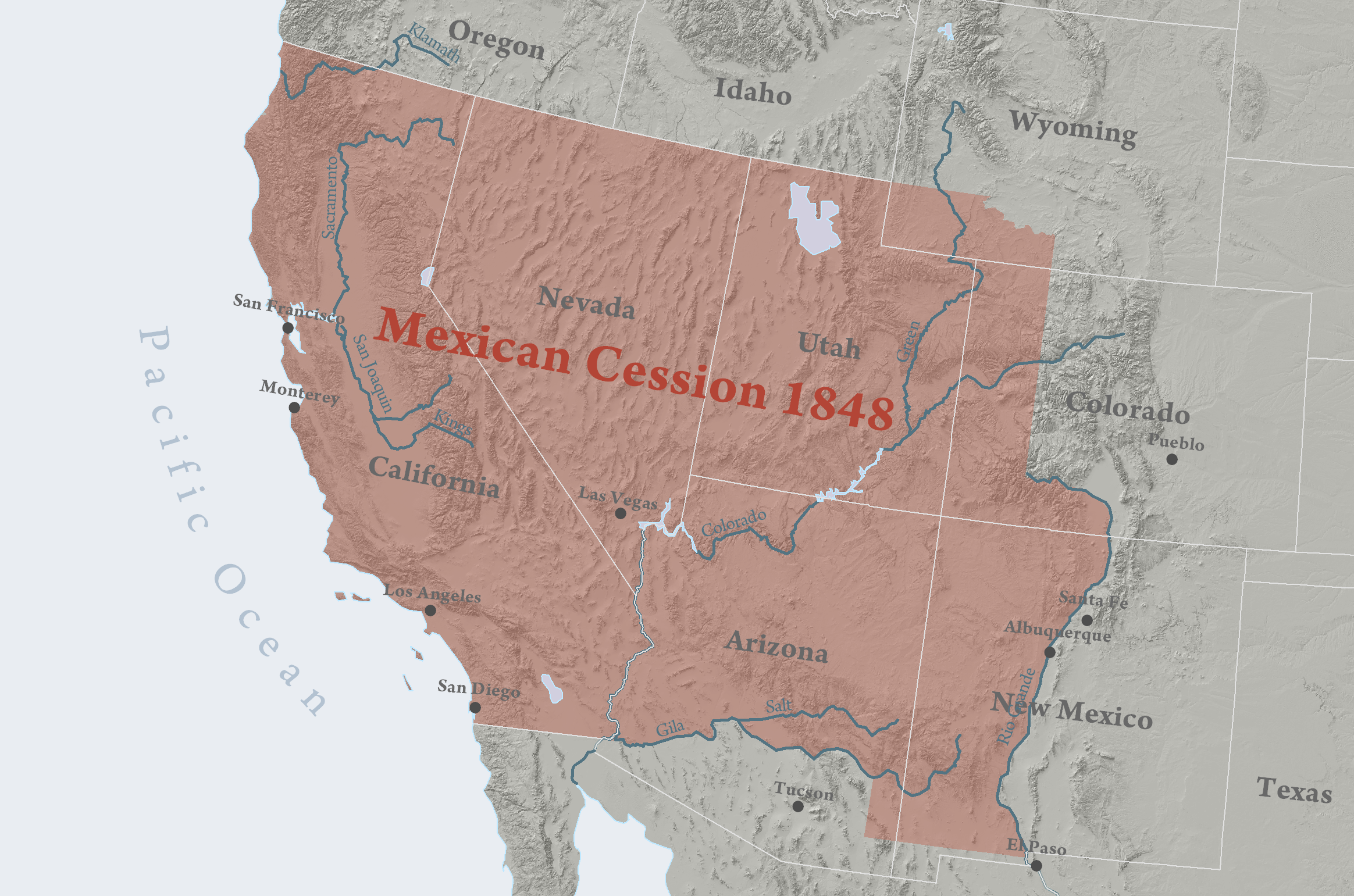
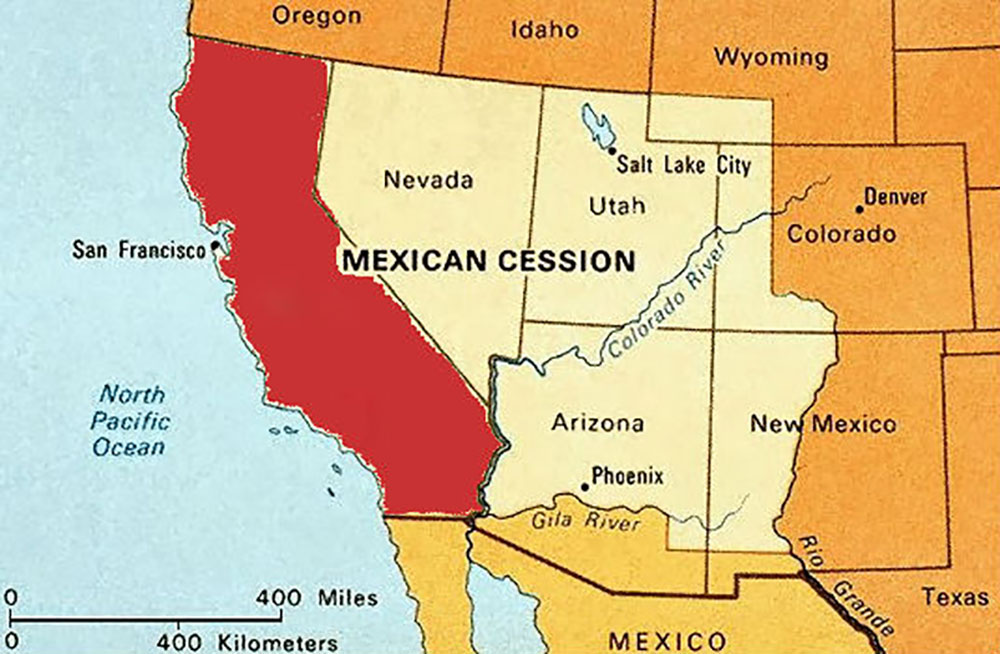
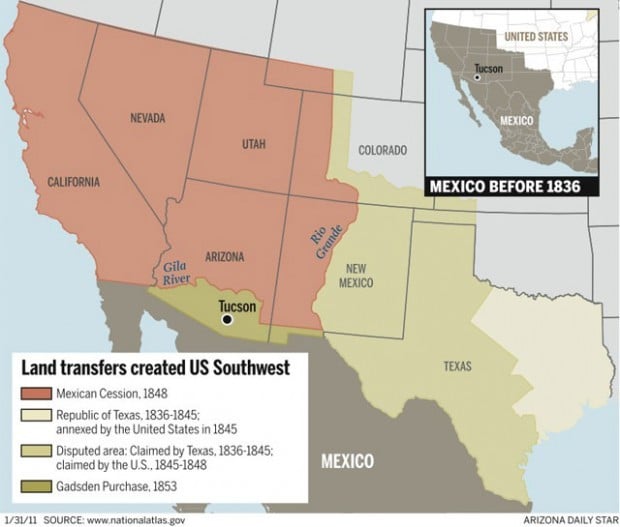
The war officially concluded with the signing of the Treaty of Guadalupe Hidalgo on February 2, 1848. This momentous treaty formally ended hostilities and, crucially, redefined the U.S.-Mexican border. Under its terms, Mexico ceded vast territories to the United States, including all of Alta California, along with what would become Arizona, New Mexico, Nevada, Utah, and parts of Colorado and Wyoming. In exchange, the United States paid Mexico $15 million and agreed to assume over $3 million in claims by U.S. citizens against Mexico.
Thus, through international treaty, California’s period of belonging to Mexico formally ended. The discovery of gold at Sutter’s Mill just days before the treaty’s signing added a layer of dramatic irony to the transfer, setting the stage for the California Gold Rush and the state’s rapid growth.
Legacy and Cultural Footprint
While California’s time as Mexican territory was relatively short compared to its Spanish colonial past or its subsequent American statehood, its legacy is indelible. The period left an enduring cultural, architectural, and historical footprint that continues to define California and offers rich opportunities to explore its past.
Enduring Mexican and Spanish Influences
The Spanish and Mexican eras are deeply embedded in California’s identity. Perhaps the most visible legacy is in place names: iconic cities like San Francisco, San Diego, Los Angeles, Sacramento, Pasadena, Fresno, Monterey, and Santa Barbara all bear Spanish names, reflecting the initial colonization and subsequent Mexican period. Beyond nomenclature, architectural styles like Spanish Colonial Revival dominate many public buildings, homes, and historic districts, characterized by red tile roofs, stucco walls, arched doorways, and ornate ironwork—a direct link to the mission and rancho aesthetics.
Mexican legal traditions, particularly concerning community property and water rights, also influenced the evolving American legal system in California. Culturally, the influences are widespread, from the origins of ranching and cowboy culture to the enduring popularity of Mexican cuisine, music, and art forms. The annual celebrations of Cinco de Mayo and Día de los Muertos in California are vibrant testaments to the continuous cultural dialogue that began centuries ago.
Historic Landmarks as Educational Sites
Today, numerous landmarks across California serve as powerful reminders of its Spanish and Mexican heritage, offering tangible connections to this foundational period.
- The California Missions: From Mission San Diego de Alcalá to Mission San Francisco Solano in Sonoma, these preserved or reconstructed sites offer insights into Spanish colonial life, religious practices, and the interactions with indigenous peoples. Mission San Juan Capistrano and Mission Santa Barbara, for example, are architectural gems that transport visitors back to the 18th and early 19th centuries. Mission Dolores in San Francisco is one of the oldest surviving structures in the city, an evocative piece of early Californian history.
- Old Town San Diego State Historic Park: This park beautifully reconstructs the atmosphere of a Mexican pueblo in the 1820s and 1830s, featuring historic adobe buildings, shops, and museums that interpret daily life during Mexican rule.
- Pueblo de Los Angeles Historical Monument: Centered around Olvera Street, this site preserves the birthplace of Los Angeles, with buildings dating back to the Mexican era, providing a glimpse into the city’s foundational history.
- Sonoma State Historic Park: Beyond the mission, this park includes the barracks of the Mexican army and the site of the Bear Flag Revolt, offering a layered historical narrative of Mexican governance and its overthrow.
These landmarks are not merely relics of the past; they are living testaments to the complex historical narrative of California. They serve as vital educational resources, helping visitors understand that before it was the 31st state of the United States, California was indeed a cherished, if distant, territory of Mexico, whose prior Spanish colonial identity laid the groundwork for much of what we recognize today. The question “Did California belong to Mexico?” receives a resounding affirmative, with its rich historical landmarks serving as enduring proof.
LifeOutOfTheBox is a participant in the Amazon Services LLC Associates Program, an affiliate advertising program designed to provide a means for sites to earn advertising fees by advertising and linking to Amazon.com. Amazon, the Amazon logo, AmazonSupply, and the AmazonSupply logo are trademarks of Amazon.com, Inc. or its affiliates. As an Amazon Associate we earn affiliate commissions from qualifying purchases.