
Chicago, the bustling metropolis on the shores of Lake Michigan in Illinois, is a magnet for travelers from across the globe. Often referred to as the “Windy City,” it’s a hub of culture, commerce, and innovation, drawing millions to its iconic skyline, world-class museums, vibrant arts scene, and renowned culinary landscape. For many, the initial planning of a trip to this magnificent city begins with a fundamental question: “How far is it to Chicago?” While seemingly straightforward, the answer extends far beyond a simple mileage figure, encompassing considerations of travel time, mode of transport, and the overall journey experience. Understanding these variables is key to crafting an efficient and enjoyable itinerary to one of the United States’ most captivating destinations.

Defining “How Far”: More Than Just Miles
The concept of “how far” is inherently relative, depending entirely on a traveler’s starting point and their preferred method of locomotion. A journey from a neighboring state presents a vastly different picture than a cross-country or international expedition. True travel insight requires looking beyond raw distance to factor in the practicalities of getting from point A to point B.
Geographical Proximity and Starting Points
Chicago’s central location in the Midwest makes it highly accessible from many major United States cities. For instance, cities like Indianapolis, Milwaukee, and St. Louis are relatively close, making for convenient day trips or weekend getaways by car or train. From Milwaukee, Wisconsin, Chicago is approximately 90 miles south, a drive typically under 1.5 hours. From Indianapolis, Indiana, the distance is around 180 miles, usually a 3-hour drive. St. Louis, Missouri, is about 300 miles southwest, a journey of approximately 4.5 to 5 hours by car.
Further afield, from cities like Minneapolis, Minnesota, the distance stretches to about 410 miles (6-7 hours driving), while from Detroit, Michigan, it’s roughly 280 miles (4.5 hours driving). These distances underscore the importance of selecting the right mode of transport for different travel aspirations and time constraints.
The Time Factor: Speed and Schedules
Distance on a map doesn’t always translate directly to travel time. Traffic conditions, road closures, flight delays, and train schedules can significantly alter the duration of a journey. A 300-mile drive through a dense urban corridor during rush hour will feel much longer than the same distance covered on open highways. Similarly, a short flight might involve hours spent at airports for check-in, security, and boarding. Strategic planning around these factors can optimize travel efficiency and minimize potential frustrations. For those traveling by air, direct flights offer the quickest transit, while connecting flights add considerable time. Train travel, while often slower than flying, provides a unique perspective and avoids the stresses of airport security and driving.
Navigating the Midwest: Driving to Chicago
For many regional travelers, driving remains a popular choice for reaching Chicago, offering flexibility and the ability to explore surrounding areas. The comprehensive interstate highway system makes road trips straightforward, though careful consideration of traffic and parking in the city is crucial.
From Neighboring States: Quick Trips
Driving from states bordering Illinois is often a convenient and economical option.
- From Indiana: As mentioned, Indianapolis is about 3 hours away. Other Indiana cities like Gary are much closer, often less than an hour’s drive.
- From Wisconsin: Milwaukee is approximately 1.5 hours, while Madison, Wisconsin, is about 2.5 hours away.
- From Michigan: Detroit is approximately 4.5 hours, traversing southern Michigan and northern Indiana.
- From Ohio: Cleveland is roughly 5.5-6 hours away, while Columbus is about 6 hours.
- From Iowa: Des Moines, Iowa, is approximately 5 hours by car.
- From Missouri: St. Louis takes around 4.5-5 hours.
These relatively short drives make Chicago a prime destination for weekend escapes, allowing travelers to pack their own luggage, maintain a flexible schedule, and potentially save on airfare.
Cross-Country Journeys: Planning and Stops
For those embarking on longer road trips to Chicago, meticulous planning becomes essential.
- From New York City, New York: The journey covers approximately 790 miles and typically takes 12-13 hours of driving. Most travelers choose to break this trip with an overnight stop, often in Ohio or Pennsylvania.
- From Atlanta, Georgia: This route is around 715 miles and takes about 11-12 hours, often requiring a stop en route.
- From Dallas, Texas: Covering about 930 miles, this drive spans 14-15 hours, making it a definite two-day journey.
- From Los Angeles, California: A true cross-country trek, this is roughly 2,000 miles and would involve approximately 30 hours of driving, spread over 3-4 days.
These longer distances necessitate careful consideration of rest stops, fuel consumption, and potential overnight stays. Leveraging navigation apps with real-time traffic updates is invaluable for managing expectations and adapting to unforeseen delays.
Taking to the Skies: Flying into Chicago
For travelers coming from distant locations, flying is invariably the fastest option. Chicago is served by two major international airports, making it a highly accessible air travel hub.

O’Hare International Airport and Midway International Airport: Gateway Airports
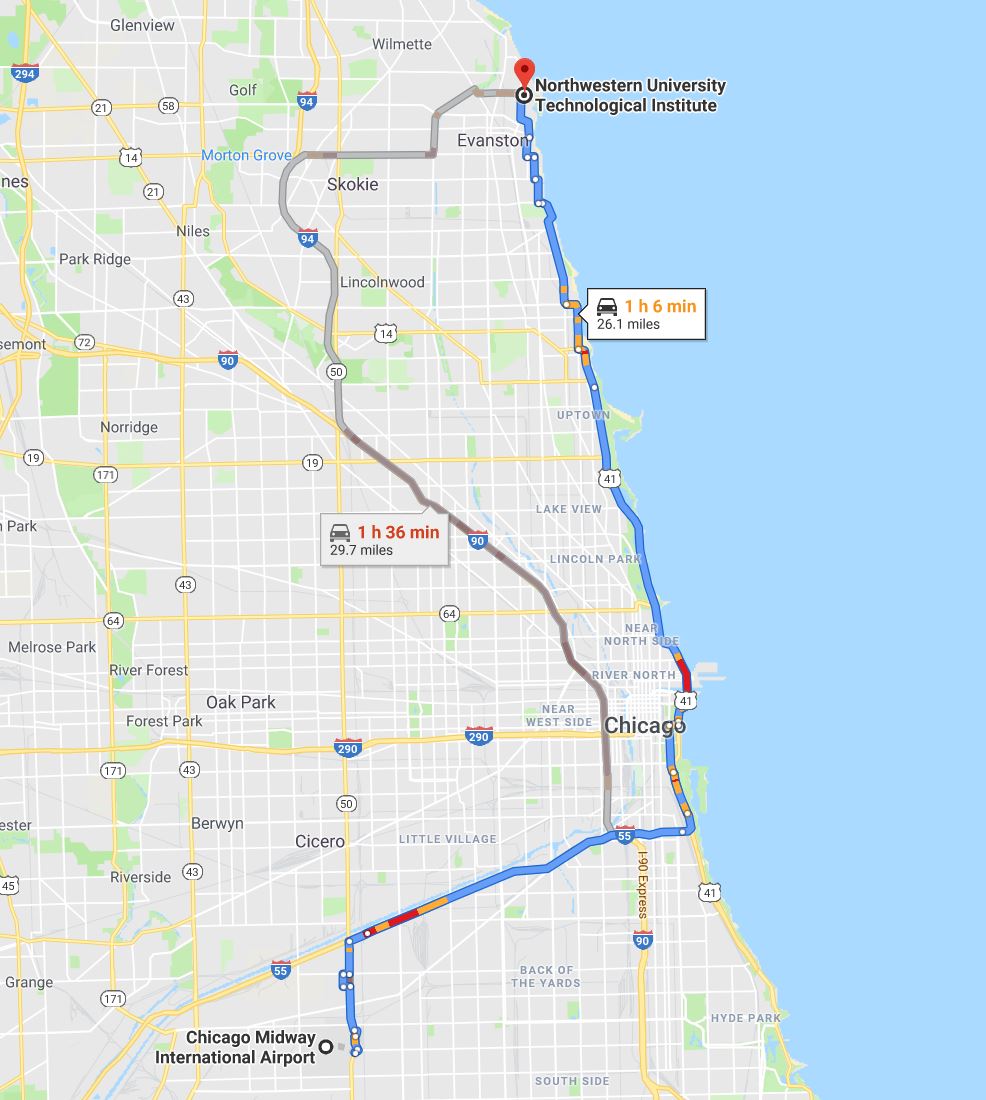
O’Hare International Airport (ORD) is one of the world’s busiest airports, serving as a major hub for both domestic and international flights. It is located approximately 18 miles northwest of downtown Chicago. Midway International Airport (MDW), while smaller, is closer to the city center, about 12 miles southwest of downtown, and primarily handles domestic traffic, often serving budget airlines. Both airports are well-connected to the city’s public transport system, the CTA ‘L’ train, providing efficient transfer options into the heart of Chicago.
Flight Durations and Connections
Flight times vary significantly based on the origin city.
- East Coast (e.g., New York City, Boston): Direct flights typically range from 2 to 2.5 hours.
- Southeast (e.g., Atlanta, Miami): Direct flights are usually 2 to 3 hours.
- West Coast (e.g., Los Angeles, San Francisco, Seattle): Direct flights average 4 to 5 hours.
- International Destinations: Flights from major European cities like London or Paris can range from 7.5 to 8.5 hours. From Toronto, Canada, a direct flight is around 1.5 hours.
While actual flight time is relatively short from many locations, the overall travel experience by air includes transit to and from airports, security checks, potential layovers, and baggage claim. For instance, a 2-hour flight might easily translate into a 5-6 hour door-to-door journey when all airport processes are factored in. Choosing between O’Hare and Midway often depends on flight availability, price, and proximity to your final destination within Chicago.
Rails and Roads: Bus and Train Travel
For a more relaxed journey, or for those seeking alternatives to driving or flying, bus and train services offer viable options to reach Chicago. These modes often provide a more scenic route and reduce the stress of navigating traffic or airport security.
Amtrak: Scenic Routes and City-to-City Connections
Amtrak, the national passenger rail corporation, positions Chicago’s historic Union Station as one of its busiest hubs. Numerous long-distance and regional routes converge here, connecting Chicago to cities across the United States.
- From St. Louis: The “Lincoln Service” route takes approximately 5.5 hours.
- From Detroit: The “Wolverine” service is roughly a 5.5-hour journey.
- From Milwaukee: The “Hiawatha Service” is a swift 1.5-hour ride, one of Amtrak’s most popular routes.
- From New York City: The “Lake Shore Limited” offers an overnight journey of about 19 hours, providing sleeping car options for a more comfortable experience.
- From Kansas City: The “Southwest Chief” takes approximately 8 hours.
Train travel offers the advantage of arriving directly into downtown Chicago, eliminating the need for further airport transfers. It’s an excellent choice for those who enjoy observing the changing landscapes and appreciate a slower pace of travel, with amenities such as dining cars and Wi-Fi often available.
Bus Services: Economical and Accessible
Intercity bus services, such as Greyhound, Megabus, and FlixBus, provide budget-friendly options to reach Chicago from a wide array of cities. While generally slower than trains or flights due to more frequent stops, they offer extensive networks and often have competitive pricing.
- From Indianapolis: A bus ride can take 3.5-4 hours.
- From Detroit: Bus journeys typically range from 6-7 hours.
- From Minneapolis: Expect a bus ride of 8-9 hours.
Bus terminals are usually centrally located, offering convenient access to local public transportation upon arrival. For travelers prioritizing cost-effectiveness and broad route coverage, bus travel to Chicago is a practical choice.
Maximizing Your Chicago Travel Experience
Regardless of the distance or chosen mode of transport, a well-planned trip to Chicago enhances the overall experience. Understanding the nuances of travel to and within the city is part of the adventure.
Seasonal Considerations
The time of year significantly impacts travel to Chicago. Winter can bring heavy snow and extreme cold, potentially affecting driving conditions and causing flight delays. Summer offers pleasant weather for exploring outdoor attractions like Millennium Park and the Lakefront Trail, but also means higher crowds and peak season pricing for flights and accommodations. Spring and fall present a balance of milder weather and fewer tourists, making them ideal times to visit. Always check weather forecasts and travel advisories, especially if driving during colder months.
Budgeting for the Journey
The “how far” question also extends to financial distance. Driving costs include fuel, tolls, and parking, which can be expensive in downtown Chicago. Flying involves airfare, baggage fees, and potentially airport transfers or rideshares. Train and bus tickets offer varying price points, often depending on how far in advance they are booked and the class of service. Beyond transportation, factor in the cost of local transit like the CTA, which is an efficient way to navigate the city to explore attractions like the Art Institute of Chicago, the Magnificent Mile on Michigan Avenue, or the panoramic views from the Willis Tower Skydeck. Planning a comprehensive budget that includes all travel-related expenses ensures a smoother and more enjoyable journey to and within the vibrant city of Chicago.
LifeOutOfTheBox is a participant in the Amazon Services LLC Associates Program, an affiliate advertising program designed to provide a means for sites to earn advertising fees by advertising and linking to Amazon.com. Amazon, the Amazon logo, AmazonSupply, and the AmazonSupply logo are trademarks of Amazon.com, Inc. or its affiliates. As an Amazon Associate we earn affiliate commissions from qualifying purchases.