
The bustling metropolis of Chicago, Illinois, and the vibrant Canadian hub of Toronto, Ontario, are two of North America‘s most dynamic cities, frequently drawing travelers for business, leisure, and cultural exploration. While both cities share a Great Lakes connection, the question of “how far” extends beyond simple mileage, encompassing journey time, transportation nuances, and the unique cross-border experience. Understanding this distance is the first step in planning an unforgettable trip between these two iconic destinations.
The Geographical Reality: Bridging Two North American Giants
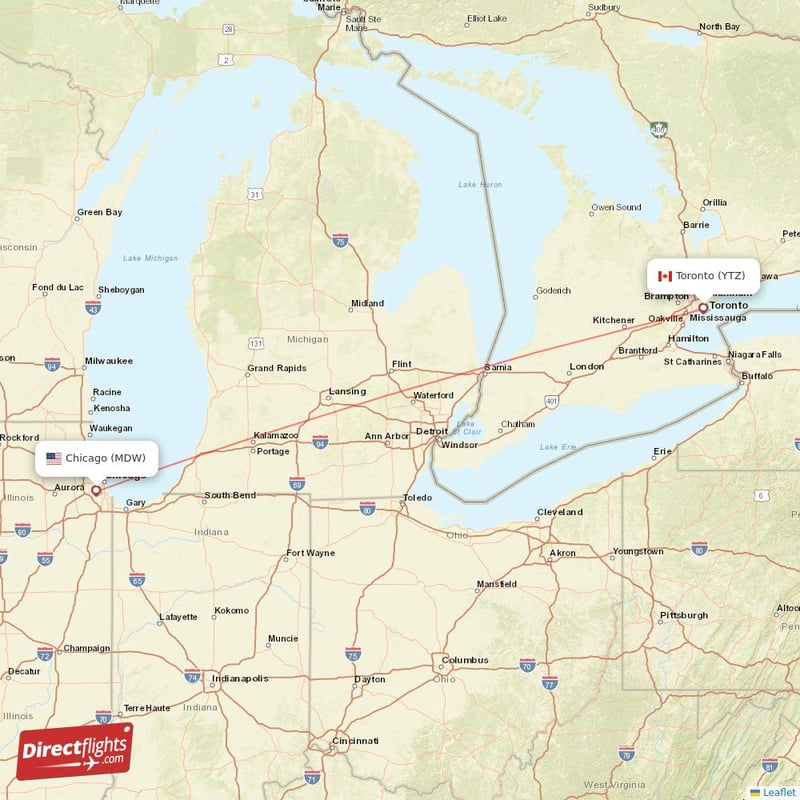
Geographically, Chicago sits on the southwestern shore of Lake Michigan, while Toronto is nestled on the northwestern shore of Lake Ontario. These two freshwater giants are part of the vast Great Lakes system, but they are not directly adjacent, necessitating a journey that bypasses or traverses several other lakes and landmasses. The border between the United States and Canada also introduces logistical considerations that differ from domestic travel.
Understanding the Distance
The direct linear distance, or “as the crow flies,” between Chicago and Toronto is approximately 435 miles (700 kilometers). However, actual travel distances are significantly longer due to geographical barriers and established road networks.
By road, the typical driving distance varies slightly depending on the specific route taken, but it generally ranges from 500 to 550 miles (approximately 800 to 885 kilometers). The most common routes involve driving around Lake Michigan, then across parts of Michigan, Ohio, and New York before crossing into Ontario, Canada. The fastest routes often guide travelers through Detroit, Michigan, and across the Ambassador Bridge or the Detroit-Windsor Tunnel into Windsor, Ontario. Alternatively, some routes might take you further east, crossing at Buffalo or Niagara Falls, which can be more scenic but also add to the total driving time.
Time Zone Considerations
Chicago operates on Central Standard Time (CST) or Central Daylight Time (CDT) during daylight saving periods, which is typically one hour behind Toronto. Toronto follows Eastern Standard Time (EST) or Eastern Daylight Time (EDT). This one-hour difference is important to remember when planning arrival times, coordinating meetings, or simply setting your watch as you cross the border. While not a significant barrier, being aware of the time change ensures smooth transitions.
Navigating the Journey: Transportation Options
Traveling between Chicago and Toronto offers several distinct transportation choices, each with its own advantages in terms of speed, cost, and experience.
Air Travel: The Fastest Connection
For those prioritizing speed, air travel is unequivocally the most efficient method. Numerous airlines offer direct or single-stop flights between Chicago and Toronto.
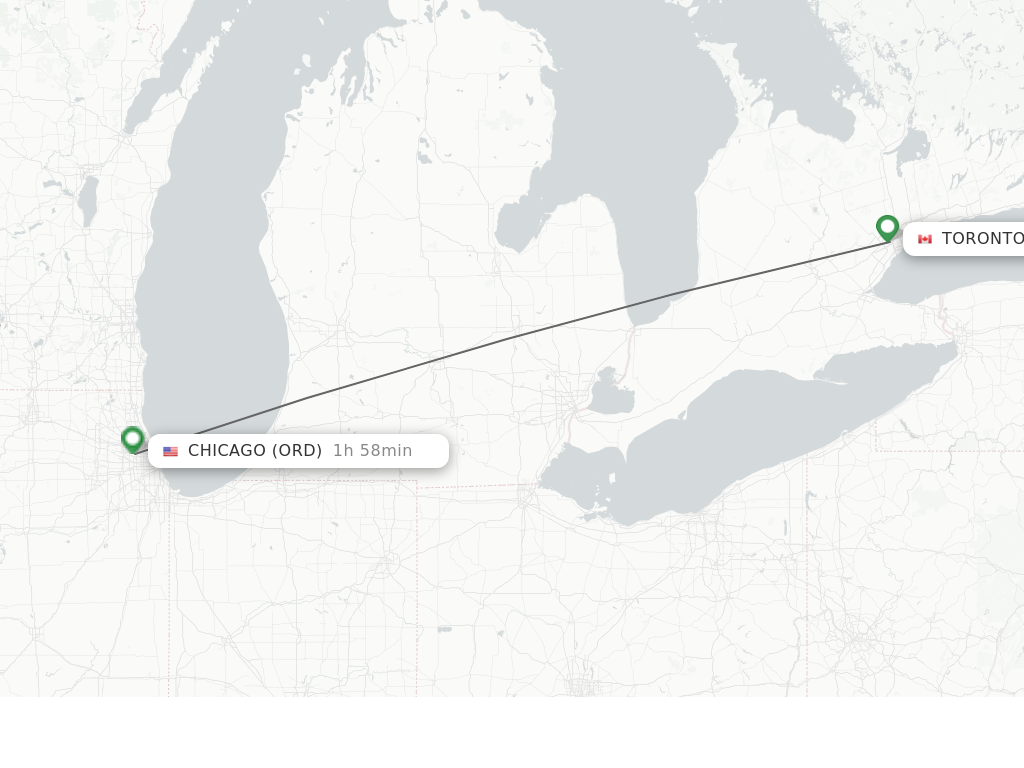
- Flight Duration: Direct flights typically range from 1 hour and 30 minutes to 2 hours in the air. When factoring in airport security, check-in, boarding, and potential delays, the total door-to-door travel time can be around 4-6 hours.
- Airports: In Chicago, travelers primarily use O’Hare International Airport (ORD) or, to a lesser extent, Midway International Airport (MDW). Toronto is served by Toronto Pearson International Airport (YYZ), its main international hub, and Billy Bishop Toronto City Airport (YTZ), a convenient downtown option often used for regional flights.
- Airlines: Major carriers such as Air Canada, Porter Airlines, United Airlines, and American Airlines frequently operate on this route, providing a range of choices for schedules and pricing. Booking in advance generally yields better fares.
Road Trip: An American-Canadian Adventure
A road trip from Chicago to Toronto offers flexibility, scenic views, and the opportunity to explore towns along the way.
- Driving Time: The average driving time, without significant stops or border delays, is approximately 8 to 10 hours. This can easily extend to 10-12 hours or more if you factor in meal breaks, fuel stops, and potential congestion, especially around major cities like Detroit or at the border crossing.
- Routes: The most common route involves taking I-94 East from Chicago towards Detroit, then crossing into Windsor, Ontario, via the Ambassador Bridge or the Detroit-Windsor Tunnel. From Windsor, Highway 401 East is the primary artery leading directly to Toronto. Another popular option involves heading further east through Ohio and New York, crossing the border near Buffalo or Niagara Falls, and then taking the QEW (Queen Elizabeth Way) to Toronto. This route offers the breathtaking views of Niagara Falls as a potential detour.
- Border Crossing: This is a crucial aspect of the road trip. Travelers should be prepared with valid passports, vehicle registration, and proof of insurance. Expect potential wait times, especially during peak seasons or holidays. Detailed information on border crossing requirements is available from U.S. Customs and Border Protection and Canada Border Services Agency.

Rail and Bus Services: Alternative Routes
For budget-conscious travelers or those preferring to avoid driving and flying, train and bus services offer viable alternatives, albeit with longer travel times.
- Train: Amtrak provides service from Chicago to various points, often requiring a transfer to VIA Rail Canada services once in Canada. The total journey can be quite long, often exceeding 12-15 hours, and may involve multiple transfers. While scenic in parts, it’s not the quickest option.
- Bus: Companies like Greyhound and Megabus operate routes between Chicago and Toronto. These services are typically the most economical, but also the longest, with travel times often ranging from 12 to 16 hours, including stops and border processing. Passengers remain on the bus during border checks.
Planning Your Cross-Border Expedition
Regardless of your chosen mode of transport, a successful trip between Chicago and Toronto requires careful planning, especially due to the international border crossing.
Border Crossing Essentials
For U.S. and Canadian citizens, a valid passport is the standard and most recommended document for crossing the border. Other acceptable documents, such as an Enhanced Driver’s License (EDL) or NEXUS card, expedite the process for frequent travelers. Non-citizens will need to confirm visa requirements for both the United States and Canada well in advance. Be prepared for questions from border agents regarding your purpose of visit, duration of stay, and items you are bringing across. Declare all goods as required to avoid issues.
Best Times to Travel
The ideal time to travel between Chicago and Toronto largely depends on your preferences and the nature of your trip.
- Summer (June-August): Offers the warmest weather, perfect for exploring outdoor attractions in both cities. However, this is also peak tourist season, meaning higher prices for flights and accommodations, and potentially longer waits at border crossings.
- Spring (April-May) and Fall (September-October): These shoulder seasons provide pleasant weather, fewer crowds, and often more affordable travel options. Fall, in particular, showcases stunning foliage along driving routes.
- Winter (November-March): While both cities experience cold and snowy winters, traveling during this time can offer unique experiences like winter festivals or ice skating. Flights and hotels are typically cheaper, but weather-related travel disruptions are more likely, especially for road trips.
Exploring Beyond the Mile Markers
Once you’ve navigated the journey, both Chicago and Toronto promise rich, diverse experiences for every type of traveler.
What Awaits in Chicago
Chicago, the “Windy City,” is a global hub for finance, culture, industry, and entertainment. Its stunning architecture, largely rebuilt after the Great Chicago Fire, is a testament to its resilience and innovation. Visitors can marvel at the towering Willis Tower (formerly Sears Tower), explore world-class institutions like the Art Institute of Chicago, or enjoy a leisurely stroll through Millennium Park to see the iconic “Bean” sculpture (Cloud Gate). The city’s culinary scene is legendary, from deep-dish pizza to Michelin-starred restaurants. A visit to Navy Pier offers family-friendly entertainment and breathtaking views of the Lake Michigan shoreline.
Discovering Toronto’s Charms
Toronto, Canada’s largest city, is a vibrant mosaic of cultures, celebrated for its diversity and dynamic urban landscape. The iconic CN Tower dominates the skyline, offering panoramic views from its observation decks. Cultural enthusiasts will appreciate the vast collections at the Royal Ontario Museum (ROM) and the contemporary exhibits at the Art Gallery of Ontario. For a unique underwater adventure, Ripley’s Aquarium of Canada is a must-see. The city’s distinct neighborhoods, such as the bohemian Kensington Market and the historic Distillery District, offer unique shopping, dining, and entertainment experiences. Toronto’s culinary scene is equally diverse, reflecting its multicultural population, with everything from authentic global cuisine to innovative fine dining.
Whether you choose the swiftness of air travel, the adventure of a road trip, or the relaxation of rail, the journey between Chicago and Toronto is an integral part of the experience. Understanding the distances, travel times, and logistical requirements ensures a seamless transition between these two remarkable North American gems.
LifeOutOfTheBox is a participant in the Amazon Services LLC Associates Program, an affiliate advertising program designed to provide a means for sites to earn advertising fees by advertising and linking to Amazon.com. Amazon, the Amazon logo, AmazonSupply, and the AmazonSupply logo are trademarks of Amazon.com, Inc. or its affiliates. As an Amazon Associate we earn affiliate commissions from qualifying purchases.