
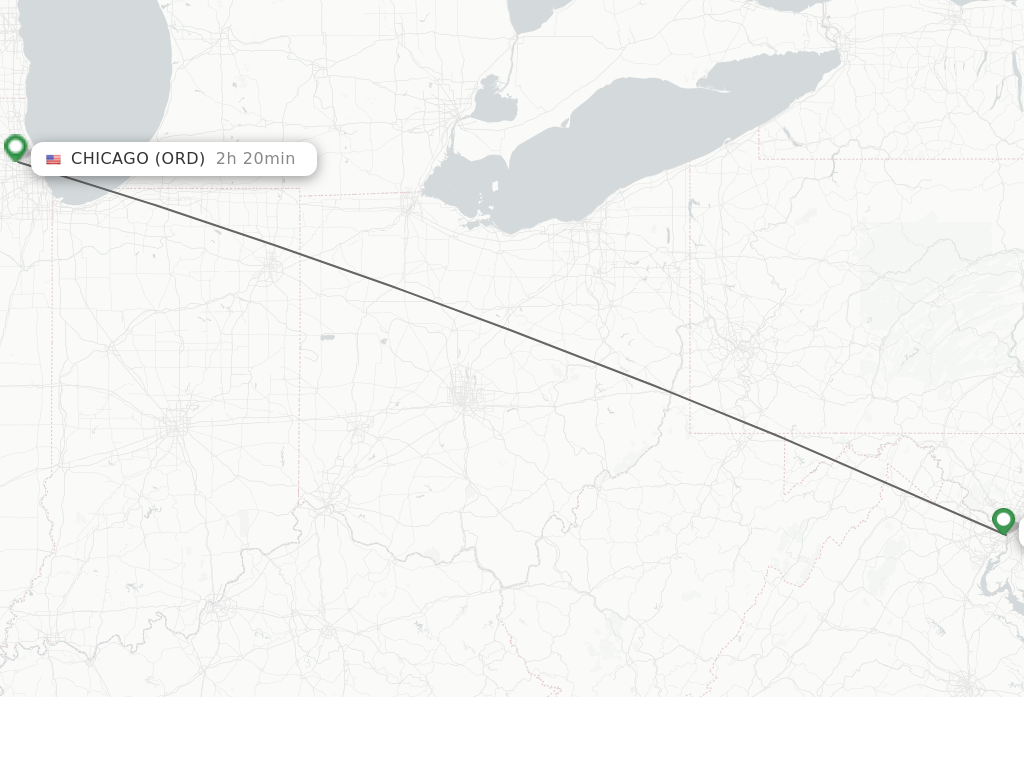
Traveling between Washington D.C., the nation’s capital, and Chicago, the vibrant heart of the Midwest, is a frequent journey for business professionals, tourists, and families alike. While the precise duration of a flight can vary, understanding the typical air travel time and the factors influencing it is crucial for effective trip planning. Generally, a direct flight connecting these two major U.S. cities will take approximately 1 hour and 50 minutes to 2 hours and 20 minutes in the air. However, this is merely the “wheels up to wheels down” time. The entire travel experience, from leaving your home to arriving at your final destination, encompasses much more.
The Direct Flight Experience: What to Expect
When considering a flight from Washington D.C. to Chicago, travelers have several airport options on both ends, influencing both convenience and occasionally, flight duration.
Airports Serving Washington D.C.
The D.C. metropolitan area is serviced by three primary airports:
- Ronald Reagan Washington National Airport (DCA): Located just across the Potomac River in Arlington, Virginia, DCA is the closest and most convenient option for those originating from downtown D.C.. Flights from DCA are typically subject to a “perimeter rule,” which restricts nonstop flights to destinations within 1,250 miles, though there are some exceptions. Chicago falls within this range.
- Dulles International Airport (IAD): Situated further out in Northern Virginia, IAD serves as a major international hub. While it offers a broader range of airlines and often more competitive pricing, getting to and from IAD can add significant ground travel time.
- Baltimore/Washington International Thurgood Marshall Airport (BWI): Located south of Baltimore, Maryland, BWI is a popular choice for budget carriers and residents living north of D.C..
Airports Serving Chicago
Chicago is primarily served by two airports:
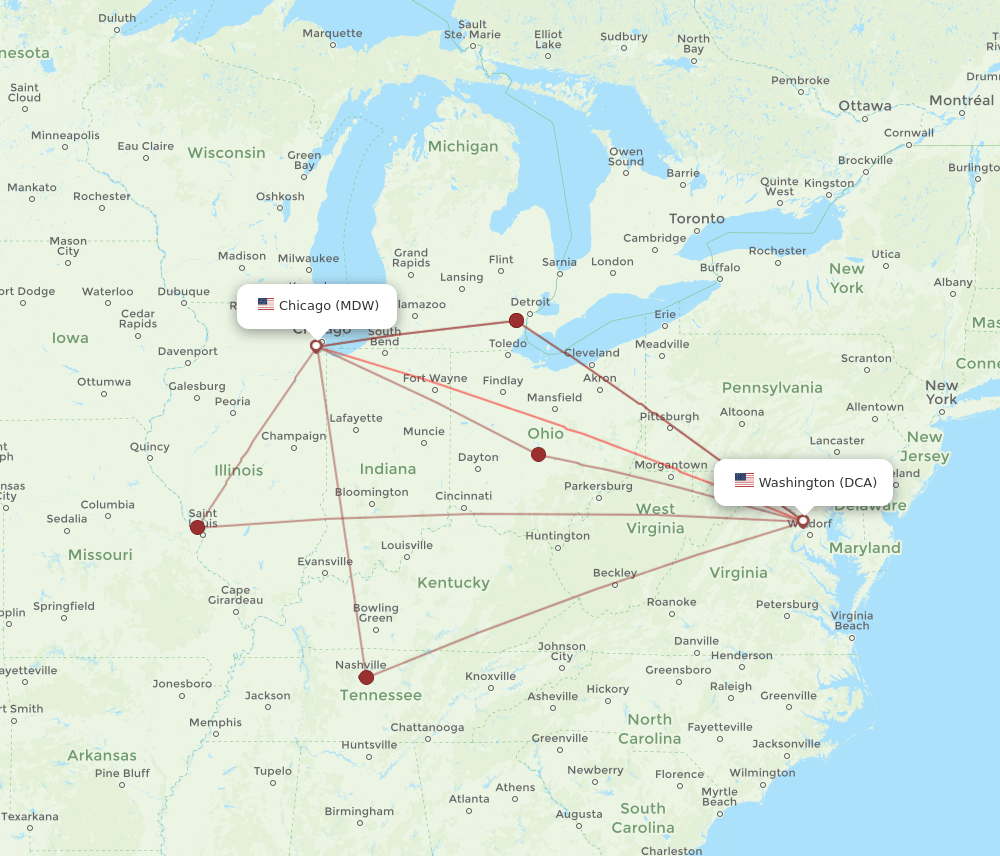
- O’Hare International Airport (ORD): One of the busiest airports in the world, ORD is a major hub for United Airlines and American Airlines. It offers numerous direct flights to D.C. area airports.
- Midway International Airport (MDW): Closer to downtown Chicago, MDW is a significant hub for Southwest Airlines. It generally offers a smoother, quicker airport experience compared to O’Hare.
Airlines frequently operating direct flights on this route include American Airlines, United Airlines, Southwest Airlines, Delta Air Lines, Spirit Airlines, and Frontier Airlines. The typical flight path covers approximately 600-612 nautical miles (around 690-705 statute miles or 1110-1135 kilometers) across the East Coast and into the Midwest airspace.
Factors Influencing Flight Duration
While a baseline flight time exists, several variables can cause deviations, leading to shorter or longer journeys. Understanding these can help set realistic expectations.
Weather Conditions
Weather is perhaps the most significant unpredictable factor. Headwinds, strong air currents blowing against the aircraft’s direction of travel, can increase flight time. Conversely, tailwinds can significantly shorten it. Severe weather systems, such as thunderstorms or blizzards, can lead to flight delays, re-routing, or even diversions, all of which add to the total travel duration. Air traffic control might also direct planes to fly around turbulent areas, extending the path.
Air Traffic Control and Congestion
Both D.C. and Chicago are major air traffic hubs. Peak travel times, particularly early mornings, late afternoons, and holidays, see a higher volume of aircraft. This can lead to delays in takeoff clearance, extended taxi times on the ground, and holding patterns in the air before landing. Air traffic controllers meticulously manage the flow, but congestion is a reality that can add minutes, or even a half-hour, to your flight.
Aircraft Type and Route Optimization
The type of aircraft can play a minor role. While most commercial jets fly at similar cruising speeds, some may have slightly different performance characteristics. More significantly, airlines and air traffic control continually optimize flight paths. A more direct route, free from congestion or adverse weather, will naturally be quicker. Technological advancements in navigation and communication have allowed for increasingly efficient routing, but these are always subject to real-time adjustments.
Beyond the Air: Total Travel Time Considerations
Focusing solely on flight duration can be misleading. A truly comprehensive understanding of your journey from D.C. to Chicago requires accounting for ground transportation and airport processes.
Airport Commute
This is often the most variable part of the journey.
-
To DCA: Easily accessible by D.C. Metro (Yellow and Blue Lines), taxi, or rideshare. Commute times from downtown are generally 15-30 minutes, but can stretch to an hour during rush hour.
-
To IAD: The Silver Line Metro now connects directly, but the journey from downtown D.C. can still take 45 minutes to 1.5 hours. Driving can take 45 minutes to 2 hours, depending on traffic.
-
To BWI: Requires a MARC or Amtrak train to BWI Rail Station and then a shuttle, or a longer drive. Total commute can be 1-2 hours.
-
From ORD: The CTA Blue Line provides direct access to downtown Chicago in about 45-60 minutes. Taxis and rideshares can take 30-90 minutes depending on traffic.
-
From MDW: The CTA Orange Line reaches downtown in about 20-25 minutes. Taxis and rideshares are typically quicker than from ORD, often 20-45 minutes.
Airport Security and Boarding Process
Even with pre-check programs like TSA PreCheck or Clear, airport security lines can vary significantly. Arriving at least 90 minutes for domestic flights is a good rule of thumb, extending to 2 hours during peak travel times or if checking luggage. Boarding typically begins 30-45 minutes before departure, and gates close 10-15 minutes prior. Missing these windows can result in denied boarding.
Deplaning and Baggage Claim
Once the plane lands, there’s still the time spent taxiing to the gate, deplaning, and, if applicable, waiting for checked luggage at baggage claim. This can easily add another 30-60 minutes to your post-flight experience before you even consider ground transportation to your final destination.
Considering all these elements, the door-to-door travel time for a D.C. to Chicago journey can easily range from 4.5 to 7 hours, or even more, depending on your origin, destination, and chosen airports and transport methods.
Optimizing Your Journey: Tips for a Smoother Flight
To make your trip as efficient and comfortable as possible, consider these strategies.
Choosing the Right Flight Time and Day
- Early Mornings: Often offer smoother air traffic and fewer delays, as the ripple effect of delays hasn’t yet accumulated.
- Mid-Day Flights: Can sometimes be less congested than peak morning or evening commuter flights.
- Mid-Week Travel: Tuesdays and Wednesdays generally see fewer travelers and potentially lower fares, which can mean a more relaxed airport experience. Avoiding major holidays and school breaks is also advisable.
Booking Strategies
- Book in Advance: While not always guaranteeing the lowest price, booking several weeks or months ahead often provides more choice in flight times and airports.
- Consider Budget Carriers: Airlines like Spirit Airlines or Frontier Airlines can offer lower base fares, but be mindful of add-on fees for baggage, seat selection, and in-flight amenities.
- Direct vs. Connecting: For this route, direct flights are plentiful and highly recommended to minimize travel time and the risk of missed connections.
In-Flight Comfort and Productivity
- Choose Your Seat Wisely: Aisle seats offer easier access, while window seats provide views and a wall to lean on. Exit row or bulkhead seats offer more legroom, often for an extra fee.
- Stay Hydrated: The dry cabin air can be dehydrating. Drink plenty of water before and during your flight.
- Entertainment: Download movies, shows, or podcasts beforehand, or bring a book. Many flights now offer Wi-Fi, though it may come at a cost.
- Work Smart: If traveling for business, utilize the uninterrupted time in the air for focused work, provided your device is charged. A comfortable neck pillow and noise-canceling headphones can significantly improve your experience.

Connecting the Capitals: Why Travel Between D.C. and Chicago is Popular
The robust air travel between Washington D.C. and Chicago is a testament to the strong economic, political, and cultural ties between these two significant American cities. D.C. serves as the epicenter of government and policy, drawing countless individuals for official business, lobbying, and academic pursuits. Chicago, on the other hand, is a global financial powerhouse, a hub for trade, technology, and a vibrant arts and culinary scene.
Business travelers frequently commute for conferences, corporate meetings, and inter-office visits. Tourists are drawn to D.C.’s iconic monuments, museums, and historical sites, while Chicago captivates with its stunning architecture, world-class dining, and diverse neighborhoods. This constant flow of travelers ensures that airlines maintain a high frequency of flights, offering flexibility in scheduling and competitive pricing. Whether you’re flying for a critical policy discussion, a major trade show, or simply to explore the cultural richness of either metropolis, understanding the intricacies of the journey ensures a smoother, more predictable travel experience.
LifeOutOfTheBox is a participant in the Amazon Services LLC Associates Program, an affiliate advertising program designed to provide a means for sites to earn advertising fees by advertising and linking to Amazon.com. Amazon, the Amazon logo, AmazonSupply, and the AmazonSupply logo are trademarks of Amazon.com, Inc. or its affiliates. As an Amazon Associate we earn affiliate commissions from qualifying purchases.