
The majestic waterway flowing through the heart of the city of Chicago is none other than the Chicago River. Far more than just a hydrological feature, the Chicago River stands as one of Chicago’s most defining and dynamic landmarks. It is a testament to human ingenuity, a canvas for architectural brilliance, and a vital thread woven into the very fabric of the city’s identity and history. Unlike many urban rivers that merely divide a city, the Chicago River actively shapes and reflects the metropolis around it, serving as a focal point for both its past struggles and its future aspirations. Its significance transcends its physical presence, embodying the spirit of innovation and resilience that defines Chicago.
An Engineered Landmark: The River Reversal and Its Historical Impact
The story of the Chicago River as a landmark is inextricably linked to one of the greatest engineering feats of the 19th century: its reversal. Originally, the river flowed sluggishly into Lake Michigan, carrying untreated sewage and industrial waste, polluting the city’s primary source of drinking water. This dire public health crisis prompted a monumental response. In 1900, after years of planning and construction, engineers from the Metropolitan Water Reclamation District of Greater Chicago completed a system of canals, most notably the Chicago Sanitary and Ship Canal, that fundamentally altered the river’s flow. Instead of emptying into Lake Michigan, the river was redirected to flow away from the lake, ultimately connecting to the Mississippi River basin.
This audacious project transformed the Chicago River from a polluted health hazard into a functional component of a vast inland waterway system. The reversal not only safeguarded Chicago’s drinking water but also paved the way for the city’s industrial expansion, allowing it to become a pivotal transportation hub connecting the Great Lakes to the Gulf of Mexico. The creation of the Illinois and Michigan Canal in the mid-19th century had set the stage for this connection, but the river reversal truly cemented Chicago’s strategic geographical advantage. This historical transformation underscores the river’s landmark status, not just for its natural beauty, but for the profound human impact that reshaped its very course, demonstrating an unparalleled triumph of civil engineering and urban planning.
Early Development and Commercial Lifeline
Before its reversal, the Chicago River was already a vital artery for the burgeoning city. Its strategic location, connecting the Great Lakes to inland territories, made it a natural hub for trade and commerce. Fur traders, explorers, and early settlers recognized its potential, establishing posts and settlements along its banks. The river’s three branches—the Main Stem, the North Branch, and the South Branch—served as natural channels for barges and ships, facilitating the transport of goods like lumber, grain, and livestock that fueled Chicago’s rapid growth in the 19th century. The bustling docks and warehouses that lined its shores were direct evidence of the river’s importance as a commercial landmark, a gateway through which the resources of the Midwest flowed to the rest of the nation and the world. This early role as a commercial conduit cemented its place in Chicago’s formative history, establishing it as a working river long before its transformation into a celebrated urban amenity.
A Gallery of Architecture: Iconic Structures Along the Waterway
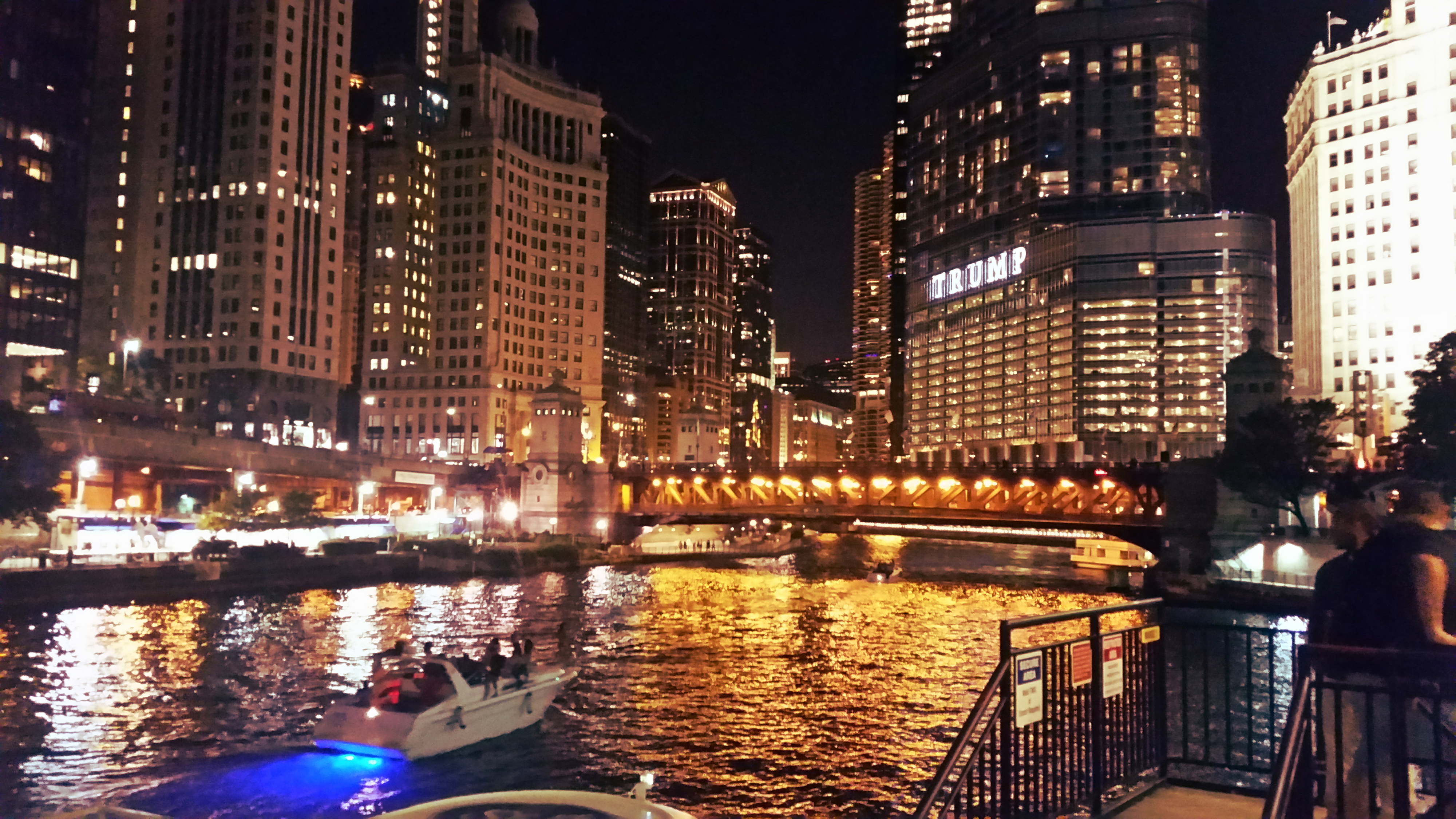
The Chicago River is often referred to as an outdoor museum of modern architecture, a truly unique landmark in its own right. Its banks are adorned with a breathtaking collection of skyscrapers and historically significant buildings that trace the evolution of American architecture from the late 19th century to the present day. This dense concentration of diverse architectural styles makes the river a premier destination for those interested in urban design and engineering marvels.
The architectural panorama begins with the classical revival styles of early 20th-century giants, such as the Tribune Tower, with its Gothic Revival flourishes, and the iconic Wrigley Building, famous for its distinctive terra cotta facade and brilliant illumination at night. These structures not only define the city’s skyline but also tell the story of its early commercial and media powerhouses. As one moves along the river, the landscape shifts to encompass the modernist steel and glass towers that characterized the mid-20th century, embodying Chicago’s legacy as the birthplace of the skyscraper. The colossal Merchandise Mart, once the world’s largest building, stands as a testament to Chicago’s industrial might and innovative construction techniques.
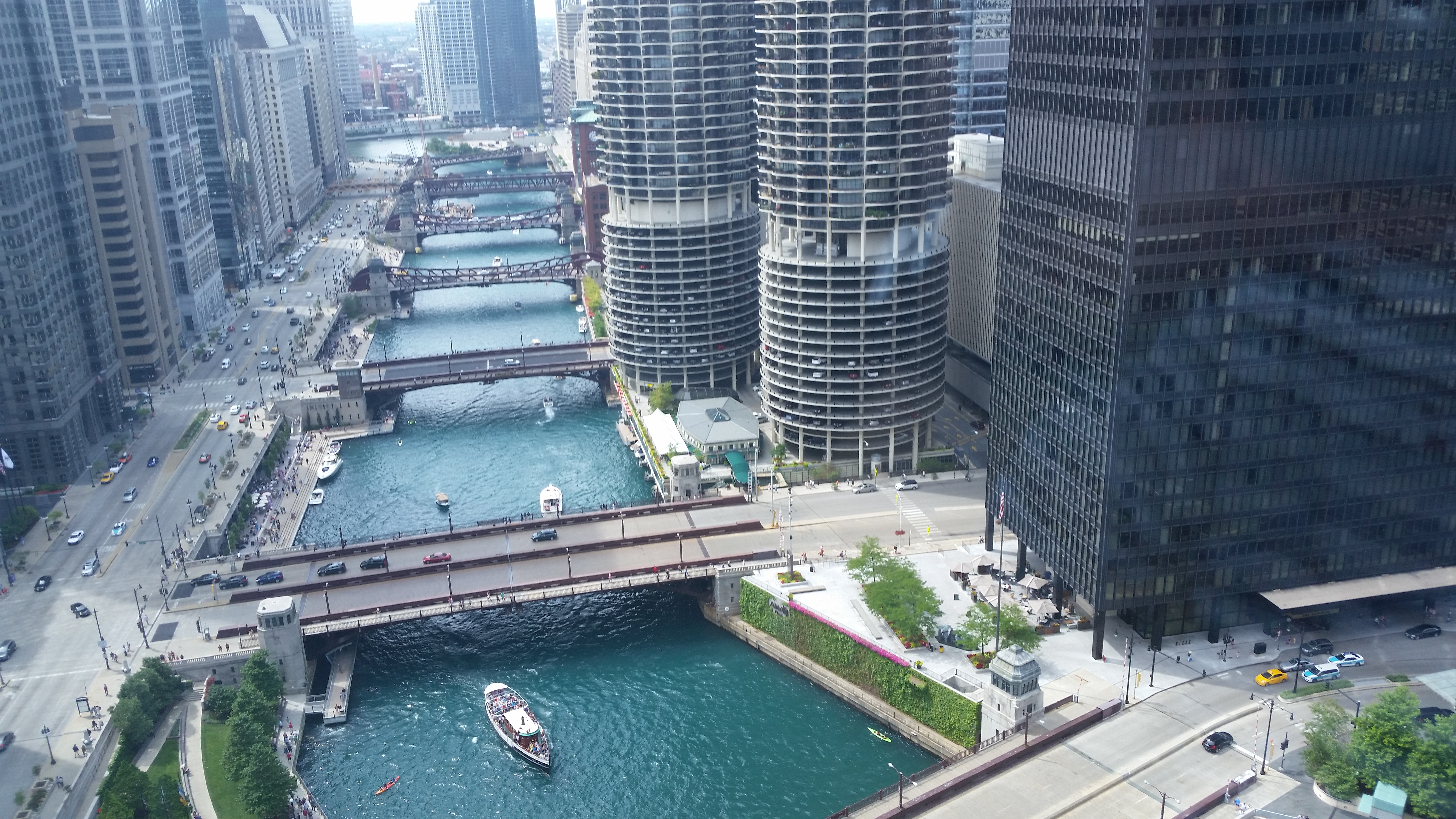
Further along, the river showcases the more experimental and dynamic designs of later eras. Marina City, with its distinctive corn-cob-like towers, broke ground in mixed-use residential design, offering a self-contained urban environment. More recently, structures like the Aqua Tower push the boundaries of conventional skyscraper aesthetics with its undulating balconies that mimic water ripples, blending seamlessly with the riverine environment. These buildings are not merely tall structures; they are active participants in the urban narrative, reflecting different periods of architectural thought and technological advancement. The perspective from the river itself, particularly during an architectural boat tour, offers an unparalleled vantage point to appreciate the interplay of these landmark buildings with the water and the sky, revealing their intricate details and massive scale in a way that ground-level viewing simply cannot. The Chicago River therefore functions as a critical landmark, not just for its inherent qualities, but as the essential backdrop and foreground for appreciating a collection of landmark buildings that define an entire urban aesthetic.
Bridges as Functional Landmarks
The numerous movable bridges spanning the Chicago River are landmarks in their own right, each a marvel of engineering that contributes to the river’s dynamic character. These bascule bridges, many of them historic, allow both river traffic and bustling street-level activity to coexist. The DuSable Bridge, commonly known as the Michigan Avenue Bridge, is perhaps the most famous, renowned for its architectural grandeur and the four monumental bas-relief sculptures that adorn its towers, depicting significant moments in Chicago’s history. This bridge also houses the Bridgehouse and Chicago River Museum, which offers insights into the river’s history and the engineering behind its movable bridges. These bridges are not just functional crossings; they are integral parts of the city’s heritage, iconic structures that punctuate the river’s course and serve as constant reminders of Chicago’s innovative spirit in overcoming geographical challenges.
The Chicago Riverwalk: An Urban Oasis and Public Landmark
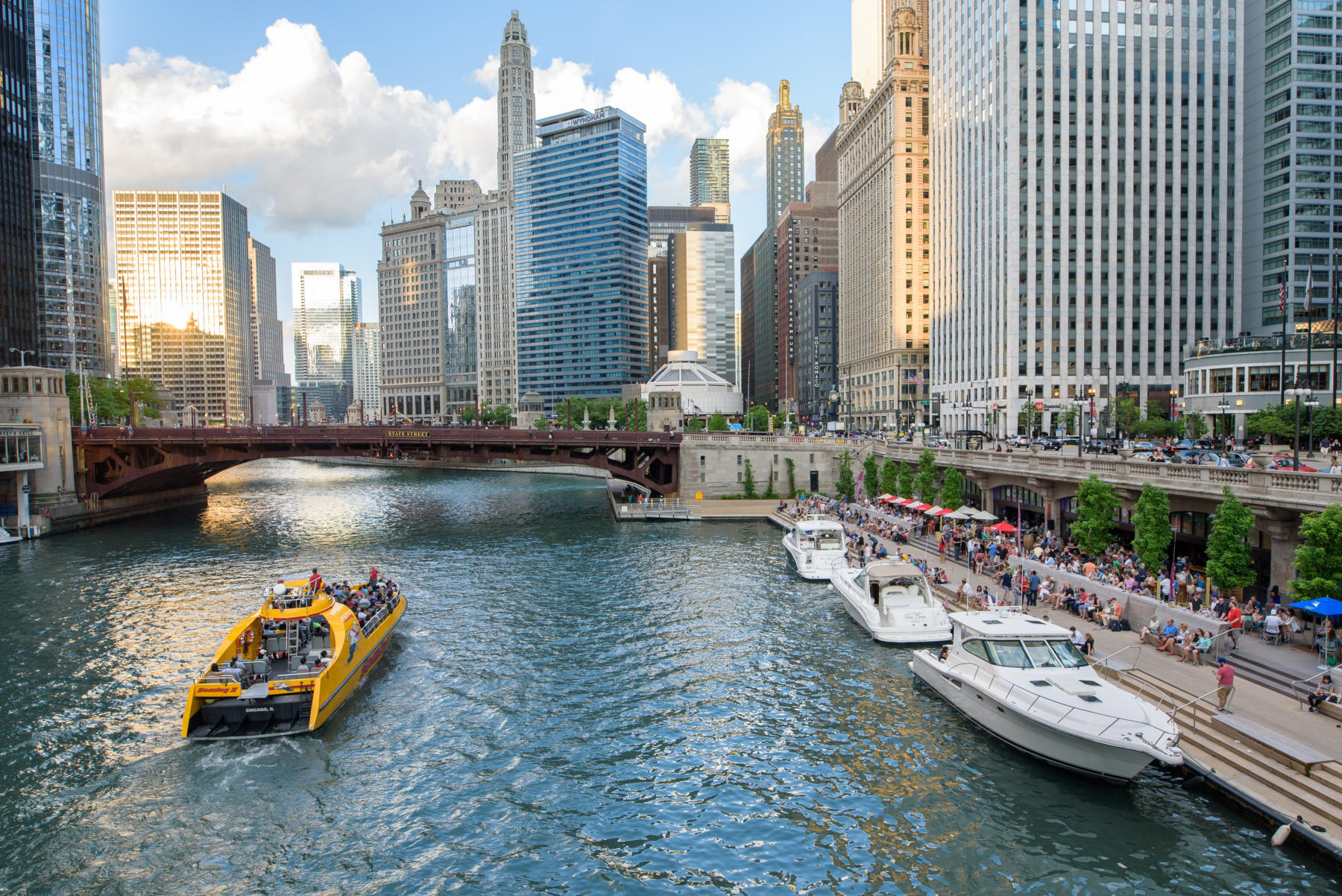
In recent decades, the Chicago River has undergone a remarkable transformation from an industrial waterway to a vibrant public space, cementing its status as a recreational and cultural landmark. The development of the Chicago Riverwalk is central to this evolution. This multi-award-winning pedestrian promenade stretches along the Main Stem of the river, offering a dynamic and engaging experience for residents and visitors alike. What was once a largely inaccessible and industrial riverfront is now a beautifully landscaped linear park, featuring a series of distinct “rooms” or sections, each with its own character and amenities.
The Chicago Riverwalk provides unprecedented access to the water’s edge, allowing for activities such as kayaking, dining at riverside cafes, fishing, and simply strolling and enjoying the spectacular urban views. It has become a cherished public landmark, a place where the city connects intimately with its river. Efforts by organizations like the Friends of the Chicago River have been instrumental in advocating for the river’s ecological health and public accessibility, transforming it into a cleaner, more vibrant ecosystem that supports a growing diversity of wildlife, including various fish species and even beavers. This commitment to ecological restoration alongside urban development showcases a holistic approach to landmark preservation and enhancement.
The Riverwalk itself, with its thoughtful design and integration of public art installations, serves as a contemporary landmark, reflecting Chicago’s commitment to creating engaging and sustainable urban spaces. It has fostered a renewed appreciation for the river, shifting perceptions from a mere backdrop to an active participant in the city’s daily life. This transformation highlights the river’s evolving role, from a purely utilitarian channel to a beloved public amenity that enriches the quality of urban life, demonstrating how a historical landmark can adapt and thrive in a modern context.
A Cultural Icon: The River’s Enduring Legacy
Beyond its engineering and architectural significance, the Chicago River holds deep cultural resonance, making it an undeniable cultural landmark. It is the stage for one of Chicago’s most famous annual traditions: the dyeing of the river green for St. Patrick’s Day. This spectacle, a beloved and globally recognized event, transforms a segment of the river into a vibrant emerald hue, attracting thousands of onlookers and showcasing the city’s festive spirit. This tradition, while seemingly whimsical, underscores the river’s central role in the city’s identity and its capacity to bring people together in celebration.
The river is also a constant presence in Chicago’s artistic representations, from literature to photography, symbolizing the city’s resilience, its industrial roots, and its ongoing evolution. It inspires artists, writers, and filmmakers, serving as a powerful visual motif. Its bridges, its towering skyscrapers, and its flowing waters are iconic images that instantly evoke Chicago. The continued investment in the Chicago Riverwalk and the various recreational activities it supports further solidify the river’s role as a living, breathing landmark, constantly evolving and adapting while remaining a core element of the city’s character. The Chicago River is not just a geographical feature; it is a monument to human achievement, a gallery of architectural masterpieces, and a dynamic public space that continues to shape and define Chicago’s cultural landscape.
LifeOutOfTheBox is a participant in the Amazon Services LLC Associates Program, an affiliate advertising program designed to provide a means for sites to earn advertising fees by advertising and linking to Amazon.com. Amazon, the Amazon logo, AmazonSupply, and the AmazonSupply logo are trademarks of Amazon.com, Inc. or its affiliates. As an Amazon Associate we earn affiliate commissions from qualifying purchases.