
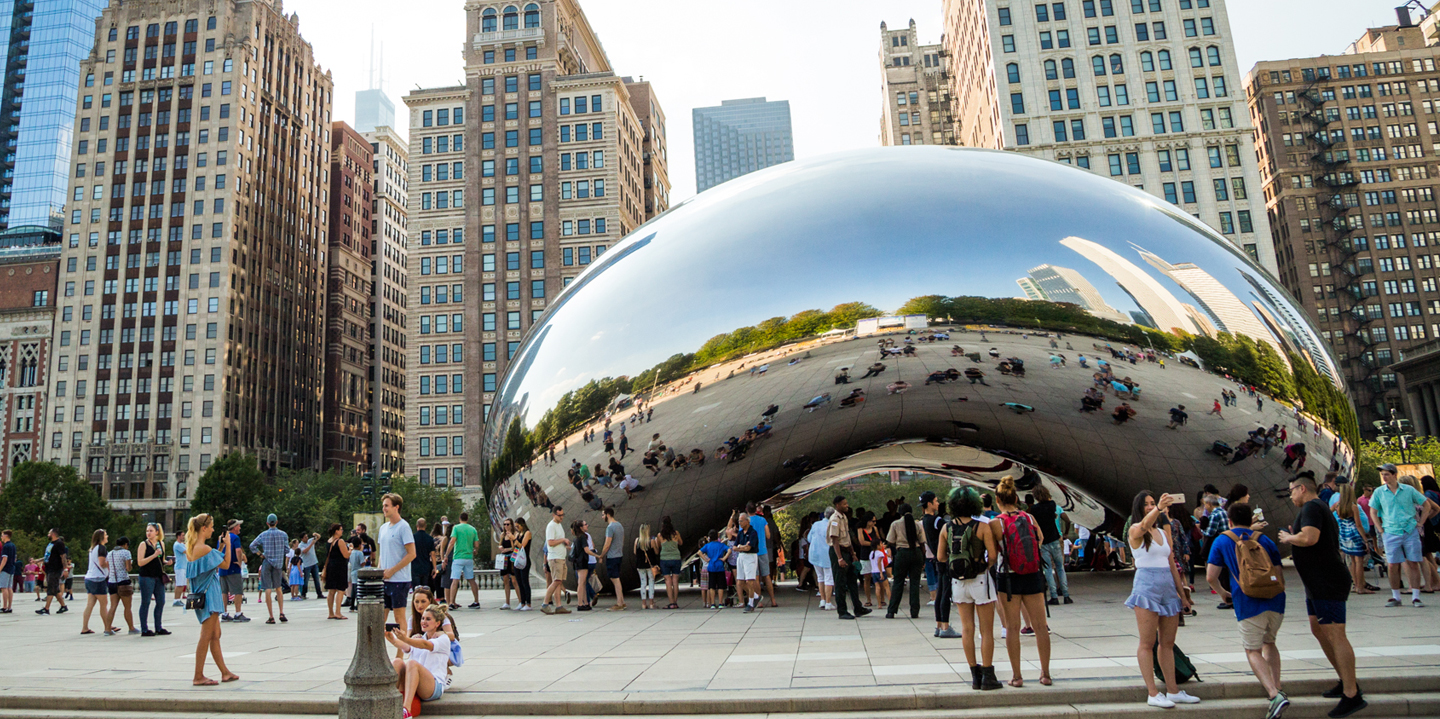
The shimmering, reflective sculpture colloquially known as “The Bean” has become an undeniable icon of Chicago, drawing millions of visitors annually. Its official name, Cloud Gate, offers a more poetic hint at its function, mirroring the sky and the city’s dynamic skyline in its polished surface. But how did this massive, peculiar, and utterly captivating artwork come to grace Millennium Park, and what is its enduring significance as a landmark? The story behind Cloud Gate is a fascinating confluence of artistic ambition, urban renewal, and groundbreaking engineering, firmly establishing it as a cornerstone of Chicago’s architectural and cultural identity.
The Artistic Vision: Anish Kapoor’s Masterpiece
At the heart of “The Bean” lies the visionary mind of internationally acclaimed artist Anish Kapoor. Born in Mumbai, India, and based in London, Kapoor is renowned for his monumental public sculptures that often explore themes of void, reflection, and perception. His work frequently engages viewers in a dialogue with space and material, challenging their understanding of form and context.
From Concept to Icon: The Genesis of Cloud Gate
The genesis of Cloud Gate began with an international design competition for a central art piece in Millennium Park. Anish Kapoor’s proposal, originally named “Cloud Gate,” was selected from a field of submissions. His concept was to create a gateway to the park and a mirror to the city, allowing visitors to interact with their surroundings in an entirely new way. The sculpture was conceived as a seamless, ovoid form that would reflect the ever-changing sky and the surrounding architecture of Chicago, inviting introspection and play. The sculpture’s rounded form, inspired by liquid mercury, was designed to warp and distort the urban landscape, creating a dynamic, kaleidoscopic view for anyone standing before it. It was a bold departure from traditional public monuments, aiming for an immersive experience rather than a static contemplation.
The Materiality and Engineering Marvel
Constructing Cloud Gate was an engineering feat of unprecedented scale. The sculpture is composed of 168 highly polished stainless steel plates seamlessly welded together, a process that required an immense amount of precision and expertise. The challenge lay not only in creating the perfectly smooth, uninterrupted surface that defines its aesthetic but also in assembling such massive, oddly shaped plates on-site without visible seams. Kapoor insisted on this seamless finish to maintain the sculpture’s integrity as a fluid, reflective object, making the fabrication process incredibly complex and lengthy.
The outer shell, weighing approximately 110 tons, required a sophisticated internal steel framework to support its immense weight and maintain its unique shape. This internal structure, along with specialized construction techniques, allowed for the individual panels to be precisely aligned and welded. The final polishing alone took months, meticulously removing any trace of the welding seams to achieve the mirror-like finish that is central to the artwork’s identity. The result is a monument that appears almost weightless despite its gargantuan size, a testament to the collaborative spirit between artistic vision and engineering ingenuity.
A Reflective Heart of Millennium Park
Cloud Gate stands proudly on AT&T Plaza in Millennium Park, a monumental public space itself born from an ambitious urban renewal project. The park, inaugurated in 2004, transformed a former railway yard and parking lot into a vibrant cultural hub, housing world-class art, architecture, and landscape design.
Urban Renewal and Public Art
Millennium Park was envisioned as a grand civic space for the 21st century, combining art, music, and nature to create an accessible urban oasis. Located at the northwestern edge of Grant Park, it brought together works by several renowned artists and architects, including Frank Gehry‘s dramatic Jay Pritzker Pavilion and Jaume Plensa’s captivating Crown Fountain. Cloud Gate was strategically placed to be a central magnet, drawing visitors into the park and encouraging exploration of its other features, such as the serene Lurie Garden and the Art Institute of Chicago nearby.
The decision to install such a significant piece of public art was a bold statement about Chicago’s commitment to culture and its role as a global city. Cloud Gate not only enhanced the aesthetic appeal of the park but also served as a catalyst for engaging the public with contemporary art in an open, democratic setting. Its presence redefined the perception of downtown Chicago, transforming a once utilitarian area into a lively destination for both locals and tourists.
Interaction and Engagement: More Than Just a Sculpture
What truly sets Cloud Gate apart as a landmark is its interactive nature. Unlike many traditional sculptures, Kapoor’s creation is designed to be touched, explored, and experienced from multiple angles. Visitors can walk around it, under its soaring arch, and observe their own reflections, distorted and playful, merged with the surrounding urban landscape. The underside of the sculpture, known as the “omphalos” (Greek for navel), offers a unique convex chamber that creates a funhouse mirror effect, multiplying and inverting reflections in dizzying patterns.
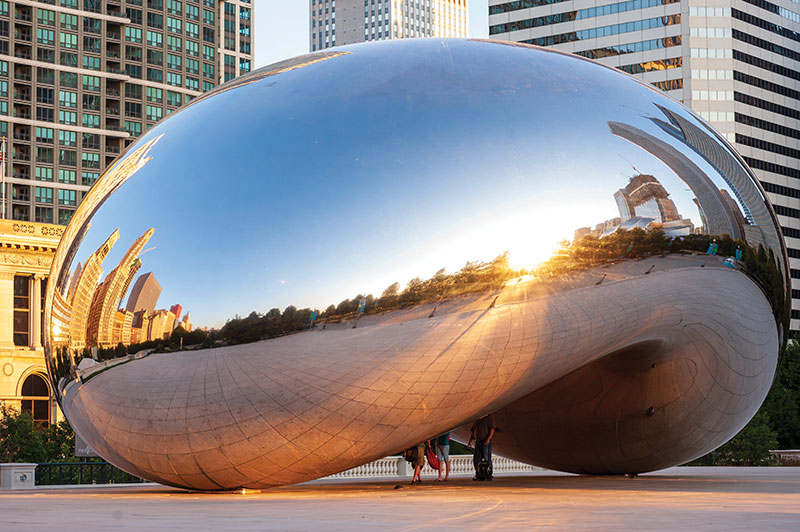
This direct engagement fosters a personal connection with the artwork. Each reflection captured in its surface—be it a towering skyscraper, a passing cloud, or a delighted child—becomes part of the sculpture itself, an ephemeral collaboration between art and viewer. It’s a place where individuals become part of the art, where the city bends to meet their gaze, and where every perspective offers a new discovery. This interactive quality has cemented its place as a beloved landmark, transcending mere visual appreciation to become a shared experience.
The Bean’s Enduring Legacy and Cultural Impact
Since its unveiling, Cloud Gate has transcended its origins as a public art installation to become a cultural phenomenon and a defining symbol of modern Chicago. Its distinctive shape and reflective properties have made it instantly recognizable worldwide.
Symbol of Chicago’s Modernity
Cloud Gate perfectly encapsulates Chicago’s spirit of innovation and its dedication to marrying architectural prowess with artistic expression. The city, famous for its groundbreaking architecture and its pivotal role in the development of the skyscraper, found in Cloud Gate a contemporary landmark that honored its past while confidently looking towards the future. It stands as a testament to Chicago’s ongoing commitment to public art and urban revitalization, signalling a forward-thinking civic identity.
The sculpture symbolizes Chicago’s embrace of the cutting edge, its willingness to invest in bold, transformative projects that enhance the quality of life for its residents and attract visitors from across the globe. It reflects the city’s dynamic energy, its continuous evolution, and its place as a global leader in culture and design.
Photography, Pop Culture, and the Tourist Experience
Perhaps no other contemporary landmark has been photographed more times than “The Bean.” Its reflective surface offers endless photographic possibilities, from distorted selfies to stunning panoramic cityscapes. On any given day, crowds gather around the sculpture, cameras in hand, eager to capture their unique interaction with the artwork and the city it mirrors. This photographic appeal has propelled it into global pop culture, appearing in countless social media feeds, travel brochures, and even films.
For tourists, Cloud Gate is often the first stop on their Chicago itinerary. It’s an accessible, free attraction that offers an immediate “wow” factor and a memorable experience. Its location within Millennium Park makes it part of a larger destination, encouraging visitors to explore other nearby landmarks and attractions. The sculpture has become synonymous with visiting Chicago, an essential pilgrimage for anyone wanting to experience the city’s modern artistic pulse.
How to Experience Cloud Gate
Experiencing Cloud Gate is a must for anyone visiting Chicago. It’s located in Millennium Park, which is easily accessible by public transportation and within walking distance of many downtown hotels and attractions along the Magnificent Mile.
Best Times to Visit
Cloud Gate is open 24/7, making it accessible at any time. However, the experience varies significantly throughout the day.
- Early Mornings: Offer the fewest crowds, providing a tranquil experience and ideal conditions for photography with softer light.
- Mid-Day: Can be very crowded, but the bright sunlight makes the reflections incredibly vibrant and dynamic. This is a great time to observe the bustling interaction between people and the art.
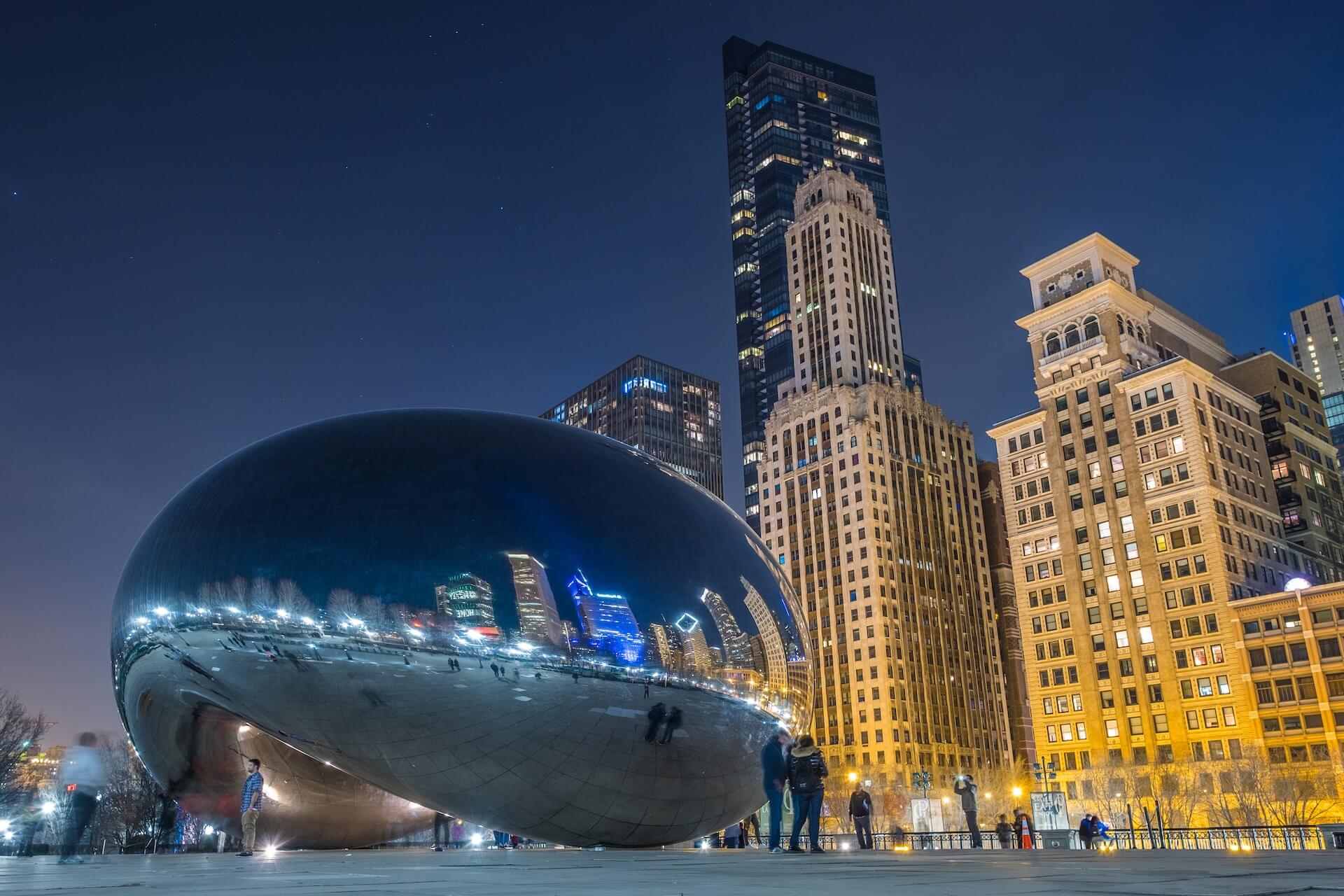
- Evenings/Night: The city lights twinkling in its surface create a magical and romantic atmosphere, offering a completely different aesthetic. The reflections of the surrounding skyscrapers, including those along Lake Michigan, are particularly striking.
Beyond the Reflection: Exploring Millennium Park
While Cloud Gate is a star attraction, remember it’s just one part of the magnificent Millennium Park. Take time to explore the other iconic landmarks within the park:
- Jay Pritzker Pavilion: An architectural marvel by Frank Gehry, hosting free concerts and events throughout the warmer months.
- Crown Fountain: Interactive video sculptures displaying the faces of Chicago residents, spitting water in the summer, perfect for cooling off.
- Lurie Garden: A serene urban oasis offering beautiful seasonal plantings and a quiet escape.
- Boeing Galleries: Feature rotating contemporary art exhibitions.
Together, these elements create a vibrant tapestry of art, architecture, and public space that makes Millennium Park, and its iconic “Bean,” an indispensable landmark in the urban fabric of Chicago. The sculpture is more than just a steel structure; it is a living, breathing part of the city, constantly changing with the weather, the light, and the people who come to gaze upon it. Its presence asks us to reflect, not just on ourselves, but on the ever-evolving grandeur of Chicago itself.
LifeOutOfTheBox is a participant in the Amazon Services LLC Associates Program, an affiliate advertising program designed to provide a means for sites to earn advertising fees by advertising and linking to Amazon.com. Amazon, the Amazon logo, AmazonSupply, and the AmazonSupply logo are trademarks of Amazon.com, Inc. or its affiliates. As an Amazon Associate we earn affiliate commissions from qualifying purchases.