
Yes, absolutely. Colorado is home to some of the most dramatic and iconic sections of the Rocky Mountains, a majestic mountain range that forms the backbone of western North America. While the Rockies stretch thousands of miles across multiple states and even into Canada, Colorado is often considered the heart of the range within the United States, boasting a remarkable concentration of high peaks, expansive wilderness, and diverse ecosystems that define this global landmark.
The Definitive Answer: A Core Region
The presence of the Rocky Mountains within Colorado is not just incidental; the state encompasses some of the range’s most significant features and elevations. Indeed, a substantial portion of Colorado’s geography is dominated by these towering mountains, influencing everything from its climate and hydrology to its culture and economy. The range acts as a monumental natural boundary, a rich repository of biodiversity, and a profound testament to the Earth’s geological forces.

Geographical Scope of the Rocky Mountains
To understand Colorado’s central role, it’s essential to grasp the vastness of the entire Rocky Mountain system. Spanning over 3,000 miles (4,800 kilometers) from the northern reaches of British Columbia in Canada to New Mexico in the southwestern United States, the Rockies are one of the world’s great mountain chains. This immense system includes numerous individual ranges, each with its own character and geological history. South of the Canadian border, the Rockies traverse Montana, Idaho, Wyoming, Utah, and most prominently, Colorado, before diminishing into New Mexico. While other states showcase impressive sections, Colorado’s segment is particularly renowned for its sheer vertical relief and the number of peaks exceeding 14,000 feet.
Colorado’s Place in the Rockies
Within this extensive chain, Colorado holds a distinguished position. Nearly half of the state’s land area is mountainous, characterized by some of the highest elevations in the entire range. Colorado contains a significant concentration of the highest peaks in the contiguous United States, including more than fifty peaks known as ” Fourteeners“—mountains reaching an elevation of 14,000 feet (4,267 meters) or more above sea level. This makes Colorado not just a part of the Rocky Mountains but a crucial, high-elevation core that defines much of the range’s character in the southern United States. The state’s section of the Rockies is also the source of numerous major rivers, vital to the hydrology of a vast portion of the American West.
Iconic Ranges and Peaks Within Colorado’s Rockies
Colorado’s portion of the Rocky Mountains is segmented into several distinct and equally impressive ranges, each contributing to the state’s rugged beauty and offering unique landmark experiences. These individual ranges possess their own geological stories, ecological niches, and historical significance, making Colorado a prime destination for understanding mountain landmarks.
The Front Range and Its Prominence
Perhaps the most recognizable part of the Colorado Rockies is the Front Range. This easternmost range of the Southern Rockies is particularly prominent because it rises abruptly from the Great Plains, providing a dramatic backdrop for Colorado’s largest cities, including Denver and Colorado Springs. Iconic peaks like Pikes Peak, often referred to as “America’s Mountain,” and Longs Peak, the highest point in Rocky Mountain National Park, are part of the Front Range. The accessibility and sheer scale of these mountains make the Front Range an immediate and impactful landmark for residents and visitors alike, shaping the identity of urban centers nestled at its base.
Majestic Fourteeners and High Plateaus
Beyond the Front Range, Colorado hosts numerous other significant ranges. The Sawatch Range is home to the highest peak in Colorado and the entire Rocky Mountains, Mount Elbert, soaring to 14,439 feet (4,399 meters). The San Juan Mountains in southwestern Colorado are renowned for their rugged beauty, mining history, and extensive high-alpine terrain. The Elk Mountains, with peaks like Maroon Bells, are quintessential images of the Colorado Rockies. Interspersed among these ranges are high-altitude plateaus and vast mountain parks like South Park and North Park, which, while not peaks themselves, are integral features of the landmark’s diverse topography, representing ancient lakebeds and expansive grasslands at elevation. These varied landscapes contribute to the Rocky Mountains’ status as a composite landmark of incredible natural diversity.
Geological Grandeur and Formation
The existence and character of the Rocky Mountains in Colorado are the result of immense geological forces that have sculpted the North American continent over millions of years. Understanding these processes is key to appreciating the landmark’s profound scale and complexity. The range itself is a testament to the Earth’s dynamic nature, with layers of rock recording eons of geological activity.
Tectonic Forces Shaping a Continent
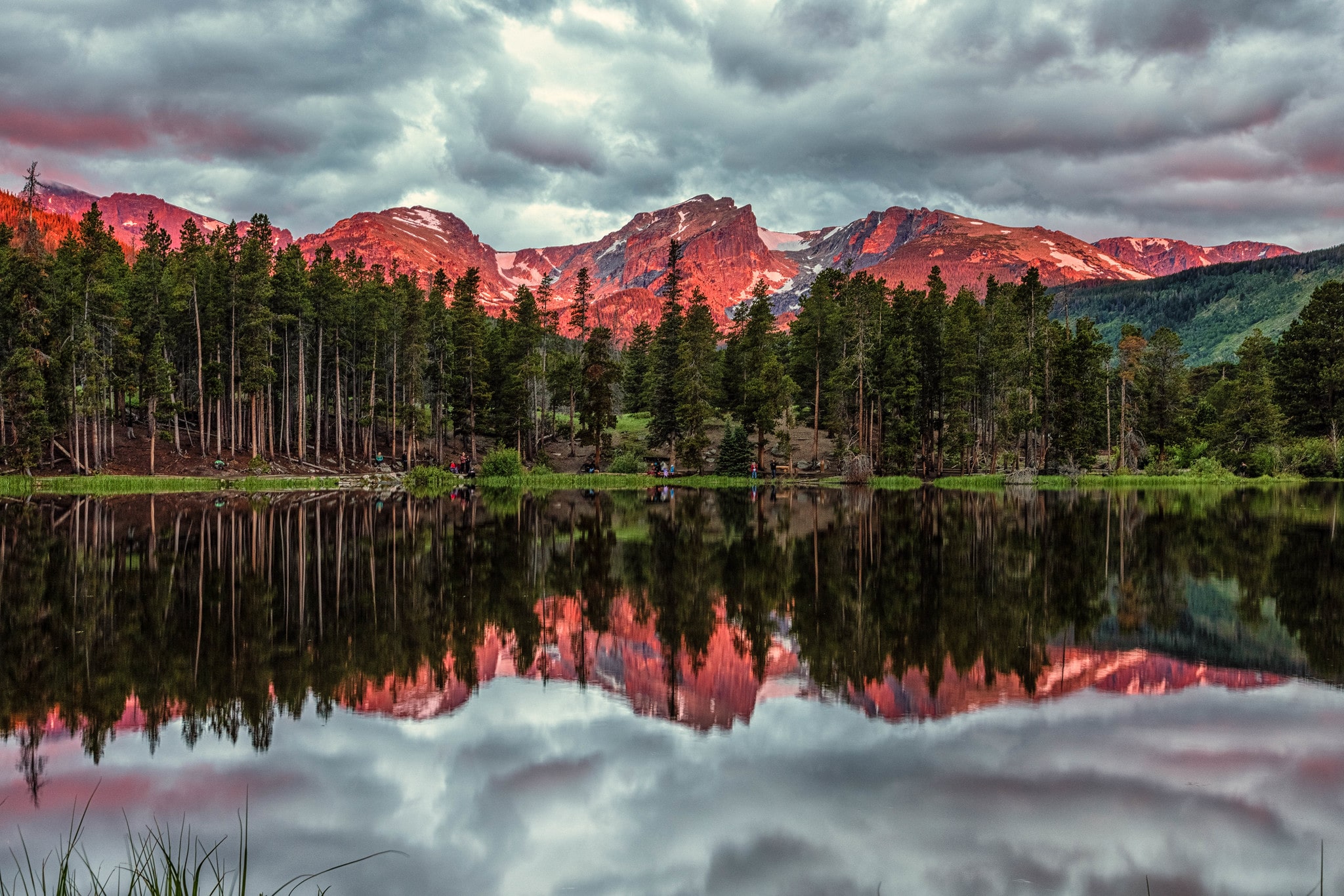
The primary uplifting event responsible for the creation of the modern Rocky Mountains is known as the Laramide Orogeny, which occurred roughly 80 to 55 million years ago during the late Cretaceous to early Paleogene periods. Unlike many mountain ranges formed by direct collision, the Rockies were uplifted further inland from the plate boundary, a phenomenon thought to be caused by a shallow subduction angle of the Farallon Plate beneath the North American Plate. This immense pressure caused the crust to thicken and buckle, pushing ancient Precambrian basement rocks upwards, which now form the core of many Colorado peaks, often capped by younger Paleozoic and Mesozoic sedimentary layers. Subsequent erosion, particularly by glacial activity during the Pleistocene Epoch, further carved the dramatic peaks, cirques, and U-shaped valleys that characterize the Colorado Rockies today.
Diverse Landscapes: From Alpine Tundra to Foothill Forests
The varied geology of the Colorado Rockies has resulted in an astonishing array of landscapes. At the highest elevations, above the treeline, alpine tundra prevails, a harsh environment characterized by sparse vegetation, strong winds, and extreme temperatures. Below this, vast expanses of subalpine forests, dominated by Engelmann spruce and subalpine fir, cloak the mountain slopes. As elevation decreases, these transition into montane forests of ponderosa pine and aspen, eventually giving way to foothills grasslands and shrublands at the base, merging with the Great Plains to the east and high desert to the west. This vertical stratification of ecosystems, directly influenced by the monumental uplift and subsequent weathering, makes the Colorado Rockies a living geological and ecological landmark. The visible layers of rock, the presence of ancient fossils in some areas, and the clear evidence of glacial scouring all tell a compelling story of Earth’s deep time.
The Ecological and Historical Significance
Beyond their physical grandeur, the Rocky Mountains in Colorado hold profound ecological and historical significance. As a landmark, they are not just geological formations but living systems and repositories of human history and cultural heritage. Their vastness and ruggedness have preserved unique ecosystems and provided sanctuary and resources for millennia.
Biodiversity Hotspot and Wilderness Preservation
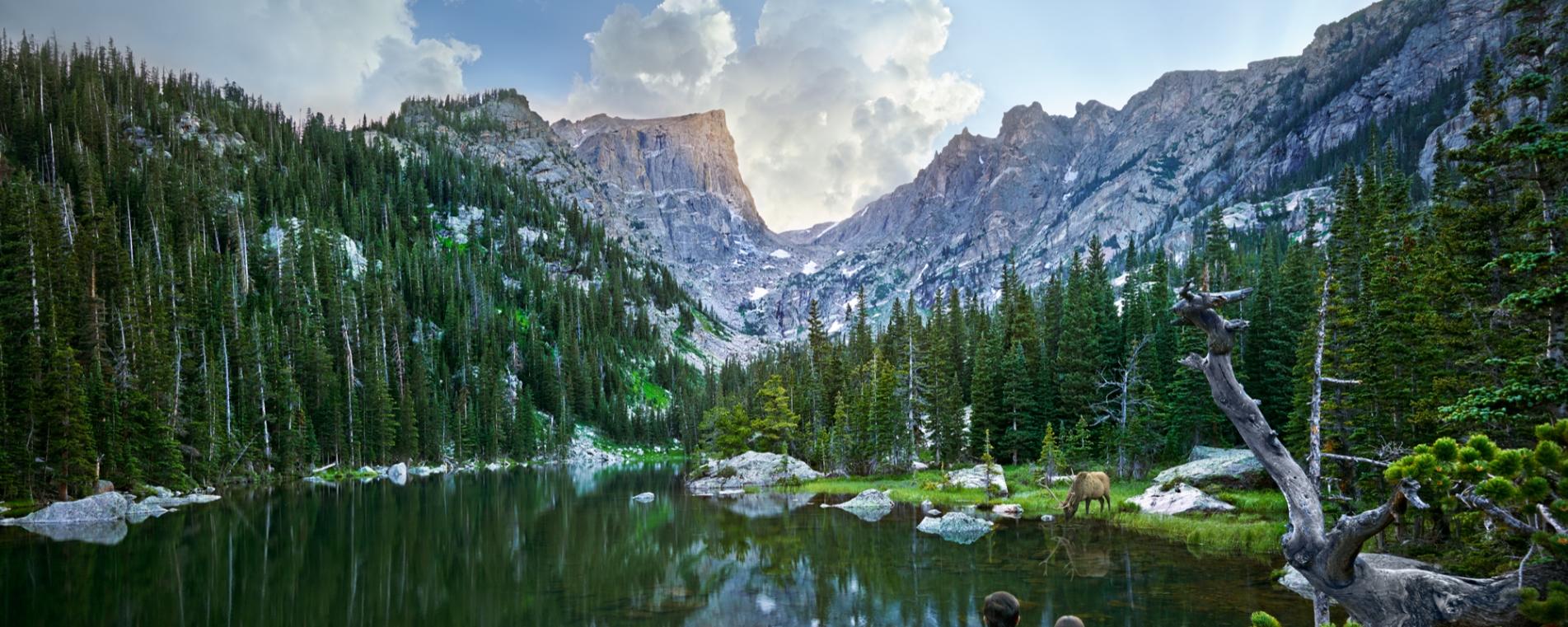
The Colorado Rockies are a critical biodiversity hotspot, home to a wide range of flora and fauna adapted to high-altitude environments. From elk and bighorn sheep that roam the high country to elusive mountain lions and black bears, the wildlife here is integral to the mountain ecosystem. The diverse altitudinal zones support unique plant communities, including rare alpine species found nowhere else. As a result, significant portions of the Colorado Rockies have been designated as wilderness areas, national forests, and national parks, ensuring the preservation of these invaluable natural assets. These protected lands are crucial for maintaining ecological balance, safeguarding water resources, and providing natural laboratories for scientific study, reinforcing the Rockies’ status as an ecological landmark of global importance.
Human Interaction: A History Etched in Stone
The Rocky Mountains have been inhabited by Indigenous Peoples for thousands of years. Tribes such as the Ute, Arapaho, and Cheyenne traditionally lived within or traversed these mountains, utilizing their resources for sustenance, ceremony, and shelter. Their deep understanding and reverence for the land are part of the mountain’s human history. Later, the mountains became a frontier for fur trappers, explorers, and during the 19th century, prospectors drawn by the Colorado Gold Rush. Mining towns, now historical landmarks themselves, sprang up in remote valleys, leaving a legacy of intricate trails, abandoned mines, and stories of boom and bust. Today, the relationship between humans and the Colorado Rockies continues to evolve, balancing recreation and development with conservation and respect for the natural environment that defines this monumental landmark.
Exploring the Landmark: National Parks and Protected Areas
The recognition of the Rocky Mountains as a natural landmark of immense value has led to the establishment of numerous protected areas, allowing for public appreciation and the safeguarding of its unique features. These areas serve as gateways for experiencing the majesty of Colorado’s peaks and valleys.
Rocky Mountain National Park: A Crown Jewel
Among the most famous of these is Rocky Mountain National Park, a designated UNESCO World Heritage Site. Located in north-central Colorado, the park encompasses 415 square miles (1,075 sq km) of spectacular mountain environments, including high peaks like Longs Peak, expansive alpine tundra, forests, and glacial lakes. It is perhaps the most iconic representation of the Rocky Mountains within the United States, offering unparalleled opportunities to witness the grandeur of the range, observe wildlife, and explore a pristine alpine ecosystem. The park’s famous Trail Ridge Road, the highest continuous paved road in North America, crosses the Continental Divide and offers breathtaking panoramic views, making it a landmark experience in itself. From the bustling gateway towns of Estes Park on the east to Grand Lake on the west, the park draws millions who seek to connect with this natural wonder.
Other Protected Areas and Their Unique Features
While Rocky Mountain National Park is the most prominent, Colorado is dotted with other significant protected areas within its portion of the Rockies. These include several national forests, wilderness areas, and national monuments that preserve different facets of the mountain landmark. For instance, Florissant Fossil Beds National Monument showcases ancient petrified redwood stumps and thousands of exquisitely preserved insect and plant fossils, offering a window into a past mountain ecosystem. Great Sand Dunes National Park and Preserve, nestled against the Sangre de Cristo Mountains, presents a stark and fascinating contrast, with the tallest dunes in North America rising dramatically at the foot of towering peaks. These diverse protected sites collectively highlight the multifaceted nature of the Rocky Mountains as a landmark, demonstrating its geological, ecological, and historical richness. They reinforce that Colorado is not just incidentally home to the Rockies but is inextricably linked to their identity and preservation.
LifeOutOfTheBox is a participant in the Amazon Services LLC Associates Program, an affiliate advertising program designed to provide a means for sites to earn advertising fees by advertising and linking to Amazon.com. Amazon, the Amazon logo, AmazonSupply, and the AmazonSupply logo are trademarks of Amazon.com, Inc. or its affiliates. As an Amazon Associate we earn affiliate commissions from qualifying purchases.