
The allure of the Northern Lights, or Aurora Borealis, captivates travelers and dreamers worldwide. Visions of ethereal green, pink, and purple ribbons dancing across a dark sky are typically associated with destinations deep within the Arctic Circle, such as Alaska, Scandinavia, or Canada. Yet, a persistent question for those in the lower latitudes of the United States often arises: is it possible to witness this celestial ballet from Colorado? The answer, while not as straightforward as a trip to Fairbanks or Tromsø, is a resounding “yes,” albeit with significant caveats and a generous helping of luck.

The Elusive Aurora Borealis: A Phenomenon of Solar Power
To understand the chances of seeing the Northern Lights in Colorado, it’s crucial to first grasp the science behind this spectacular phenomenon. The Aurora Borealis is the result of energized particles from the sun colliding with gases in Earth’s atmosphere. The sun constantly emits a stream of charged particles known as solar wind. During periods of increased solar activity, such as solar flares or coronal mass ejections (CMEs), these particles are ejected with greater force and volume. When these particles reach Earth’s magnetic field, they are largely deflected, but some are channeled towards the magnetic poles. As they interact with oxygen and nitrogen atoms in the upper atmosphere, they excite these gases, causing them to emit light. The color of the light depends on the type of gas and the altitude at which the interaction occurs, with green being the most common (oxygen at lower altitudes) and reds, blues, and purples appearing under different conditions.
The strength of these solar events is often measured by the Kp-index, a scale from 0 to 9 that indicates geomagnetic activity. A Kp-index of 0-2 signifies very quiet conditions, while Kp 5-9 indicates a geomagnetic storm. For the aurora to be visible from lower latitudes like Colorado, an exceptionally strong geomagnetic storm (typically Kp 7 or higher) is required, pushing the auroral oval much further south than its usual polar position.
Colorado’s Latitude and the Aurora’s Reach
Colorado’s geographic location places it approximately between 37 and 41 degrees North latitude. While this is certainly south of the prime auroral zones, it doesn’t entirely rule out a sighting. The key factor is not purely geographic latitude, but geomagnetic latitude. Earth’s magnetic poles are not perfectly aligned with its geographic poles, meaning the geomagnetic equator is shifted. This shift allows places like Maine or the northern parts of Michigan to have slightly better chances than their geographic latitude might suggest.
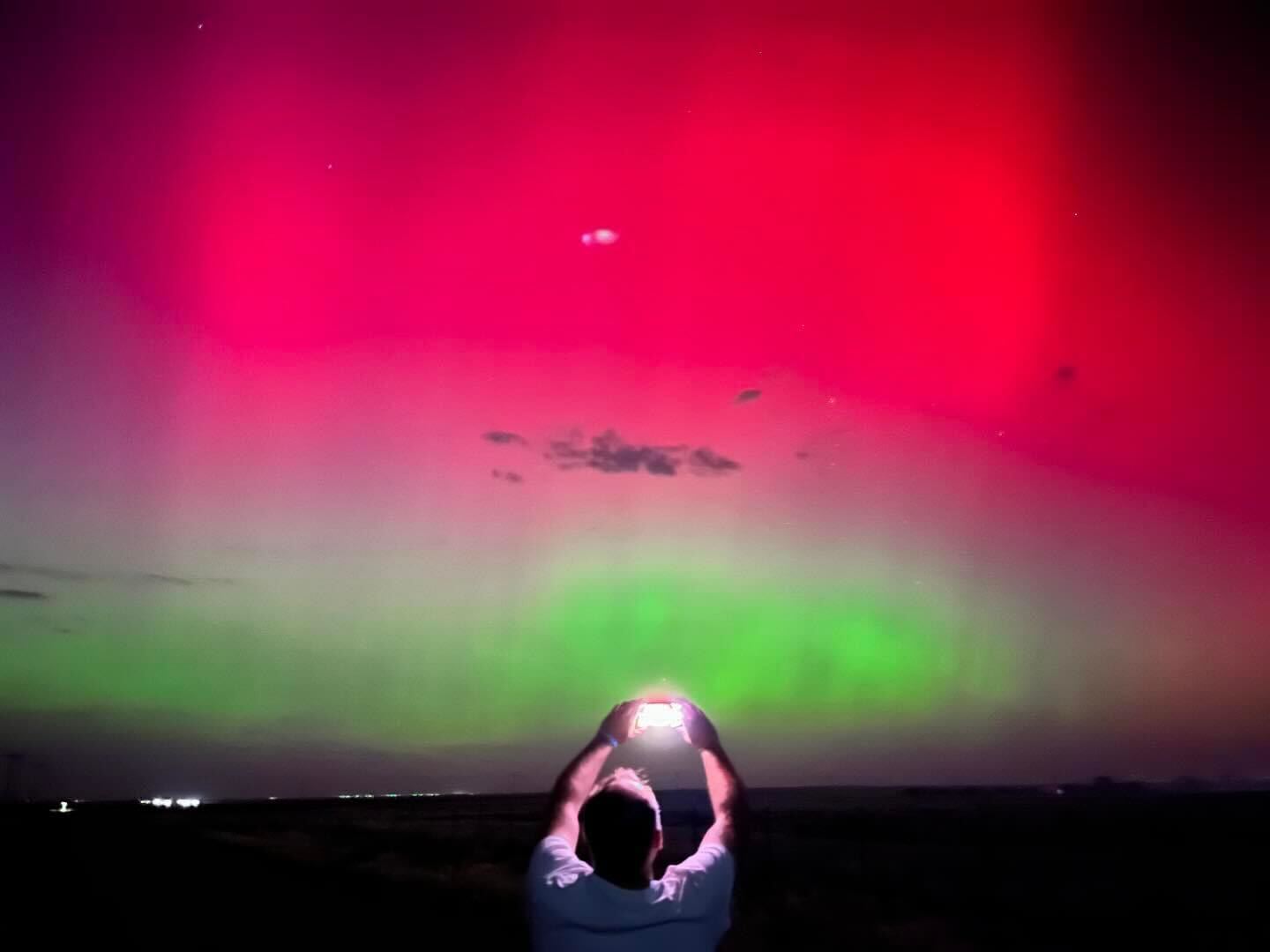
For Colorado, the geomagnetic latitude still places it well outside the primary auroral oval under normal conditions. This means that only during very powerful geomagnetic storms does the auroral oval expand sufficiently far south to encompass parts of the state. Such events are rare, occurring perhaps a few times per solar cycle, and even then, visibility is not guaranteed due to other factors like local weather and light pollution. When they do occur, the aurora often appears lower on the northern horizon, rather than directly overhead as it would in Alaska. It might also appear as a faint glow or subtle pillars, potentially less vibrant to the naked eye than captured by long-exposure photography.
Prime Conditions for Aurora Spotting in Colorado
Chasing the Northern Lights in Colorado requires a combination of rare solar activity and ideal viewing conditions on the ground. Travelers hoping for this unique experience must be prepared for a quest that demands patience and quick responsiveness.
Dark Skies: Escaping Light Pollution
Light pollution is the number one enemy of aurora hunters in any location, but particularly in areas where the aurora is likely to be fainter. Major metropolitan areas like Denver, Colorado Springs, or Fort Collins emit too much artificial light, washing out faint celestial phenomena. To maximize your chances, you need to travel far from city lights, seeking out truly dark skies. Colorado is fortunate to have vast expanses of wilderness and designated dark sky areas. Locations with minimal light interference, ideally looking north over an unobstructed horizon, are crucial.
Some of the best places to consider in Colorado for dark sky viewing include:
- Pawnee National Grassland: Located in northeastern Colorado, this expansive grassland offers incredibly dark skies and an open northern horizon, perfect for scanning for aurora activity. It’s relatively accessible from the Front Range.
- Great Sand Dunes National Park and Preserve: An International Dark Sky Park known for its incredible stargazing. While it might be a bit further south, its pristine dark skies offer excellent contrast.
- Black Canyon of the Gunnison National Park: Another International Dark Sky Park in western Colorado with dramatic landscapes that enhance the night sky experience.
- State Forest State Park: Nestled in northern Colorado near the Wyoming border, this park offers high-altitude darkness and a northern vantage point.
- Remote areas in the San Luis Valley or eastern plains near the Kansas and Nebraska borders also present opportunities.
Clear Weather and Cloud Cover
Even with a strong solar storm, cloud cover can completely obscure the aurora. Colorado’s weather can be highly unpredictable, especially during the colder months when nights are longest. A clear, cloudless sky is non-negotiable for aurora viewing. Monitoring local weather forecasts, particularly cloud cover maps, is essential for planning any aurora chase. Winter often brings clearer, crisper nights, but also the potential for heavy snowstorms.

Timing is Everything: Solar Cycles and Peak Activity
The sun operates on an approximate 11-year cycle of activity, moving from solar minimum (low activity) to solar maximum (high activity). We are currently in Solar Cycle 25, with a peak predicted around 2024-2025. During solar maximum, strong solar flares and CMEs become more frequent, increasing the likelihood of powerful geomagnetic storms capable of pushing the aurora south. Travelers interested in catching the Northern Lights in Colorado should pay close attention to the timing within this solar cycle.
Within a given night, the best viewing window is typically between 10 p.m. and 2 a.m. local time, though strong events can be visible earlier or later. It also helps to plan your trip during a new moon phase, as the absence of moonlight further reduces natural light pollution, enhancing the visibility of fainter aurora displays.
Planning Your Aurora Chase in Colorado: Tips for the Aspiring Stargazer
Successfully witnessing the Northern Lights in Colorado is more about being prepared for an opportunity than scheduling a definite event. It requires flexibility, vigilance, and the right approach.
Monitor Space Weather Forecasts
This is perhaps the most critical step. Several reputable organizations provide real-time space weather data and aurora forecasts. The NOAA Space Weather Prediction Center (SWPC) is an excellent resource, offering Kp-index forecasts, geomagnetic storm watches and warnings, and aurora oval predictions. Several apps and websites also aggregate this data, sending alerts when geomagnetic activity reaches a level that might make the aurora visible from your location. Setting up alerts for Kp 7 or higher would be advisable for [Colorado](https://lifeoutofthebox.com/colorado].
Equipment and Preparedness
Even if the aurora is visible, it might be faint. A good camera with manual settings can often capture more than the naked eye. A sturdy tripod, a wide-angle lens, and the ability to set a high ISO and long exposure (10-30 seconds) are essential for aurora photography. Beyond photography, prepare for a long night in potentially cold, remote conditions:
- Warm Clothing: Layers are critical, even in warmer months at night in the mountains. Insulated jackets, hats, gloves, and thermal base layers are a must.
- Food and Drink: Bring snacks, hot drinks in a thermos, and plenty of water.
- Safety Gear: A headlamp with a red light setting (to preserve night vision), a fully charged phone, an external battery pack, and a first-aid kit. Inform someone of your plans if heading to a remote area.
- Comfort: A camping chair or blanket can make waiting more comfortable.
Realistic Expectations
The most important tip for aurora chasing in Colorado is to maintain realistic expectations. This is not Yellowknife or Iceland, where aurora sightings are frequent and often spectacular. In Colorado, seeing the Northern Lights is a rare treat, often a muted experience, and sometimes appears as a faint glow that only reveals its true colors through a camera lens. Approach it as an exciting possibility rather than a guaranteed attraction. Be prepared to enjoy the dark skies even if the aurora doesn’t make an appearance.
Beyond the Aurora: Colorado’s Night Sky Attractions
Even if the spectacular solar storm required for Colorado aurora viewing doesn’t materialize, the state offers unparalleled opportunities for stargazing and astrophotography. Its high altitudes, dry climate, and numerous expansive natural areas create some of the darkest night skies in the contiguous United States.
Colorado boasts several designated International Dark Sky Parks and communities, recognized for their exceptional commitment to preserving the nocturnal environment. These include Great Sand Dunes National Park and Preserve, Black Canyon of the Gunnison National Park, Dinosaur National Monument, and Jackson Lake State Park. Beyond these, areas in the Rocky Mountains and the eastern plains away from urban centers offer breathtaking views of the Milky Way, meteor showers, and countless stars.
A trip focused on stargazing in Colorado is a rewarding experience in itself. Imagine camping beneath a tapestry of stars, the silence broken only by the sounds of nature, far removed from the hustle and bustle of city life. Whether you’re scanning the northern horizon for an auroral glow or simply admiring the vastness of the cosmos, Colorado’s night skies promise an unforgettable celestial display. The chance of seeing the Northern Lights is the exciting cherry on top of an already incredible astronomical adventure.
LifeOutOfTheBox is a participant in the Amazon Services LLC Associates Program, an affiliate advertising program designed to provide a means for sites to earn advertising fees by advertising and linking to Amazon.com. Amazon, the Amazon logo, AmazonSupply, and the AmazonSupply logo are trademarks of Amazon.com, Inc. or its affiliates. As an Amazon Associate we earn affiliate commissions from qualifying purchases.