
Denver, Colorado: The Mile-High City Beckons
Denver, the vibrant capital of Colorado, stands as a gateway to the majestic Rocky Mountains and a bustling urban center in its own right. Often referred to as the “Mile-High City” due to its official elevation of exactly one mile (5,280 feet or 1,609 meters) above sea level, Denver offers a unique blend of outdoor adventure and metropolitan sophistication. For travelers contemplating a visit, the initial question often revolves around proximity: “How far am I from Denver, Colorado?” Understanding this distance, whether by air, road, or rail, is the first crucial step in planning an unforgettable journey to this dynamic destination.
Millions flock to Denver each year, drawn by its stunning natural backdrop, diverse cultural attractions, thriving culinary scene, and a reputation for sunny weather. From world-class museums and historic districts to expansive parks and proximity to premier ski resorts and hiking trails, the city appeals to a broad spectrum of travelers. Whether you’re an adventure seeker eyeing the slopes of Vail or Aspen, a culture enthusiast eager to explore the Denver Art Museum, or a foodie looking to sample innovative cuisine and craft brews, Denver presents a compelling itinerary. The journey to this high-altitude haven is as much a part of the adventure as the destination itself, necessitating a clear understanding of travel logistics from various points of origin.
Understanding Distance and Travel Time
Determining “how far” you are from Denver is not merely a matter of linear miles; it encompasses an assessment of actual travel time, influenced by the chosen mode of transportation, specific route, prevailing traffic conditions, and even weather. While a straight-line distance might give a rough idea, practical travel distances follow established road networks, flight paths, or rail lines, which are often considerably longer.
Modern navigation tools, such as online mapping services, provide real-time estimates by factoring in current conditions. These tools are invaluable for travelers, offering not just mileage but also estimated driving times, flight durations, and even public transit routes. When considering a trip to Denver, it’s essential to specify your exact starting point and preferred method of travel to get the most accurate picture of your journey. A cross-country drive from the East Coast, for instance, will involve multiple days and considerable mileage, vastly different from a short flight from a neighboring state.
Major Travel Hubs and Distances to Denver
Denver’s central location in the United States makes it accessible from virtually any part of the country, though distances and travel times vary significantly.
Driving Distances to Denver
Road trips to Denver offer the flexibility to explore the diverse landscapes of the American West. From nearby states, a drive can be a comfortable day’s journey, while destinations further afield require careful multi-day planning.
- From Salt Lake City, Utah: Approximately 520 miles (837 km) east, a drive typically takes 8-9 hours, primarily along I-70, offering scenic views as you cross the Continental Divide.
- From Kansas City, Missouri: Roughly 600 miles (966 km) west, travelers can expect a 9-10 hour drive on I-70, traversing the expansive plains.
- From Omaha, Nebraska: About 540 miles (869 km) southwest, taking approximately 8-9 hours via I-80 W and I-76 W.
- From Albuquerque, New Mexico: Approximately 450 miles (724 km) north, a 7-8 hour drive mostly on I-25 N, offering glimpses of the Southwest’s unique geology.
- From Dallas, Texas: Roughly 790 miles (1271 km) north, an extensive drive of 12-13 hours, typically via I-35 N and I-25 N.
- From Chicago, Illinois: Approximately 1,000 miles (1609 km) west, a journey of 15-16 hours, often necessitating an overnight stop. The route usually involves I-80 W and I-76 W.
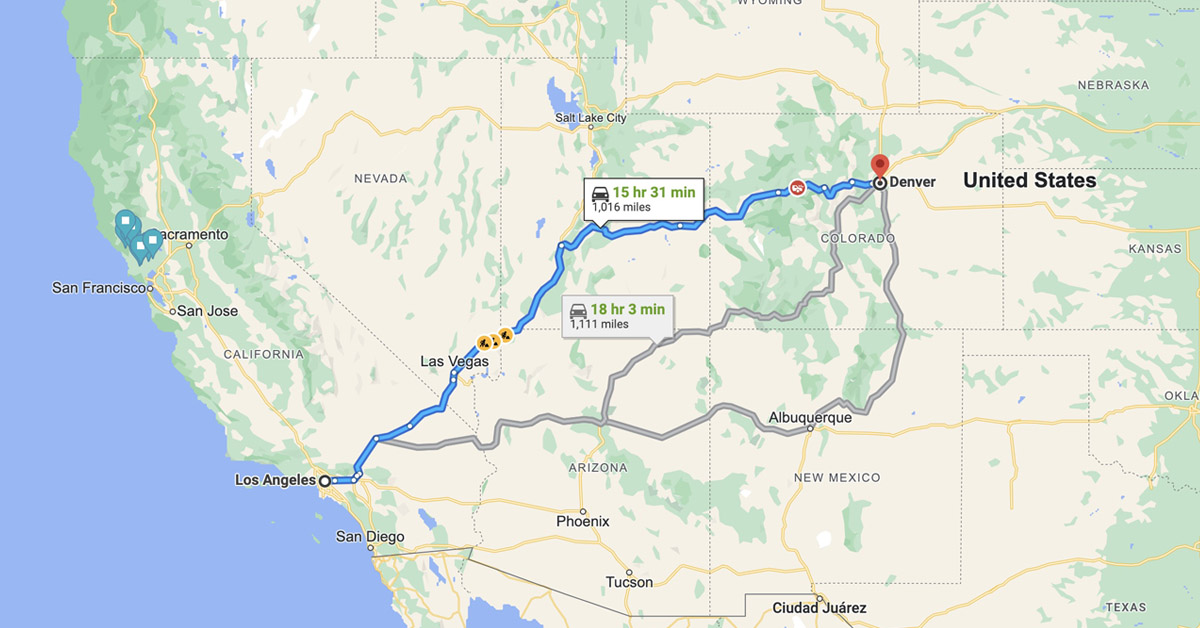
- From Los Angeles, California: Roughly 1,020 miles (1642 km) east, requiring a 15-16 hour drive, usually along I-15 N and I-70 E. This route crosses varied desert and mountain terrains.
For extended road trips, planning stops in charming towns, ensuring vehicle maintenance, and allowing for rest are crucial. Consider the time of year as well; winter travel through mountain passes can be challenging, requiring all-wheel drive and potentially tire chains.
Flying to Denver: Denver International Airport (DEN)
For many, flying offers the most efficient way to reach Denver. Denver International Airport (DEN) is one of the busiest airports in the world, serving as a major hub for numerous airlines. Located approximately 25 miles (40 km) northeast of Downtown Denver, it is well-connected to the city center via the RTD A Line commuter train, which offers a convenient and affordable 37-minute ride.
- From New York City: Direct flights from JFK, LGA, or EWR typically range from 3.5 to 4.5 hours.
- From Atlanta, Georgia: Direct flights usually take around 3-3.5 hours.
- From San Francisco, California: Expect direct flights of approximately 2-2.5 hours.
- From Seattle, Washington: Direct flights average 2.5-3 hours.
- From Miami, Florida: Direct flights are typically 4-4.5 hours.
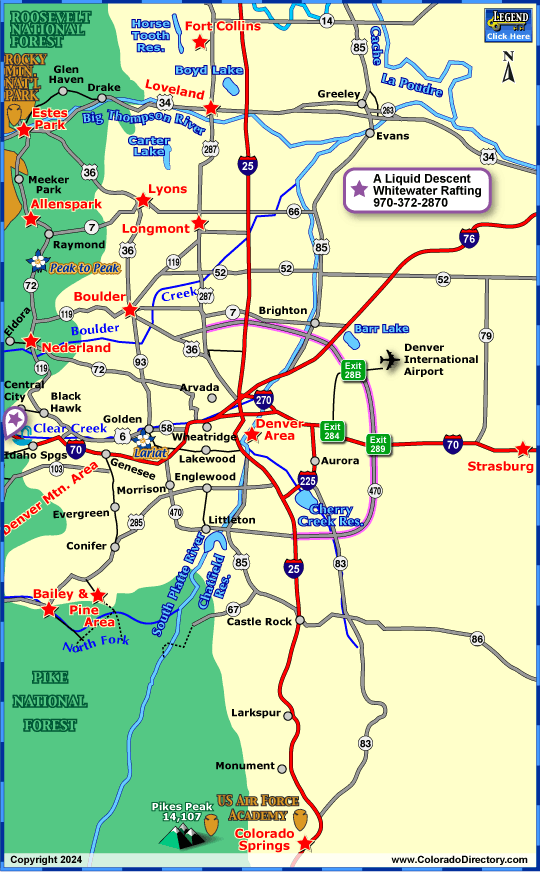
DEN offers extensive domestic and international connections, making it an excellent entry point for exploring not only Denver but also the wider Rocky Mountain region. Travelers should book flights well in advance, especially during peak seasons like ski season or major festivals, to secure the best fares and availability.
Rail Travel to Denver
For a more leisurely and scenic journey, Amtrak provides rail service to Denver’s historic Union Station. The California Zephyr route, considered one of North America’s most beautiful train trips, connects Chicago to Emeryville, California (near San Francisco), with a significant stop in Denver.
- From Chicago: The train journey takes approximately 18 hours, offering views of the prairies and the initial ascent into the Rockies.
- From points west (e.g., Salt Lake City): The journey is shorter, roughly 14 hours, but equally breathtaking as the train winds through canyons and mountains.
While significantly slower than flying, train travel offers a unique perspective on the American landscape, with comfortable seating, dining cars, and opportunities to relax and socialize.
Planning Your Denver Itinerary: Beyond Just Getting There
Once you’ve determined how far you are from Denver and made your travel arrangements, the real excitement begins: planning your activities. Denver and its surroundings offer a wealth of experiences for every type of traveler.
Must-See Attractions
- Rocky Mountain National Park: A quintessential Colorado experience, this stunning national park is just a 1.5-hour drive northwest of Denver. It offers incredible hiking, wildlife viewing, and scenic drives like Trail Ridge Road (seasonal). A day trip here is highly recommended.
- Red Rocks Park and Amphitheatre: Located just 15 miles (24 km) west of Denver, this iconic venue is known for its stunning natural acoustics and breathtaking geological formations. Even if there isn’t a concert, visitors can hike the trails and admire the scenery.
- Downtown Denver: Explore the historic architecture of Union Station, browse the shops and restaurants along the pedestrian-friendly 16th Street Mall, or stroll through Larimer Square, the city’s oldest block.
- Museums: Denver boasts an impressive array of museums, including the Denver Art Museum, with its distinctive architecture and diverse collections, and the Denver Museum of Nature & Science, offering exhibits on paleontology, space, and local natural history.
- Denver Botanic Gardens: A tranquil oasis showcasing a vast collection of plants from around the world, as well as themed gardens and art installations.
Denver’s Culinary Scene
Denver’s food and drink scene is a major draw. The city is renowned for its craft breweries, with numerous taprooms offering innovative local beers. Farm-to-table dining is prevalent, reflecting Colorado’s agricultural bounty. From upscale dining in the Cherry Creek neighborhood to casual eateries in RiNo Art District, there’s something to satisfy every palate. Don’t forget to sample Colorado’s green chile!
When to Visit
The best time to visit Denver depends on your interests.
- Winter (December to February): Ideal for skiers and snowboarders, with easy access to world-class resorts like Breckenridge, Keystone, and Winter Park. The city itself also offers holiday festivities.
- Spring (March to May): A transitional season with melting snow and blooming wildflowers, good for city exploration and early hiking, though mountain roads may still be closed.
- Summer (June to August): Perfect for hiking, biking, and outdoor concerts at Red Rocks. The weather is generally warm and sunny, making it peak tourist season.
- Fall (September to November): Witness stunning autumn foliage in the mountains surrounding Denver, with comfortable temperatures for city walks and outdoor activities.

Making the Journey Seamless
Regardless of how far you are from Denver, meticulous planning can transform your trip from a logistical challenge into a smooth adventure.
- Book in Advance: Secure flights, rental cars, and accommodations, especially during peak travel seasons, to ensure availability and better rates. Many attractions also offer online ticket purchases, which can save time.
- Pack Smart: Given Denver’s variable weather and proximity to mountains, layers are always a good idea. Include comfortable walking shoes, sun protection, and a reusable water bottle. For winter trips, appropriate cold-weather gear is essential.
- Altitude Awareness: Denver’s mile-high elevation can affect some visitors. Drink plenty of water, limit alcohol consumption initially, and avoid strenuous activity on your first day to help your body acclimate. Symptoms of altitude sickness can include headaches, nausea, and shortness of breath.
By considering these factors, you can accurately answer the question “How far am I from Denver, Colorado?” and confidently embark on a well-prepared and enjoyable journey to this captivating city.
LifeOutOfTheBox is a participant in the Amazon Services LLC Associates Program, an affiliate advertising program designed to provide a means for sites to earn advertising fees by advertising and linking to Amazon.com. Amazon, the Amazon logo, AmazonSupply, and the AmazonSupply logo are trademarks of Amazon.com, Inc. or its affiliates. As an Amazon Associate we earn affiliate commissions from qualifying purchases.