
The allure of Las Vegas’ vibrant entertainment juxtaposed with Denver’s majestic mountain backdrop often sparks the question of how accessible one is from the other. Understanding the distance and various travel options between these two major American cities is crucial for planning any journey, whether it’s a quick getaway or an epic road trip adventure. The journey from the Mile High City to the Entertainment Capital of the World spans a significant stretch of the Western United States, offering diverse landscapes and travel experiences.
Understanding the Geographic Divide
The distance between Denver, Colorado, and Las Vegas, Nevada, is substantial, crossing several state lines and diverse topographies. This section delves into the precise measurements and the principal routes that connect these two dynamic cities.

The Direct Distance: Miles and Kilometers
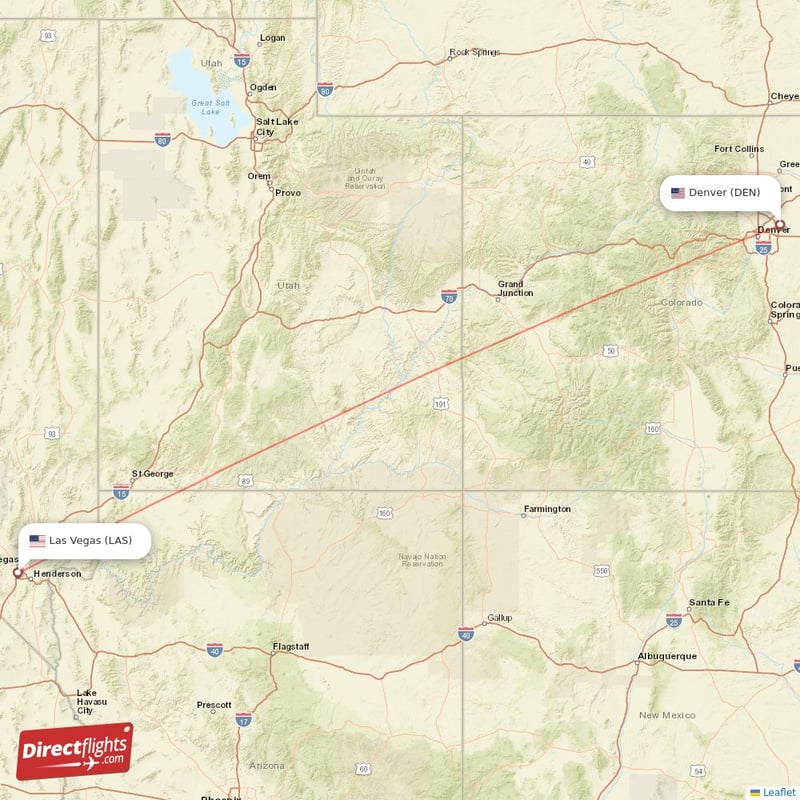
When considering a trip from Denver to Las Vegas, the most direct driving route typically covers approximately 750 to 800 miles (about 1,200 to 1,300 kilometers), depending on the specific starting and ending points within each metropolitan area. This distance translates into a considerable driving time, often estimated between 11 to 13 hours without factoring in stops for fuel, food, rest, or potential traffic delays. It’s a journey that traverses vast expanses of varying landscapes, from the towering peaks of the Rocky Mountains to the sprawling deserts of Utah and Nevada.
Understanding this direct distance is the first step in appreciating the scope of the travel. For many, such a significant mileage warrants careful planning, especially if driving, as it’s generally too far for a single-day journey without considerable fatigue. This vastness underscores the diversity of the American West, inviting travelers to consider the journey itself as part of the destination.
Key Routes and Topography
The predominant driving route connecting Denver and Las Vegas involves heading west on I-70 from Denver, cutting across Colorado and into Utah. This segment of the journey is renowned for its breathtaking mountain passes, including the dramatic Glenwood Canyon near Glenwood Springs and the ski resort areas around Vail. As travelers proceed westward into Utah, the scenery gradually transitions from alpine forests and high deserts to the striking red rock formations characteristic of the state’s southern regions.
Upon reaching central Utah, typically around the city of Salina or further west, the route transitions south onto I-15. This interstate then carries travelers directly through southern Utah, passing by national parks like Zion National Park (a worthy detour), before finally crossing into Nevada and leading straight into Las Vegas. The topography shifts dramatically once more, giving way to the stark beauty of the Mojave Desert, characterized by arid landscapes and unique desert flora. This route offers a captivating cross-section of the American West, making the travel experience as much about the journey as the destination.
Navigating Your Journey: Modes of Transport
Choosing the right mode of transportation is paramount when traveling between Denver and Las Vegas. Each option presents a unique set of advantages and considerations, from the flexibility of a road trip to the speed of air travel.
The Quintessential Road Trip Experience
For many, the idea of a road trip from Denver to Las Vegas evokes images of open roads and scenic vistas. The estimated 11 to 13 hours of non-stop driving is often broken up into two days to allow for rest, meals, and sightseeing. Planning for fuel stops is crucial, especially in more remote sections of Utah and Nevada where services can be sparse. It is advisable to maintain a half-full tank of gas at all times and take frequent breaks to combat driver fatigue.
Several factors can influence the actual driving time. Traffic, particularly around urban centers like Denver or the approach to Las Vegas, can add significant delays. Road construction is also a common occurrence, especially during warmer months. Weather conditions pose perhaps the most significant variable; Colorado mountain passes can experience heavy snow and ice in winter, while the deserts of Utah and Nevada can reach extreme temperatures in summer. Travelers should always check road conditions via state transportation websites like CDOT for Colorado and UDOT for Utah before departing. Furthermore, a thorough vehicle check—including tires, oil, and coolant—is recommended to ensure a smooth journey. While the primary route is I-70 to I-15, a significantly longer and less direct, but potentially scenic, route could involve traveling south through New Mexico and Arizona, though this would transform the trip into a multi-day expedition with considerably more mileage.
Expedited Air Travel
For those prioritizing speed, flying is undoubtedly the most efficient way to travel from Denver to Las Vegas. Non-stop flights typically range from 1 hour and 30 minutes to 2 hours, making it a considerably shorter travel time than driving. Denver International Airport (DEN) serves as a major hub with numerous daily flights to Harry Reid International Airport (LAS) in Las Vegas.
While the flight duration is minimal, it’s important to account for the entire travel process. This includes getting to and from the airports, navigating check-in and security lines, and potential delays. Door-to-door travel time by air can easily amount to 4-6 hours, making it still significantly faster than driving. Booking flights in advance and being flexible with travel dates can often result in more affordable fares. Various airlines, including budget carriers, operate this popular route, offering a range of options for travelers.
Alternative Ground Transport: Buses and Trains
For budget-conscious travelers or those who prefer not to drive or fly, bus services offer an alternative. Companies like Greyhound provide routes between Denver and Las Vegas. However, this option comes with a significantly longer travel time, often ranging from 18 to 24 hours or even more, including transfers and layovers. While more economical, the extended duration and multiple stops can be less comfortable for some travelers.

Train travel via Amtrak is another ground option, but it is not a direct route and is generally impractical for this specific journey. Travelers would typically need to take multiple trains with transfers, potentially through Chicago or Los Angeles, extending the trip to well over 24 hours and making it a more scenic adventure than a direct commute. For this reason, train travel is rarely chosen for the primary purpose of reaching Las Vegas from Denver efficiently.
Crafting Your Itinerary: Overcoming the Distance
A successful trip between Denver and Las Vegas, particularly by road, requires thoughtful itinerary planning. From strategic stopovers to understanding seasonal variations, preparation enhances the journey.
The Road Trip Advantage: Scenic Detours and Overnight Stays
Transforming a long drive into an unforgettable adventure is one of the primary appeals of the Denver to Las Vegas road trip. Breaking the estimated 11-13 hour drive into two days is highly recommended. Ideal halfway points for an overnight stay include cities like Grand Junction, Colorado, or Moab and St. George in Utah. These locations not only offer comfortable lodging but also serve as gateways to some of the most spectacular natural wonders in the United States.
Detours to national parks such as Arches National Park and Canyonlands National Park near Moab, or Zion National Park just off I-15 in southern Utah, can enrich the travel experience immensely. These stops provide opportunities for hiking, photography, and exploring unique geological formations, turning a simple commute into a multi-faceted journey. Planning for meals and overnight lodging in advance, especially during peak travel seasons, is advisable to ensure availability and potentially secure better rates.
Best Times to Travel
The timing of your trip significantly impacts the experience. Spring (April-May) and Fall (September-October) are often considered the best seasons for this journey. During these periods, temperatures are generally milder, making driving conditions more pleasant across both mountainous and desert regions. There’s also less tourist traffic compared to the peak summer months.
Traveling in summer (June-August) means contending with extreme heat, particularly in Utah and Nevada, where temperatures can soar well over 100°F (38°C). This necessitates extra precautions like carrying ample water and monitoring vehicle temperatures. Summer also sees potential for monsoon storms in the desert southwest, leading to flash floods. Winter travel (November-March) can be challenging due to snow and ice on the mountain passes in Colorado and Utah, particularly on I-70 near Vail and Glenwood Springs. Road closures and delays are possible, so checking updated road conditions with CDOT and UDOT is essential for safety.
Budgeting and Practicalities
Effective budgeting is crucial for any long-distance travel. For a road trip, primary expenses include fuel, which can fluctuate significantly based on gas prices and your vehicle’s fuel efficiency. Accommodation costs for overnight stays along the route should also be factored in, with options ranging from budget motels to more upscale hotels. Food and snacks are another significant category, especially for a multi-day drive. It’s wise to allocate an emergency fund for unforeseen circumstances like vehicle repairs or unexpected overnight stays.
Practical tools are indispensable for a smooth journey. Reliable GPS navigation apps such as Google Maps or Waze are essential, but having a physical map as a backup is always a good idea, especially when passing through areas with limited cell service. Packing an emergency kit with essentials like water, non-perishable food, a first-aid kit, and jumper cables is a responsible precaution. For remote areas, considering a satellite phone or a personal locator beacon might be prudent.
Your Las Vegas Arrival: Maximizing the Experience
After a journey from Denver, arriving in Las Vegas marks the culmination of your travel efforts. The transition from the road or air to the city’s vibrant energy requires a few considerations to maximize your stay.
From Arrival to Adventure
Upon landing at Harry Reid International Airport, travelers have several convenient options for reaching their accommodations. Shuttle services, taxis, and popular ride-sharing apps are readily available to transport visitors to their hotels on The Strip or downtown to the Fremont Street Experience. If arriving by car, most resorts offer ample parking, either self-parking garages or valet services, though fees can apply.
Once settled, the immediate adventure awaits. Las Vegas offers an unparalleled array of entertainment, dining, and leisure activities. First-time visitors often gravitate towards exploring the iconic resorts along The Strip, each with its unique theme and attractions. Alternatively, the historic Fremont Street Experience in downtown Las Vegas provides a different kind of energy, with its dazzling light canopy and live performances. Prioritizing rest after a long journey is crucial before diving into the city’s excitement.
Beyond the Strip: Day Trips and Exploration
While Las Vegas is famous for its indoor attractions, the surrounding Nevada desert offers incredible opportunities for outdoor exploration and day trips. Just a short drive from The Strip, the Red Rock Canyon National Conservation Area provides stunning hiking trails and scenic drives amidst vibrant red rock formations. It’s a perfect escape for nature lovers seeking a contrast to the city’s neon glow.
Another popular excursion is to the Valley of Fire State Park, Nevada’s oldest state park, known for its fiery red Aztec sandstone outcrops and ancient petroglyphs. Furthermore, a trip to the Hoover Dam on the Colorado River, straddling the border of Nevada and Arizona, is a fascinating engineering marvel and a significant historical landmark. These nearby attractions extend the travel experience beyond the city limits, offering a broader perspective of the region’s natural beauty and human ingenuity.
LifeOutOfTheBox is a participant in the Amazon Services LLC Associates Program, an affiliate advertising program designed to provide a means for sites to earn advertising fees by advertising and linking to Amazon.com. Amazon, the Amazon logo, AmazonSupply, and the AmazonSupply logo are trademarks of Amazon.com, Inc. or its affiliates. As an Amazon Associate we earn affiliate commissions from qualifying purchases.